
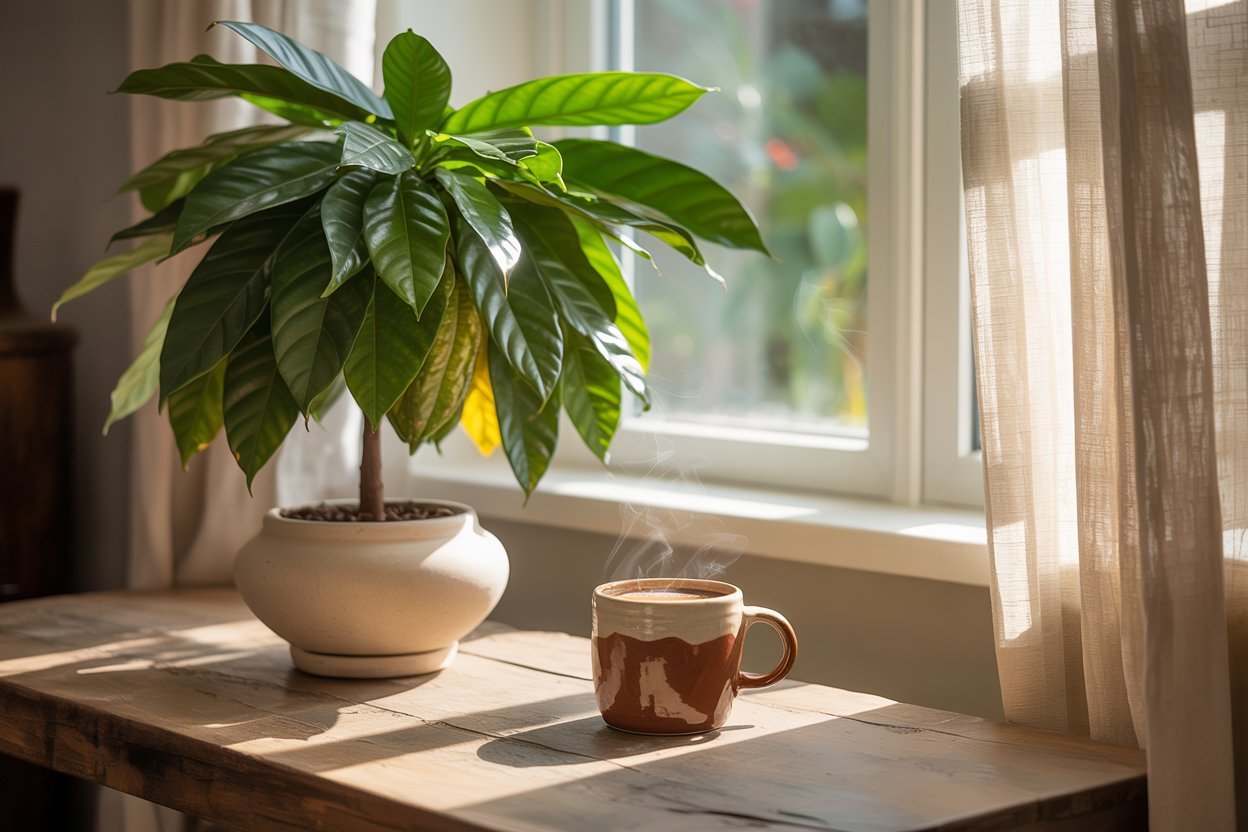

Warm, rich, and quietly magical, the idea of growing your own chocolate tree indoors feels like bringing a piece of the tropics into your home.
Imagine glossy green leaves stretching toward soft indoor light, delicate flowers forming along the trunk, and the possibility however patient it may require of harvesting your own cacao pods one day.
Even in colder climates, where frost lingers and sunlight fades too early in winter, nurturing a cacao tree indoors is not only possible, but deeply rewarding.
This guide will walk you through everything you need to know, from choosing the right plant to maintaining ideal growing conditions, troubleshooting challenges, and encouraging healthy growth.
With the right care, your indoor cacao tree can thrive and become a beautiful, living centerpiece in your home.
Understanding the Chocolate Tree (Cacao Plant)
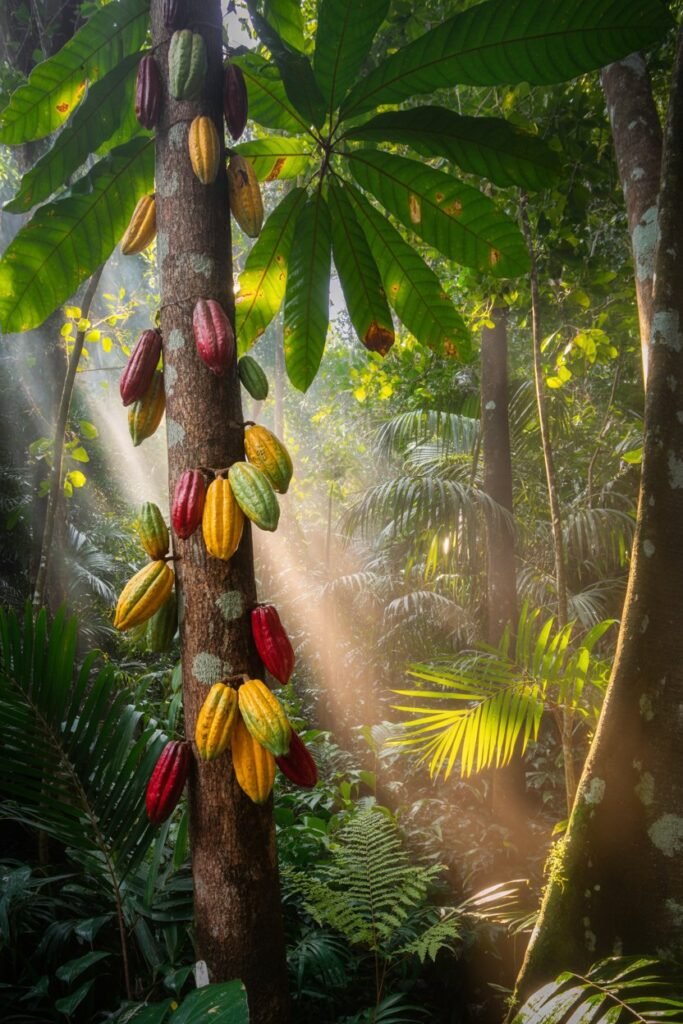
The chocolate tree, scientifically known as Theobroma cacao, is native to the humid, tropical regions of Central and South America.
In its natural environment, it grows beneath the canopy of taller trees, protected from direct sunlight and surrounded by warmth and moisture.
This tells us something very important: cacao trees are naturally adapted to indirect light, consistent warmth, and high humidity.
When growing indoors especially in colder climates your goal is to recreate these conditions as closely as possible.
A mature cacao tree can grow up to 15–25 feet outdoors, but indoors, it typically stays much smaller, often between 4–8 feet with proper pruning.
The plant produces small, delicate flowers directly on its trunk and branches, and eventually, colorful pods that contain cacao beans the source of chocolate.
Choosing the Right Cacao Plant
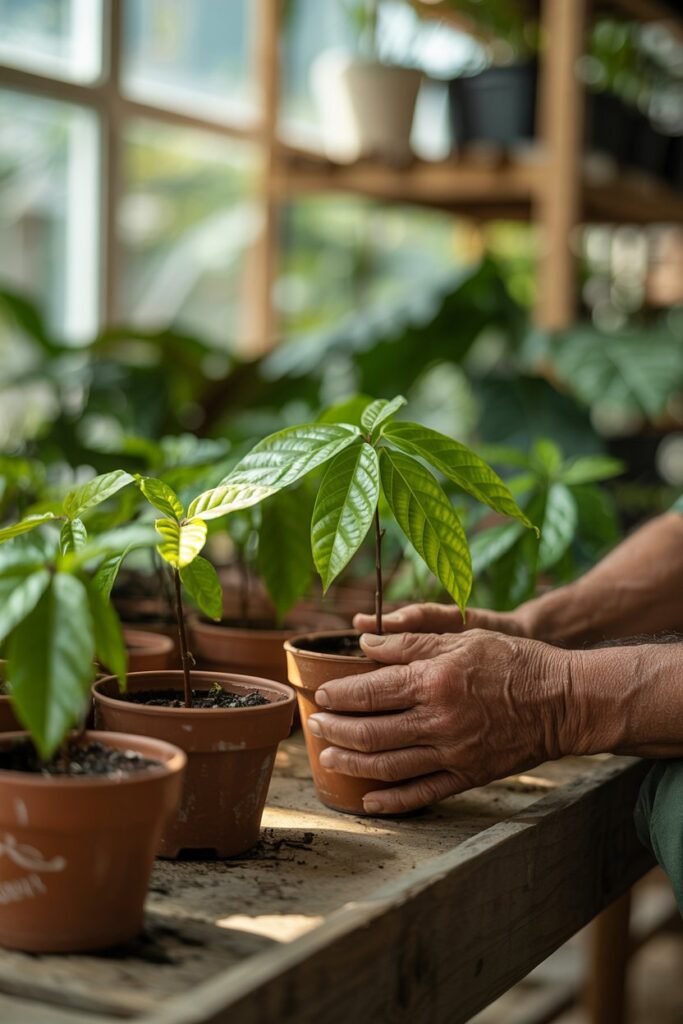
Starting with a healthy plant sets the tone for your entire growing journey. You have two main options:
1. Growing from Seeds
Fresh cacao seeds can be germinated, but they must be very fresh to remain viable. This method requires patience and careful attention to humidity and warmth.
2. Buying a Young Plant
This is the easiest and most reliable option, especially for beginners. Look for:
- Bright, healthy leaves (no yellowing or spots)
- Strong central stem
- No signs of pests
A nursery specializing in tropical plants is often your best bet.
Creating the Perfect Indoor Environment
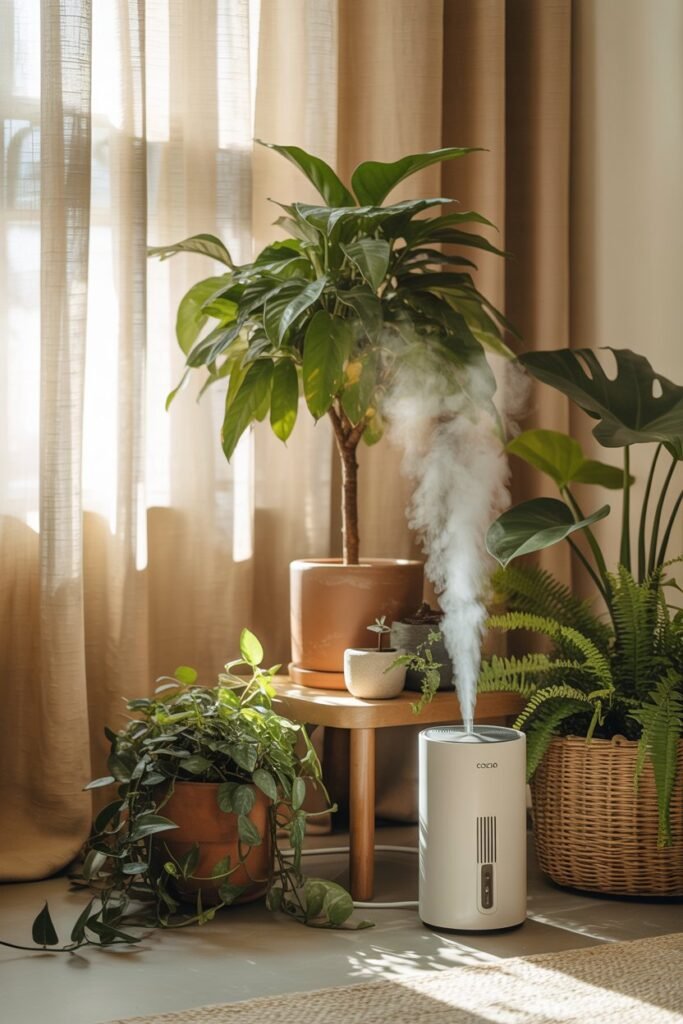
Growing cacao indoors is all about mimicking its natural habitat. Let’s break this down into simple, manageable elements.
Light: Gentle and Indirect
Cacao trees do not like harsh, direct sunlight. Too much sun can scorch their leaves.
Best practice:
- Place your plant near an east- or north-facing window
- Use sheer curtains to filter strong sunlight
- Supplement with grow lights if natural light is limited
In colder climates, winter light can be weak, so a grow light can make a significant difference.
Temperature: Warm and Stable
Cacao thrives in temperatures between 65°F and 85°F (18°C–29°C).
Avoid:
- Cold drafts from windows or doors
- Sudden temperature drops
- Placing near heaters or radiators (they dry the air)
If your home gets chilly, consider:
- A heat mat under the pot
- Keeping the plant in a naturally warmer room
Humidity: The Secret to Success
Humidity is often the biggest challenge indoors. Cacao trees love 60–80% humidity.
Ways to increase humidity:
- Use a humidifier nearby
- Group plants together
- Place a tray of water with pebbles under the pot
- Mist the leaves regularly (but gently)
Dry air can cause leaf browning and slow growth, so this step is essential.
Choosing the Right Soil and Pot
Soil Mix
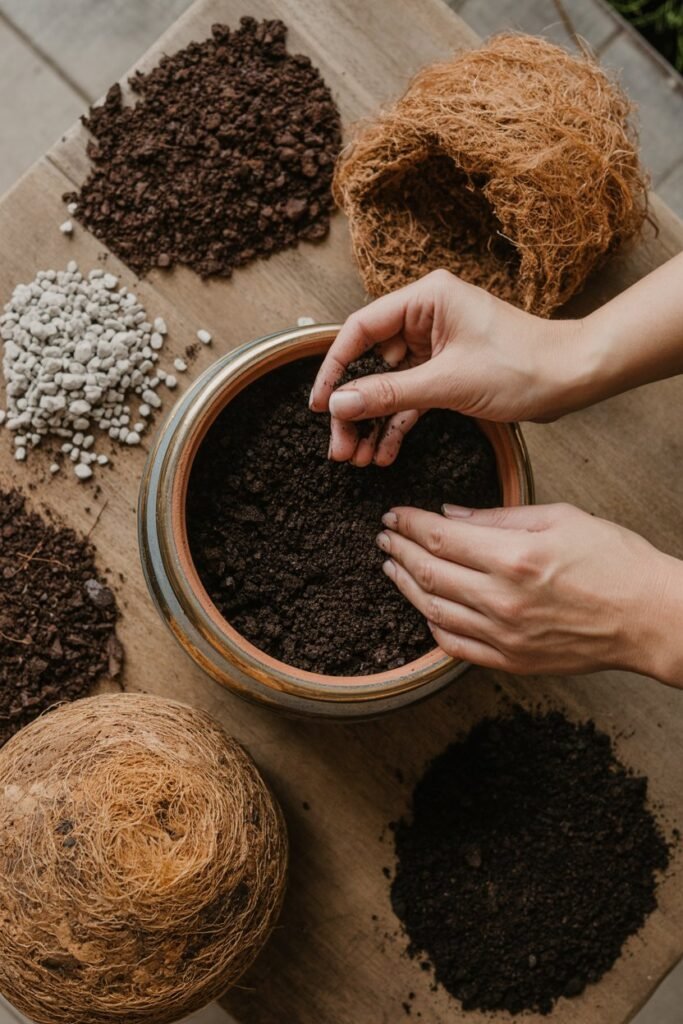
Cacao trees need well-draining but moisture-retentive soil.
A good mix includes:
- 40% potting soil
- 30% coco coir or peat moss
- 20% perlite
- 10% compost
This blend ensures roots stay moist but not waterlogged.
Pot Selection
Choose a pot with:
- Good drainage holes
- Enough depth for root growth
Start with a medium-sized pot and repot as the tree grows. Avoid pots that are too large, as they can hold excess moisture and lead to root rot.
Watering Your Chocolate Tree
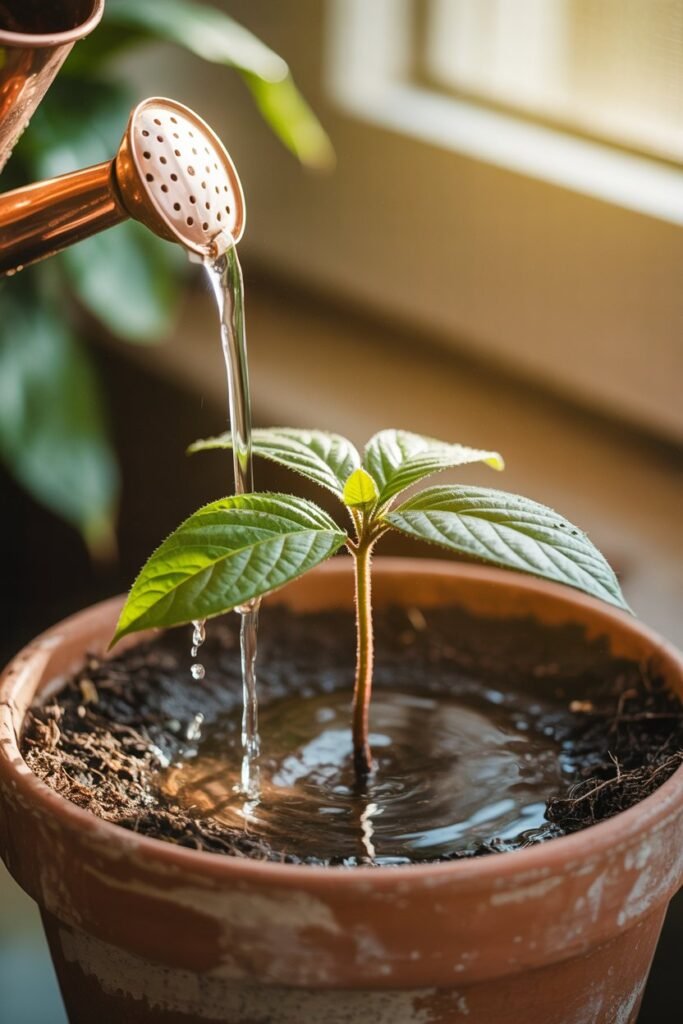
Cacao trees enjoy consistent moisture but dislike soggy soil.
Watering tips:
- Water when the top inch of soil feels dry
- Use room-temperature water
- Ensure excess water drains out completely
Signs of overwatering:
- Yellowing leaves
- Mushy soil
- Root rot smell
Signs of underwatering:
- Drooping leaves
- Dry, crispy edges
Consistency is key try to maintain a gentle rhythm rather than extremes.
Feeding and Fertilizing
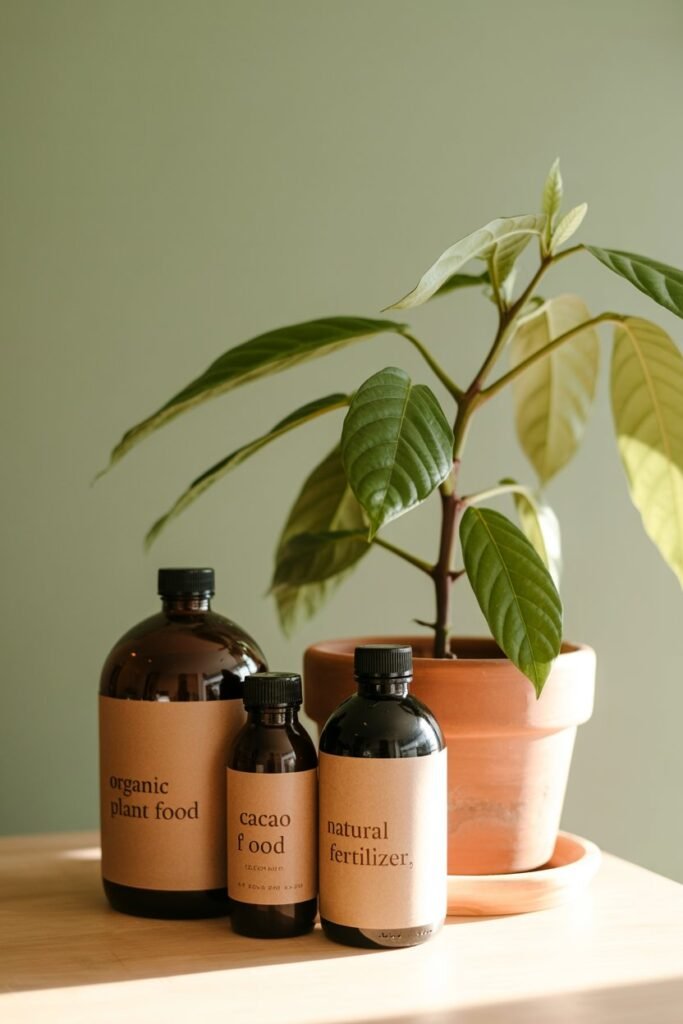
Indoor cacao trees benefit from regular feeding during their growing season (spring and summer).
Use:
- A balanced liquid fertilizer (every 2–4 weeks)
- Organic options like compost tea or fish emulsion
Reduce feeding during fall and winter when growth slows.
Pruning and Shaping
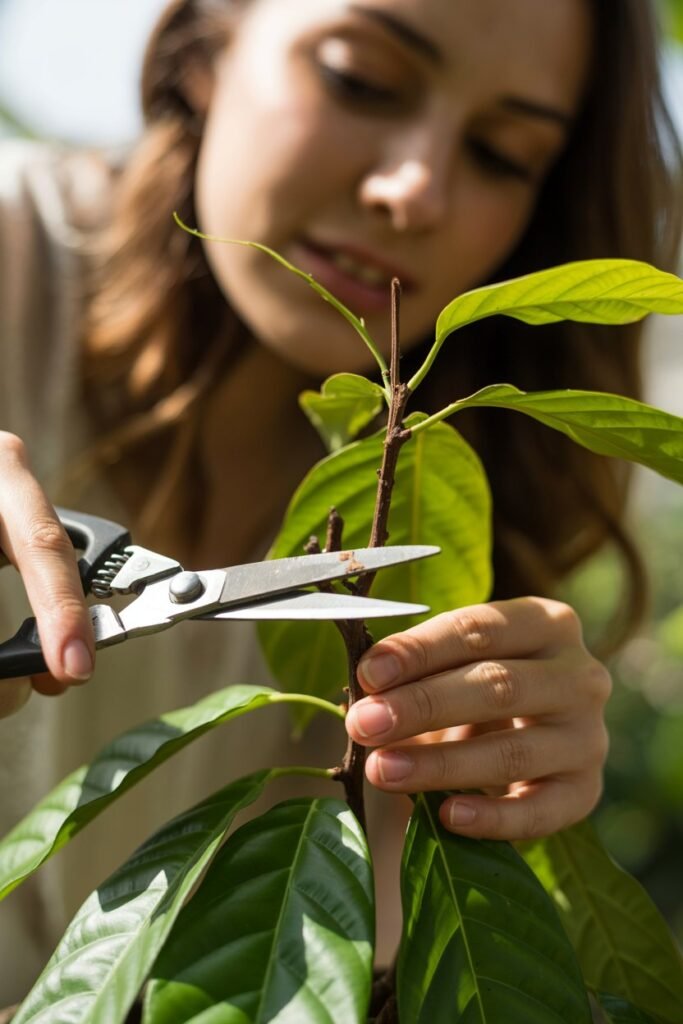
Pruning helps maintain a manageable size and encourages healthy growth.
When to prune:
- Early spring or after a growth flush
What to remove:
- Dead or damaged leaves
- Leggy or uneven growth
- Lower branches if you want a tree-like shape
Use clean, sharp scissors to avoid damaging the plant.
Pollination and Fruit Production Indoors
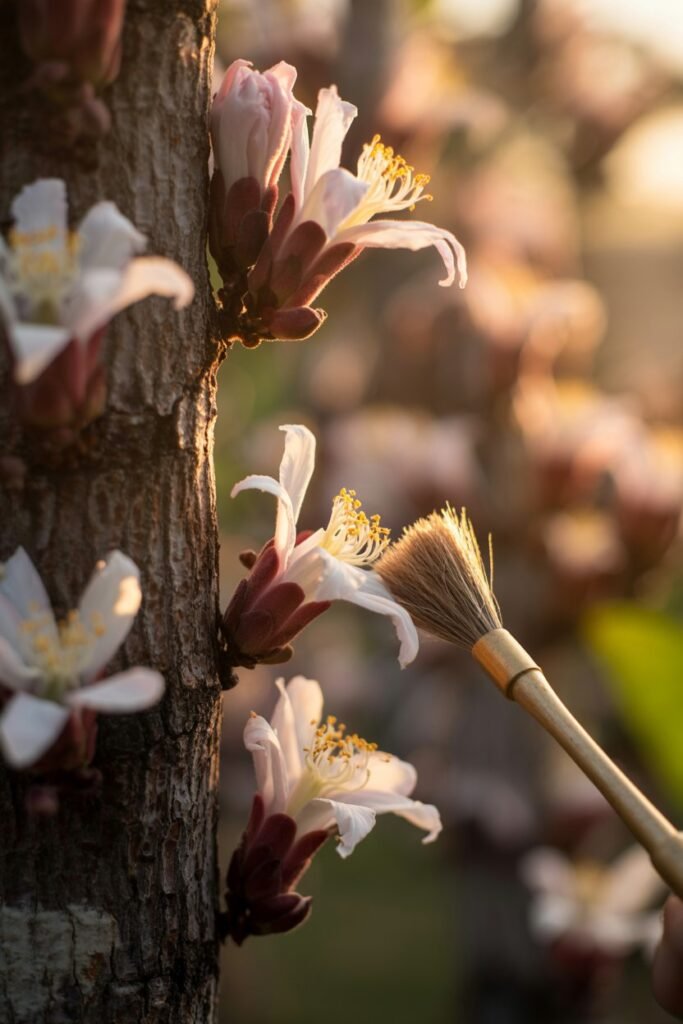
One of the most fascinating aspects of cacao trees is how they flower and produce fruit. However, indoor fruiting is rare and requires patience.
Cacao flowers are naturally pollinated by tiny insects in the wild. Indoors, you may need to hand-pollinate using a small brush.
Even with perfect care, fruiting can take several years and may not always happen indoors but the beauty of the plant itself is deeply rewarding.
Common Problems and How to Fix Them
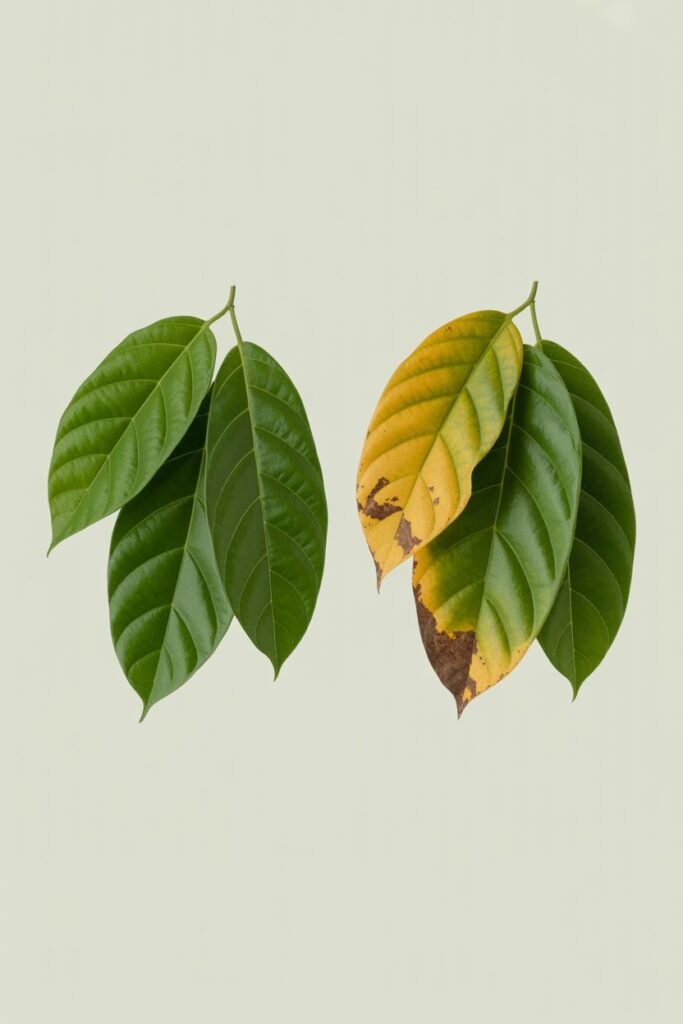
1. Yellow Leaves
- Cause: Overwatering or poor drainage
- Fix: Adjust watering and check soil
2. Brown Leaf Edges
- Cause: Low humidity
- Fix: Increase moisture in the air
3. Leaf Drop
- Cause: Temperature stress or drafts
- Fix: Stabilize environment
4. Pests (Spider mites, aphids)
- Fix: Wipe leaves with neem oil or mild soap solution
Regularly inspecting your plant helps catch issues early.
Growing in Cold Climates: Special Considerations
Living in a colder region doesn’t mean you can’t grow a thriving cacao tree it simply means being a bit more intentional.
Winter Care Tips:
- Move the plant away from cold windows at night
- Use grow lights to compensate for shorter days
- Increase humidity (indoor heating dries the air)
- Reduce watering slightly, but don’t let soil dry out completely
Think of winter as a resting period, not a setback.
Repotting Your Cacao Tree
As your plant grows, it will eventually outgrow its container.
Signs it’s time to repot:
- Roots coming out of drainage holes
- Soil drying out too quickly
- Slowed growth
Repot every 1–2 years into a slightly larger container. Handle roots gently to avoid shock.
Can You Really Grow Chocolate Indoors?
Growing actual cacao pods indoors is possible, but it’s a long journey. It requires:
- Consistent care over several years
- Proper humidity and warmth
- Successful pollination
Even if your tree never produces pods, it still offers:
- Lush tropical beauty
- A calming, nurturing experience
- A unique conversation piece in your home
And if it does produce? That’s a rare and wonderful reward.
Final Thoughts
Growing a chocolate tree indoors is less about instant results and more about creating a nurturing environment where something truly special can flourish. Each new leaf, each subtle sign of growth, becomes a quiet reminder that even tropical beauty can thrive far from its natural home.
With patience, attention, and a little creativity, your indoor space can transform into a warm sanctuary for your cacao tree—no matter how cold it may be outside.
If you approach this journey with curiosity and care, you’ll find that growing your own chocolate tree is just as enriching as the chocolate it may one day produce.
