
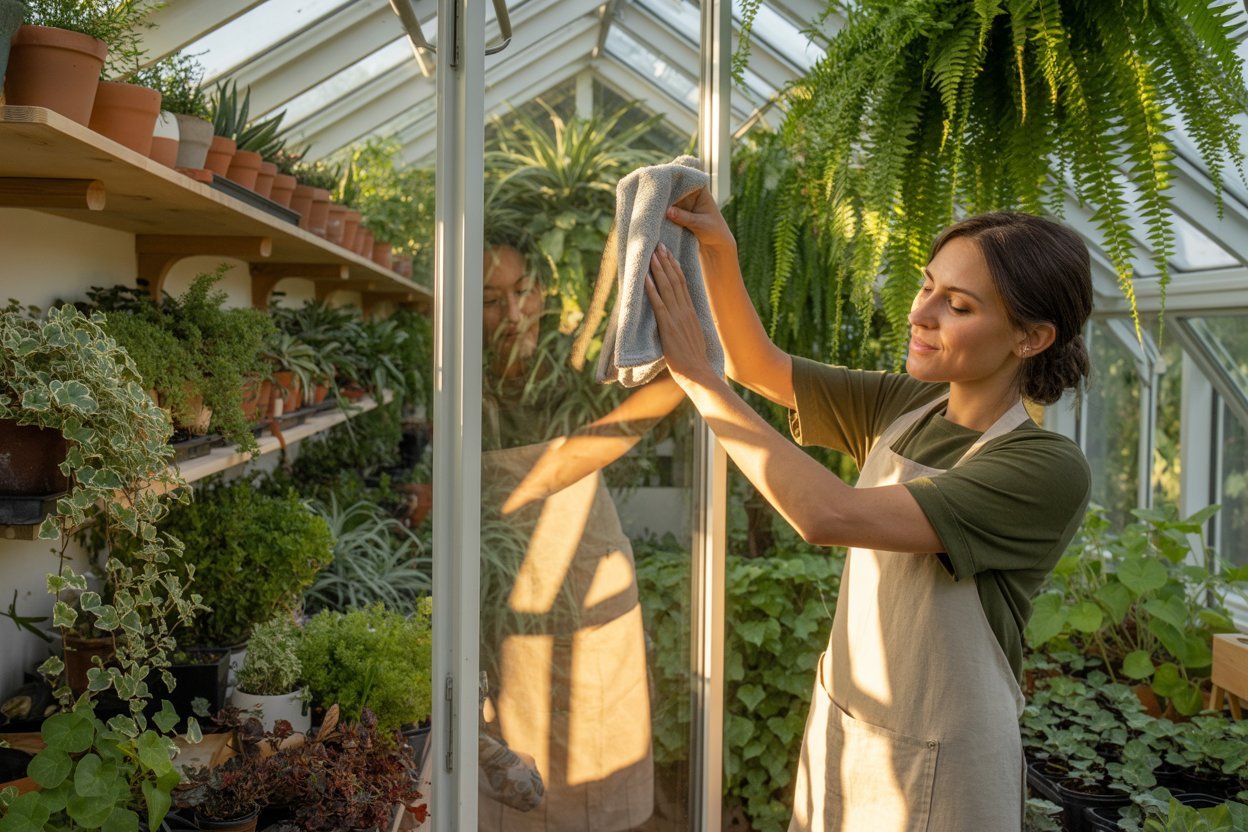

Stepping into a clean greenhouse feels almost magical. Warm sunlight filters through sparkling panels, the air smells fresh and earthy, and every plant seems happier in its little protected paradise.
But any gardener who has spent time nurturing seedlings and tropical beauties inside a greenhouse knows how quickly dirt, algae, pests, and clutter can build up.
A neglected greenhouse not only looks untidy, it can also affect plant health, reduce sunlight, encourage disease, and create the perfect hiding place for unwanted pests.
Keeping a greenhouse clean does not have to feel overwhelming or exhausting. With a thoughtful routine and a few simple habits, you can create a thriving space that supports healthy growth all year long.
This guide will walk you through everything you need to know about cleaning and maintaining a greenhouse in a practical, gentle, and manageable way so your plants can truly flourish.
Why Greenhouse Cleaning Matters
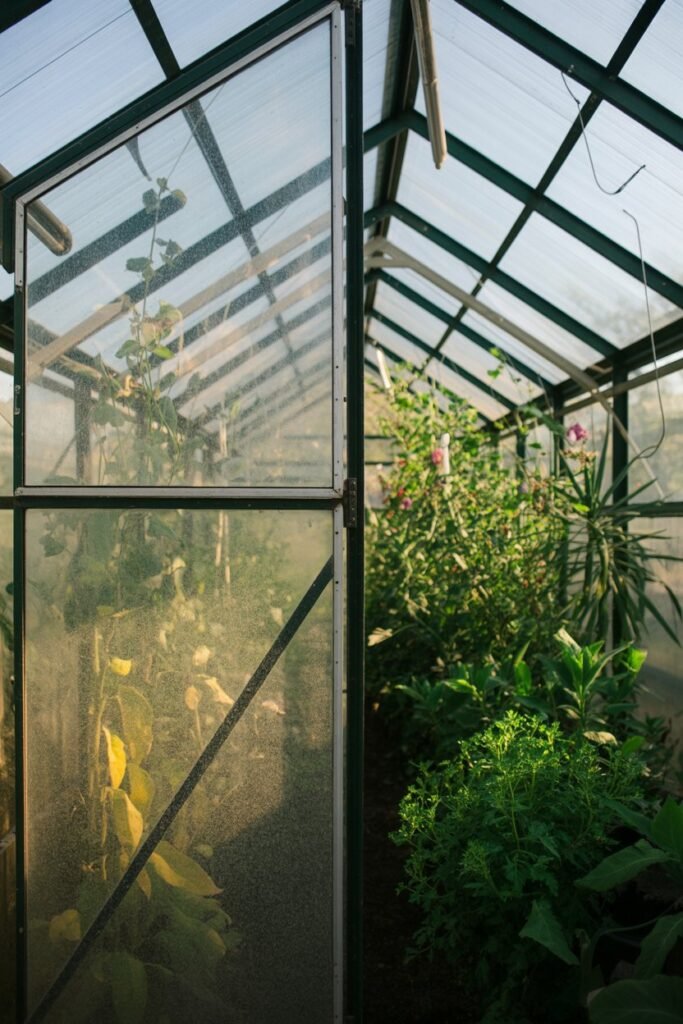
A greenhouse creates the ideal growing environment for plants, but unfortunately, that same environment is also perfect for mold, fungi, algae, insects, and bacteria.
Warm temperatures combined with humidity can quickly turn small issues into larger problems if regular maintenance is ignored.
Cleaning your greenhouse regularly helps:
- Prevent plant diseases
- Improve airflow
- Allow more sunlight to reach plants
- Reduce pests and infestations
- Extend the lifespan of your greenhouse
- Create a more organized gardening space
- Encourage stronger and healthier plant growth
Even a thin layer of dirt on greenhouse panels can reduce the amount of light entering the structure. Since plants rely heavily on sunlight for photosynthesis, maintaining clean glass or plastic panels directly impacts plant productivity.
A clean greenhouse also makes gardening more enjoyable. It becomes a peaceful retreat rather than a stressful chore-filled area.
Best Time To Clean A Greenhouse
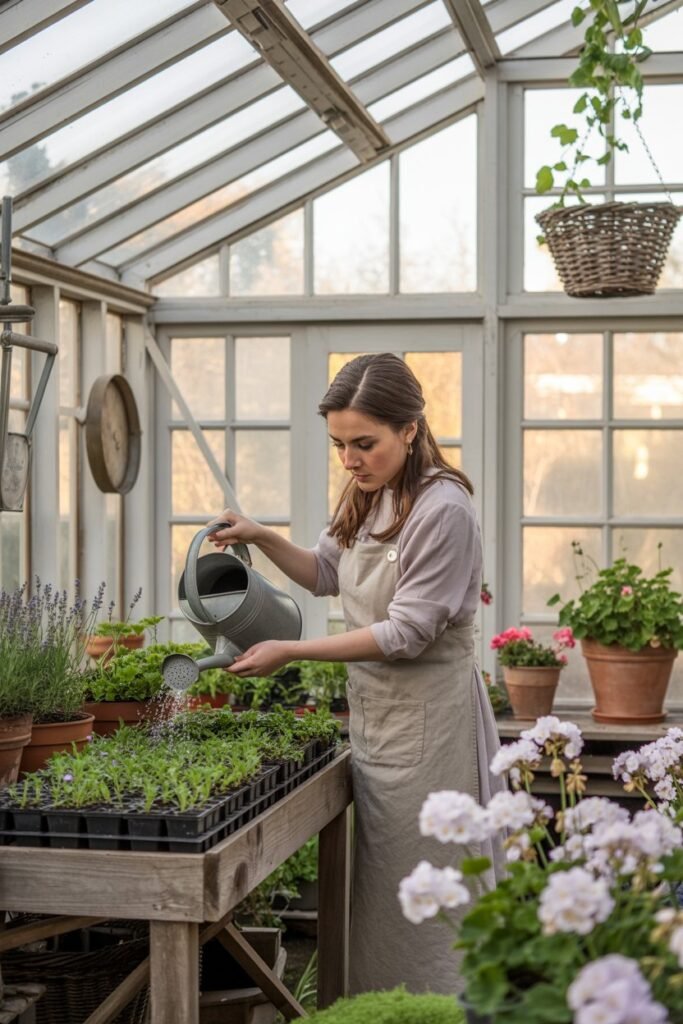
Timing makes greenhouse cleaning much easier and more effective.
The best times for deep cleaning are:
Early Spring
Before seedlings and new plants move into the greenhouse, give the entire structure a full refresh. This removes pests and diseases that may have survived the winter.
Late Autumn
Once summer crops are finished and temperatures begin cooling, another deep clean prepares the greenhouse for winter and prevents overwintering pests.
During The Growing Season
Light maintenance should happen weekly or monthly depending on how heavily the greenhouse is used.
Essential Greenhouse Cleaning Supplies
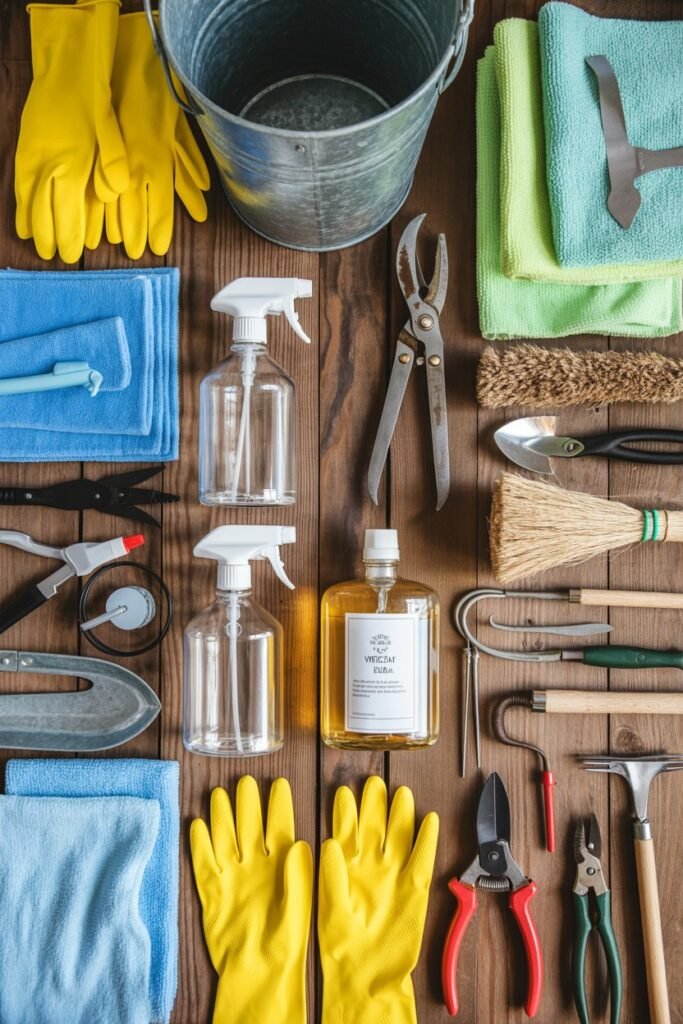
Before getting started, gather everything you need so the process feels smooth and organized.
Basic Supplies
- Soft sponge or microfiber cloth
- Bucket of warm water
- Mild dish soap
- Gardening gloves
- Soft-bristle brush
- Hand broom and dustpan
- Garden hose
- Squeegee
- Pruning shears
- Trash bags
Optional Supplies
- White vinegar
- Disinfectant suitable for greenhouses
- Pressure washer on low setting
- Glass cleaner for greenhouse panels
- Hydrogen peroxide solution
- Algae remover
- Replacement pots or trays
Avoid harsh chemical cleaners whenever possible, especially around edible plants and seedlings. Gentle solutions are usually enough for routine cleaning.
Step-By-Step Guide To Cleaning A Greenhouse
Cleaning a greenhouse thoroughly may seem like a big task, but breaking it into steps makes it much more manageable.
Step 1: Remove Everything From The Greenhouse
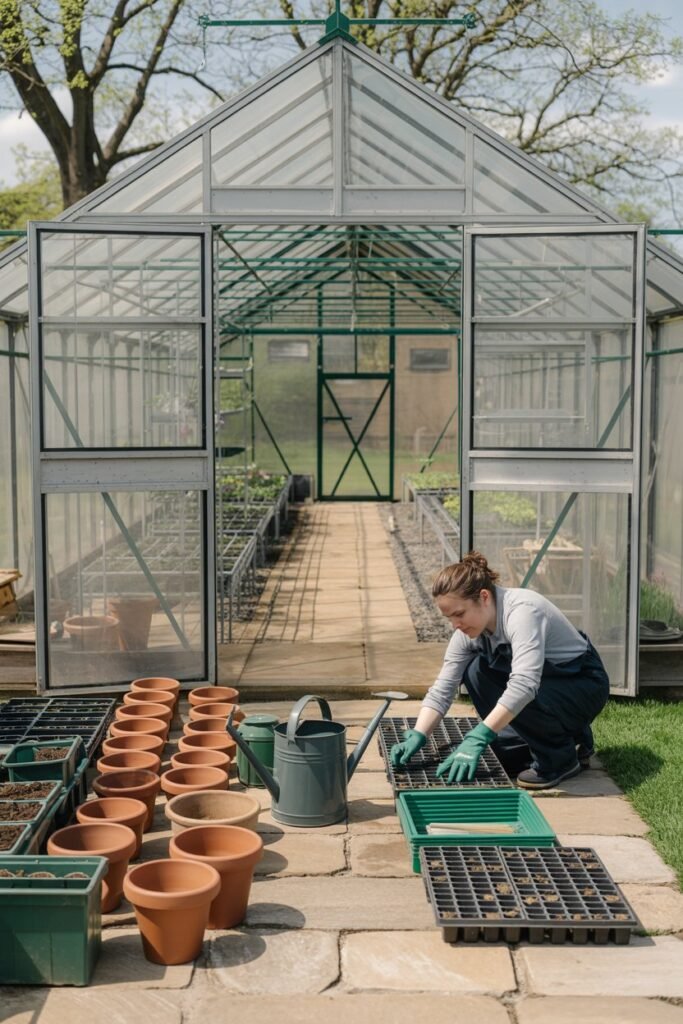
Start by taking out:
- Pots
- Trays
- Shelving
- Tools
- Plant containers
- Decorative items
- Watering cans
If possible, temporarily move plants outdoors on a mild day or place them in a shaded protected area.
Removing everything allows you to clean hidden corners properly and gives you a chance to organize your supplies.
This is also the perfect time to discard:
- Dead plants
- Broken pots
- Expired fertilizers
- Diseased foliage
- Old potting soil
Clutter creates hiding spots for pests and limits airflow.
Step 2: Sweep Away Dirt And Debris
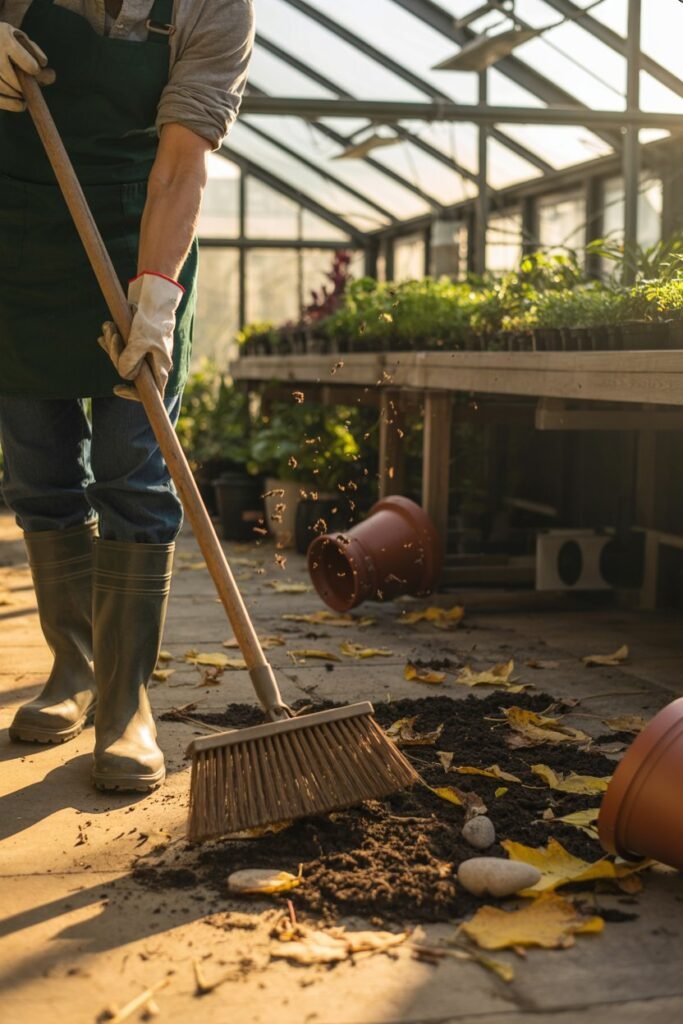
Use a broom or handheld brush to remove:
- Fallen leaves
- Loose soil
- Cobwebs
- Dust
- Dead insects
Pay special attention to corners, under benches, and around doors where debris tends to collect.
Keeping floors clean reduces fungal growth and helps prevent pests from breeding inside the greenhouse.
Step 3: Wash Greenhouse Panels
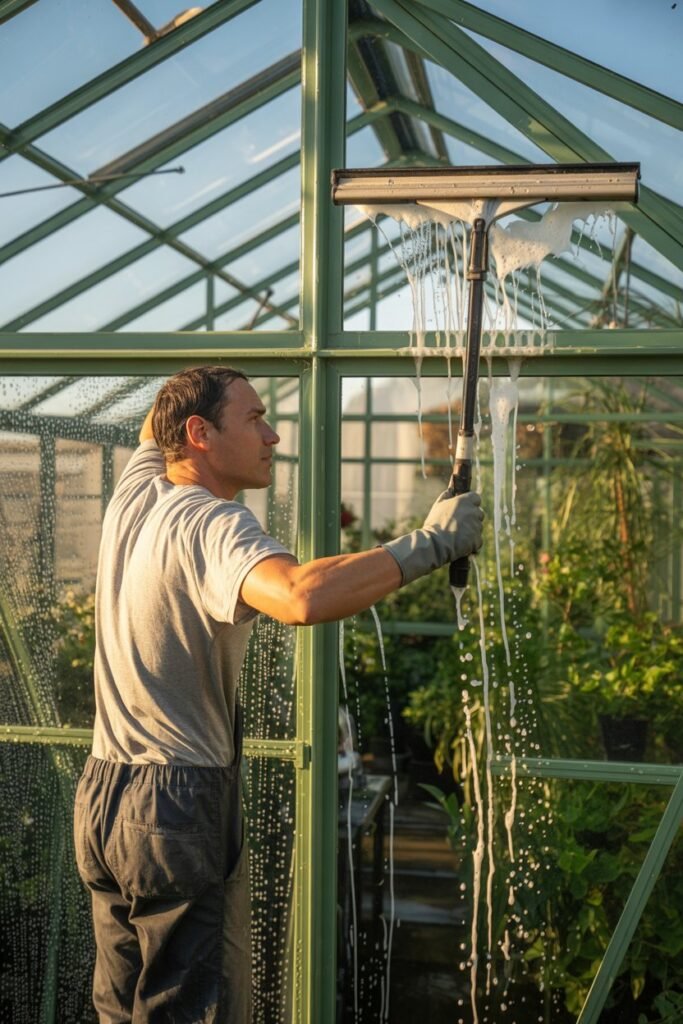
Clean greenhouse walls and roof panels carefully to maximize sunlight.
For Glass Greenhouses
Use warm water mixed with mild soap and wipe gently with a soft cloth or sponge.
Avoid abrasive scrubbers that can scratch the surface.
For Polycarbonate Or Plastic Panels
Use non-abrasive materials and avoid strong chemicals that may damage protective coatings.
Rinse thoroughly afterward.
Cleaning Tips
- Work from top to bottom
- Use a squeegee to prevent streaks
- Clean both inside and outside panels
- Choose a cloudy day to prevent quick drying and streaking
You may be surprised by how much brighter the greenhouse feels after washing the panels properly.
How To Remove Algae And Mold
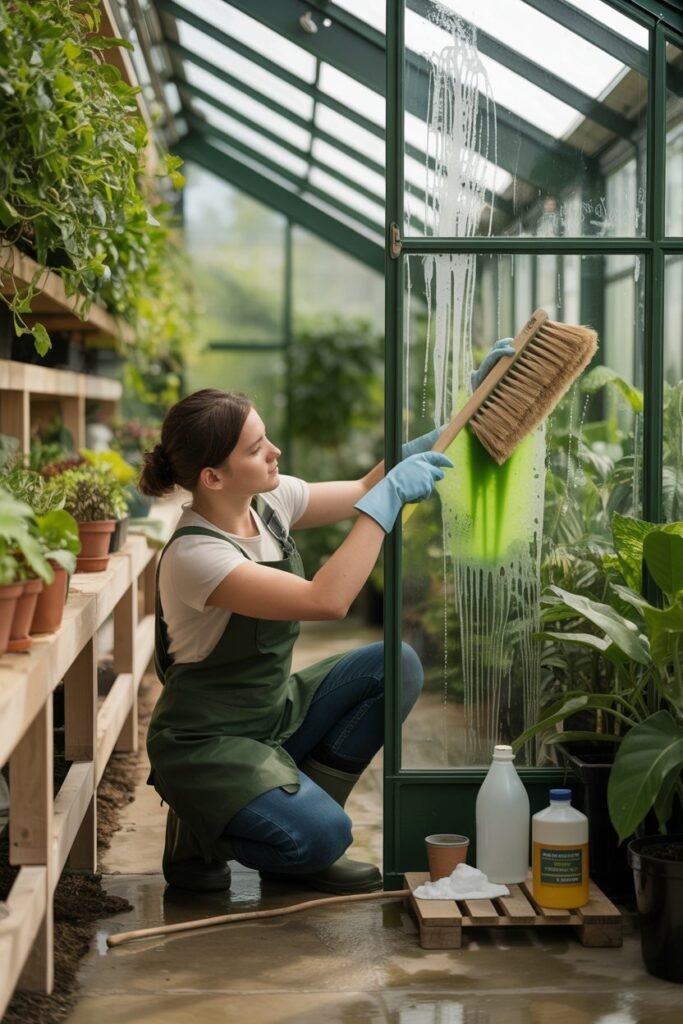
Greenhouses naturally collect moisture, making algae and mold common issues.
Removing Algae
Algae often appears as green slippery patches on floors, benches, or damp corners.
To remove it:
- Scrub affected areas with warm soapy water
- Use vinegar solution for stubborn patches
- Rinse thoroughly
- Improve airflow afterward
Avoid letting algae remain because slippery surfaces can become dangerous.
Removing Mold And Mildew
Mold may appear as fuzzy white, black, or gray patches.
Clean moldy areas with:
- Vinegar solution
- Hydrogen peroxide spray
- Greenhouse-safe disinfectant
After cleaning, focus on reducing humidity and improving ventilation to prevent regrowth.
Cleaning Greenhouse Benches And Shelves
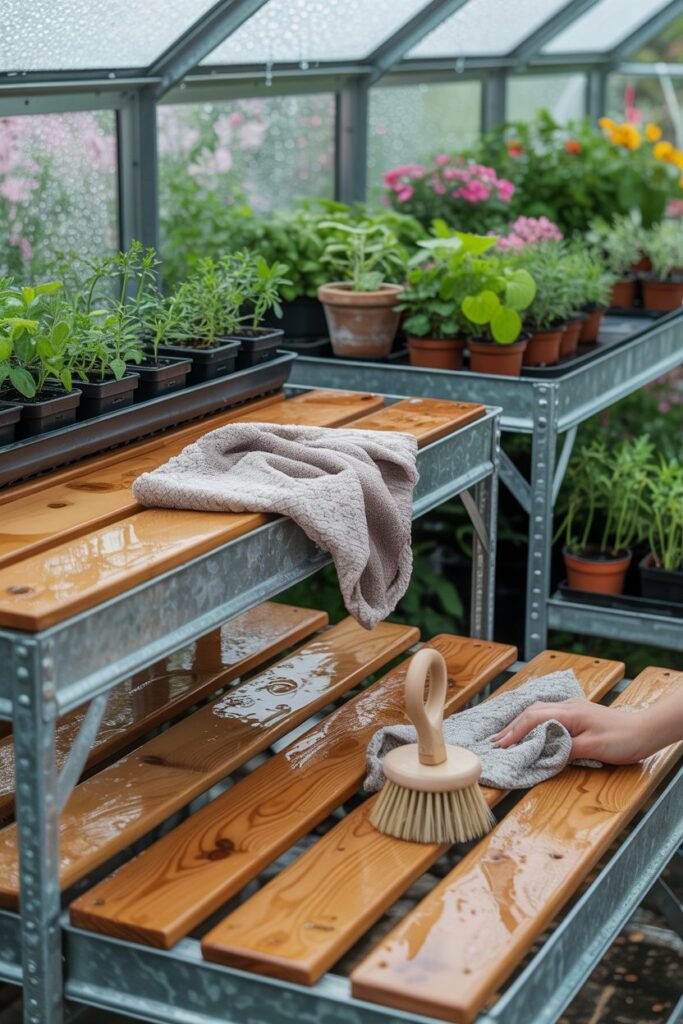
Benches and shelving collect dirt, fertilizer residue, and bacteria over time.
Wooden Benches
Wood can absorb moisture and harbor fungi. Scrub thoroughly and inspect for rot.
Consider sealing wood surfaces to improve longevity.
Metal Benches
Wipe down with soapy water and inspect for rust.
Treat rust early before it spreads.
Plastic Shelving
Plastic shelves are easy to clean with mild soap and water.
Rinse and dry fully before replacing plants.
Sanitizing Pots And Seed Trays
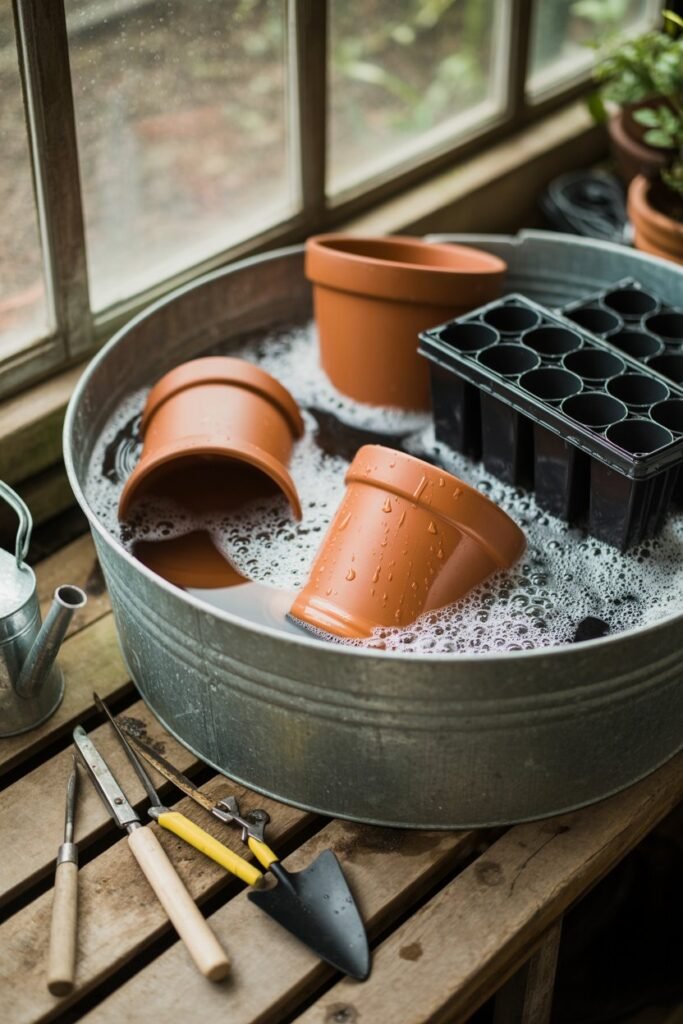
Dirty pots and trays can spread disease between plants.
How To Sanitize Pots
- Remove old soil completely
- Soak pots in warm soapy water
- Scrub away residue
- Rinse thoroughly
- Disinfect using diluted vinegar or hydrogen peroxide
- Allow to air dry
This step is especially important before seed-starting season.
Reusable pots stay in better condition when cleaned regularly.
Cleaning Greenhouse Floors
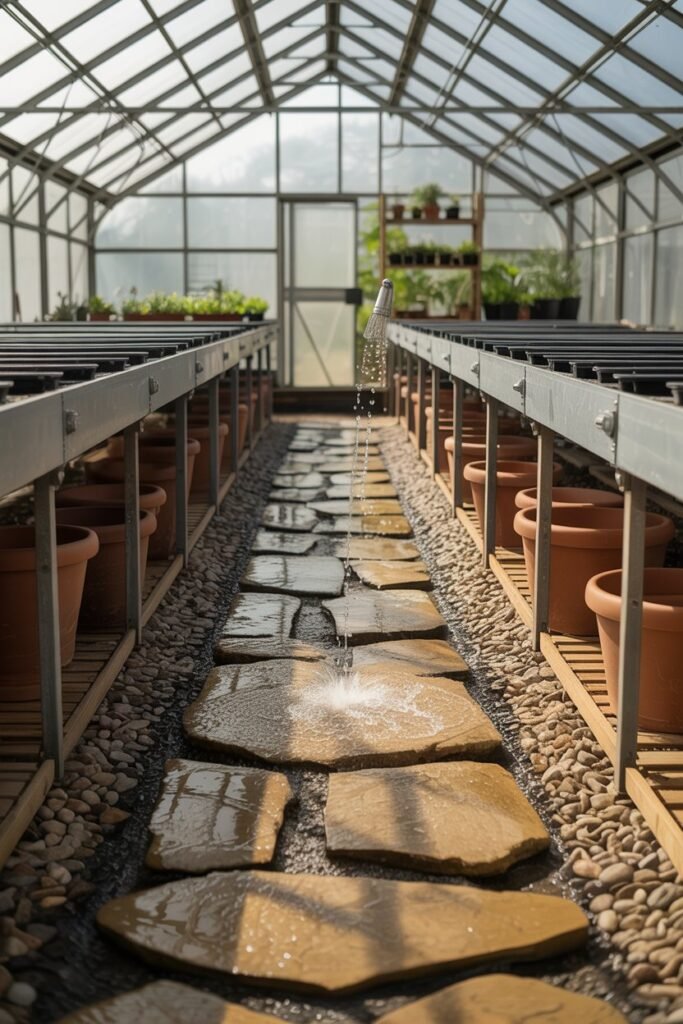
Different greenhouse floors require slightly different care.
Concrete Floors
Sweep regularly and scrub occasionally with soapy water.
Concrete is durable and easy to maintain but may develop algae in damp areas.
Gravel Floors
Rake gravel occasionally to remove debris.
Replace heavily contaminated gravel if pests or mold become a recurring issue.
Paver Floors
Clean between cracks where weeds and moss can grow.
A pressure washer on low setting may help remove stubborn buildup.
Organizing Your Greenhouse
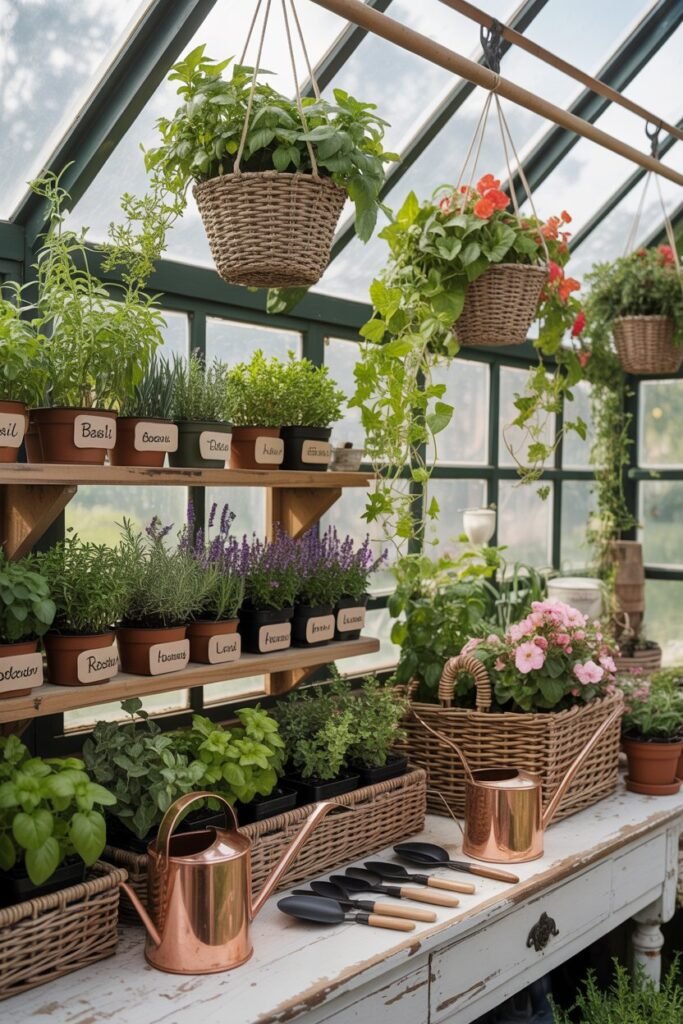
Maintenance becomes much easier when the greenhouse is organized.
Create Zones
Separate areas for:
- Seed starting
- Mature plants
- Storage
- Propagation
- Tool organization
This improves efficiency and airflow.
Use Vertical Space
Hanging baskets and wall shelves maximize space while keeping floors clear.
Label Everything
Clear labels prevent confusion during planting seasons.
Store Supplies Properly
Keep fertilizers, tools, and soil neatly stored in sealed containers whenever possible.
An organized greenhouse feels calmer and more inspiring to work in.
How To Maintain Proper Ventilation
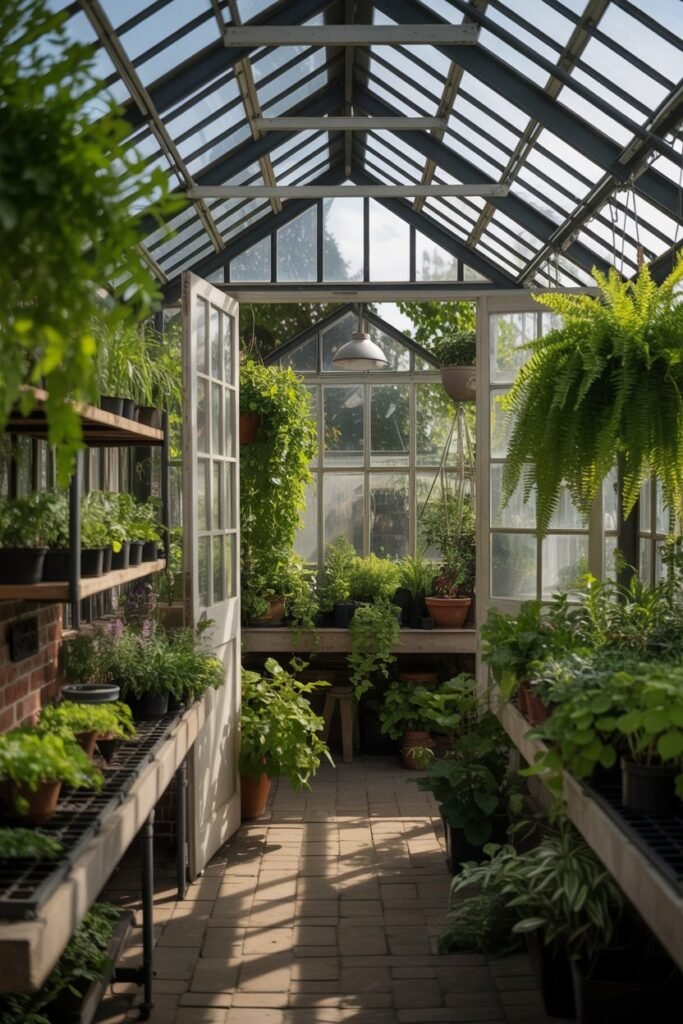
Good airflow is one of the most important parts of greenhouse maintenance.
Poor ventilation leads to:
- Mold
- Mildew
- Pest outbreaks
- Weak plant growth
- Excess humidity
Ways To Improve Ventilation
- Open doors regularly
- Use roof vents
- Install circulation fans
- Avoid overcrowding plants
- Trim excessive foliage
Even during cooler months, occasional airflow is important.
Managing Humidity Inside A Greenhouse
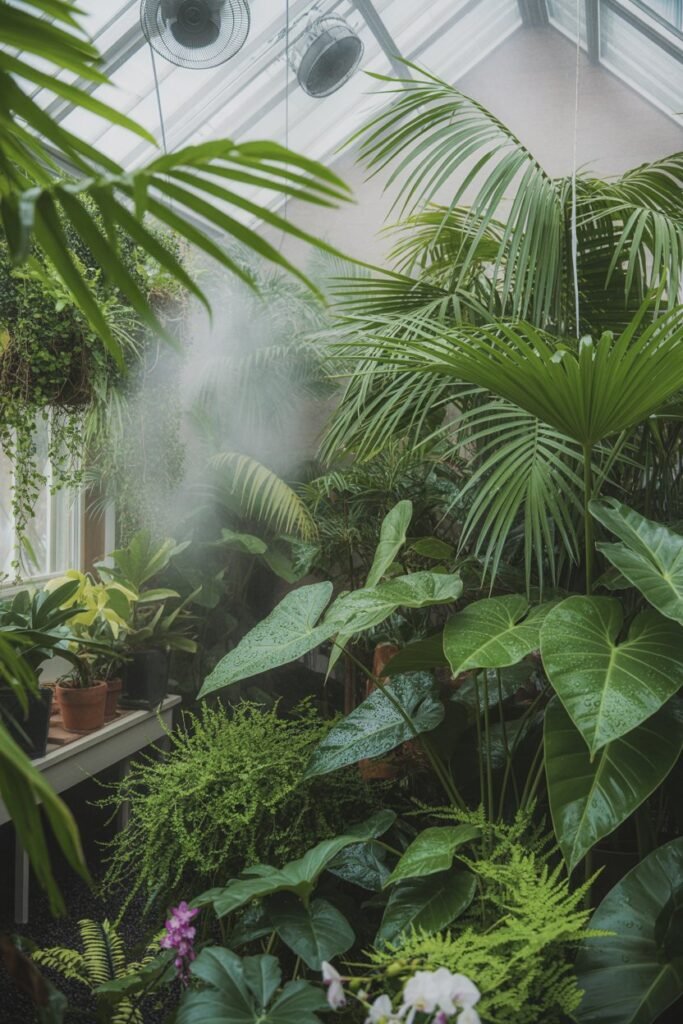
Humidity control keeps plants healthy and reduces disease.
Signs Humidity Is Too High
- Condensation on panels
- Mold growth
- Damp soil that never dries
- Fungal diseases
Ways To Reduce Humidity
- Water plants early in the day
- Improve airflow
- Space plants properly
- Remove standing water
- Use fans when necessary
When Humidity Is Helpful
Some tropical plants enjoy higher humidity levels, so balance is key.
Monitoring conditions regularly helps you adjust before problems appear.
Pest Prevention And Control
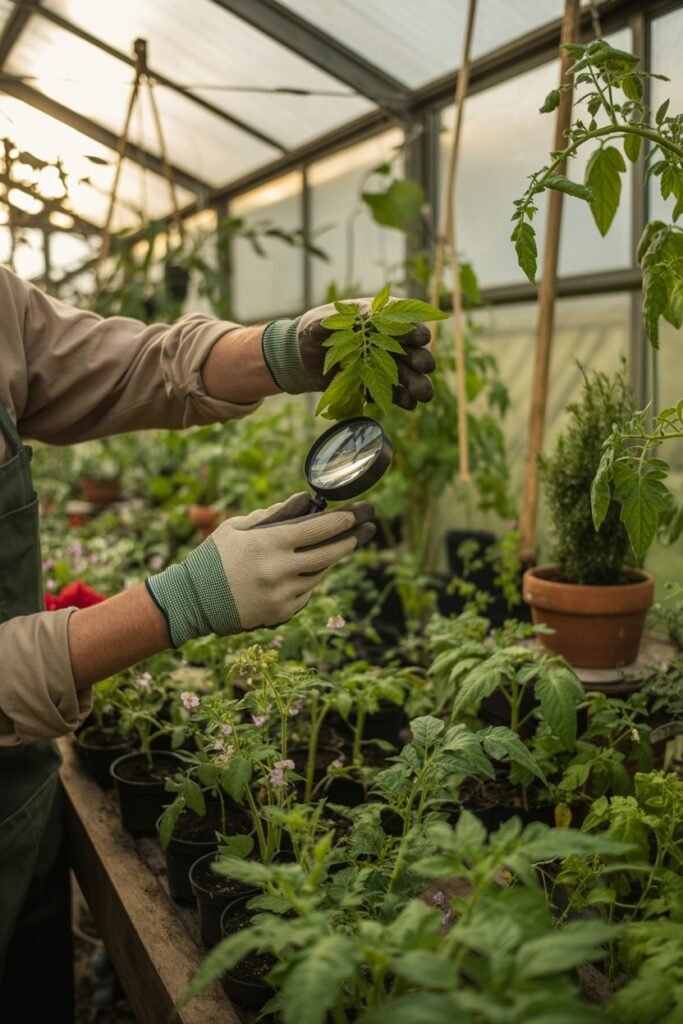
Greenhouses can quickly attract pests because conditions stay warm and protected.
Common Greenhouse Pests
- Aphids
- Whiteflies
- Spider mites
- Fungus gnats
- Mealybugs
- Scale insects
Preventative Maintenance Tips
Inspect Plants Regularly
Check leaves, stems, and soil weekly.
Early detection prevents major infestations.
Quarantine New Plants
Keep new plants separate for a short period before introducing them to the greenhouse.
Remove Dead Plant Material
Decaying leaves attract pests and disease.
Keep Floors Dry
Many insects thrive in damp environments.
Encourage Beneficial Insects
Ladybugs and lacewings can naturally help control pests.
Healthy greenhouse habits often prevent the need for harsh pesticides.
Watering System Maintenance
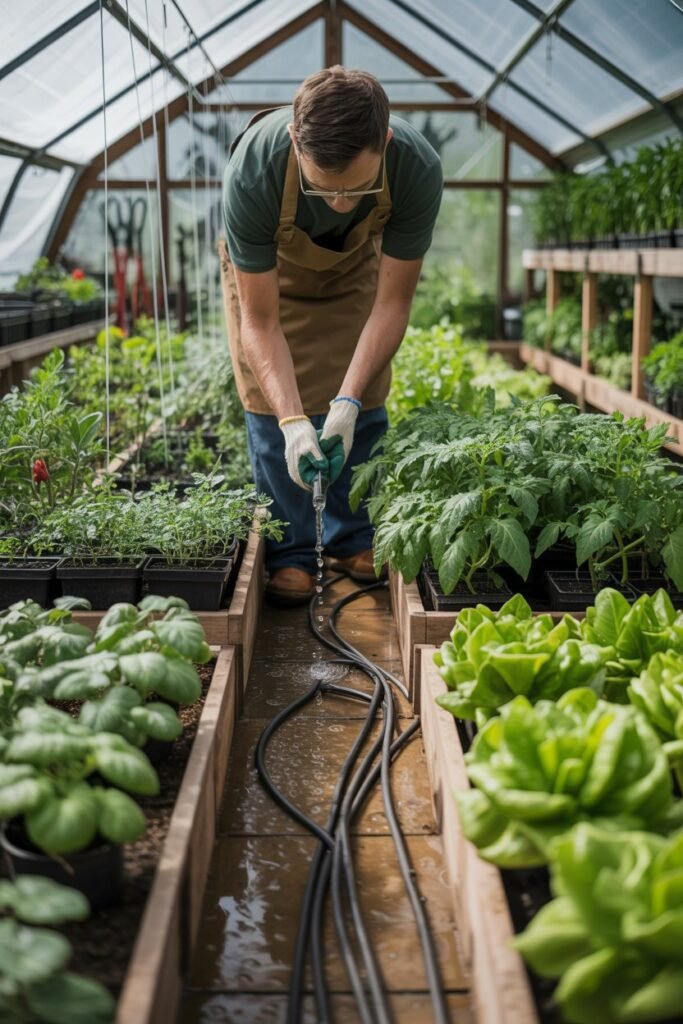
If your greenhouse uses irrigation systems, regular cleaning is essential.
Check For:
- Clogged drip lines
- Leaking hoses
- Mineral buildup
- Damaged fittings
Clean irrigation parts regularly to maintain proper water flow.
Standing water can encourage mosquitoes and disease, so repair leaks quickly.
Seasonal Greenhouse Maintenance Checklist
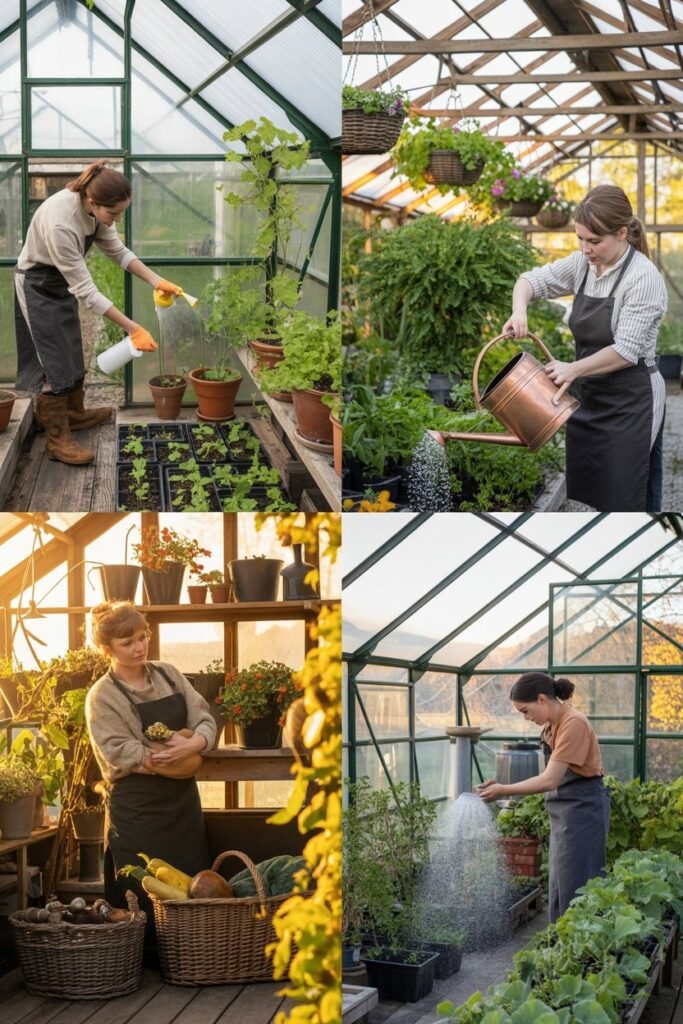
Breaking greenhouse care into seasons makes everything feel less overwhelming.
Spring Greenhouse Tasks
- Deep clean panels
- Sanitize pots
- Check ventilation systems
- Inspect for overwintering pests
- Organize planting areas
- Test watering systems
Spring cleaning sets the tone for a productive growing season.
Summer Greenhouse Tasks
- Monitor heat levels
- Increase ventilation
- Water consistently
- Remove dead foliage regularly
- Watch for pests daily
Summer maintenance focuses heavily on temperature control.
Autumn Greenhouse Tasks
- Remove spent crops
- Wash surfaces
- Repair damaged areas
- Reduce clutter
- Prepare insulation if needed
Autumn cleaning prevents winter problems.
Winter Greenhouse Tasks
- Monitor condensation
- Ventilate carefully
- Protect delicate plants
- Check heaters if used
- Clean tools and storage areas
Winter maintenance is usually lighter but still important.
How To Repair Small Greenhouse Problems
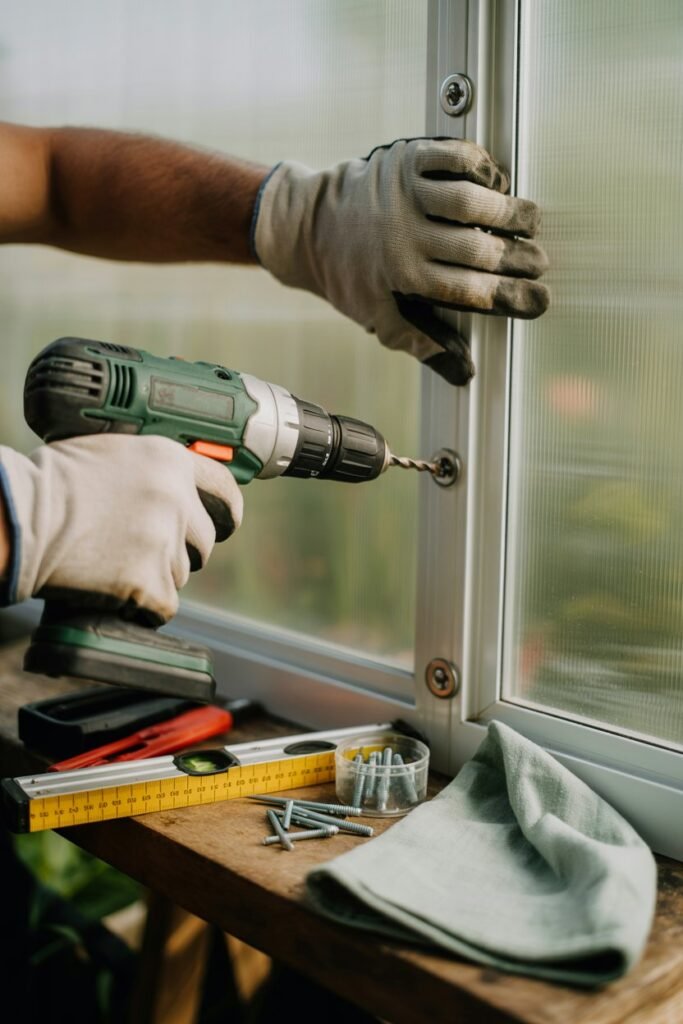
Routine inspections help catch issues before they become expensive repairs.
Check For:
- Cracked panels
- Loose screws
- Rusted frames
- Torn seals
- Damaged vents
- Broken shelving
Repairing small issues early extends the life of your greenhouse significantly.
Tips For Keeping A Greenhouse Clean Longer
A few simple habits can make a huge difference.
Create A Weekly Routine
Spend 10–15 minutes each week:
- Sweeping floors
- Removing dead leaves
- Checking for pests
- Wiping surfaces
- Organizing tools
Small consistent efforts prevent major deep-cleaning sessions later.
Avoid Overcrowding Plants
Crowded plants reduce airflow and encourage disease.
Leave enough space for air circulation and easy access.
Use Clean Soil
Fresh, quality potting mix reduces contamination risks.
Avoid reusing infected soil.
Keep Tools Sanitized
Dirty pruning shears can spread disease quickly between plants.
Wipe tools regularly during gardening sessions.
Eco-Friendly Greenhouse Cleaning Tips
Many gardeners prefer natural cleaning methods that are safer for plants and pollinators.
Natural Cleaning Options
White Vinegar
Excellent for removing mineral buildup and mild mold.
Lemon Juice
Helpful for deodorizing and gentle cleaning.
Baking Soda
Useful for scrubbing stubborn grime.
Hydrogen Peroxide
Effective for disinfecting surfaces safely.
Natural cleaning methods are often surprisingly effective when used consistently.
Common Greenhouse Cleaning Mistakes
Avoiding a few common mistakes will save time and frustration.
Using Harsh Chemicals
Strong cleaners can damage plants and greenhouse materials.
Forgetting Ventilation
Cleaning without improving airflow often allows mold to return quickly.
Ignoring Small Pest Problems
Tiny infestations can become overwhelming fast inside enclosed spaces.
Overwatering During Cleaning
Excess moisture creates perfect fungal conditions.
Skipping Seasonal Deep Cleans
Light maintenance alone is usually not enough long term.
Creating A Relaxing Greenhouse Space
A greenhouse can become more than just a gardening structure. It can also feel like a peaceful personal retreat.
Add Comfortable Touches
Consider:
- Small seating areas
- Soft lighting
- Decorative pots
- Hanging plants
- Garden journals
- Organized storage baskets
A clean and beautiful greenhouse invites you to spend more time caring for your plants and enjoying the process.
Final Thoughts
A greenhouse thrives when it receives the same gentle care and attention as the plants growing inside it.
Regular cleaning may seem like a simple task, but it plays a huge role in preventing disease, improving plant growth, and creating a calm, organized environment that feels wonderful to work in every day.
The good news is that greenhouse maintenance does not have to happen all at once. Small routines, seasonal deep cleans, and mindful organization can completely transform the health and beauty of your space over time.
Once you build a steady rhythm, caring for your greenhouse becomes less of a chore and more of a rewarding gardening ritual.
With sparkling panels, fresh air, healthy plants, and tidy shelves, your greenhouse can become one of the most inspiring and productive corners of your garden all year long.
