
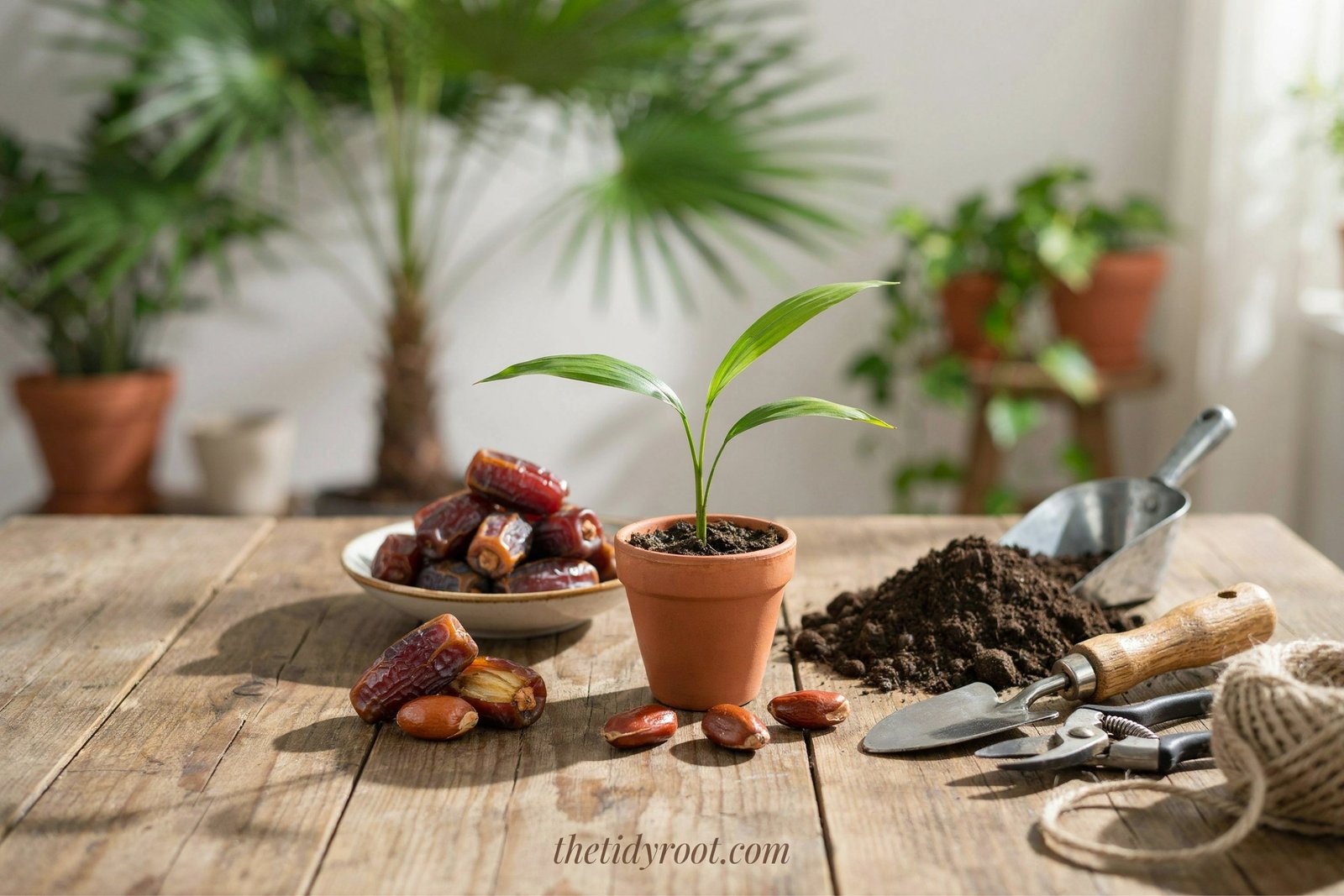

I’ve always loved the idea of turning something I would normally eat and throw away into a living plant.
A date seed is one of those little surprises that can become a beautiful palm with a bit of patience. Growing a date tree from seed is not a quick project, but it is wonderfully simple and rewarding.
You don’t need fancy equipment or gardening experience to get started.
If you have a fresh date, a pot, some well-draining soil, and a sunny spot, you already have most of what you need. In this guide, I’ll walk you through how I would start a date palm from a seed and care for it as it grows.
Can You Grow a Date Tree from a Date Seed?
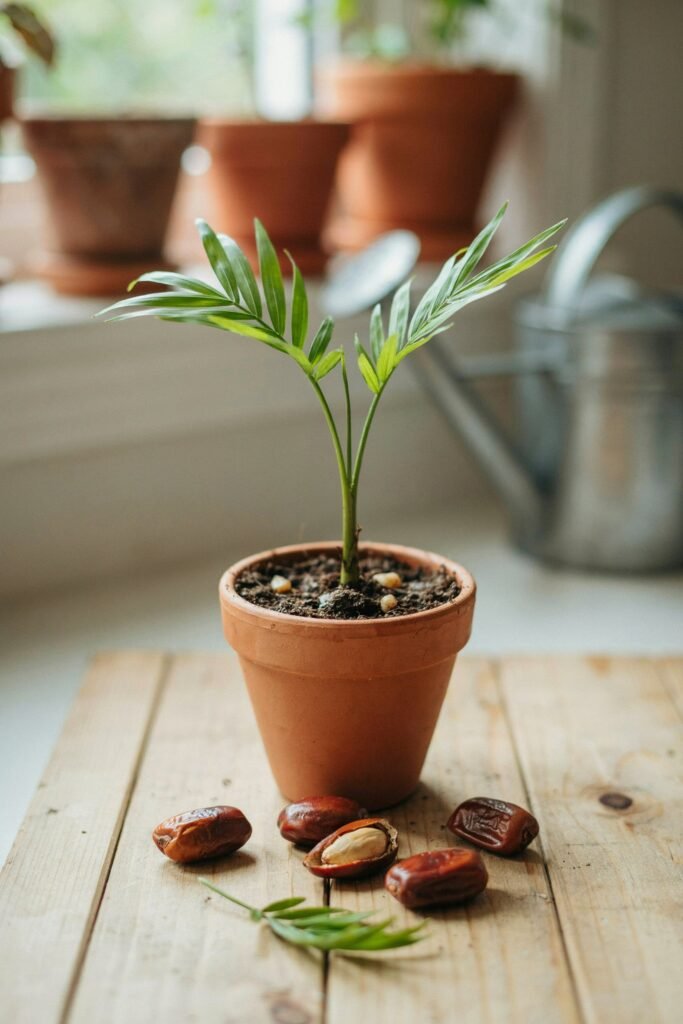
Yes, you can grow a date palm from a date seed.
The plant you grow will be a date palm, but there are a few things worth knowing before you start.
Date palms are slow-growing plants, especially when grown from seed, so this is more of a long-term gardening project than a quick way to produce dates.
Another important point is that a seed-grown date palm may not produce fruit that is identical to the date you ate. Commercial date varieties are usually propagated in other ways to preserve desirable characteristics.
Seed-grown palms can also take many years to reach maturity, and a young palm may not produce dates at all.
For me, that doesn’t make the project any less exciting. Watching a tiny seed develop roots and eventually produce its first palm leaves is rewarding on its own.
What Kind of Date Should You Use?
You can start with seeds from many types of dates, but fresh, viable seeds are your best choice.
If possible, use dates that contain a whole, healthy-looking pit. Avoid seeds that are cracked, moldy, badly damaged, or extremely dried out.
Dates sold as food may be fresh or dried, and germination can vary. If you’re unsure whether your seed is viable, plant several seeds instead of relying on just one.
That way, you have a better chance of getting at least one healthy seedling.
What You Need
You don’t need much to get started.
You’ll need:
- One or more date seeds
- Fresh water
- A small container or seed-starting pot
- Well-draining potting mix
- A warm location
- Bright light
- A larger pot later as the seedling grows
A paper towel or small piece of cloth can also be useful if you want to try the baggie germination method.
Step 1: Remove and Clean the Date Seed
Start by removing the pit from the date.
Eat or remove the fruit around the seed, then wash the seed thoroughly with water.
This step is important because leftover fruit can become moldy while you’re trying to germinate the seed.
I like to gently rub the seed between my fingers under running water until it feels clean and smooth.
Don’t scrape or damage the seed while cleaning it.
Once it’s clean, let it sit for a little while so excess moisture can drain away.
Step 2: Soak the Seed
Place the cleaned date seed in a small container of room-temperature water.
Let it soak for about 24 to 48 hours.
Soaking helps soften the outer surface of the seed and gives it a good supply of moisture before germination begins.
Change the water once during the soaking period if it becomes cloudy.
You may notice that the seed becomes slightly darker or looks a little different after soaking. That’s perfectly normal.
I wouldn’t worry if nothing appears to happen during this stage. Seeds can take their time.
Step 3: Choose a Germination Method
There are two easy ways to germinate a date seed.
You can plant it directly into soil, or you can start it in a damp paper towel.
Paper Towel Method
For the paper towel method, dampen a clean paper towel with water.
It should be moist but not dripping wet.
Place the date seed in the middle of the towel and fold the towel around it. Put everything inside a resealable plastic bag or small covered container.
Keep it somewhere warm.
Check the seed every few days to make sure the towel hasn’t dried out.
Don’t keep adding lots of water. Excess moisture can encourage mold and rot.
After several weeks, you may notice a small root beginning to emerge.
Once the root is a couple of centimeters long, you can carefully move the seed into soil.
Direct Soil Method
You can also skip the paper towel and plant the soaked seed directly.
Fill a small pot with a well-draining potting mix.
Make a hole about 1 to 2 inches deep and place the seed inside.
Cover it lightly with soil and water gently.
Keep the soil slightly moist while you wait for germination.
This method is slower to see because the root develops underground, but it avoids disturbing the young root later.
How Long Does a Date Seed Take to Germinate?
Patience is one of the biggest parts of this project.
A date seed may germinate in a few weeks, but some seeds can take longer.
Warm conditions generally encourage faster germination.
If several weeks pass and nothing happens, don’t immediately throw the seed away. Some seeds simply need more time.
This is one reason I prefer starting several seeds at once. It makes the waiting much less frustrating.
Step 4: Plant the Germinated Seed
Once the seed has developed a healthy root, it’s time to move it into a pot.
Choose a container with drainage holes at the bottom.
Fill it with a loose, well-draining potting mix.
Make a small hole and carefully place the seed inside with the root pointing downward.
Cover the seed lightly with soil.
Don’t pack the soil down tightly. Young roots need access to air as well as moisture.
Water gently until the soil is evenly moist.
Then place the pot somewhere warm with plenty of bright light.
Step 5: Give Your Young Date Palm Plenty of Light
Date palms naturally grow in sunny environments, so light is extremely important.
Once your seedling begins producing leaves, give it plenty of bright light.
A sunny window can work for a young indoor palm.
If you’re growing it outdoors, introduce it to stronger sunlight gradually if it has been growing indoors. A sudden move from low light to intense direct sun can stress young plants.
As the palm becomes stronger, it can handle much more sunlight.
If the leaves become pale, weak, or stretched toward a window, the plant may not be receiving enough light.
Step 6: Water Carefully
One of the easiest mistakes to make with a young date palm is keeping the soil constantly wet.
Date palms appreciate moisture while they’re establishing, but their roots also need good drainage.
Water when the upper part of the soil begins to dry.
When you water, do it thoroughly enough that some water drains from the bottom of the pot. Then empty any excess water sitting underneath the container.
Avoid letting the pot sit in a saucer full of water.
The goal is moist soil, not soggy soil.
As your palm grows and becomes established, it will generally become more tolerant of periods of dryness.
Step 7: Choose the Right Soil
Good drainage is more important than having an overly rich soil mix.
A basic quality potting mix can work well when combined with materials that improve drainage.
You can use a mix containing ingredients such as:
- Potting soil
- Coarse sand
- Perlite
- Fine bark
The exact mixture doesn’t need to be complicated.
What matters most is that water can move through the soil instead of staying around the roots.
Step 8: Move the Palm Into a Larger Pot
Your little palm won’t stay little forever.
As the roots fill the container, you’ll eventually need to move it into a larger pot.
Don’t jump from a tiny seedling pot to an enormous container. A pot only slightly larger than the current one is usually easier to manage.
Choose a container with drainage holes.
When repotting, handle the root ball gently. Young palm roots can be sensitive to unnecessary disturbance.
Place the palm at approximately the same depth it was growing before and water it after repotting.
How Fast Does a Date Palm Grow?
Date palms are not known for being fast-growing houseplants.
A young palm can spend quite a while developing its root system before producing much visible growth.
Growth speed depends on factors such as:
- Temperature
- Light
- Watering
- Soil quality
- Container size
- Overall plant health
Warm temperatures and plenty of light can encourage stronger growth.
Don’t become discouraged if your palm seems to be growing slowly. A healthy palm doesn’t need to produce new leaves every few days to be doing well.
Can You Grow a Date Palm Indoors?
Yes, a young date palm can be grown indoors.
In fact, starting it indoors can make it easier to protect the young seedling from extreme weather, pests, and temperature changes.
The main challenge indoors is providing enough light.
Place the palm near your brightest suitable window.
As it grows, keep in mind that a date palm can eventually become a very large plant. A palm that starts in a small pot can eventually need considerably more space.
When Can You Move It Outdoors?
If you live somewhere with a warm climate, you may eventually be able to grow your date palm outdoors.
Before moving an indoor-grown palm outside permanently, gradually expose it to outdoor conditions.
Start with a short period outdoors in a sheltered location and slowly increase the amount of sunlight it receives.
This process helps the plant adjust.
Avoid immediately placing a young indoor palm in intense midday sunlight for hours.
Can a Seed-Grown Date Palm Produce Fruit?
This is where patience really matters.
A date palm grown from seed can take many years to reach maturity.
There is also no guarantee that a seed-grown palm will produce fruit that matches the original date.
Date palms have separate male and female plants, so growing one seed doesn’t guarantee you’ll eventually get dates.
If your main goal is reliable fruit production, buying a known female cultivar and growing it under suitable conditions is generally a better approach.
But if your goal is to experience the fun of growing a palm from something you ate, starting with a date seed is a wonderful little gardening experiment.
Common Problems When Growing Date Palms from Seed
The Seed Doesn’t Germinate
The seed may not be viable, the conditions may be too cool, or it may not have received enough moisture.
Try planting several seeds and keeping them warm.
The Seed Becomes Moldy
Too much moisture can cause mold.
Make sure the seed is clean and the paper towel or soil is damp rather than soaked.
The Seedling Looks Weak
Insufficient light is one possible cause.
Move it to a brighter location and make sure you’re not keeping the soil excessively wet.
The Leaves Turn Brown
Brown leaf tips can happen for several reasons, including dry air, inconsistent watering, salt buildup, or other environmental stress.
Check the soil moisture and make sure the container drains properly.
The Plant Stops Growing
Slow growth isn’t always a problem.
Young date palms can grow slowly, especially when temperatures or light levels are lower.
Focus on providing steady warmth, bright light, suitable moisture, and good drainage.
A Few Tips That Can Make the Process Easier
If you’re planning to try this project, these are the things I’d keep in mind:
Plant several seeds. Not every seed will germinate, so starting with a few improves your chances.
Keep the seeds warm. Warm conditions can encourage germination.
Don’t overwater. Moist soil is helpful, but constantly wet soil can cause problems.
Be gentle with new roots. A newly germinated seed is surprisingly delicate.
Give young palms plenty of light. Strong light helps them develop healthier growth.
Don’t rush repotting. Move the plant when it actually needs more room.
Expect a long-term project. Growing a date palm from seed is more about enjoying the process than getting fruit quickly.
Final Thoughts
Growing a date tree from a seed is one of those simple gardening projects that can be surprisingly rewarding.
I love that it starts with something as ordinary as a date from the kitchen and ends with the possibility of a beautiful palm growing in a pot or garden. The biggest secret is simply patience.
Keep the seed warm, give it moisture without making the soil soggy, provide plenty of light once it sprouts, and give the young palm room to grow.
Even if it takes years before you see a mature tree, watching that first little root and leaf appear makes the whole experiment worthwhile. And honestly, that is part of the fun of gardening.
