
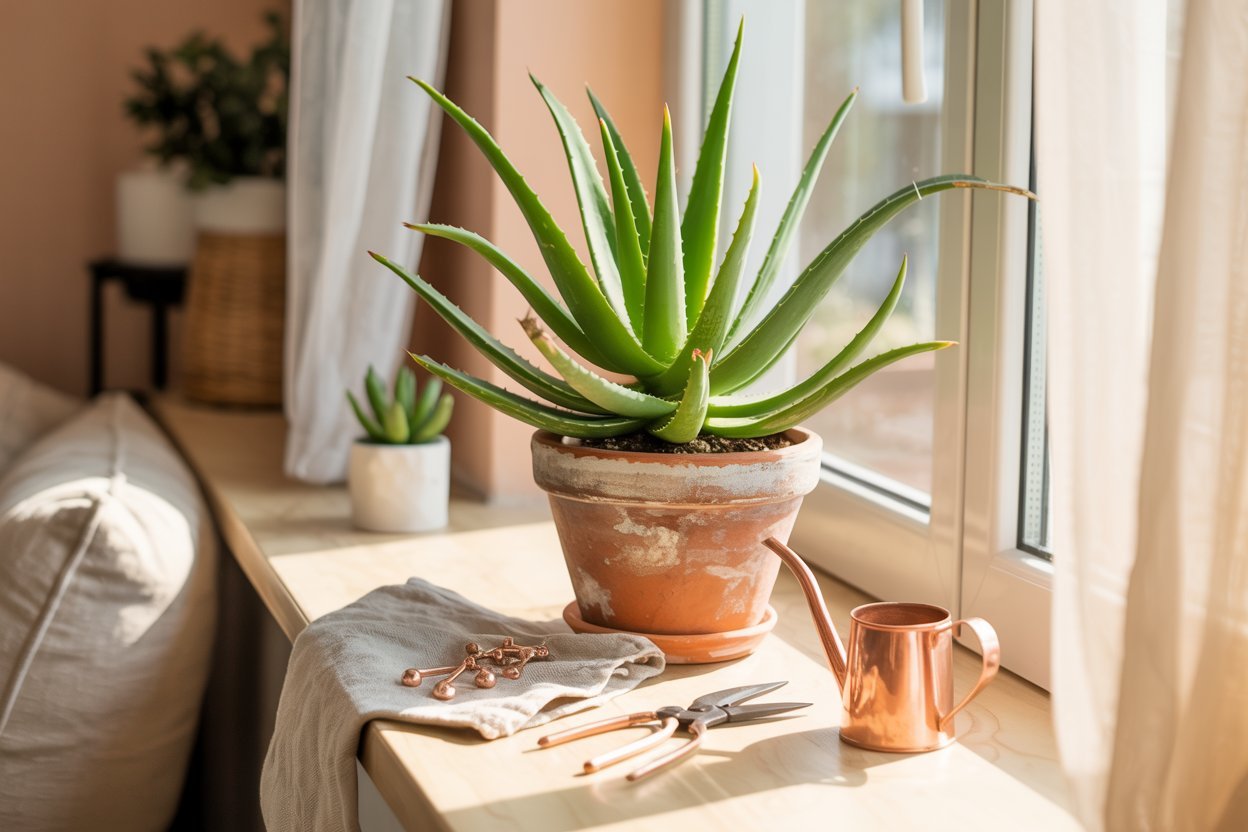

There is something so rewarding about growing a plant that gives back. Aloe vera is one of those rare houseplants that is both beautiful and practical.
Its sculptural green leaves brighten a windowsill, it asks for very little in return, and it can become a helpful part of your home routine when cared for properly.
If you have ever wanted an easy plant that feels graceful, useful, and beginner-friendly, aloe vera deserves a spot in your collection.
The lovely part about growing aloe vera is that it does not need constant fussing. In fact, it often grows better when left alone than when over-loved.
Once you understand what it needs sunlight, light watering, and the right soil you can grow a thriving plant that lasts for years.
In this complete guide, you will learn exactly how to grow aloe vera the right way, whether indoors or outside, in pots or garden beds. We will also cover common mistakes, propagation, care tips, and ways to keep your aloe healthy and full.
Why Grow Aloe Vera?
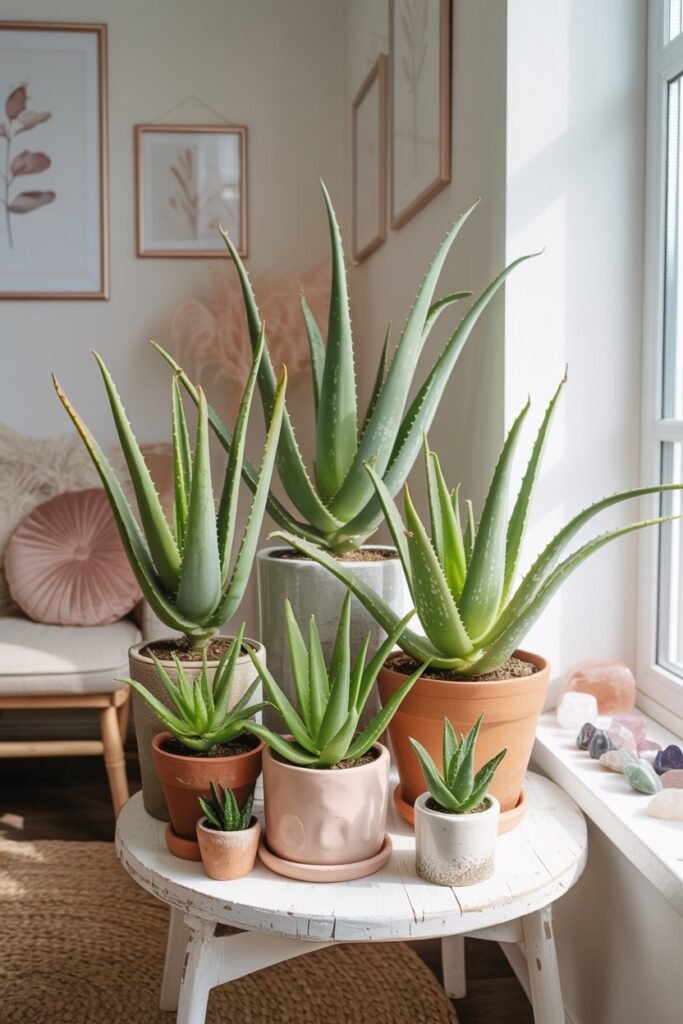
Aloe vera is more than just a trendy succulent. It is one of the most useful plants you can grow.
Benefits of Growing Aloe Vera
1. Easy for Beginners
If you are new to gardening, aloe vera is forgiving and low-maintenance.
2. Beautiful Appearance
Its thick, upright leaves add a fresh modern look to homes, patios, and balconies.
3. Drought Tolerant
Aloe stores water in its leaves, so it does not need frequent watering.
4. Multiples Easily
Healthy plants often produce baby offsets called pups, giving you more plants for free.
5. Useful Plant to Keep Nearby
Many people keep aloe at home because the gel inside mature leaves is commonly used for skincare purposes.
Understanding Aloe Vera Before You Plant
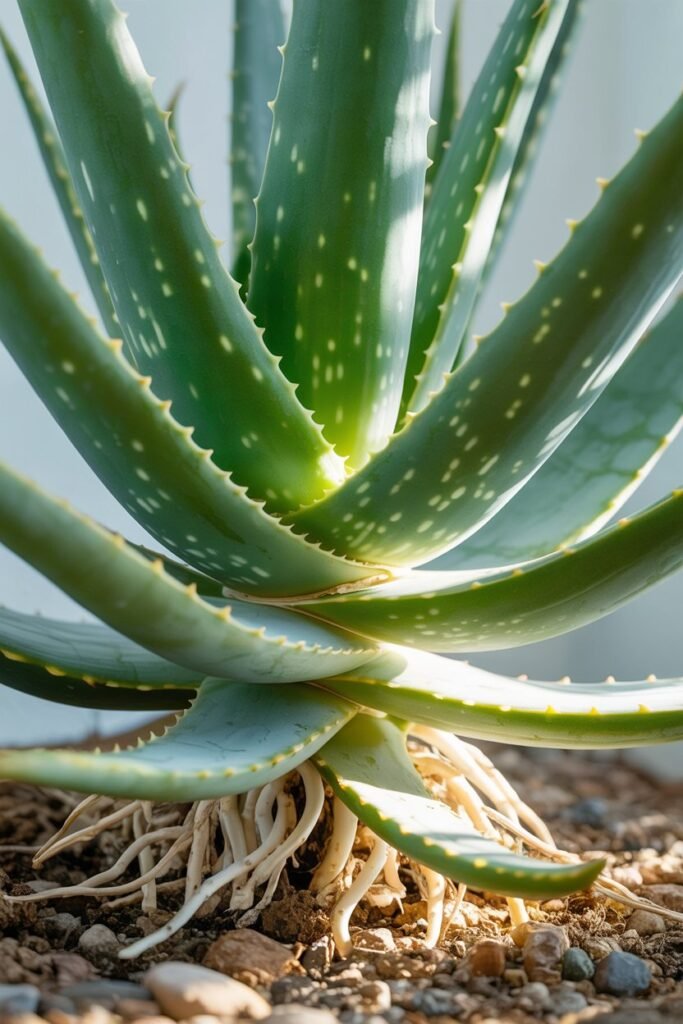
Knowing how aloe grows makes care much easier.
Aloe vera is a succulent, meaning it stores moisture inside its thick leaves. It naturally grows in warm, dry climates with sandy soil and bright sun.
That tells us three very important things:
- It dislikes soggy roots
- It loves sunlight
- It prefers fast-draining soil
If you remember those three things, you are already halfway to success.
Best Conditions for Growing Aloe Vera
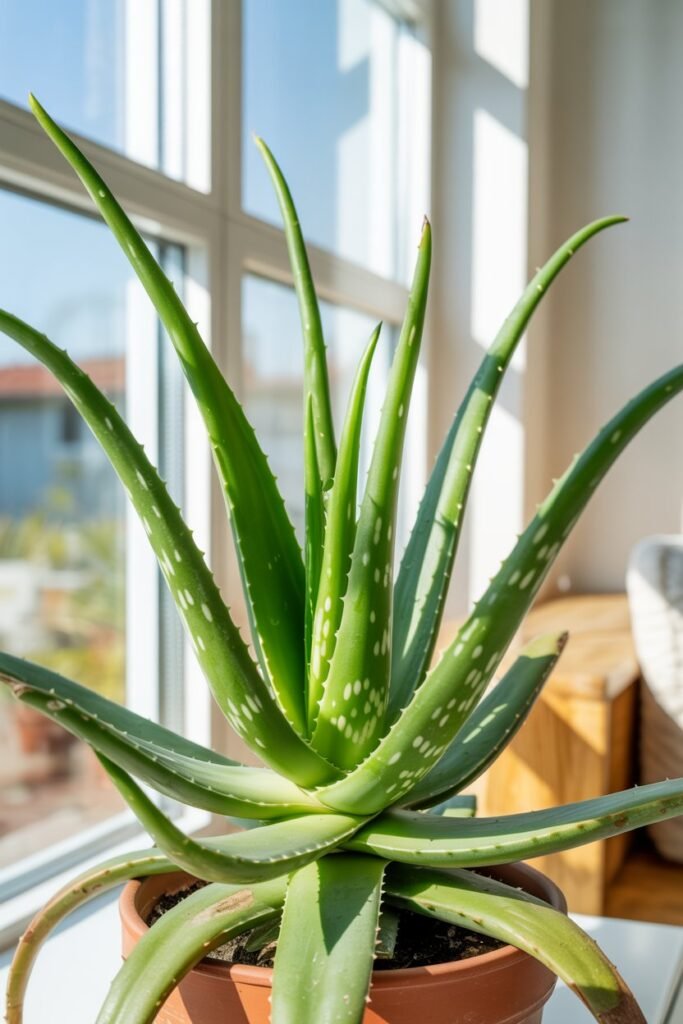
Light Requirements
Aloe vera loves bright light.
Indoors:
Place it near:
- South-facing window
- West-facing window
- Bright sunny kitchen window
- Warm office with natural light
Aim for 6 to 8 hours of bright light daily.
Outdoors:
Grow in a sunny location with morning to afternoon sun.
In very hot climates, a little afternoon shade can help prevent stress.
Sign of Too Little Light:
- Leaves stretch outward
- Pale color
- Slow growth
- Weak floppy shape
Sign of Too Much Harsh Sun:
- Brown tips
- Reddish stress color
- Dry patches
Temperature Needs
Aloe prefers warmth.
Best range:
- 55°F to 85°F (13°C to 29°C)
Protect it from:
- Frost
- Freezing winds
- Cold wet soil
- Sudden temperature drops
If you live in a cold region, grow aloe in containers so you can bring it inside.
Best Soil for Aloe Vera
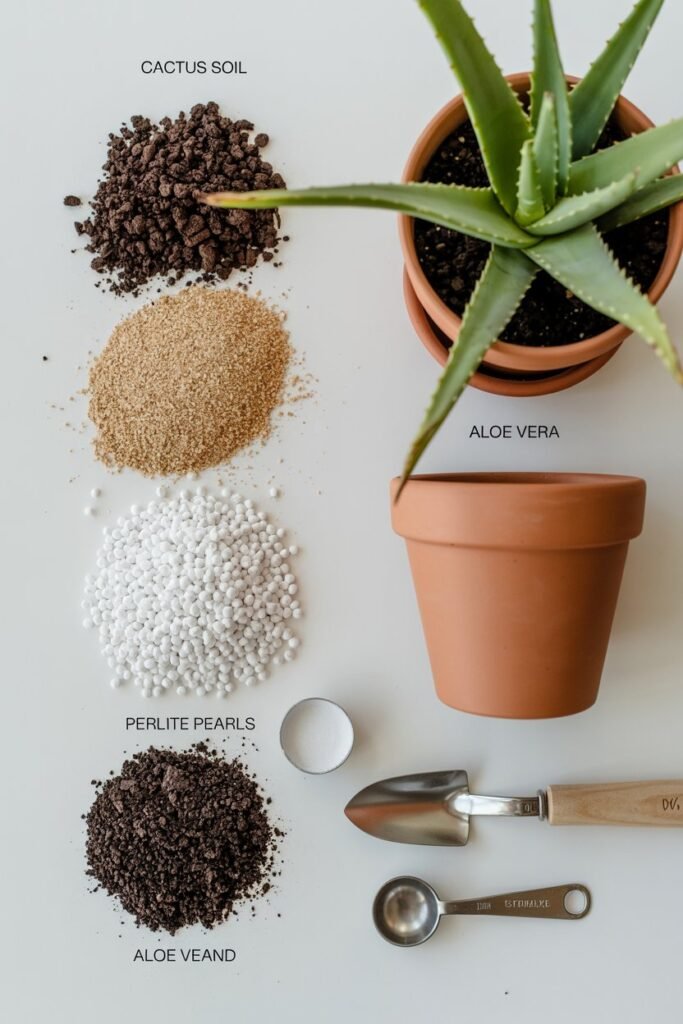
This is one of the biggest secrets to success.
Aloe vera needs soil that drains quickly. Regular garden soil often holds too much water.
Best Soil Mix
Use:
- Cactus soil mix
or
Make your own:
- 2 parts potting soil
- 1 part coarse sand
- 1 part perlite or pumice
This creates airy soil roots can breathe in.
Soil to Avoid
Avoid:
- Heavy clay soil
- Dense wet compost mixes
- Soil that stays muddy after watering
Wet roots lead to rot quickly.
Choosing the Right Pot
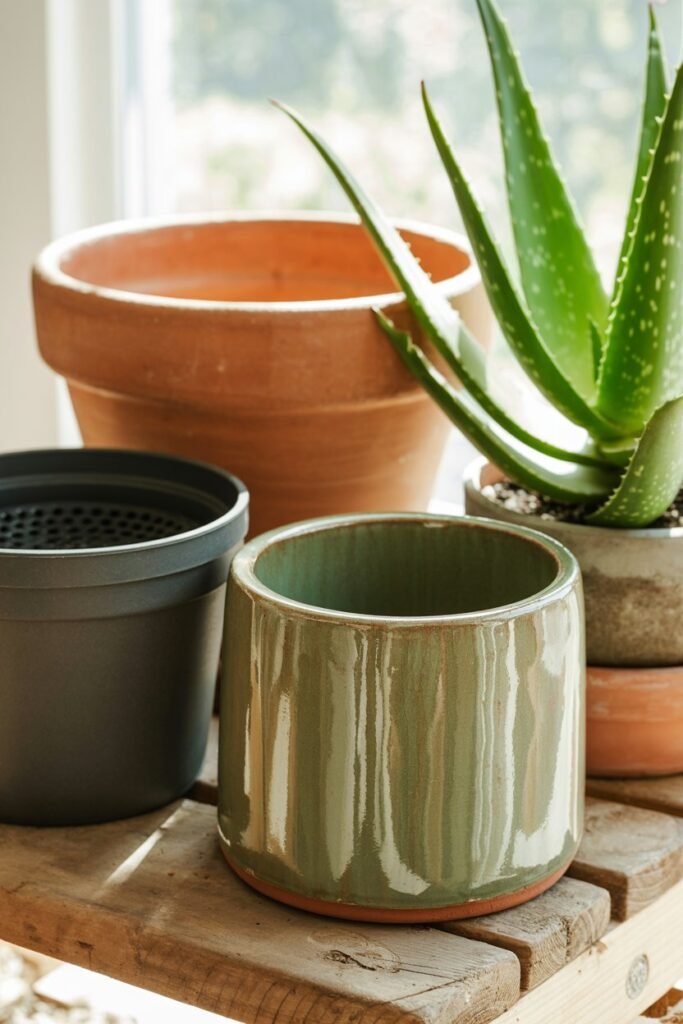
The right container matters more than many people realize.
Best Pot Types
Terracotta Pots
These are wonderful for aloe because they breathe and dry out faster.
Ceramic Pots with Drainage Holes
Beautiful and functional.
Plastic Pots
Can work, but soil may stay wet longer.
Must-Have Feature: Drainage Hole
Never grow aloe in a pot without drainage unless you are highly experienced.
Standing water is one of the fastest ways to lose an aloe plant.
Pot Size
Choose a pot only slightly larger than the root ball.
Too much extra soil holds excess moisture.
How to Plant Aloe Vera Step by Step
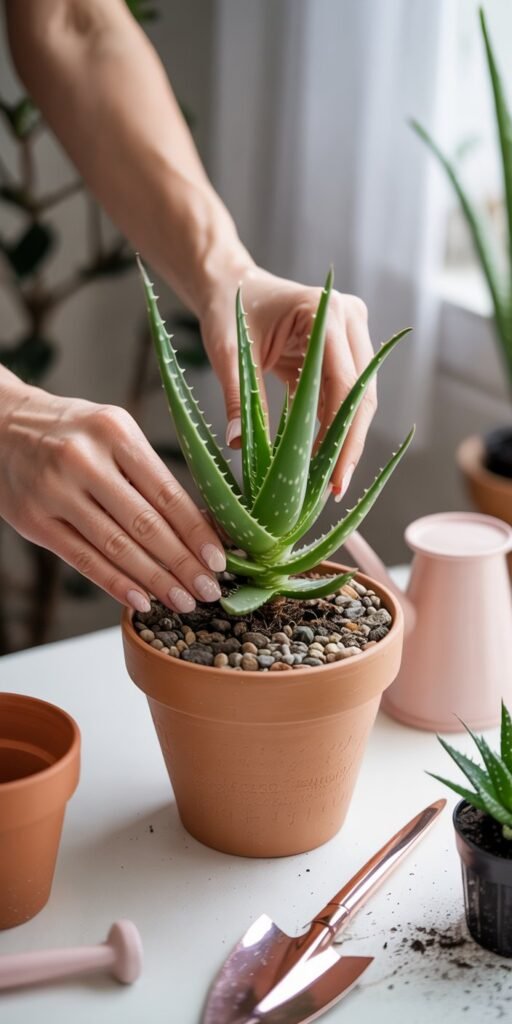
What You Need
- Healthy aloe plant or pup
- Pot with drainage hole
- Succulent soil mix
- Gloves (optional)
- Small trowel
Step 1: Fill Pot Partway
Add fresh soil to the bottom.
Step 2: Place the Plant
Set aloe so the base sits slightly above the soil line.
Do not bury the leaves.
Step 3: Fill Around Roots
Gently add soil around the roots.
Lightly firm it in place.
Step 4: Wait Before Watering
If roots were disturbed, wait 1 day before watering. This helps reduce rot risk.
Step 5: Move to Bright Light
Place in a bright location and allow the plant to settle in.
How Often to Water Aloe Vera
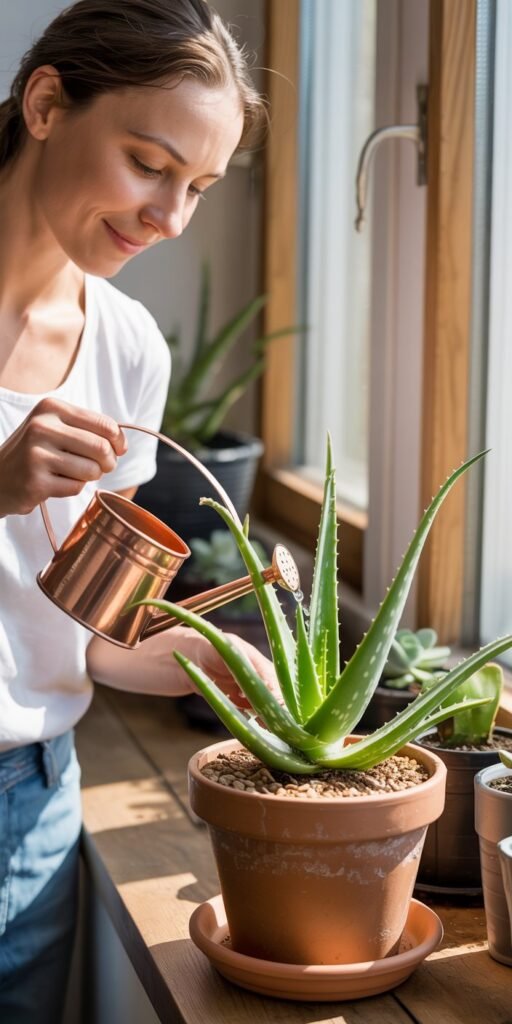
This is where most people accidentally struggle.
Aloe likes deep but infrequent watering.
Best Rule:
Water only when the soil is fully dry.
Check by:
- Sticking finger 2 inches into soil
- Lifting pot (dry pots feel lighter)
- Using moisture meter
Typical Watering Schedule
Indoors:
- Every 2 to 4 weeks depending on season
Outdoors:
- Weekly in extreme heat
- Less during rainy periods
How to Water Properly
Water thoroughly until excess drains out.
Then allow soil to dry completely before watering again.
What Overwatering Looks Like
- Yellow leaves
- Mushy base
- Drooping leaves
- Soft spots
- Root rot smell
What Underwatering Looks Like
- Thin curled leaves
- Wrinkled texture
- Slow growth
How to Fertilize Aloe Vera
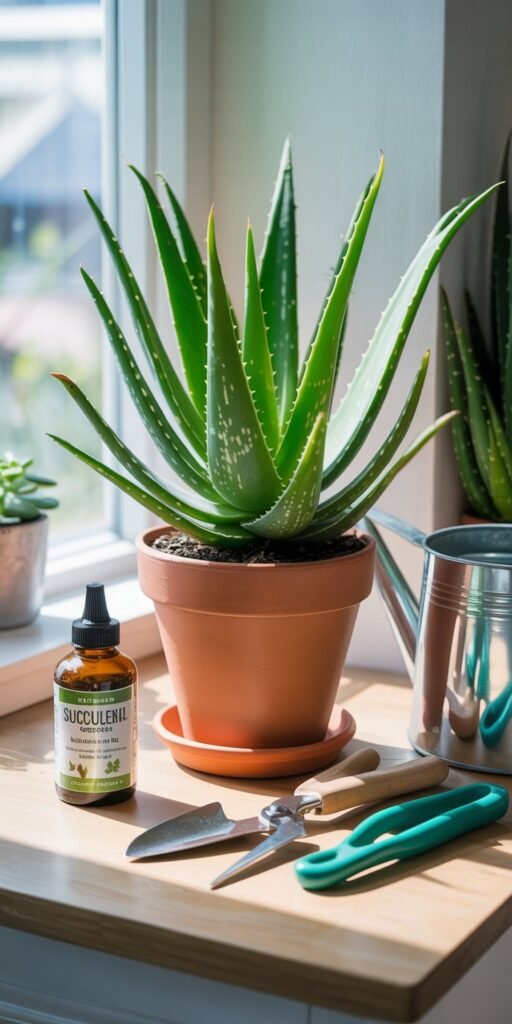
Aloe does not need much feeding.
Too much fertilizer causes weak growth.
Best Feeding Schedule
Use diluted succulent fertilizer:
- Once in spring
- Once in summer
That is often enough.
Avoid:
- Weekly fertilizer
- Strong chemical doses
- Fertilizing in winter
Indoor Aloe Vera Care Tips
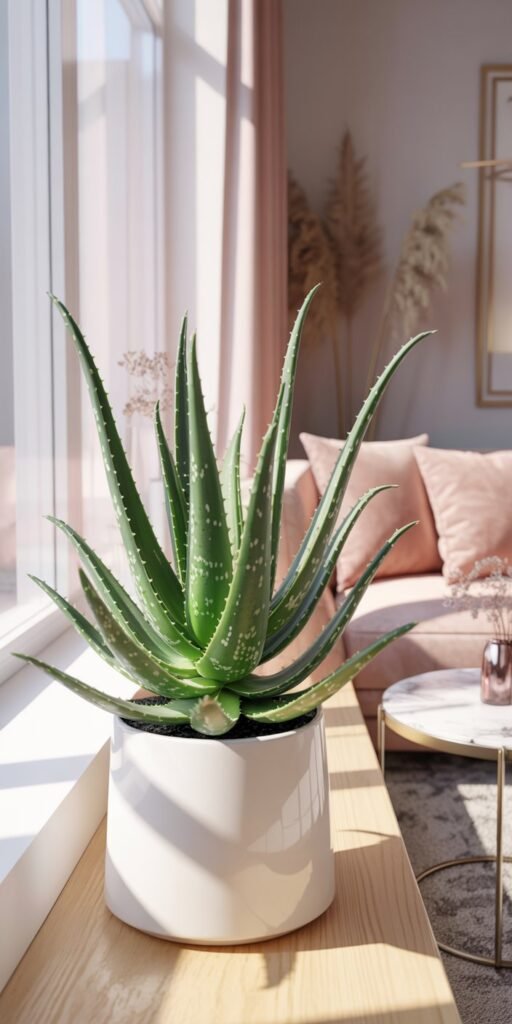
Growing aloe indoors can be lovely and simple.
Rotate the Pot
Turn the pot every few weeks so growth stays even.
Keep Leaves Clean
Dust blocks light. Wipe leaves gently with damp cloth.
Avoid Cold Drafts
Keep away from freezing windows or air vents.
Use Brightest Spot Available
Aloe indoors often needs more light than people think.
Outdoor Aloe Vera Care Tips
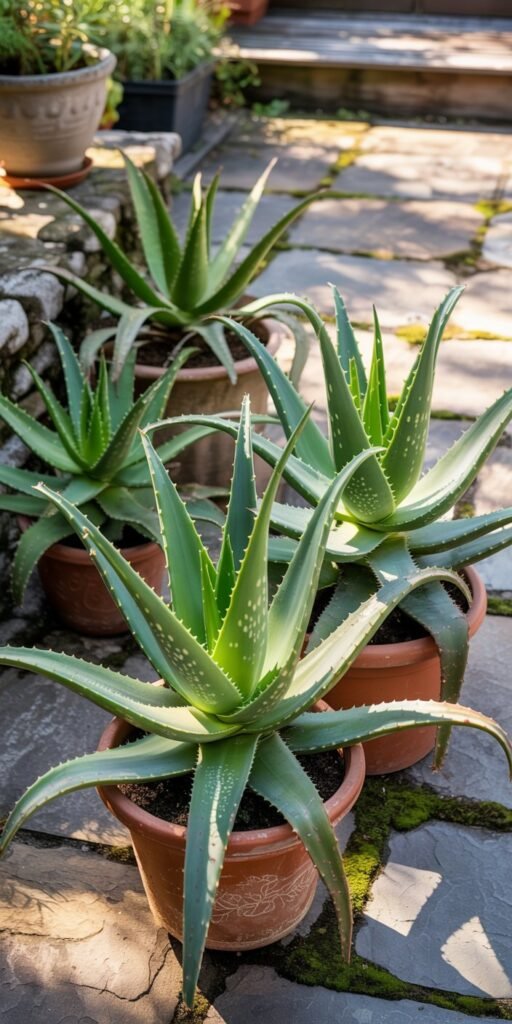
If climate allows, aloe can grow beautifully outside.
Best Placement
- Rock gardens
- Dry borders
- Patio containers
- Sunny balcony corners
Protect From Heavy Rain
Long wet periods can rot roots.
Use containers or raised beds if rainfall is frequent.
Watch for Frost
Bring potted aloe inside before cold nights arrive.
How Fast Does Aloe Vera Grow?
Aloe grows moderately slowly.
You may notice:
- New leaves during warm months
- Little growth in winter
- Pups after maturity
Patience is part of the charm.
Healthy aloe focuses on strong roots and thick leaves first.
How to Propagate Aloe Vera (Get More Plants Free)
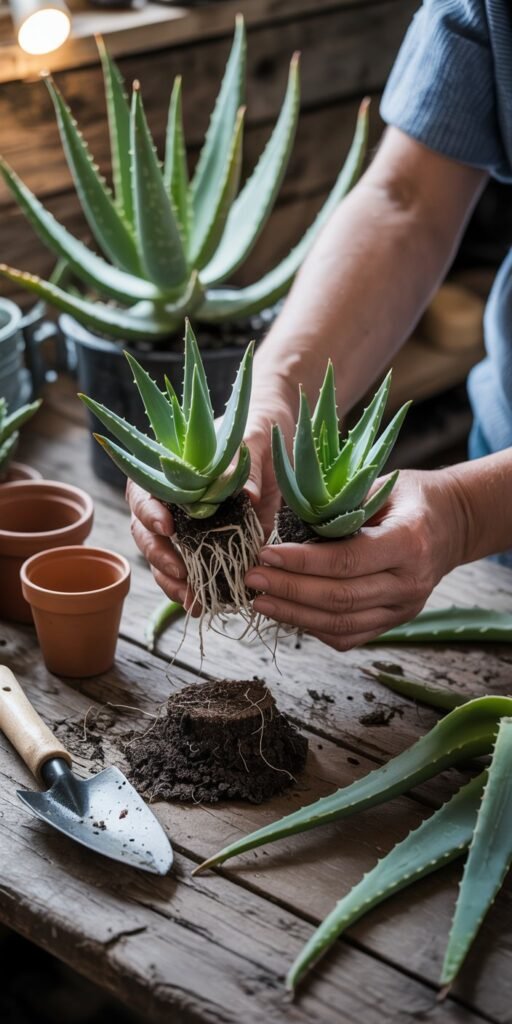
One of my favorite things about aloe is how generous it becomes with time.
Mature plants often produce babies called pups.
How to Separate Pups
Step 1:
Wait until pup is 3 to 4 inches tall.
Step 2:
Remove parent plant from pot gently.
Step 3:
Locate pup roots.
Step 4:
Separate with clean knife if needed.
Step 5:
Allow cut area to dry for a day.
Step 6:
Plant in fresh succulent soil.
Step 7:
Wait a few days, then water lightly.
Soon you have another beautiful plant.
Common Aloe Vera Problems and Fixes
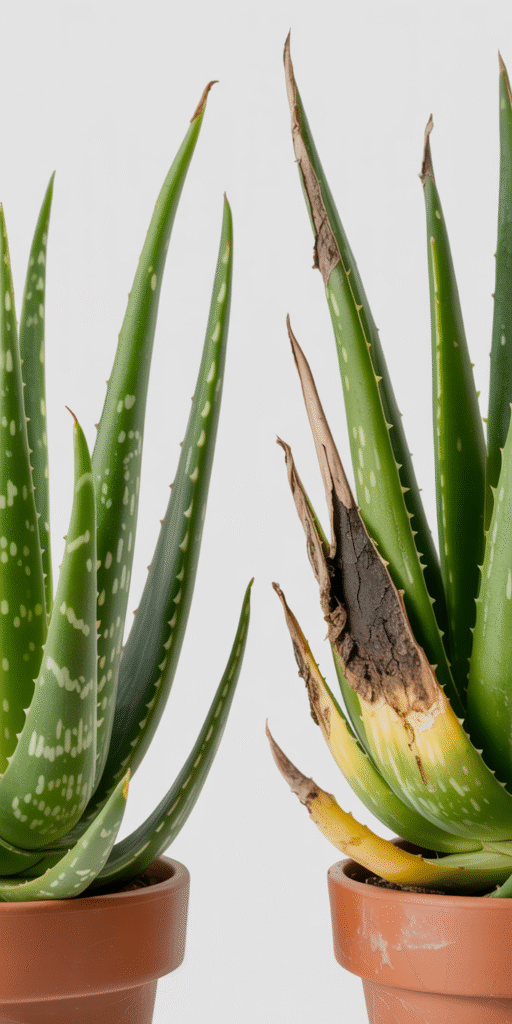
1. Leaves Turning Brown
Possible causes:
- Sun scorch
- Very dry conditions
- Salt buildup in soil
Fix:
Move to gentler light and flush soil occasionally.
2. Mushy Leaves
Cause:
- Overwatering
Fix:
Remove rot, repot in dry mix, reduce watering.
3. Thin Weak Leaves
Cause:
- Not enough sunlight
Fix:
Move to brighter location gradually.
4. Plant Leaning Sideways
Cause:
- Reaching toward light
Fix:
Rotate plant regularly.
5. No Growth
Cause:
- Winter dormancy
- Root-bound plant
- Low light
Fix:
Check roots, improve light, wait for warm season.
When to Repot Aloe Vera
Repot every 2 to 3 years or when:
- Roots circle the pot
- Plant becomes top-heavy
- Soil drains poorly
- Many pups crowd container
Best Time to Repot
Spring or early summer.
Seasonal Aloe Vera Care
Spring
- Resume watering as growth begins
- Repot if needed
- Feed lightly
Summer
- Main growing season
- Bright light
- Monitor dryness more often
Autumn
- Slow watering frequency
- Remove dead leaves
Winter
- Water sparingly
- Keep warm
- Maximize sunlight indoors
Can You Grow Aloe Vera from Leaf Cuttings?
Unlike some succulents, aloe vera does not reliably grow from leaf cuttings.
A damaged leaf may rot before rooting.
The best propagation method is separating pups.
Harvesting Aloe Vera Leaves Properly
Only harvest from mature plants.
How to Harvest
- Choose outer lower leaf
- Use clean sharp knife
- Cut close to base
- Let yellow sap drain away before use
Never remove too many leaves at once.
Extra Value Tips for Beautiful Aloe Plants
Use Terracotta Pots
They reduce overwatering risk beautifully.
Group With Other Succulents
Plants with similar needs simplify care.
Less Love, Better Growth
Many aloe plants suffer from kindness in the form of too much water.
Bright Window = Happy Plant
Light changes everything.
Observe the Leaves
Leaves tell the story of the plant faster than any schedule.
My Favorite Beginner Aloe Routine
If I were helping a friend start today, I would say:
- Buy a healthy aloe in terracotta
- Put it in the brightest window
- Water deeply once soil dries fully
- Ignore it a little
- Watch it slowly thrive
Sometimes the easiest routines truly work best.
Frequently Asked Questions
How long does aloe vera live?
With proper care, many aloe plants live for years, even decades.
Does aloe need direct sun?
It likes bright light and some direct sun, especially morning sun.
Why are my aloe leaves floppy?
Usually overwatering or low light.
Can aloe grow outside year-round?
Yes, in frost-free warm climates.
Is aloe vera low maintenance?
Very much so when planted in the right soil.
Final Thoughts
Growing aloe vera is one of those lovely gardening experiences that reminds us plants do not always need constant attention to flourish.
Give it sunshine, fast-draining soil, and thoughtful watering, and it rewards you with elegant growth year after year.
If you have struggled with houseplants before, aloe vera may be the confidence-building plant you need. It is resilient, beautiful, practical, and wonderfully beginner friendly.
Start with one small plant, care for it simply, and before long you may find yourself sharing pups with friends and placing aloe in every sunny corner of your home.
