
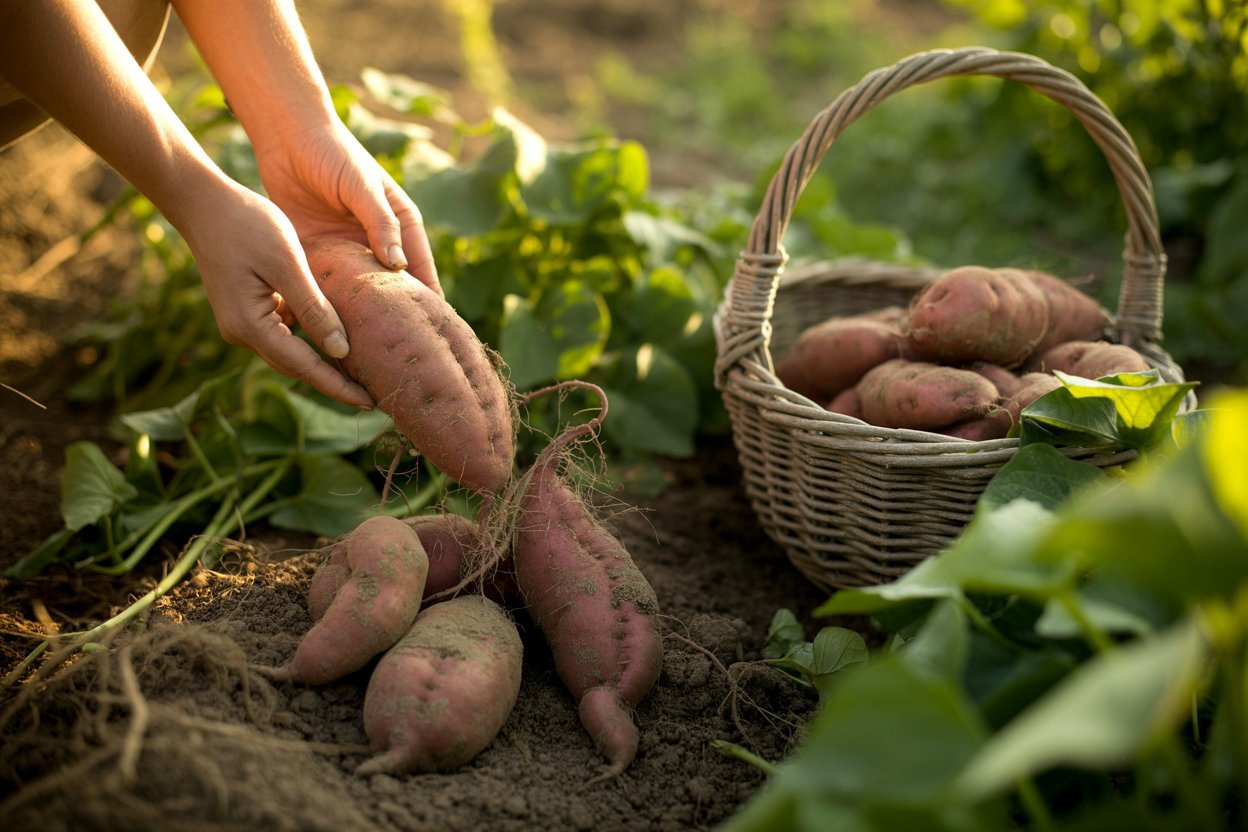

Sweet potatoes have a way of teaching you patience in the gentlest, most rewarding way. You don’t rush them. You don’t fuss too much. You simply give them warmth, space, and time and quietly, beneath the soil, something beautiful begins to take shape.
I still remember the first time I grew sweet potatoes. The vines stretched out like they were claiming the garden as their own, soft and wild, spilling over the edges of the bed.
And when harvest day came, I gently brushed back the soil and uncovered those earthy, golden roots it felt like uncovering buried treasure.
That’s the magic of sweet potatoes. They’re generous. They’re forgiving. And they give back so much more than what you put in.
Whether you’re growing in a backyard garden, a small raised bed, or even a container tucked into a sunny corner, this guide will walk you through everything you need to know from growing your own slips to harvesting, curing, storing, and transforming your harvest into nourishing meals.
So let’s begin, slowly and intentionally, just like the sweet potato itself.
Understanding Sweet Potatoes
Before you plant anything, it helps to truly understand what you’re growing.
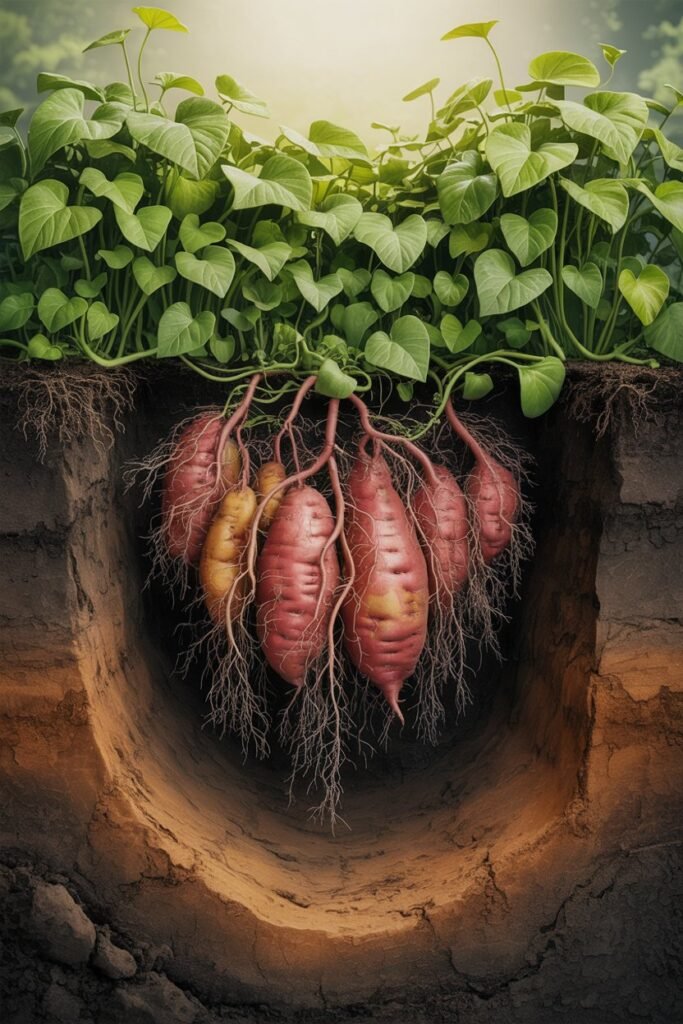
Sweet potatoes are tropical perennials grown as annuals in most gardens. Unlike regular potatoes, which are tubers, sweet potatoes are storage roots. This means they develop differently underground and require slightly different care.
Another important difference is how they’re planted. You don’t plant chunks of potato you plant slips, which are young shoots grown from a mature sweet potato.
This alone makes the process feel more connected. You’re not just planting you’re propagating life from life.
Why Sweet Potatoes Are Worth Growing
Sweet potatoes are one of those crops that quietly check every box:
- Thrive in warm climates (perfect for tropical regions)
- Require relatively low maintenance
- Produce high yields from small spaces
- Offer edible leaves as well as roots
- Store well for months without refrigeration
- Are incredibly nutritious and filling
They’re especially valuable if you’re trying to grow more of your own food sustainably. One small planting can feed you for weeks or even months.
Ideal Growing Conditions
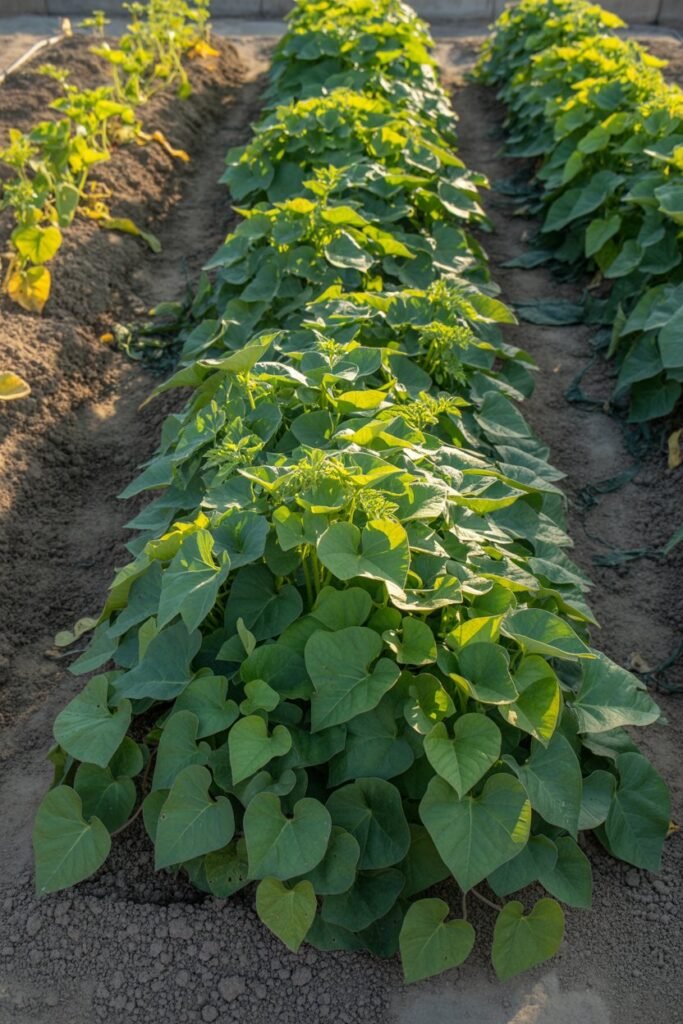
Sweet potatoes are sun lovers. Warmth is their language, and if you give them enough of it, they’ll reward you generously.
Climate and Temperature
Sweet potatoes thrive in temperatures between:
- 21°C to 32°C (70°F to 90°F)
They do not tolerate frost at all. Cold soil slows their growth, and frost can destroy the vines entirely.
If you live in a warm region (like much of Africa), you already have a natural advantage. You can grow sweet potatoes almost effortlessly during the right season.
Sunlight Needs
Sweet potatoes need full sun, which means:
- At least 6–8 hours of direct sunlight daily
The more sun they receive, the more energy they can store in their roots. If your plants aren’t producing well, sunlight is often the missing piece.
Soil Requirements
Sweet potatoes prefer soil that feels soft and easy to move through.
Ideal soil characteristics:
- Loose and well-draining
- Slightly sandy or loamy
- Free of stones or heavy clumps
- Slightly acidic (pH 5.5–6.5)
Heavy clay soil can make roots small, twisted, or difficult to harvest. If your soil is dense, consider loosening it with compost or growing in raised beds.
Growing Your Own Sweet Potato Slips
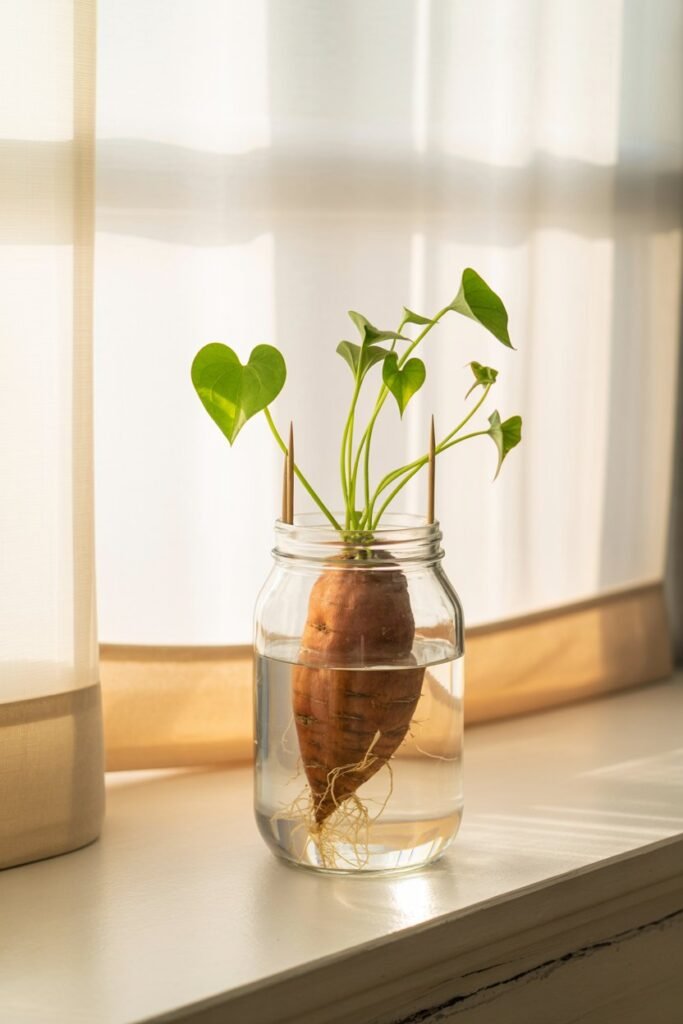
This is one of the most beautiful parts of the process watching new life emerge from something as simple as a single sweet potato.
Method 1: Growing Slips in Water
This is the most popular and visually satisfying method.
Step-by-step:
- Choose a healthy, organic sweet potato
- Insert toothpicks around the middle
- Suspend it in a jar with the bottom half in water
- Place in a warm, sunny spot
- Change water every few days
Within 2–4 weeks, you’ll start to see sprouts forming.
Method 2: Growing Slips in Soil
This method feels more natural and often produces stronger slips.
Steps:
- Fill a tray or shallow container with moist soil
- Lay sweet potatoes on top
- Lightly cover them
- Keep warm and slightly moist
Soon, green shoots will begin to appear.
Harvesting Slips
When the sprouts reach about 15–20 cm (6–8 inches):
- Gently twist them off the potato
- Place them in water
- Allow roots to develop (about a week)
Once roots form, they’re ready to plant.
Planting Sweet Potato Slips
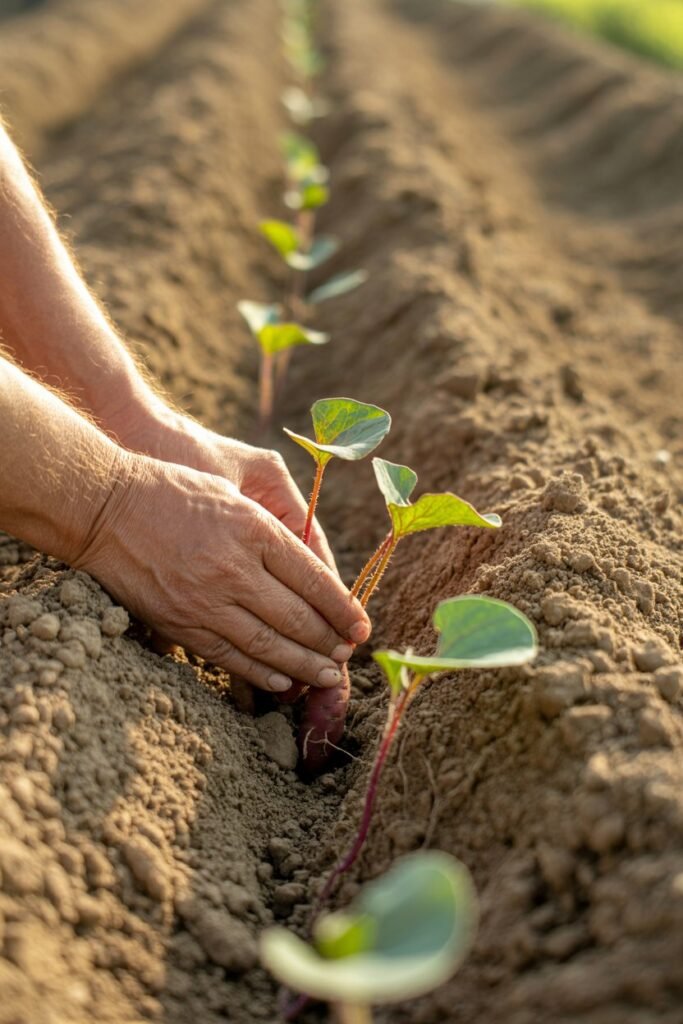
Planting day feels hopeful like the start of a quiet promise.
When to Plant
- After the last frost
- When soil is warm (at least 18°C / 65°F)
Warm soil is key. Planting too early can slow growth significantly.
Spacing
Give your plants room to breathe and spread:
- 30–45 cm (12–18 inches) between plants
- 90 cm (3 feet) between rows
Sweet potato vines love to roam.
How to Plant
- Dig a small hole
- Place the slip roots into the soil
- Bury the stem up to the first leaves
- Press soil gently around it
- Water thoroughly
For the first week, keep the soil consistently moist to help them establish.
Watering and Daily Care
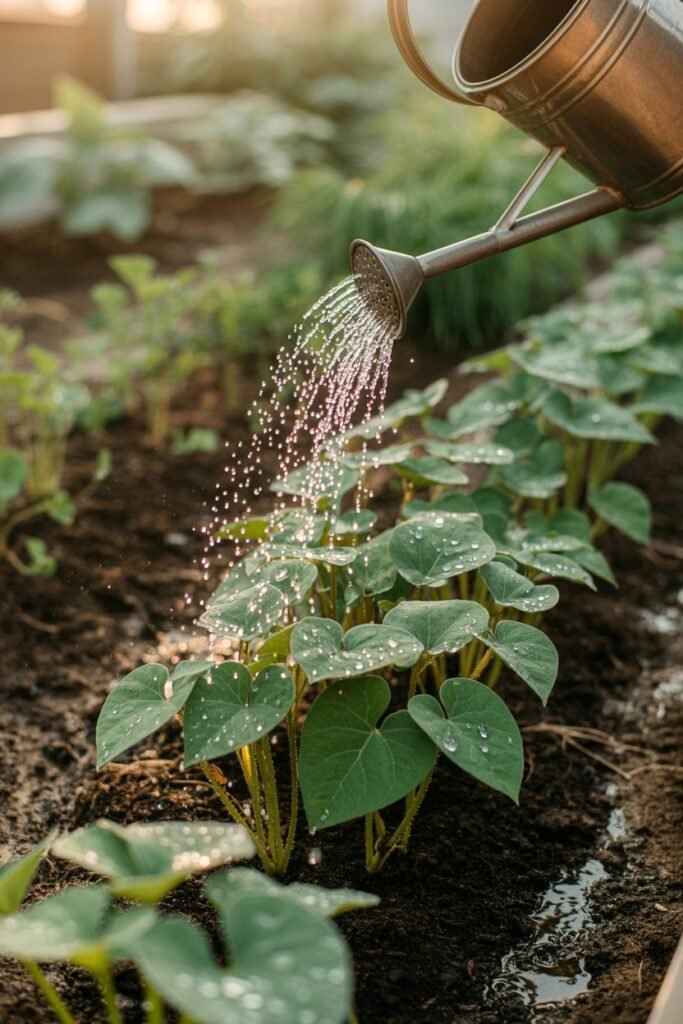
Sweet potatoes don’t need constant attention but they do appreciate consistency.
Watering Routine
- Water deeply once or twice a week
- Keep soil moist, not soggy
- Reduce watering as harvest approaches
Too much water can lead to rot, while too little can reduce yield.
Mulching
Mulch is your quiet helper in the garden.
It helps:
- Retain moisture
- Prevent weeds
- Keep soil temperature stable
Use:
- Dry leaves
- Straw
- Grass clippings
Mulch also adds a soft, finished look to your garden.
Feeding Your Plants
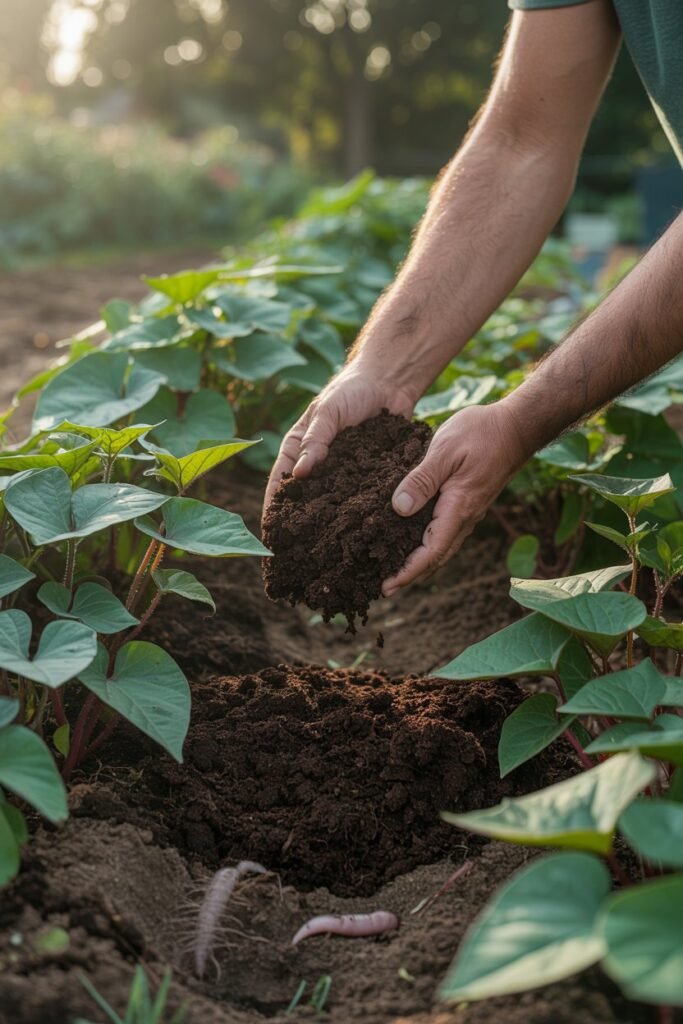
Sweet potatoes don’t need heavy feeding, but balance matters.
Fertilizer Tips
- Use low-nitrogen fertilizers
- Too much nitrogen = leafy vines, small roots
- Compost is ideal
Feed lightly every 3–4 weeks, especially in poor soil.
Managing Sweet Potato Vines
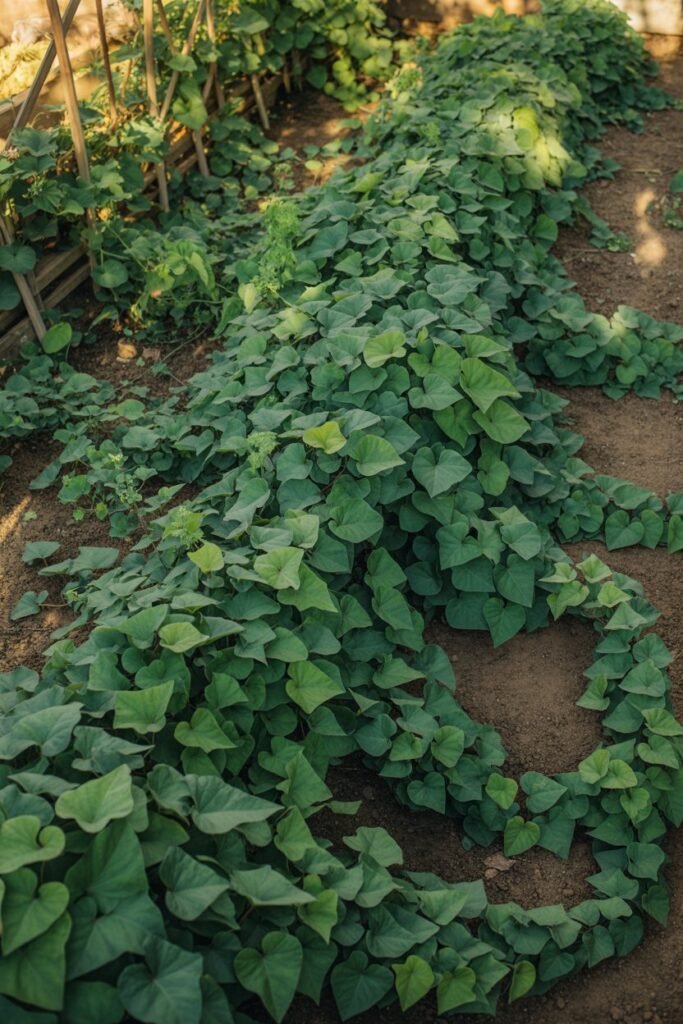
The vines are lively, abundant, and sometimes a little wild.
What to Expect
- Vines can spread several feet
- They may root at nodes if left undisturbed
- They can cover entire beds if allowed
Should You Prune?
Only lightly, if needed.
- Trim if they crowd other plants
- Avoid frequent lifting (this can disrupt root growth)
Let them sprawl it’s part of their nature.
Pests and Problems
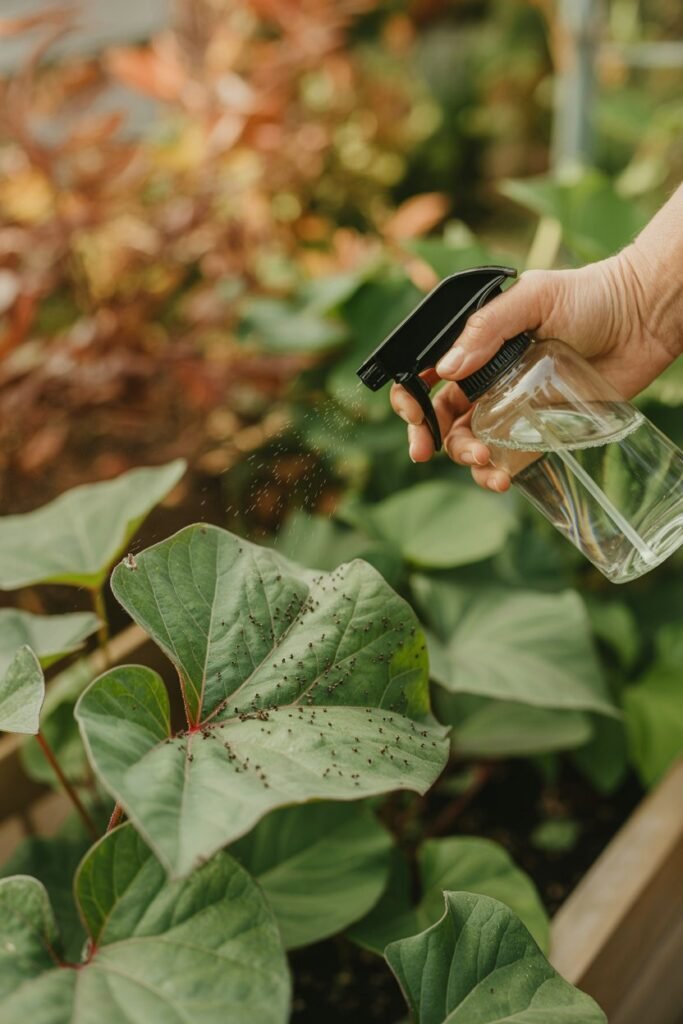
Even the most resilient plants face a few challenges.
Common Pests
- Sweet potato weevils
- Aphids
- Whiteflies
Natural Solutions
- Neem oil spray
- Companion planting
- Hand removal
Encouraging beneficial insects also helps keep pests in balance.
Diseases
- Root rot (overwatering)
- Fungal issues (poor airflow)
Good spacing and proper watering prevent most problems.
Harvesting Sweet Potatoes
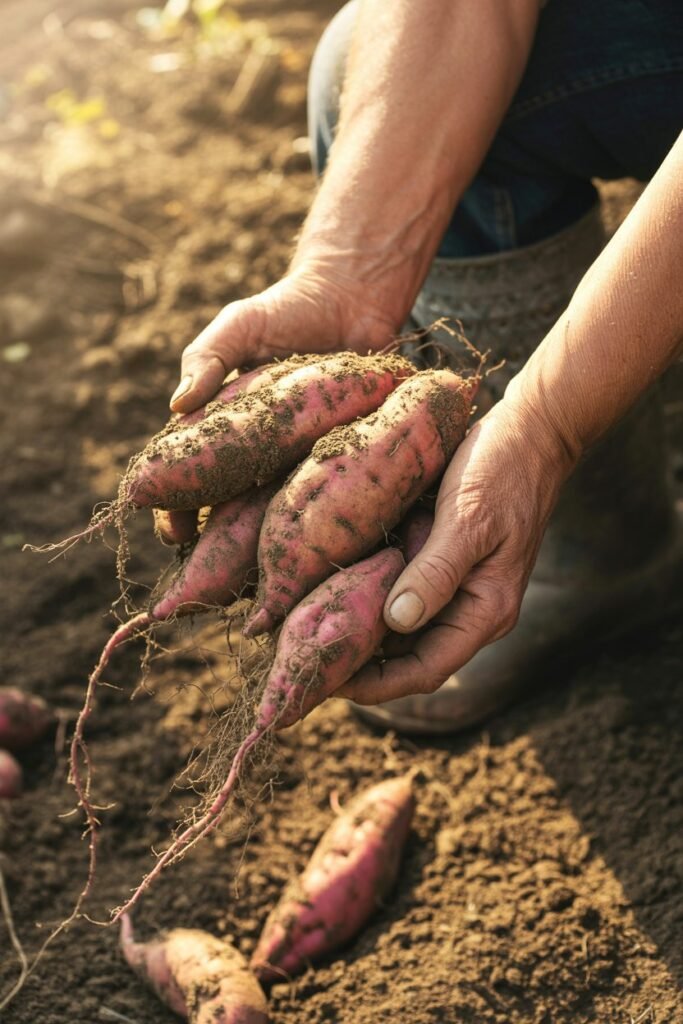
Harvesting is where everything comes full circle.
When to Harvest
- 90–150 days after planting
- Leaves begin to yellow
- Before cold weather arrives
How to Harvest
- Loosen soil gently with a fork
- Lift roots carefully
- Handle gently to avoid bruising
Sweet potatoes often grow deeper than expected, so move slowly and patiently.
Curing Sweet Potatoes
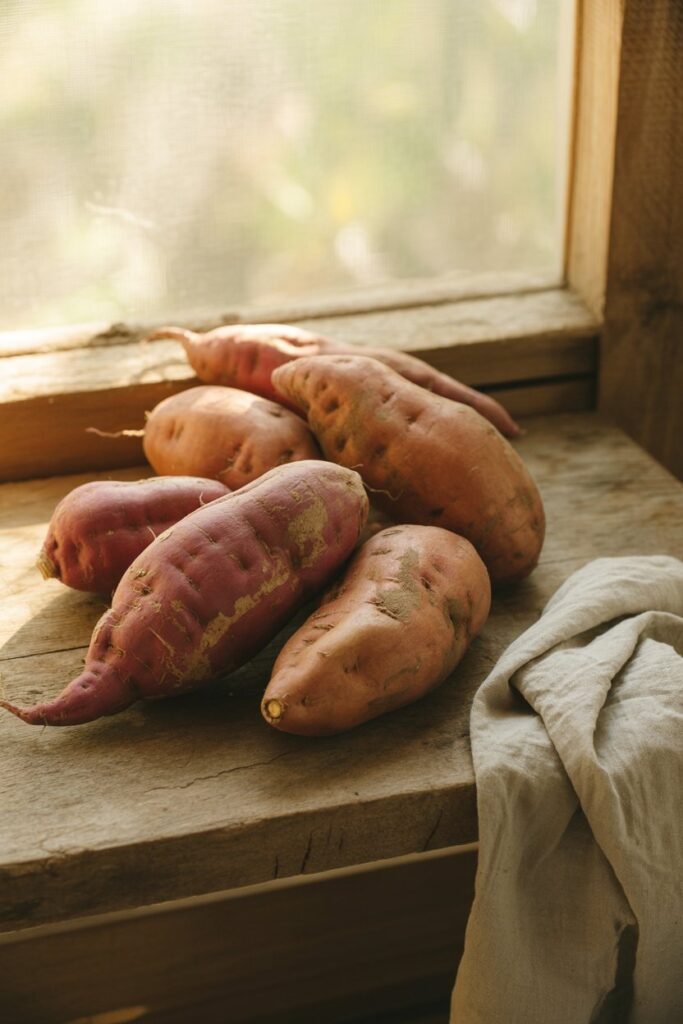
This step transforms your harvest from good to exceptional.
Why Curing Matters
Curing:
- Converts starches to sugars
- Improves flavor
- Extends shelf life
- Heals small cuts
How to Cure
- Keep in a warm place (27–30°C / 80–85°F)
- Maintain high humidity
- Cure for 7–14 days
After curing, they’re sweeter, richer, and ready to store.
Storing Your Harvest
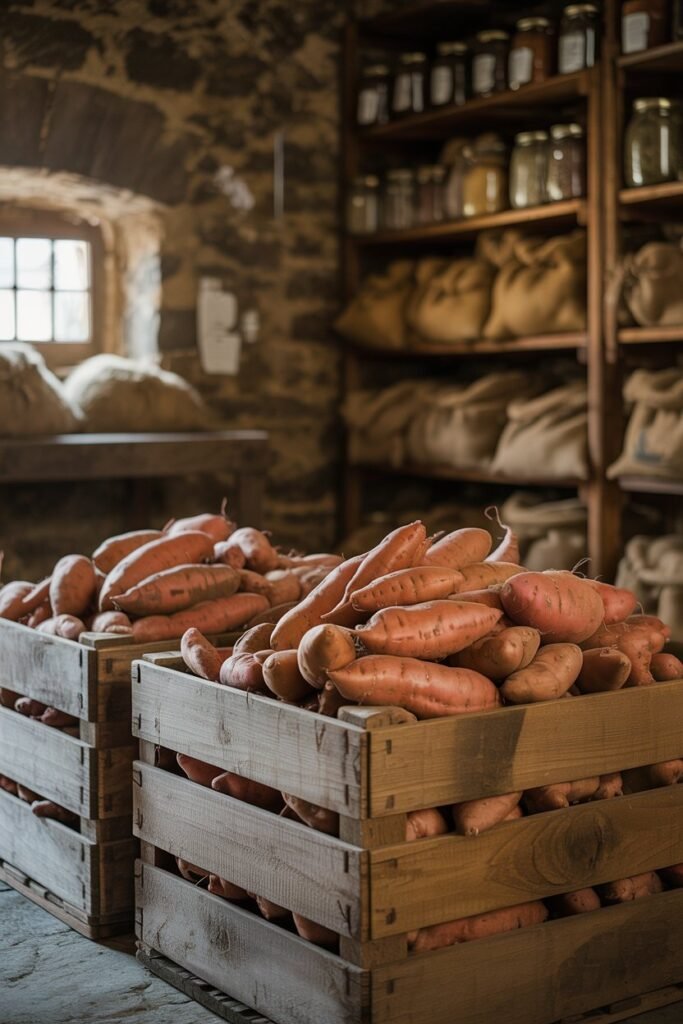
A well-stored harvest feels like a pantry full of comfort.
Storage Tips
- Store in a cool, dry, dark place
- Ideal temperature: 13–16°C (55–60°F)
- Avoid refrigeration
Properly stored sweet potatoes can last up to 6 months.
Cooking and Using Sweet Potatoes
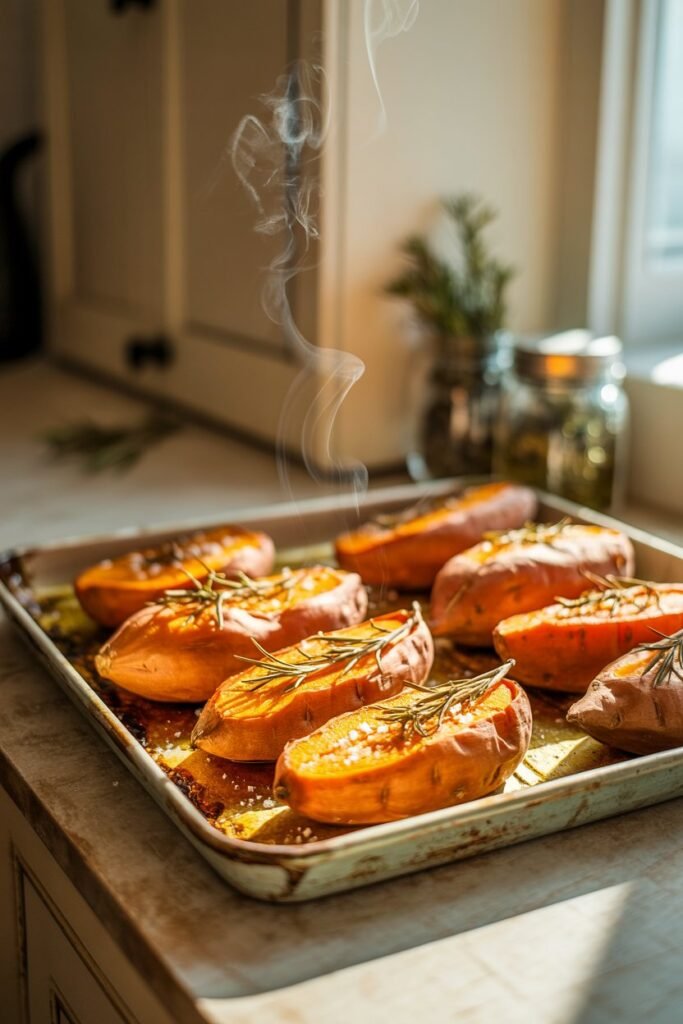
Now comes the most comforting part bringing your harvest into your kitchen.
Roasted Sweet Potatoes
A simple favorite:
- Cube and season
- Roast until golden
- Crispy outside, soft inside
Mashed Sweet Potatoes
Smooth and nourishing:
- Boil or steam
- Mash with butter or oil
- Add spices or herbs
Sweet Potato Fries
- Slice into strips
- Bake or air-fry
- Season generously
Soups and Stews
They add:
- Creaminess
- Natural sweetness
- Depth of flavor
Baking
Sweet potatoes shine in:
- Cakes
- Breads
- Pancakes
They bring moisture and richness to every bite.
Using Sweet Potato Leaves
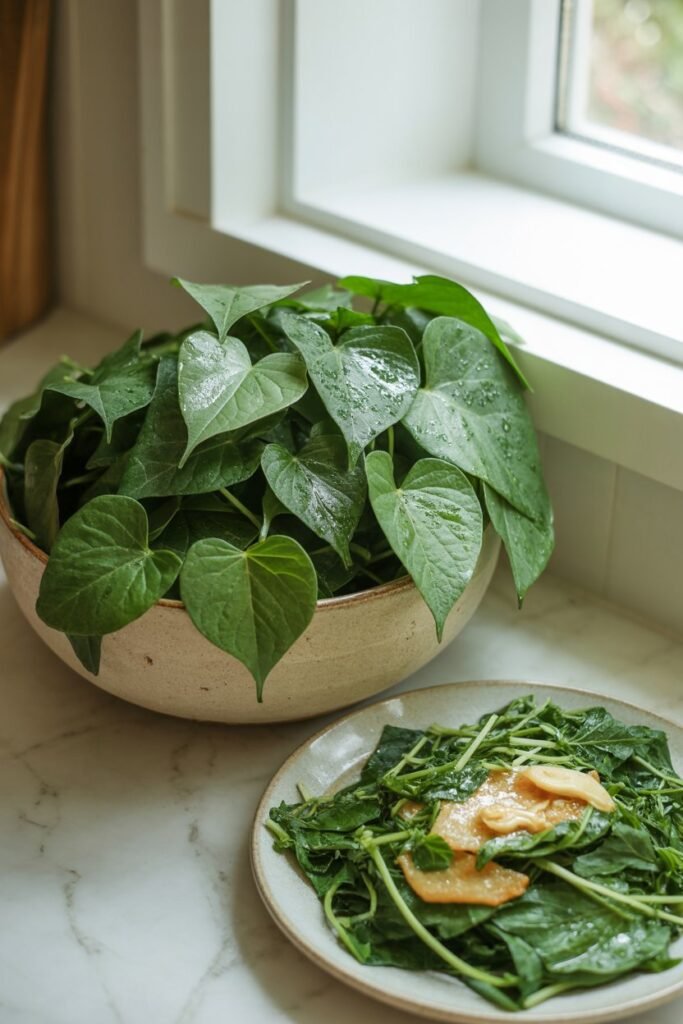
This is often overlooked but it’s such a gift.
How to Use the Leaves
- Stir-fry like spinach
- Add to soups
- Blend into smoothies
They’re nutrient-rich and give you an extra harvest long before the roots are ready.
Growing in Containers
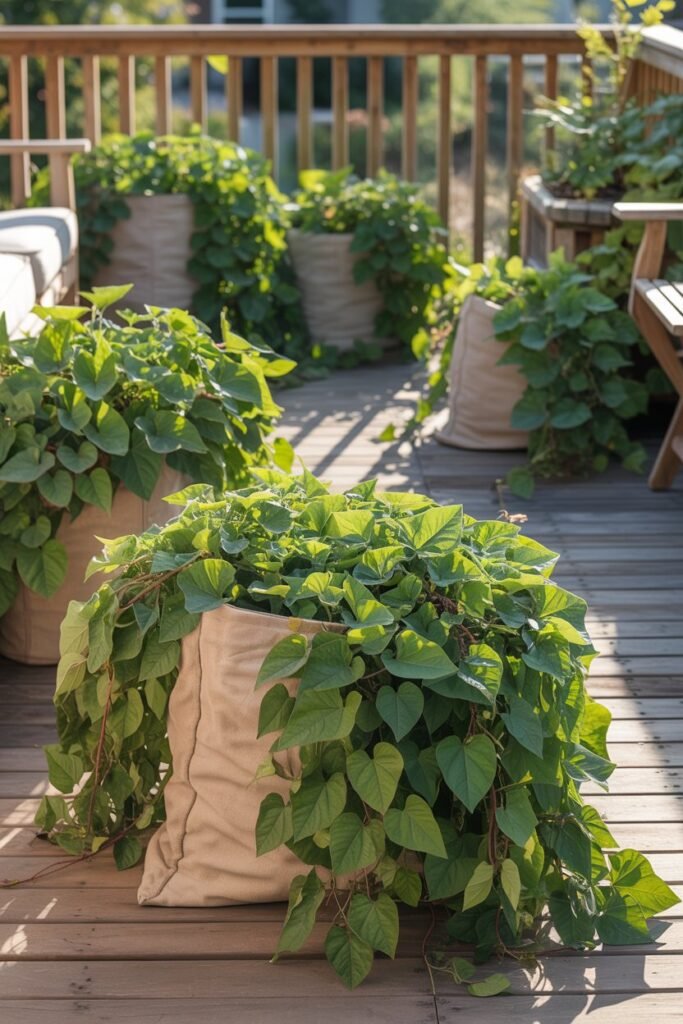
No garden? No problem.
What You Need
- Large container (20–30 liters or more)
- Good drainage
- Quality soil
Tips for Success
- Water more frequently
- Ensure full sun
- Use loose soil
Grow bags work beautifully for this.
Companion Planting
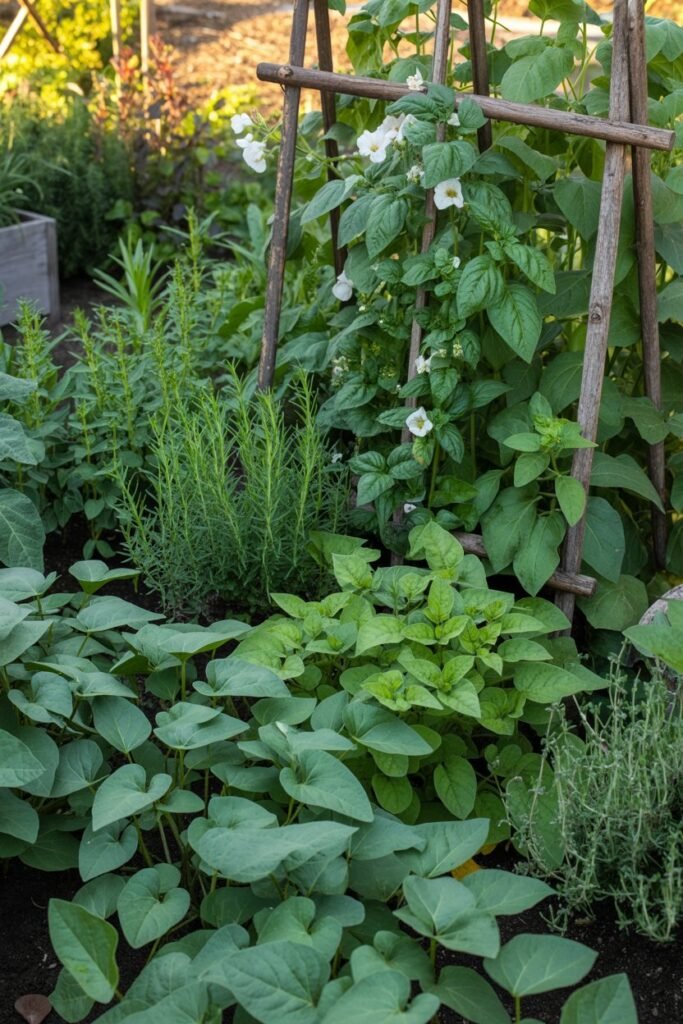
Your garden thrives when plants support each other.
Good Companions
- Beans
- Spinach
- Thyme
Plants to Avoid
- Squash
- Regular potatoes
These can compete for space or nutrients.
Final Thoughts
Growing sweet potatoes isn’t about perfection it’s about rhythm.
It’s about trusting that even when you can’t see what’s happening beneath the soil, something meaningful is unfolding. It’s about letting vines wander, letting time pass, and then one day, gently uncovering the results of your care.
And when you finally hold those sweet, earthy roots in your hands, it feels like more than a harvest. It feels like a quiet success.
A reminder that growth takes time and that some of the most beautiful things happen where we can’t see them.
