
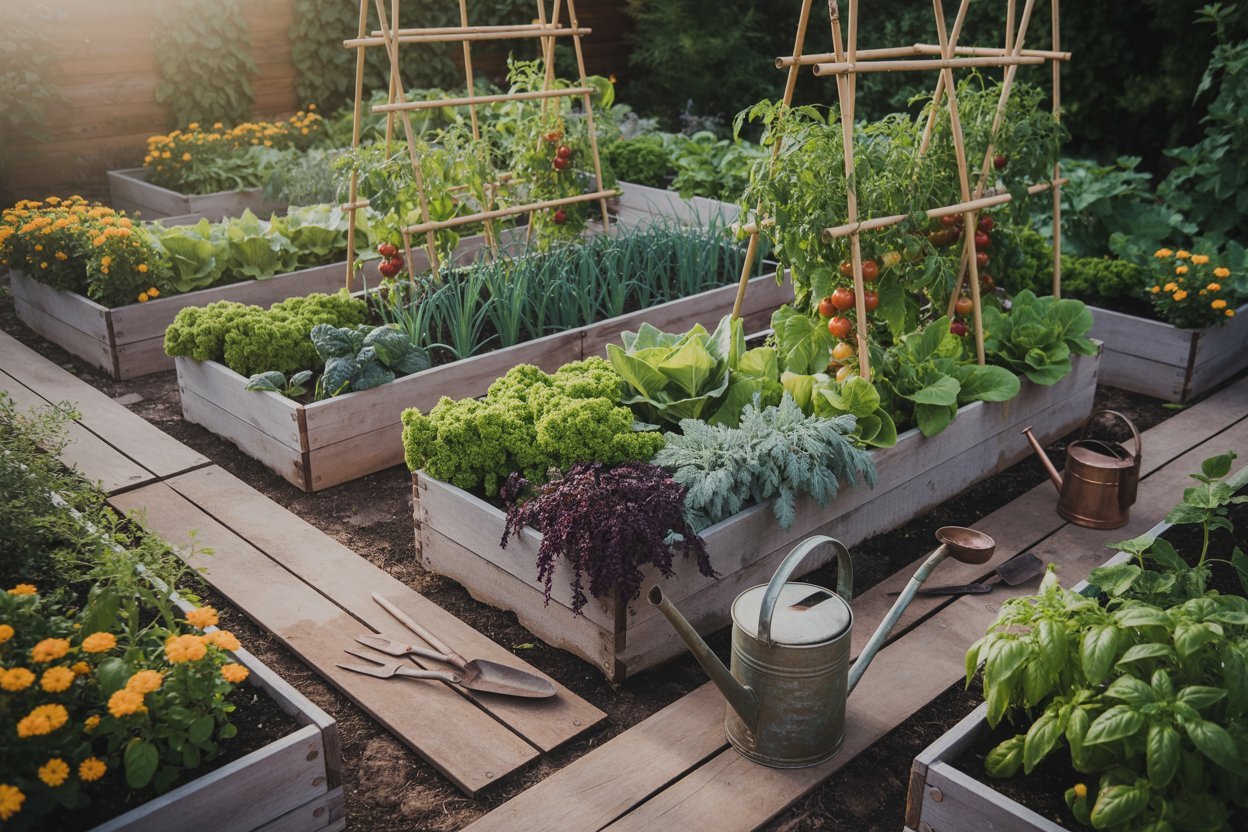

Planning the layout of a vegetable garden always feels like the quiet beginning of something wonderful. Before the seeds are planted, before the soil is turned, the garden exists first as an idea.
I often sit with a notebook and sketch simple little boxes and paths, imagining where tomatoes will climb, where herbs will spill over the edges, and where leafy greens will fill the empty spaces.
Over time, I learned that the way a garden is laid out makes a huge difference.
A thoughtful layout can turn even a small space into a productive, thriving vegetable garden. Plants grow healthier, harvesting becomes easier, and the whole garden feels more peaceful and organized.
Many gardeners jump straight into planting without planning the layout, but taking time to design your garden first saves frustration later. A good layout helps with sunlight exposure, water management, soil health, and even pest control.
In this guide, I’ll walk you through exactly how to layout a vegetable garden step by step, including:
- Why garden layout matters
- What you need before planning
- How to design your garden space
- Different types of vegetable garden layouts
- Helpful planning tips
- Mistakes to avoid
- Ways to make your garden more productive
Whether you’re working with a large backyard or a tiny space, this guide will help you create a vegetable garden that is both beautiful and productive.
Shop my amazon essentials
- Garden Measuring Tape
- Wooden Garden Stakes
- Garden Twine
- Graph Paper or Garden Planner Notebook
- Landscape Marking Paint
- Hand Trowel
- Wheelbarrow
- Garden Rake
- Shovel
- Raised Bed Frame Kits
Why Garden Layout Is So Important
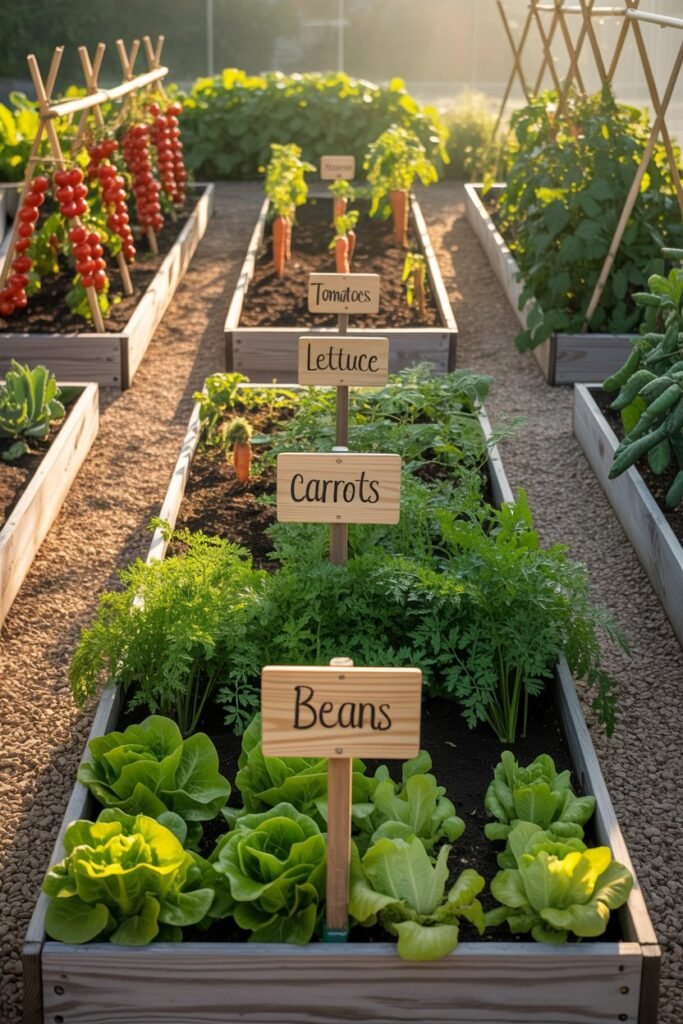
A garden layout is more than just deciding where plants go. It creates the structure that determines how well your vegetables grow.
When a garden is planned properly, everything works together naturally.
1. Better Sunlight Distribution
Most vegetables need 6–8 hours of sunlight each day.
Without planning, taller plants can shade smaller crops. For example:
- Corn or tomatoes can block sunlight from lettuce
- Cucumbers on trellises can shade herbs
A thoughtful layout ensures each plant receives enough light.
2. Easier Watering
A well-planned garden layout allows you to:
- Install drip irrigation easily
- Water plants evenly
- Prevent dry spots
Grouping plants with similar water needs makes watering much simpler.
3. Healthier Soil
Garden layouts also affect soil health.
When you organize your beds properly, it becomes easier to:
- Rotate crops
- Add compost
- Maintain soil fertility
This helps prevent nutrient depletion and disease buildup.
4. Easier Harvesting
Harvesting becomes a pleasure when your garden is easy to move through.
Clear paths allow you to:
- Pick vegetables without stepping on plants
- Access every bed easily
- Maintain your garden regularly
5. Pest and Disease Control
Spacing plants correctly improves airflow.
Better airflow means:
- Less fungal disease
- Fewer pest problems
- Stronger plants
What You Need Before Planning Your Garden Layout

Before drawing your garden layout, it helps to gather a few basic tools and information.
1. A Simple Garden Sketch
A pencil and notebook are perfect for planning.
Sketch:
- Your garden space
- Existing structures
- Sun direction
You don’t need to be an artist simple boxes work perfectly.
2. Measuring Tape
Measure your garden area carefully.
Write down:
- Length
- Width
- Any obstacles (trees, walls, fences)
This helps you design realistic garden beds.
3. Sunlight Observation
Spend a day watching how sunlight moves across your space.
Note areas that are:
- Full sun
- Partial shade
- Mostly shade
Most vegetables grow best in full sun.
4. Soil Knowledge
Knowing your soil helps you plan where crops should go.
Check:
- Drainage
- Soil texture
- Fertility
If your soil is poor in some areas, raised beds may be helpful.
5. A Plant List
Write down the vegetables you want to grow.
For example:
- Tomatoes
- Peppers
- Lettuce
- Carrots
- Cucumbers
- Beans
- Herbs
Knowing your crops helps determine how much space each plant needs.
Step-by-Step Guide to Layout a Vegetable Garden
Designing a vegetable garden becomes much easier when broken into simple steps.
Read How To Start Urban Homesteading in a 500-Sq-Ft Apartment (Beginner-Friendly Guide)
Step 1: Choose the Best Garden Location
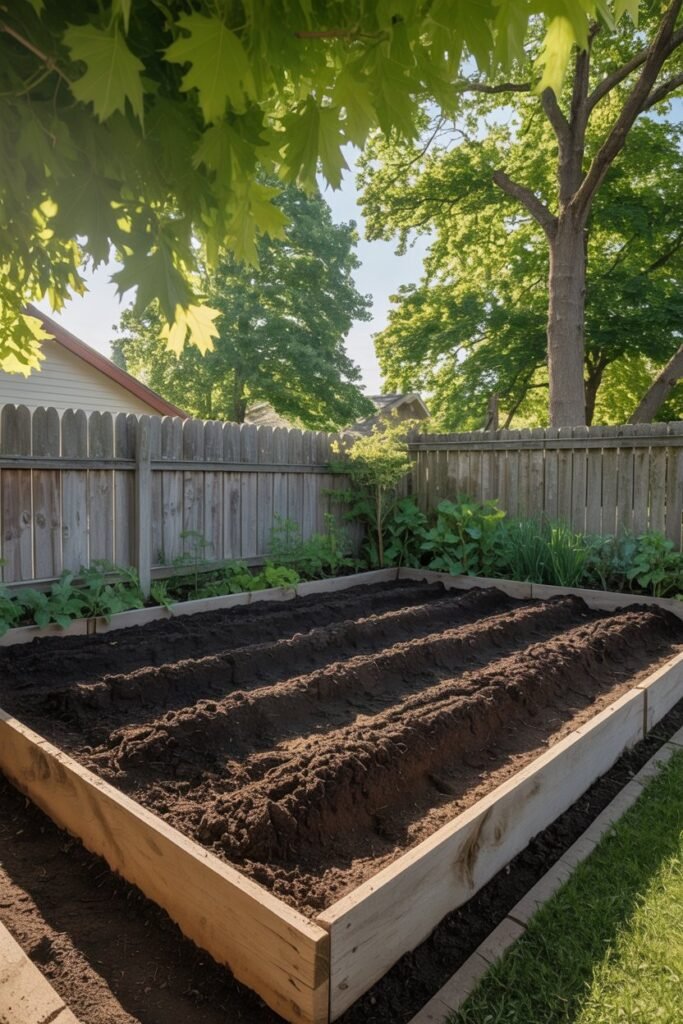
The location of your garden affects everything.
Look for a space that has:
- 6–8 hours of sunlight
- Good drainage
- Easy access to water
- Protection from strong winds
Avoid areas that stay soggy after rain.
Step 2: Decide on Garden Bed Size
Garden beds should be easy to reach from all sides.
A common size is:
- 4 feet wide
- Any length you prefer
Four feet allows you to reach the center without stepping on the soil.
Step 3: Add Walking Paths
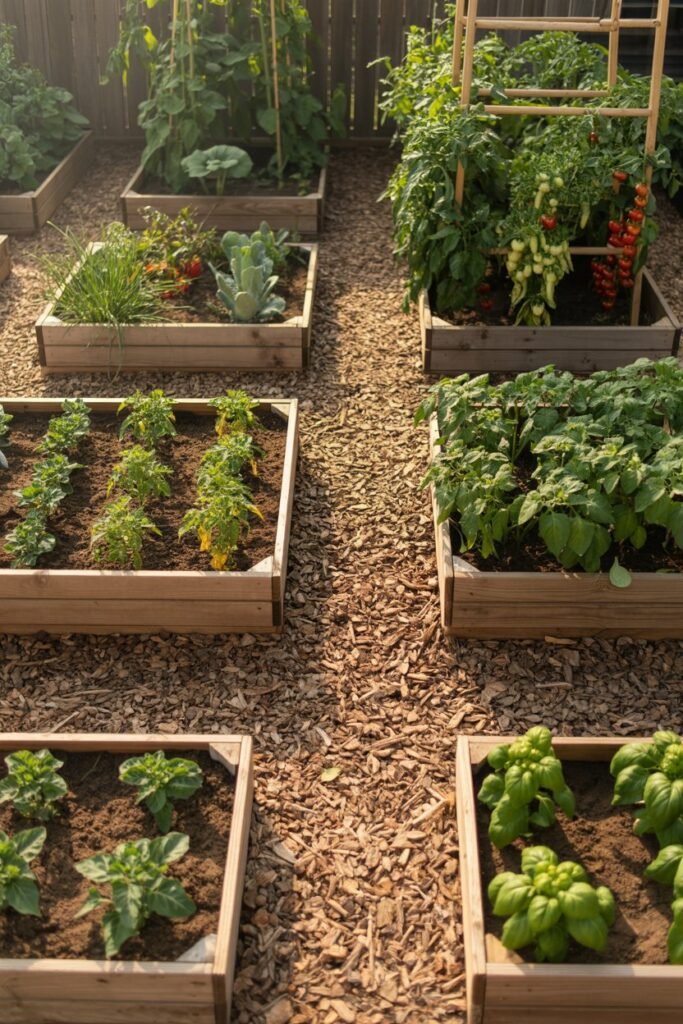
Paths are often forgotten, but they are essential.
Good paths:
- Prevent soil compaction
- Make harvesting easier
- Keep the garden tidy
Paths should be about 18–24 inches wide.
Materials you can use include:
- Wood chips
- Gravel
- Straw
- Stepping stones
Step 4: Place Tall Plants First
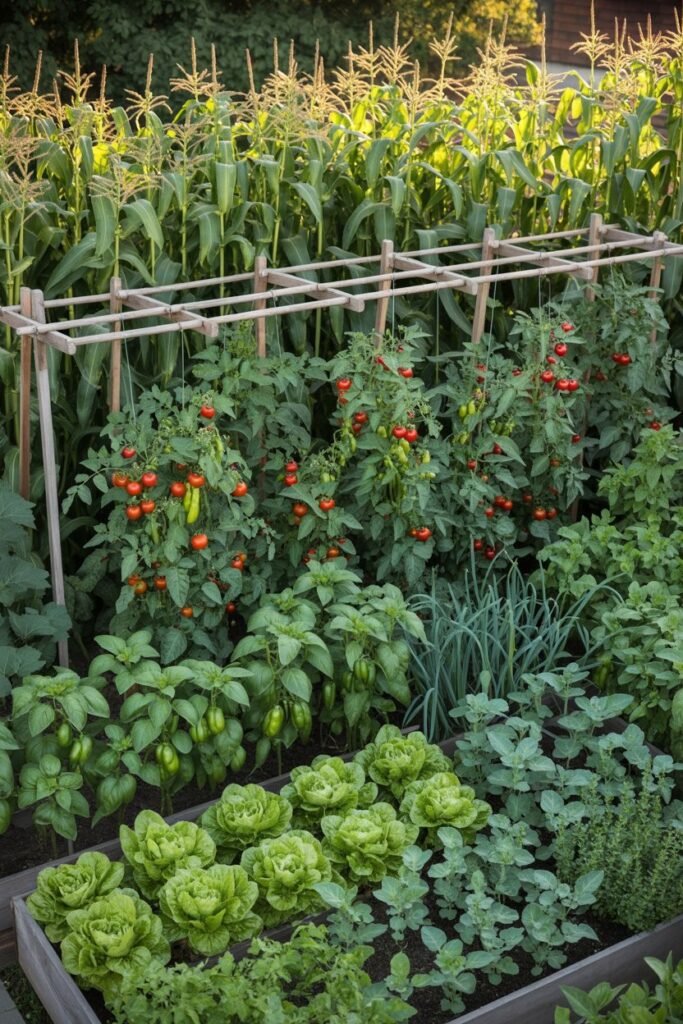
Tall plants should be placed where they will not block sunlight.
In most gardens:
- Tall plants go at the north side
- Short plants go at the south side
Examples of tall crops:
- Corn
- Tomatoes
- Trellised cucumbers
- Pole beans
Step 5: Group Similar Plants Together
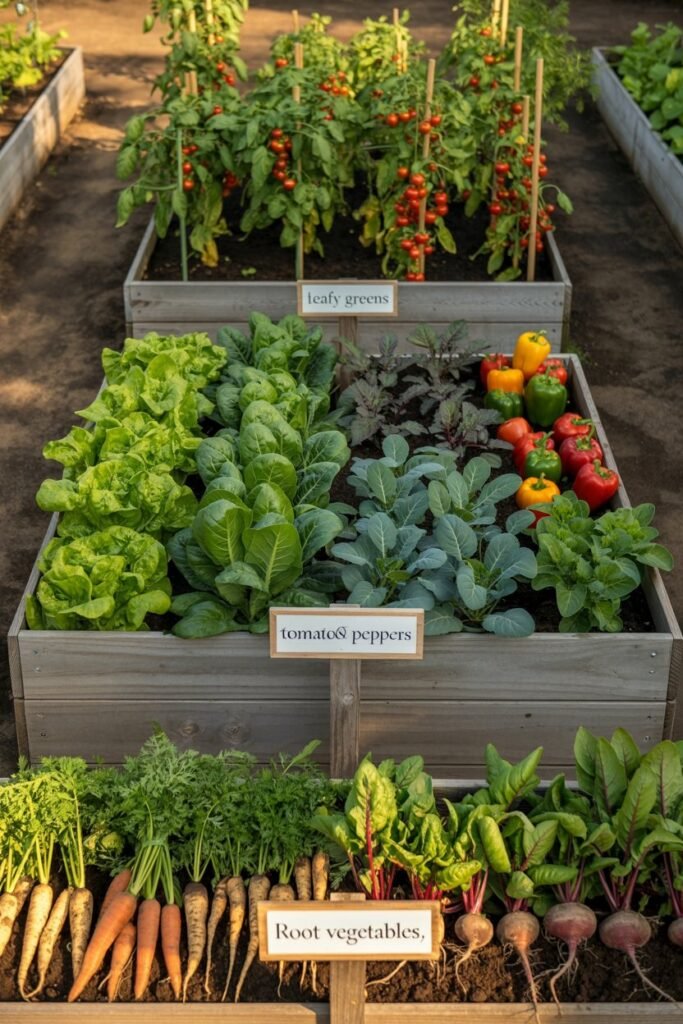
Plants with similar needs grow best when grouped together.
For example:
High water plants
- Lettuce
- Spinach
- Cabbage
Lower water plants
- Tomatoes
- Peppers
- Herbs
This makes watering easier.
Step 6: Plan Crop Rotation Areas
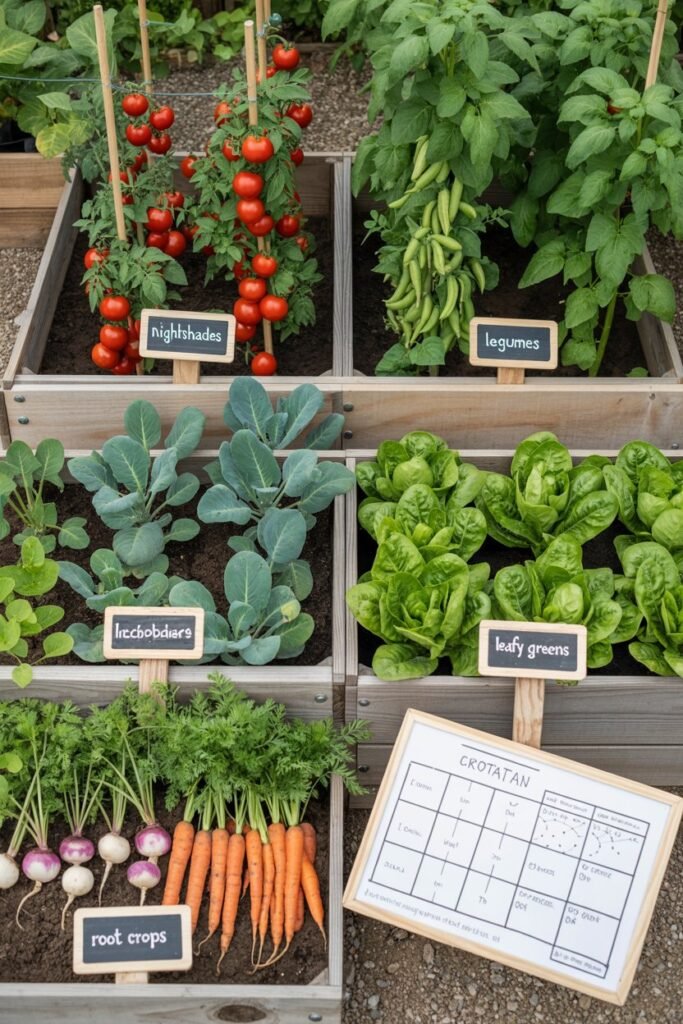
Crop rotation keeps soil healthy.
Divide beds into sections for plant families:
- Nightshades (tomatoes, peppers)
- Legumes (beans, peas)
- Root crops (carrots, onions)
- Leafy greens
Next season, rotate them to a different bed.
Step 7: Add Vertical Growing Areas
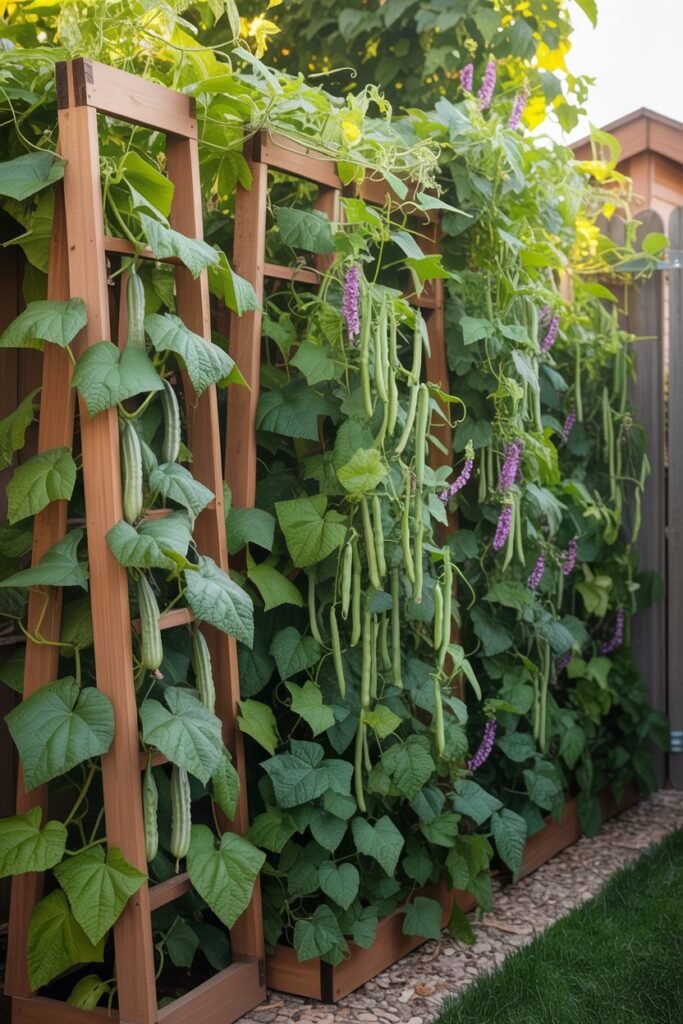
Vertical gardening saves space and increases production.
Add structures like:
- Trellises
- Arches
- Garden towers
Great crops for vertical growing include:
- Cucumbers
- Beans
- Peas
- Small melons
Different Types of Vegetable Garden Layouts
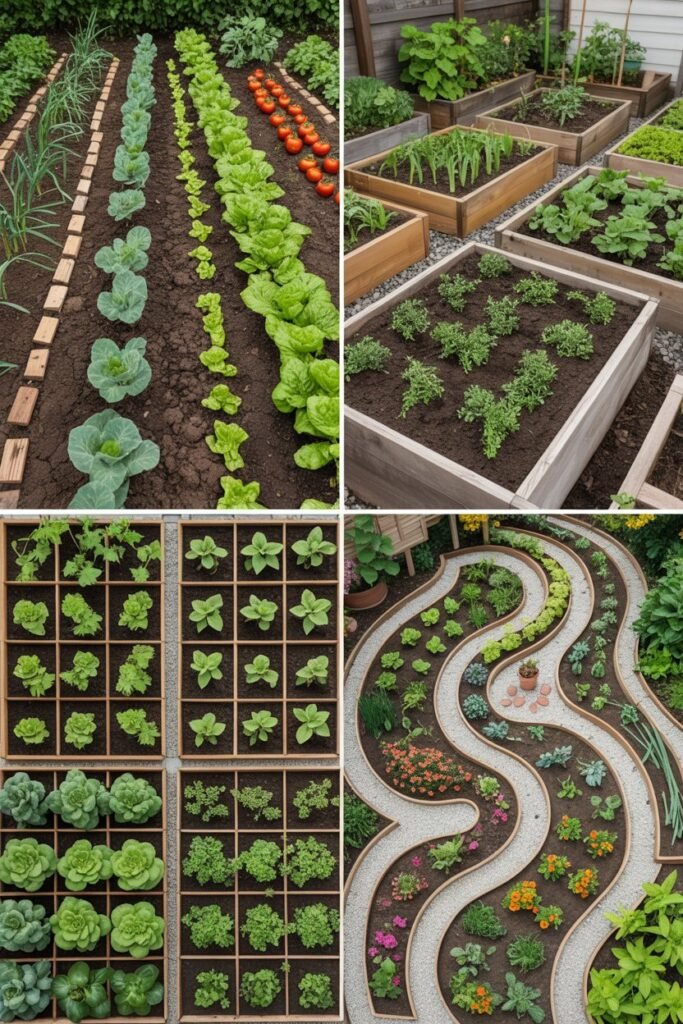
Different garden layouts work better for different spaces.
Here are some of the most popular options.
1. Traditional Row Garden Layout
This is the classic vegetable garden design.
Plants grow in long rows with walking paths between them.
Advantages
- Easy to plant
- Good for large spaces
- Simple to maintain
Disadvantages
- Takes more space
- Can waste growing area
This layout works best in larger gardens.
2. Raised Bed Layout
Raised beds are one of the most popular modern garden designs.
Beds are framed structures filled with soil.
Advantages
- Better soil control
- Good drainage
- Easy to maintain
Ideal Size
4 ft wide x 8 ft long
3. Square Foot Garden Layout
This layout divides beds into small square sections.
Each square grows a specific crop.
For example:
- 1 tomato per square
- 16 carrots per square
- 4 lettuce plants per square
Advantages
- Extremely space efficient
- Perfect for beginners
- Very organized
4. Potager Garden Layout
A potager garden mixes vegetables, herbs, and flowers in a beautiful pattern.
It is both productive and decorative.
You might see:
- Curved paths
- Symmetrical beds
- Colorful plant combinations
5. Vertical Garden Layout
Perfect for small spaces.
Plants grow upward using trellises and structures.
Great for:
- Balconies
- Tiny yards
- Urban gardens
How to Layer Your Garden for Maximum Productivity
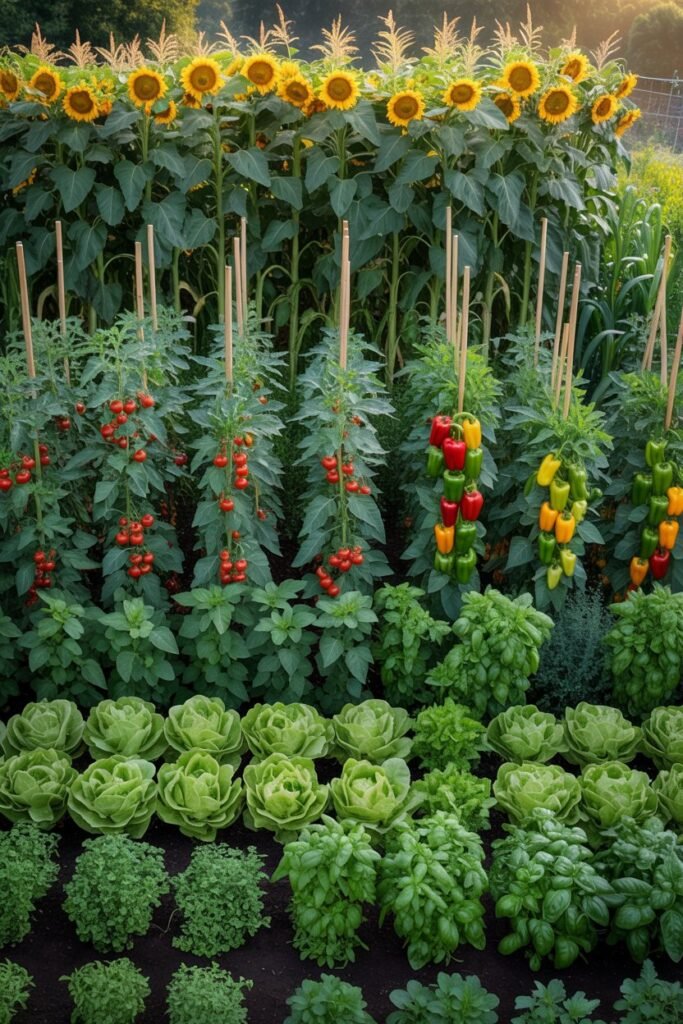
Layering plants is one of the best ways to increase harvests.
Garden layering means placing plants at different heights so they share space without competing.
Top Layer (Tall Crops)
Examples:
- Corn
- Sunflowers
- Trellised beans
These capture the highest sunlight.
Middle Layer (Medium Plants)
Examples:
- Tomatoes
- Peppers
- Eggplants
They grow below taller plants.
Lower Layer (Short Crops)
Examples:
- Lettuce
- Spinach
- Basil
These plants thrive with partial shade.
Ground Layer
Examples:
- Strawberries
- Thyme
- Sweet potatoes
They spread across the soil.
Root Layer
Below the soil surface grow:
- Carrots
- Radishes
- Beets
- Garlic
This layered method maximizes every inch of garden space.
Helpful Tips for Designing a Vegetable Garden Layout
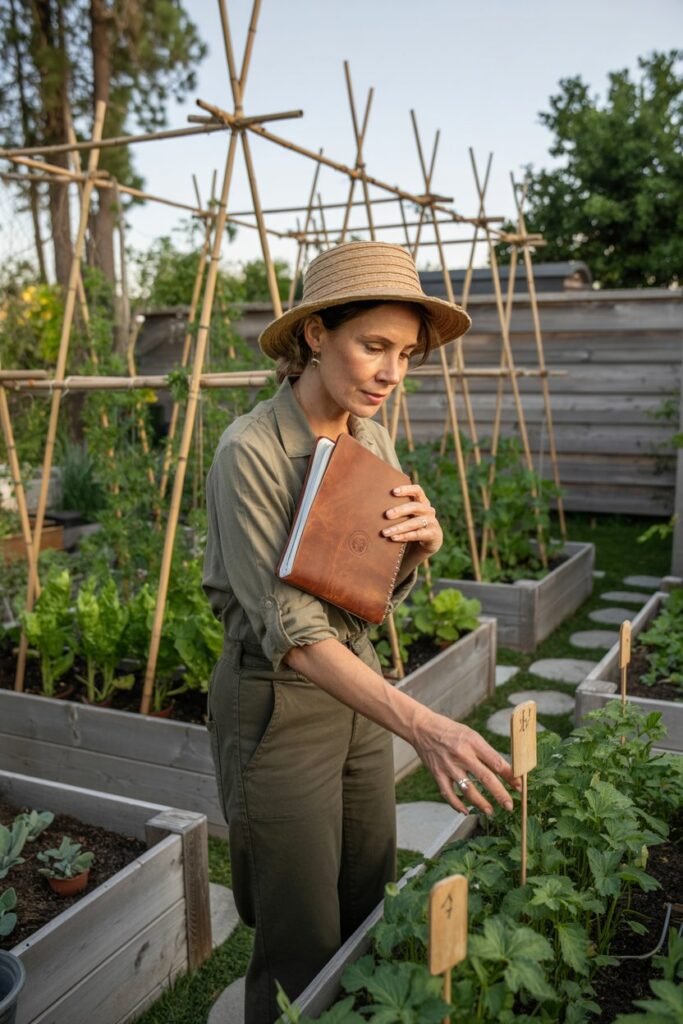
Over the years, a few simple tricks have made garden planning much easier.
Start Small
A small garden is easier to maintain.
Many beginners start too big and become overwhelmed.
Leave Space for Expansion
Gardens often grow each year.
Leave room to add more beds later.
Keep Frequently Used Plants Close
Herbs and salad greens should be near the kitchen door.
This makes daily harvesting easy.
Add Companion Plants
Some plants grow better together.
Examples include:
- Tomatoes and basil
- Carrots and onions
- Cucumbers and dill
Companion planting improves growth and pest control.
Include Pollinator Flowers
Flowers attract bees and beneficial insects.
Good options include:
- Marigolds
- Calendula
- Nasturtiums
These also help control pests naturally.
Common Vegetable Garden Layout Mistakes to Avoid
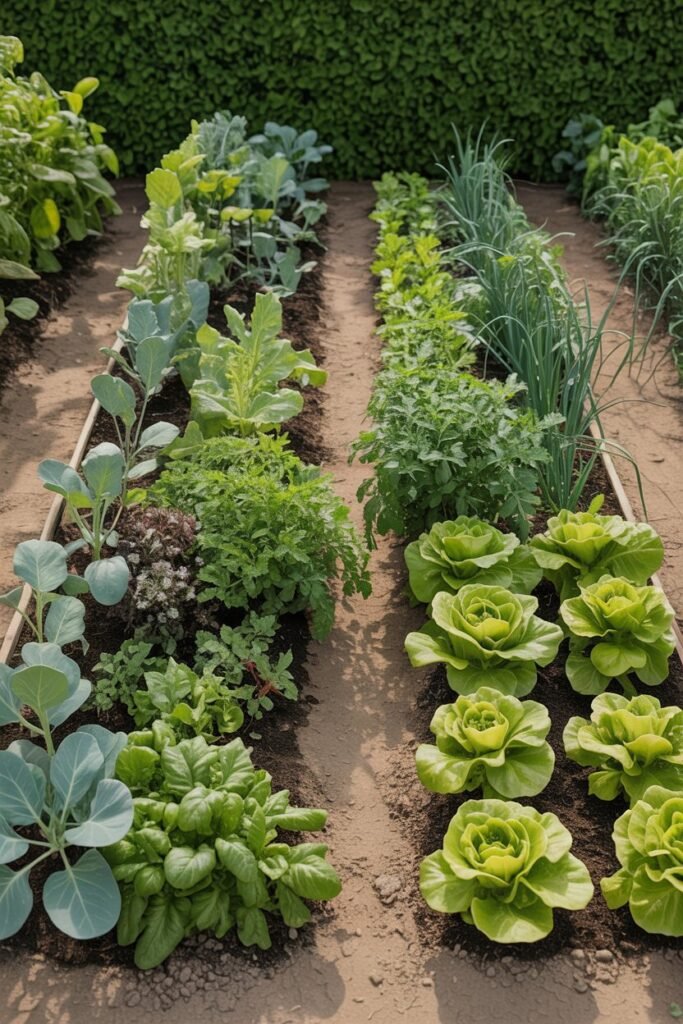
Even experienced gardeners make mistakes when designing layouts.
Planting Too Close
Crowded plants compete for:
- Water
- Nutrients
- Sunlight
Always follow proper spacing guidelines.
Ignoring Sun Patterns
Sunlight shifts throughout the day.
Observe your garden before planting.
Forgetting Paths
Walking paths prevent soil compaction.
Never skip them.
Mixing Incompatible Plants
Some plants compete or attract the same pests.
Research companion planting.
Overplanting
Too many plants can overwhelm your garden.
Focus on crops you actually enjoy eating.
Simple Example Layout for a Beginner Vegetable Garden
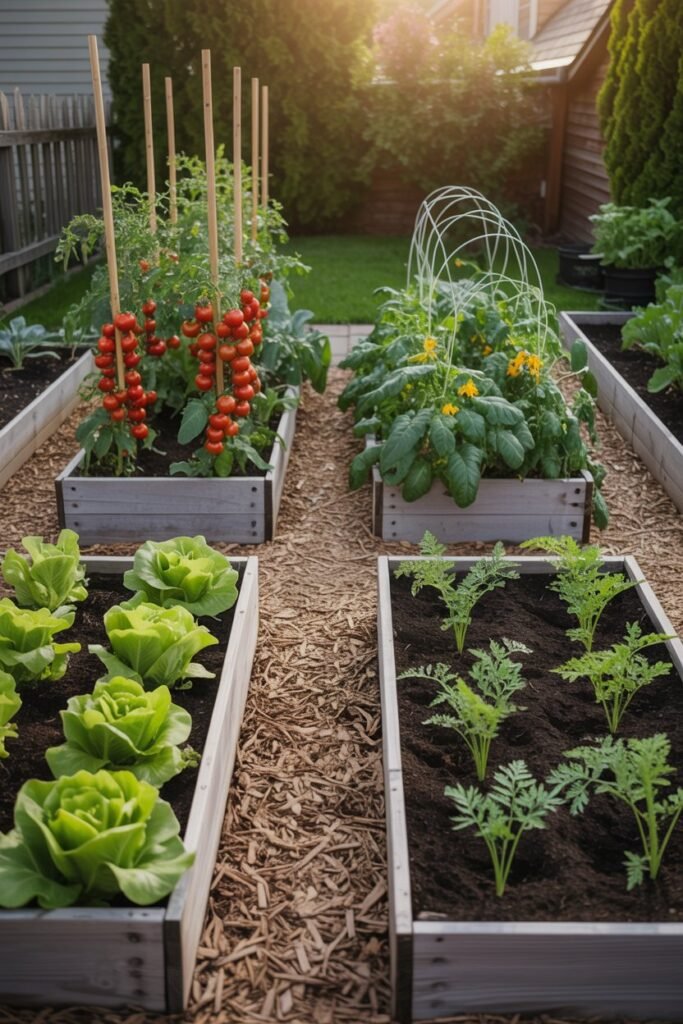
Here is an easy layout for a small backyard garden.
Bed 1
- Tomatoes
- Basil
- Marigolds
Bed 2
- Peppers
- Onions
- Carrots
Bed 3
- Lettuce
- Spinach
- Radishes
Bed 4
- Cucumbers on a trellis
- Beans
- Dill
Paths between each bed make harvesting simple.
Final Thoughts
Designing a vegetable garden layout is one of the most rewarding parts of gardening. A thoughtful plan transforms a simple patch of soil into a thriving space full of fresh food and life.
Each season brings new lessons, and every garden evolves a little differently. Some layouts work beautifully, while others get adjusted the following year. That process is part of the joy of gardening.
Taking time to plan your garden carefully allows plants to grow healthier, harvests to become more abundant, and the garden itself to feel peaceful and organized.
Even a small space can become incredibly productive with the right layout.
Start simple, observe your garden closely, and let each season guide your improvements. Before long, your vegetable garden will feel like a natural extension of your home a place where planning, patience, and a little sunshine come together to create something truly wonderful.
