


I love finding simple ways to make my garden more comfortable without turning every outdoor space into a battle against bugs.
During warm evenings, mosquitoes can quickly become the one thing that makes me want to head indoors, so I started looking for a prettier solution that could fit naturally into my patio and garden.
A DIY mosquito planter is one of my favorite ideas because it combines two things I already love: beautiful plants and practical gardening.
You can create one with a container, good-quality potting mix, and a selection of fragrant herbs and flowers that are commonly associated with mosquito-repelling gardens.
One important thing to understand first is that these plants are not a guaranteed mosquito barrier. Simply placing a lavender or basil plant outside does not mean mosquitoes will stay away.
Their natural fragrances may contribute to a less mosquito-friendly space, but the biggest difference comes from keeping the area free of standing water and making your outdoor space less attractive to mosquitoes.
The good news? Your planter can still be beautiful, useful, fragrant, and easy to maintain.
What Is a DIY Mosquito Planter?
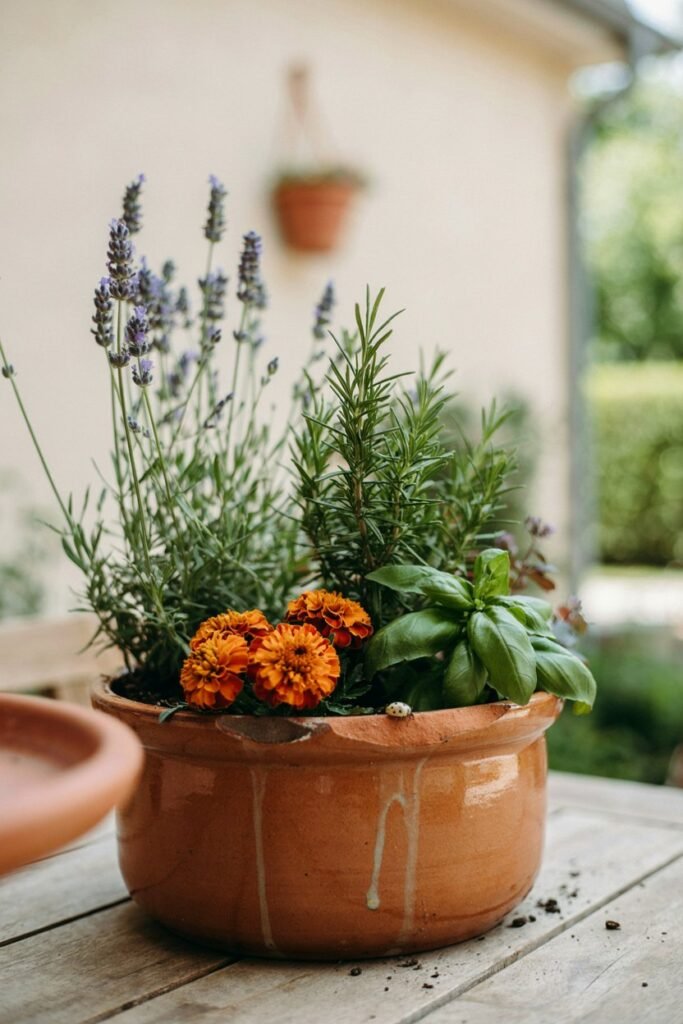
A DIY mosquito planter is a container garden designed around plants that are commonly used in mosquito-conscious gardens.
Instead of growing one plant by itself, you can combine several fragrant herbs and flowers in one attractive container. The planter can sit near a patio, porch, outdoor seating area, balcony, or garden entrance.
Some plants commonly chosen for this type of planter include:
- Lavender
- Rosemary
- Basil
- Mint
- Marigolds
- Catnip
- Lemon balm
- Scented geraniums
- Lemongrass
However, it is important to separate gardening tradition from scientific evidence.
Research on mosquito-repelling plants shows that the presence of a plant alone generally does not provide the same mosquito protection as the concentrated oils or extracts from that plant.
That means your planter should be thought of as part of a broader mosquito-conscious garden rather than a guaranteed mosquito repellent.
Why Make a Mosquito Planter?
A mosquito planter can be a fun project for anyone who wants to make an outdoor space more attractive while growing fragrant plants.
Here are a few reasons I love the idea.
1. It Adds Beauty to Your Outdoor Space
A practical garden feature doesn’t have to look like pest control equipment.
You can choose a pretty ceramic pot, wooden planter, terracotta container, or large patio pot and fill it with plants that complement your existing garden.
2. Many Choices Are Useful Herbs
Some of the plants commonly used in mosquito-conscious planters are herbs you can also enjoy in the kitchen.
Basil, rosemary, mint, and lemon balm can all be useful additions to an herb garden.
3. It Works Well in Small Spaces
You don’t need a large backyard.
A container can work on:
- A balcony
- Small patio
- Front porch
- Deck
- Apartment terrace
- Outdoor table
- Garden steps
4. You Can Move It Around
One of my favorite things about container gardening is flexibility.
If your planter isn’t doing well in one location, you can move it. You can also bring some containers into a protected area when temperatures become unsuitable for the plants.
5. It Encourages Better Mosquito Management
Creating the planter gives you a reason to look around your outdoor space for things mosquitoes actually need—especially standing water.
That is a much more important part of mosquito control than simply adding fragrant plants.
What You’ll Need
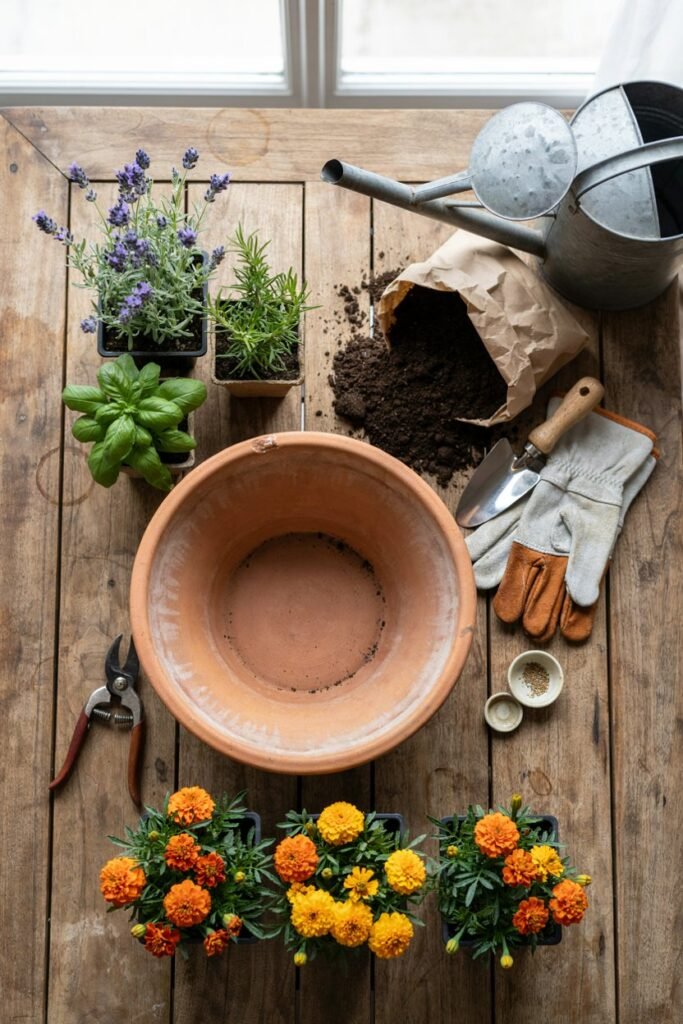
You don’t need a complicated collection of gardening supplies.
Materials
For a medium-to-large DIY mosquito planter, gather:
- 1 large container with drainage holes
- High-quality potting mix
- Compost, if appropriate for your plants
- Small gardening trowel
- Gardening gloves
- Watering can
- Selected plants
- Small pieces of broken terracotta or a container saucer, if needed
- Plant labels, optional
Choose a container that has proper drainage holes in the bottom.
This is extremely important.
A mosquito planter should never become a little reservoir of stagnant water.
Choosing the Right Container
I recommend choosing a container that is large enough to accommodate the mature size of your plants.
A container that’s too small can dry out quickly and leave the roots crowded.
Good options include:
- Terracotta pots
- Ceramic containers
- Wooden planters
- Metal containers with drainage
- Large plastic nursery-style containers
- Repurposed containers that have been properly prepared
Whatever you choose, make sure excess water can escape.
The Best Plants for a DIY Mosquito Planter
You don’t need to use every plant on this list. In fact, choosing two to four plants that have similar growing requirements is often easier.
1. Lavender
Lavender is one of the prettiest choices for a fragrant container garden.
Its silvery foliage and purple flowers give the planter a soft, cottage-garden appearance.
Lavender generally prefers:
- Plenty of sunlight
- Well-drained soil
- Good airflow
- Moderate watering
- A container that doesn’t stay soggy
Lavender dislikes consistently wet roots, so drainage is especially important.
2. Rosemary
Rosemary is another excellent container plant, especially if you want your planter to double as a small herb garden.
It enjoys:
- Full sun
- Well-drained soil
- Good airflow
- Moderate watering
Rosemary can become quite large over time, so choose a container with enough room for its roots.
3. Basil
Basil is a wonderful option for a sunny container.
It grows quickly during warm weather and can provide fresh leaves for cooking.
Basil generally likes:
- Warm temperatures
- Plenty of sunlight
- Consistent moisture
- Nutrient-rich soil
Unlike lavender and rosemary, basil doesn’t like being allowed to become extremely dry.
This is a good reminder that you shouldn’t automatically combine plants simply because they are all considered mosquito-repelling plants. Their watering requirements matter too.
4. Mint
Mint has a strong fragrance and grows vigorously.
If you decide to use mint, I strongly recommend giving it its own container whenever possible.
Mint spreads aggressively and can quickly take over a mixed planter.
A separate mint pot can sit beside your main mosquito planter and give you the same decorative effect without allowing the roots to compete with slower-growing plants.
5. Marigolds
Marigolds bring cheerful color to a container.
They are easy to grow and can work well in sunny garden spaces.
Choose compact varieties if you’re working with a smaller planter.
Marigolds need:
- Sunlight
- Well-drained soil
- Regular watering
- Good air circulation
Their bright flowers also make them a lovely companion for green herbs.
6. Lemon Balm
Lemon balm has a pleasant lemony fragrance and grows easily in many gardens.
It prefers:
- Sun to partial shade
- Moist but well-drained soil
- Regular watering
Like mint, lemon balm can spread quickly, so container growing can actually make it easier to control.
7. Lemongrass
Lemongrass is another popular choice for mosquito-themed gardens.
It enjoys warm conditions and plenty of sunlight.
One important distinction is that citronella grass and citronella-scented plants are not all the same plant. A plant sold as a “citronella geranium,” for example, is different from true citronella grass.
Always check the botanical name on the plant label instead of relying only on a common name.
8. Scented Geranium
Scented geraniums can make beautiful container plants.
Some varieties have lemony or citrus-like fragrances, which is why they are sometimes included in mosquito-themed planters.
They prefer good light and well-drained soil.
Keep in mind that fragrance from a plant is not the same thing as proven mosquito protection.
How to Make Your DIY Mosquito Planter
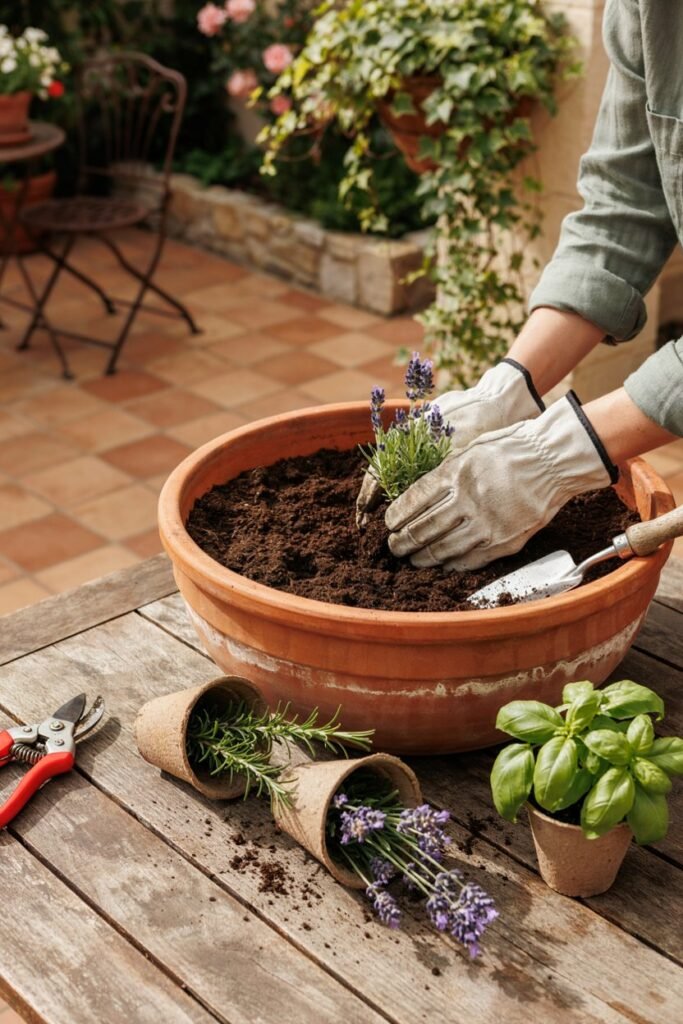
Now for the fun part.
Step 1: Choose the Location First
Before filling the planter, decide where you want it to live.
A sunny patio is a good choice for many of the herbs and flowers listed above.
Think about where you actually spend time outdoors.
You might place the planter:
- Beside a patio chair
- Near an outdoor dining area
- Beside the porch
- Near the garden entrance
- Around a balcony seating area
- Near an outdoor kitchen
Don’t put it somewhere simply because it looks pretty if the plants won’t receive the light they need.
Step 2: Check the Drainage
Turn the container over and make sure it has drainage holes.
If the holes are blocked, water can collect inside the container.
You want water to move through the soil rather than remain trapped around the roots.
If you use a saucer underneath the planter, check it after watering and empty excess water rather than allowing it to sit there indefinitely.
Step 3: Add Your Potting Mix
Use a quality potting mix intended for containers.
Avoid filling a container entirely with heavy garden soil because it can become compacted and drain poorly.
Fill the pot while leaving enough room at the top for watering.
Step 4: Arrange Your Plants Before Planting
This is my favorite part.
Set the plants inside the container while they’re still in their nursery pots.
Move them around until you like the arrangement.
A simple design is:
Back: taller plant such as rosemary or lemongrass
Middle: medium-sized lavender or scented geranium
Front: lower-growing flowers or herbs
This creates layers and keeps the planter from looking flat.
Step 5: Check Their Growing Requirements
Before planting everything together, check that the plants have similar needs.
For example, rosemary and lavender generally prefer conditions that are much drier than basil.
Putting plants with completely different watering requirements into the same container can make maintenance frustrating.
If necessary, create two or three smaller planters instead of forcing everything into one pot.
Step 6: Plant Carefully
Remove each plant from its nursery container gently.
Loosen tightly circling roots if necessary, then place the plant into the potting mix.
Keep the plant at approximately the same depth it was growing at previously.
Don’t bury the stem unnecessarily.
Fill around the roots with potting mix and gently firm the soil.
Step 7: Water Thoroughly
After planting, water the container thoroughly.
Allow excess water to drain from the bottom.
Don’t leave the container sitting in a pool of water.
For the following weeks, monitor the soil rather than following a rigid watering schedule.
Weather, container size, sunlight, and plant type all affect how quickly the soil dries.
A Simple Mosquito Planter Combination
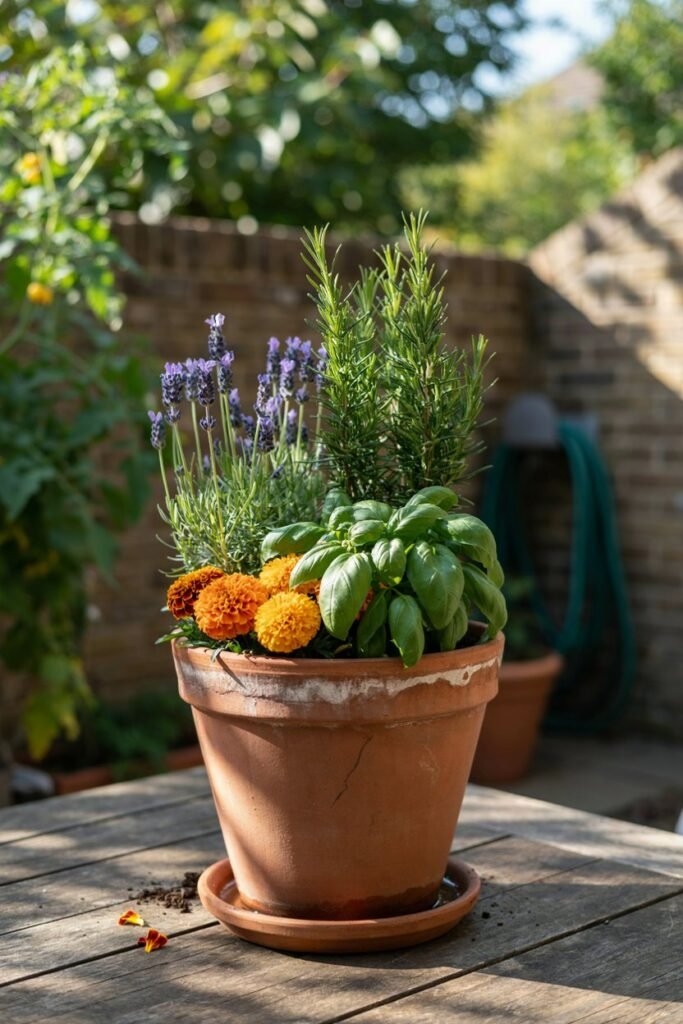
If you want an easy starting point, try creating a sunny herb-and-flower container with:
- Rosemary
- Lavender
- Basil
- Compact marigold
This combination gives you different textures, fragrances, and colors.
However, pay attention to watering because basil generally prefers more consistent moisture than rosemary and lavender.
If maintaining different watering needs becomes difficult, make two containers instead.
Another Easy Option: The Herb Mosquito Planter
For a useful kitchen garden, try:
- Rosemary
- Basil
- Lemon balm
Keep lemon balm in its own smaller pot if you are concerned about its spreading habit.
This arrangement gives you fragrant herbs that can also be harvested for cooking.
How to Make the Planter More Effective
The plants themselves are only one part of the equation.
If you really want to make your outdoor space less attractive to mosquitoes, focus on the environment around your planter.
Remove Standing Water
This is probably the most important step.
Mosquitoes need water to reproduce, and even small amounts of stagnant water can become a problem.
Check regularly for water collecting in:
- Plant saucers
- Buckets
- Toys
- Wheelbarrows
- Birdbaths
- Gutters
- Tarps
- Outdoor containers
- Unused pots
- Other small containers
Empty or manage these sources regularly.
Don’t Overwater Your Planter
A constantly saturated container isn’t good for most herbs, and unnecessary water can contribute to the kind of damp environment you want to avoid.
Water according to the needs of your plants.
Keep the Area Tidy
Trim dead foliage and remove fallen leaves when needed.
Good garden maintenance improves airflow and helps keep your container plants healthy.
Encourage Air Movement
Mosquitoes are generally weaker fliers than many people realize, and moving air can make outdoor areas less comfortable for them.
A fan near a patio seating area can therefore be a useful addition when appropriate.
Use Screens When Possible
If your goal is to enjoy an outdoor living space with fewer mosquito problems, physical barriers can be very effective.
Screened porches, doors, and windows can help keep mosquitoes outside.
Where Should You Put a Mosquito Planter?
Think about where you actually spend time.
A beautiful planter tucked into the far corner of the garden may look lovely but won’t do much for your seating area.
Consider placing containers around:
- Patio seating
- Outdoor dining areas
- Porch steps
- Balcony seating
- Garden benches
- Outdoor entertaining areas
You can create several small containers instead of one enormous planter.
This also makes it easier to give each plant the conditions it prefers.
Common Mistakes to Avoid
Mistake 1: Expecting the Plants to Eliminate Mosquitoes
This is the biggest misconception.
A living plant doesn’t automatically release enough of its aromatic compounds into the surrounding air to create a mosquito-proof zone.
Don’t rely on the planter as your only mosquito-control strategy.
Mistake 2: Using a Container Without Drainage
This can cause root problems and create unwanted standing water.
Always prioritize drainage.
Mistake 3: Combining Plants With Different Watering Needs
A thirsty basil plant and drought-tolerant rosemary may not be the happiest roommates.
Choose plants with compatible care requirements.
Mistake 4: Planting Mint Directly Into a Mixed Garden
Mint spreads quickly.
Container growing is one of the easiest ways to keep it under control.
Mistake 5: Ignoring the Rest of the Yard
You could have the most beautiful mosquito-themed planter in the neighborhood and still have mosquitoes if water is collecting nearby.
Inspect the entire outdoor space.
How to Care for Your DIY Mosquito Planter
Once your planter is established, maintenance should be fairly simple.
Water According to the Plants
Check the soil with your finger before watering.
If the surface is dry but the plant prefers consistently moist soil, water it. If you’re growing a drought-tolerant herb, allow the soil to dry more between waterings.
Give Plants Enough Sun
Most of the herbs commonly chosen for sunny mosquito-themed containers perform best with plenty of light.
However, always check the requirements of your specific variety.
Trim Regularly
Pruning herbs such as basil and rosemary can help keep the container attractive and manageable.
Harvesting herbs regularly can also encourage fresh growth.
Remove Dead Flowers and Leaves
Clean away damaged or dead plant material to keep the container looking fresh.
Fertilize When Appropriate
Container plants eventually use nutrients from their potting mix.
A suitable container fertilizer can be used according to the needs of the plants and the manufacturer’s directions.
Don’t assume more fertilizer means better growth.
Can You Grow a Mosquito Planter Indoors?
You can grow many of these plants indoors, but an indoor mosquito planter isn’t necessarily going to protect your home from mosquitoes.
If you grow herbs indoors, focus on giving them the right conditions.
A sunny window may work for some plants, while others may need supplemental grow lighting.
Most importantly, don’t allow water to sit in indoor plant saucers.
DIY Mosquito Planter Ideas
If you want to make your container more decorative, here are some ideas I love.
1. Rustic Herb Planter
Use an aged terracotta pot with rosemary, basil, and lavender.
It gives the container a relaxed cottage-garden feeling.
2. Colorful Patio Planter
Combine lavender with compact marigolds and a fragrant herb.
The flowers add color while the herbs provide texture.
3. Modern Black Planter
Use a simple dark container with upright rosemary and trailing greenery.
This works beautifully with modern patios.
4. Collection of Small Pots
Instead of one large container, group several small pots together.
You could have:
- One lavender pot
- One rosemary pot
- One basil pot
- One mint pot
This is actually one of my favorite approaches because each plant can receive the care it prefers.
5. Balcony Mosquito Garden
For a small balcony, use lightweight containers and focus on compact plants.
Arrange them around your seating area without blocking walkways.
Is Citronella Plant Really a Mosquito Repellent?
This is worth discussing because the name can be confusing.
Plants sold as “citronella plants” are often citronella-scented geraniums rather than true citronella grass.
The fragrance may remind you of citronella products, but simply growing one of these plants does not provide the same mosquito-repelling effect as using a properly formulated product containing mosquito-repelling compounds.
So if you’re purchasing a plant specifically because you expect mosquito protection, read the plant label carefully and keep your expectations realistic.
What About Crushing the Leaves?
You’ll sometimes see advice suggesting that you should crush leaves and rub them on your skin.
I wouldn’t recommend treating a homemade planter as a source of homemade mosquito repellent.
Plant oils can irritate skin, cause allergic reactions, or behave differently depending on the plant and concentration.
If you need personal mosquito protection, use an appropriate, tested insect repellent according to its label rather than experimenting with concentrated plant oils.
The Most Important Part of Your Mosquito Planter
If I had to choose one thing to emphasize, it wouldn’t actually be the plants.
It would be water management.
A mosquito planter should never accidentally become a mosquito nursery.
After watering, check the saucer. Look around the container. Empty unnecessary water. Check nearby containers and garden objects.
This simple habit can make your entire mosquito-management strategy more sensible.
Frequently Asked Questions
Do mosquito plants really work?
Some plants contain aromatic compounds that can repel mosquitoes when their oils or extracts are concentrated and applied appropriately. However, simply growing the plants in a pot usually doesn’t provide strong or reliable mosquito protection by itself.
Use the planter as one part of a broader mosquito-management approach.
What is the best plant for a mosquito planter?
There isn’t one plant that can guarantee mosquito protection.
Lavender, rosemary, basil, marigolds, lemon balm, mint, lemongrass, and scented geraniums are popular choices for fragrant container gardens.
Choose plants based on your climate, sunlight, container size, and watering needs.
Can I put lavender and rosemary together?
Yes, they can make a good container combination because both generally prefer sunny conditions and well-drained soil.
Make sure the container drains well and avoid keeping the soil constantly wet.
Can I put basil and rosemary together?
You can, but their watering preferences aren’t identical.
Basil generally appreciates more consistent moisture, while rosemary prefers to dry more between waterings.
Separate containers may make care easier.
Does lavender keep mosquitoes away?
Lavender has a strong fragrance and contains aromatic compounds that have been studied for insect-repellent properties. However, growing lavender in a pot shouldn’t be expected to create a mosquito-free area.
Should my mosquito planter have a saucer?
A saucer can protect a patio or deck from excess water, but don’t allow water to remain in it.
Empty standing water regularly.
Can I make a mosquito planter for a small balcony?
Absolutely.
Use one or several compact containers and select plants appropriate for the amount of sunlight your balcony receives.
How many mosquito plants do I need?
There isn’t a magic number.
More plants don’t automatically mean better mosquito control. Instead, concentrate on creating a healthy container garden and reducing standing water around the area.
Final Thoughts
Creating a DIY mosquito planter is one of those gardening projects that can be both pretty and practical.
I love that you can turn a simple container into a fragrant little garden filled with herbs and flowers while also making your patio feel more inviting.
Choose plants that genuinely suit your growing conditions, give them the care they need, and place your planter where you actually enjoy spending time outdoors.
