


I still remember the first time I planted a Japanese maple in a small garden corner.
I loved how its delicate leaves moved in the breeze and how the tree seemed to bring an instant sense of calm to the space.
Dwarf Japanese maples are especially wonderful when you want that same beauty without taking up a huge amount of room.
With the right location, moisture, soil, and a little patience, these slow-growing trees can become a beautiful focal point for years.
In this guide, I’ll walk you through everything you need to know to plant and grow a dwarf Japanese maple successfully, from choosing the right variety to watering, mulching, pruning, and protecting those delicate leaves.
What Is a Dwarf Japanese Maple?
Dwarf Japanese maples are compact selections of Acer palmatum that are prized for their small size, graceful branching, and colorful foliage. Depending on the cultivar, they may have green, red, purple, yellow, or finely cut leaves.
Unlike larger landscape trees, many dwarf selections remain small enough for patios, courtyards, small gardens, rock gardens, and containers.
Some varieties can stay only a few feet tall for many years. For example, ‘Mikawa yatsubusa’ typically reaches around 4–6 feet tall and about 4 feet wide.
Their slow growth is actually one of their biggest advantages. You don’t have to worry about a small garden suddenly being overwhelmed by a fast-growing tree.
Choose the Right Dwarf Japanese Maple
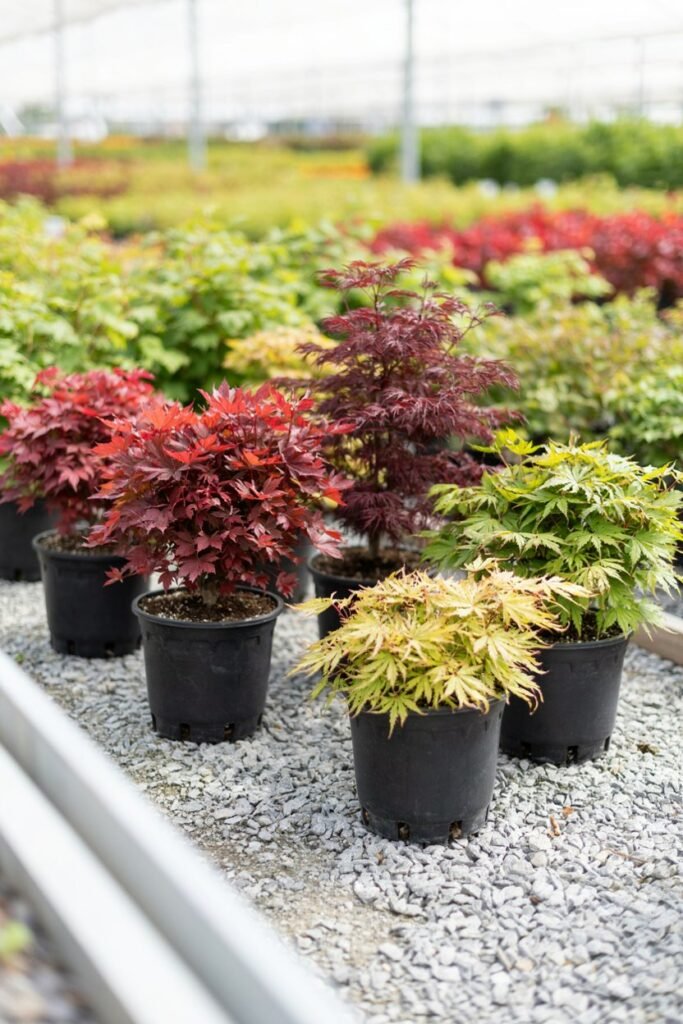
Before planting, spend some time choosing a variety that fits your garden.
Japanese maples come in many forms, and their mature size and sunlight preferences can differ considerably. Some have upright growth, while others develop a beautiful cascading or weeping shape.
When shopping, check:
- Mature height
- Mature width
- Leaf color
- Leaf shape
- Growth habit
- Cold hardiness
- Sun requirements
- Whether the cultivar is suitable for your climate
Don’t choose a variety based only on its appearance in a nursery pot. A tree that looks perfect may not be the best choice for your particular garden conditions.
Where Should You Plant a Dwarf Japanese Maple?
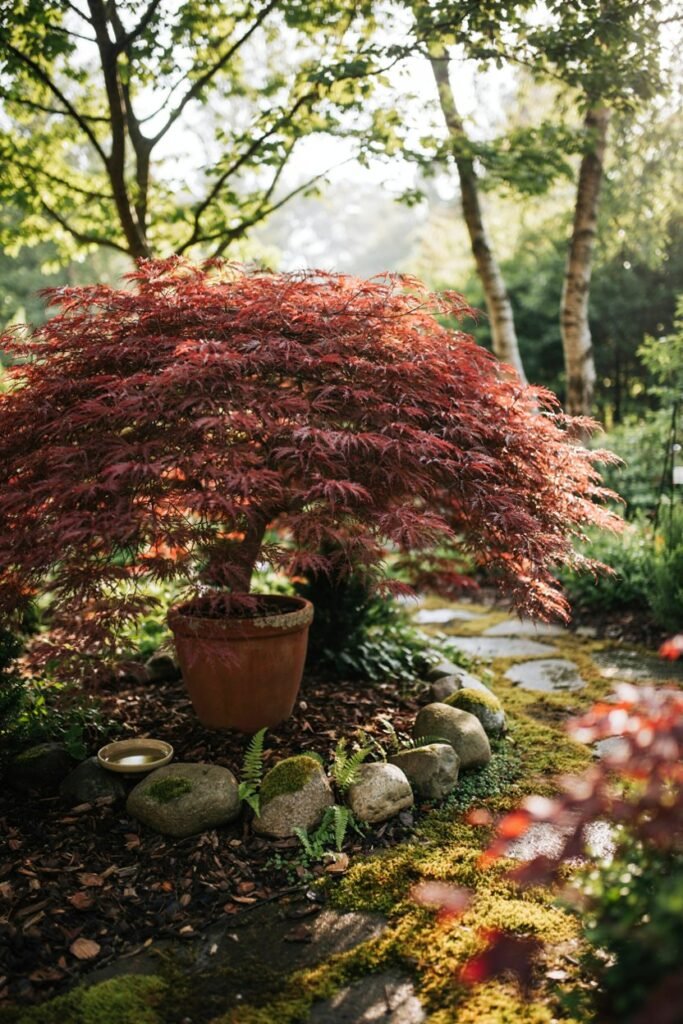
Choosing the location is one of the most important steps.
Japanese maples generally perform best in dappled or partial shade, particularly where they receive protection from intense afternoon sun and drying winds.
A spot beneath taller trees can work beautifully, provided the maple still receives enough light.
Good locations include:
- A partially shaded garden bed
- A protected courtyard
- Beside a patio
- Under the light canopy of a larger tree
- A sheltered Japanese-style garden
- A large container on a protected patio
Avoid extremely exposed areas where strong winds can dry out the foliage.
What about full sun?
Some cultivars tolerate more sun than others. Green-leaved types can often handle more sunlight, while delicate foliage can scorch in hot, dry conditions.
If you live somewhere with intense summer heat, afternoon shade can be especially helpful.
Prepare the Soil
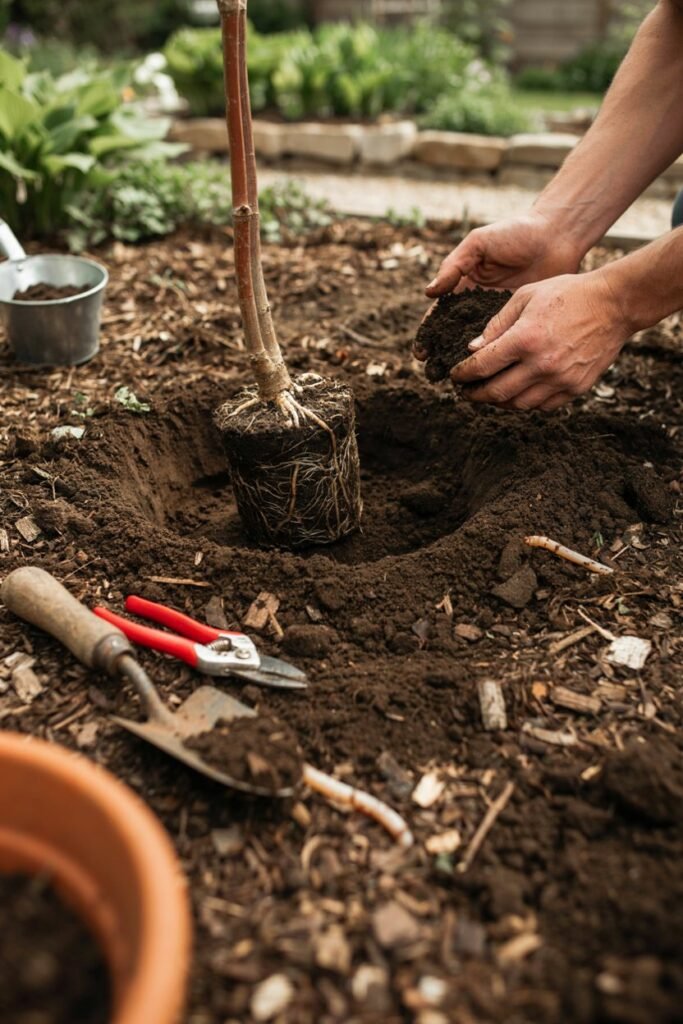
Dwarf Japanese maples aren’t especially difficult about soil, but good drainage is essential.
They prefer moist, well-drained soil with plenty of organic matter and generally perform well in slightly acidic conditions.
Before planting, examine your soil.
If it is heavy and stays soggy after rain, improve the planting area so excess water can drain away. Japanese maple roots should not sit in standing water.
If your soil is poor, incorporating suitable organic matter can help improve the soil structure.
The goal is simple:
Moist—not soggy, rich—not excessively fertile, and well-drained.
How to Plant a Dwarf Japanese Maple
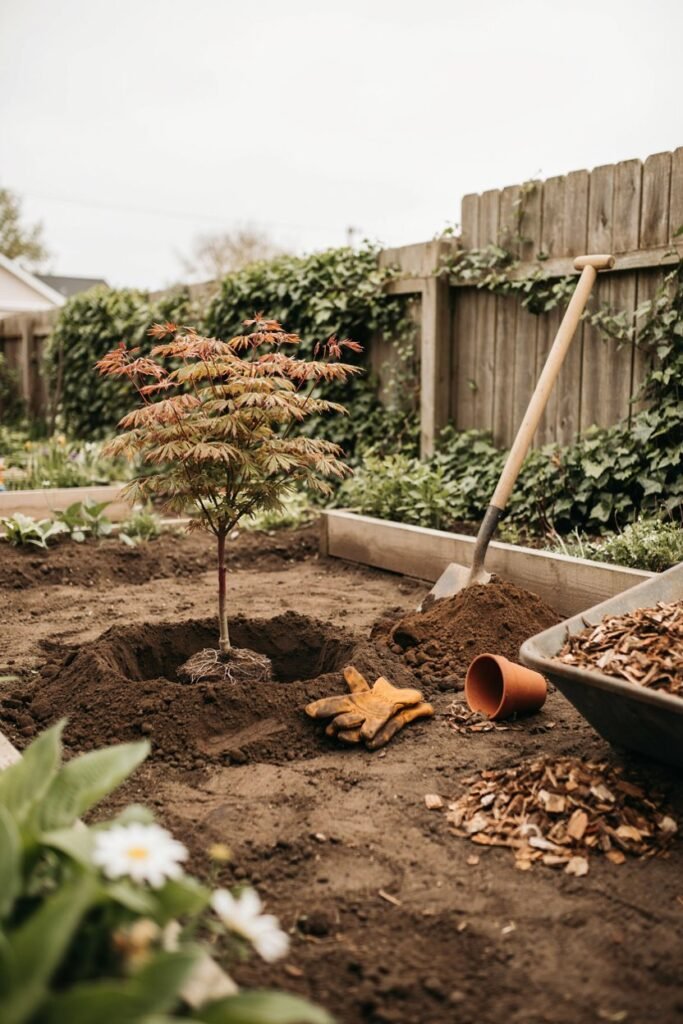
Once you’ve selected the location, planting is fairly straightforward.
Step 1: Dig the hole
Dig a hole that is at least twice as wide as the tree’s root ball, while keeping the planting depth appropriate for the root flare.
The hole doesn’t need to be dramatically deeper than the root ball.
One common mistake is planting trees too deeply. Japanese maples have relatively shallow roots, and the main roots should not be buried under a thick layer of soil.
Step 2: Remove the tree carefully
Gently remove the tree from its nursery container.
Handle the root ball carefully and avoid unnecessarily disturbing the roots.
Look at the base of the trunk and locate the root flare, where the trunk begins spreading into the main roots.
Step 3: Position the tree
Place the tree in the center of the hole.
Check it from several directions to make sure it is standing naturally.
The root flare should remain visible rather than being buried beneath soil.
Step 4: Backfill
Fill around the roots with the soil you removed from the hole.
Press the soil gently into place rather than compacting it heavily.
Step 5: Water thoroughly
Give the newly planted tree a deep watering to settle the soil around the roots.
Step 6: Add mulch
Apply roughly 2–3 inches of mulch around the root zone. Mulch helps conserve moisture and keep the soil cooler.
Keep the mulch away from direct contact with the trunk.
How Often Should You Water a Dwarf Japanese Maple?
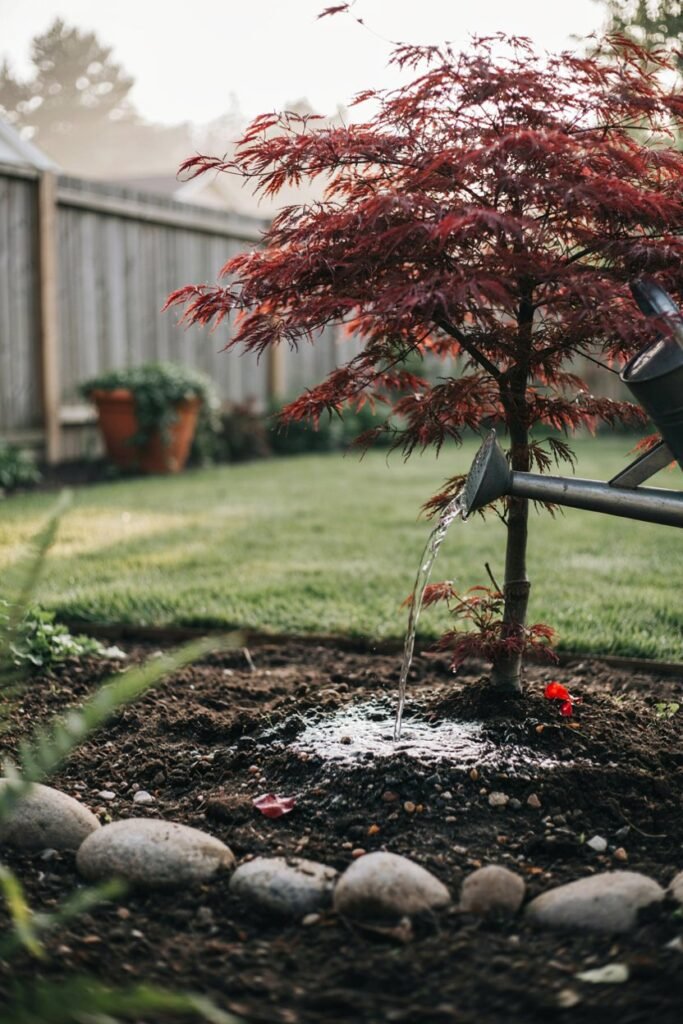
Watering is particularly important during the establishment period.
Newly planted Japanese maples should not be allowed to repeatedly dry out, especially during hot weather.
Rather than watering lightly every day, give the root zone a thorough watering when the soil begins to dry.
The exact schedule depends on:
- Temperature
- Rainfall
- Soil type
- Tree size
- Container vs. ground planting
- Amount of sunlight
During hot, dry periods, check the soil before watering.
Don’t automatically water simply because it has been a certain number of days. The goal is to maintain reasonably even moisture without leaving the roots constantly saturated.
Container-grown trees require more frequent attention because containers dry out much faster than garden soil.
Mulching Your Japanese Maple
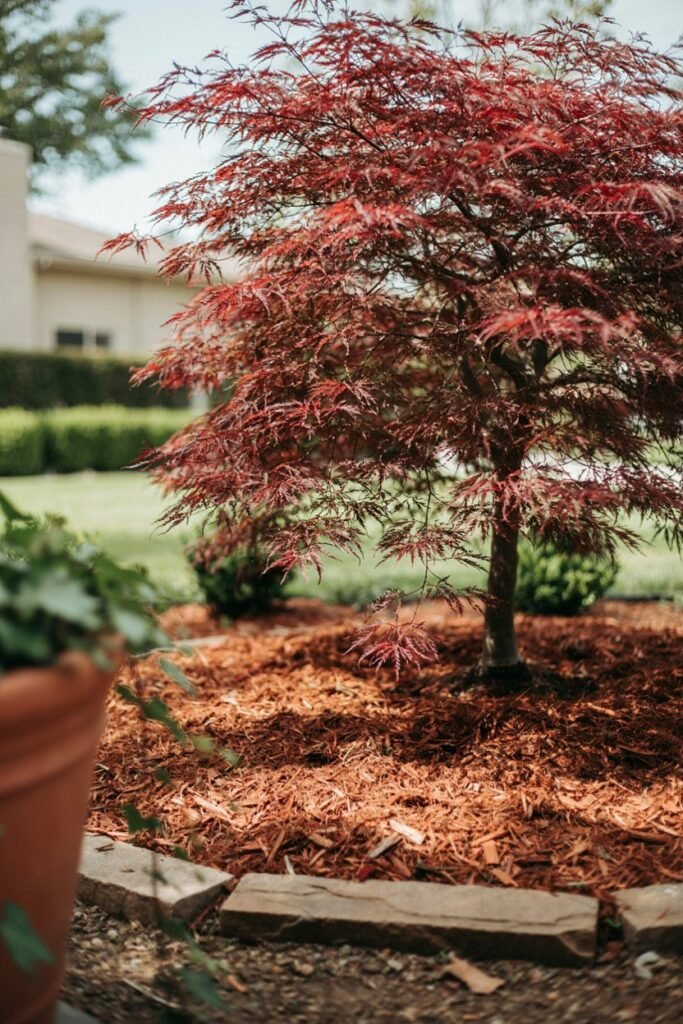
Mulch is one of the easiest ways to make caring for your tree simpler.
A 2–3 inch layer of organic mulch can help:
- Reduce moisture loss
- Moderate soil temperature
- Reduce weed competition
- Protect shallow roots
- Add organic matter as it breaks down
Keep a small gap between the mulch and trunk.
Avoid creating a thick mound of mulch against the bark because consistently damp bark can create problems.
Does a Dwarf Japanese Maple Need Fertilizer?
Usually, not much.
One of the easiest mistakes to make is assuming that more fertilizer means faster or healthier growth.
Japanese maples generally don’t need heavy feeding, particularly when planted in good soil containing organic matter. Newly planted trees generally should not be fertilized immediately.
If an established tree appears weak or growth is unusually poor, consider a soil test before adding fertilizer.
A soil test can help determine whether a genuine nutrient deficiency exists.
How to Prune a Dwarf Japanese Maple
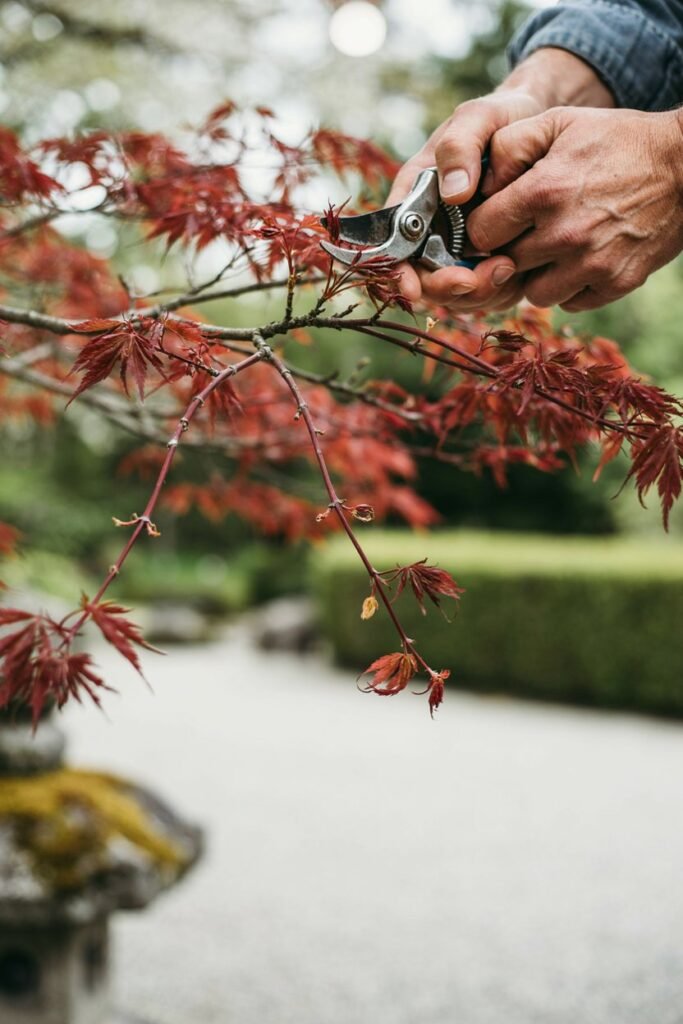
One of my favorite things about Japanese maples is that they naturally develop such an elegant shape that they usually don’t require heavy pruning.
The goal isn’t to force the tree into a particular shape. Instead, focus on maintaining its natural structure.
Remove:
- Dead branches
- Damaged branches
- Crossing branches
- Rubbing branches
- Strongly inward-growing branches
- Poorly positioned shoots
Make pruning cuts back to an appropriate side branch rather than leaving long stubs.
Japanese maples can bleed sap heavily when pruned at certain times of year, so pruning should be kept minimal and timed appropriately.
Extension guidance recommends pruning after the spring growth flush, while the RHS gives a broader pruning window from July through January.
Protecting the Leaves From Scorch
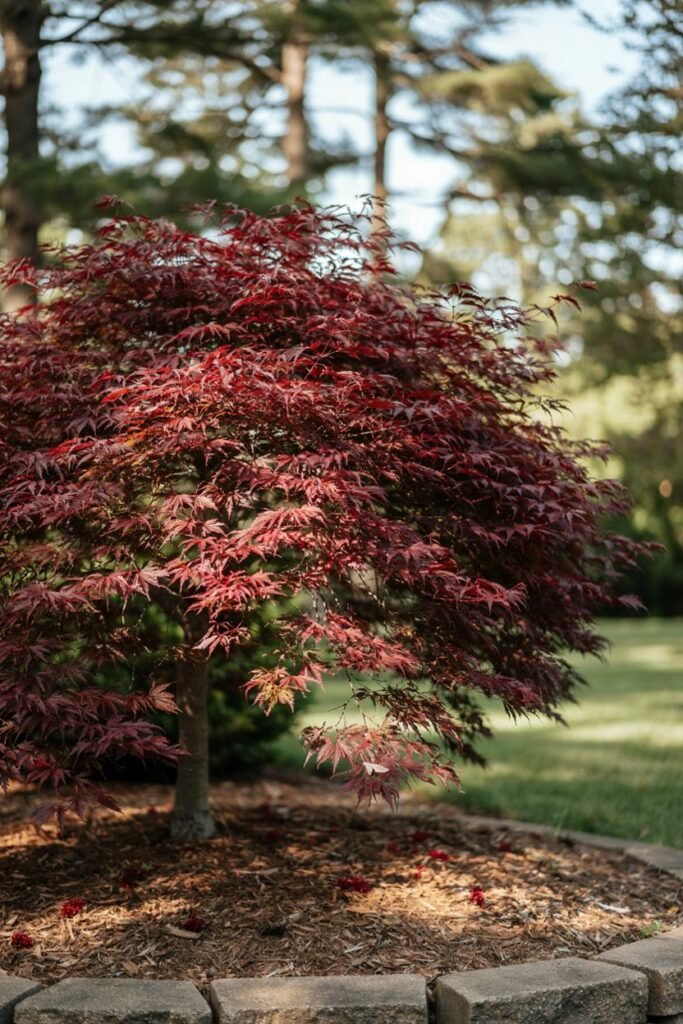
Leaf scorch is one of the most common concerns gardeners notice with Japanese maples.
The leaves may develop brown or tan edges, particularly during periods of:
- Intense sunlight
- High temperatures
- Dry soil
- Strong winds
- Root stress
Japanese maple foliage is particularly sensitive to hot, dry conditions.
If your tree regularly develops scorched leaves, look at the growing conditions before assuming the tree has a disease.
Ask yourself:
Is the soil drying out too quickly?
Is the tree exposed to harsh afternoon sun?
Is strong wind hitting the foliage?
Could nearby pavement or walls be increasing heat?
Improving moisture management and providing afternoon protection can make a noticeable difference.
Growing a Dwarf Japanese Maple in a Container
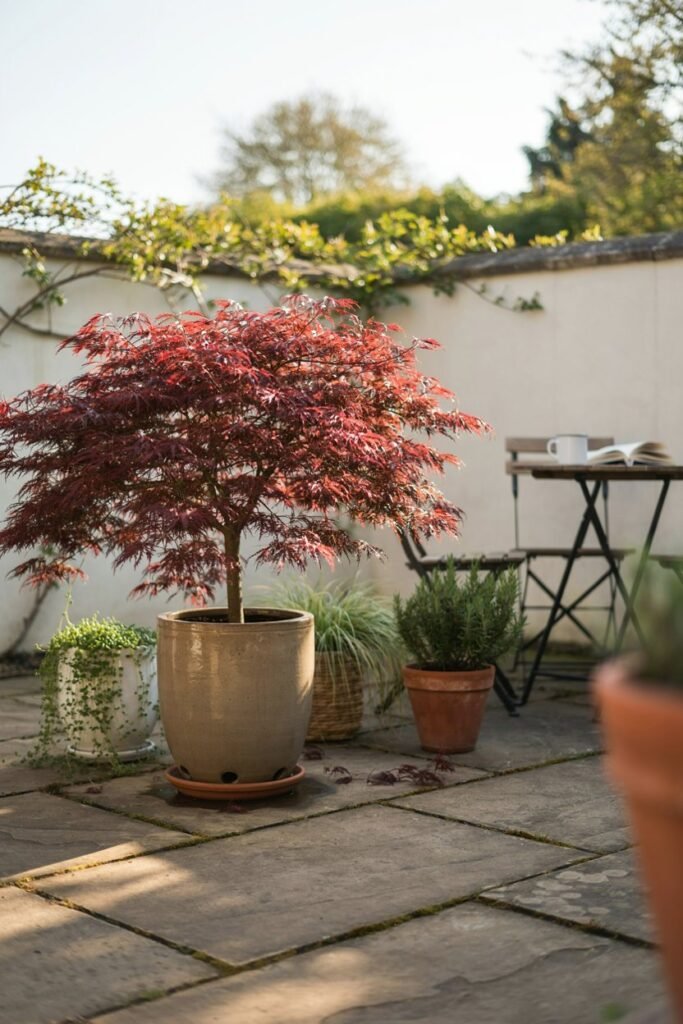
One of the best things about dwarf Japanese maples is that many compact varieties can grow successfully in containers.
Choose a pot with:
- Good drainage holes
- Enough room for the root system
- A stable base
- High-quality container growing medium
Don’t choose an enormous container simply because you want to give the roots lots of space. Excess soil can remain wet for too long and increase the risk of root problems.
Container trees also dry out faster than trees planted in the ground, so check their moisture regularly.
A container-grown maple can make a gorgeous focal point on a patio, balcony, courtyard, or small garden.
Common Problems With Dwarf Japanese Maples
Japanese maples are generally considered relatively low-maintenance, but problems can still occur.
Brown leaf edges
Usually associated with heat, wind, dry conditions, or root stress.
Leaves dropping
Some leaf loss can happen when a tree experiences environmental stress. Check watering, sunlight, wind, and overall growing conditions.
Poor growth
Poor soil, inadequate moisture, root problems, or unsuitable growing conditions can slow growth.
Insects
Aphids and scale can occasionally affect Japanese maples, while borers may be associated with stressed trees.
Don’t immediately reach for a treatment when you notice an insect. First identify what you’re dealing with and determine whether it is actually causing significant damage.
Seasonal Care Guide
Spring
Spring is when your maple wakes up and produces its delicate new foliage.
Watch for late frosts because Japanese maples leaf out early and their young foliage can be damaged by freezing temperatures.
Check your mulch and inspect the branches for winter damage.
Summer
Summer is all about moisture and protection.
Keep an eye on the soil during hot, dry weather and protect the tree from excessive afternoon heat when possible.
Fall
Fall can be spectacular.
Depending on the cultivar, foliage may turn shades of yellow, orange, red, bronze, or purple.
Continue watering when the weather remains dry.
Winter
Protect young trees from severe exposure, especially strong drying winds.
A sheltered location can help reduce winter stress.
My Best Tips for Growing a Healthy Dwarf Japanese Maple
If you want to keep things simple, remember these seven rules:
- Choose the right cultivar for your climate.
- Give it morning sun and afternoon protection when appropriate.
- Plant in well-drained soil.
- Keep the soil evenly moist while the tree establishes.
- Mulch around the root zone without touching the trunk.
- Avoid unnecessary fertilizer.
- Prune lightly and preserve the tree’s natural shape.
The most important lesson is that Japanese maples generally prefer consistency. Avoid allowing the soil to swing repeatedly between extremely dry and extremely wet conditions.
Final Thoughts
Growing a dwarf Japanese maple doesn’t have to be complicated. Once you give it the right location and pay attention to moisture, much of the work becomes simple maintenance.
I especially love these little trees because they can transform an ordinary garden corner into something that feels peaceful and intentional.
Their delicate foliage, graceful branches, and seasonal color make them beautiful focal points even in smaller spaces.
Give your maple time to establish, avoid over-pruning, protect it from harsh conditions, and let its natural shape shine. With a little patience, your dwarf Japanese maple can become one of the most charming features in your garden.
