
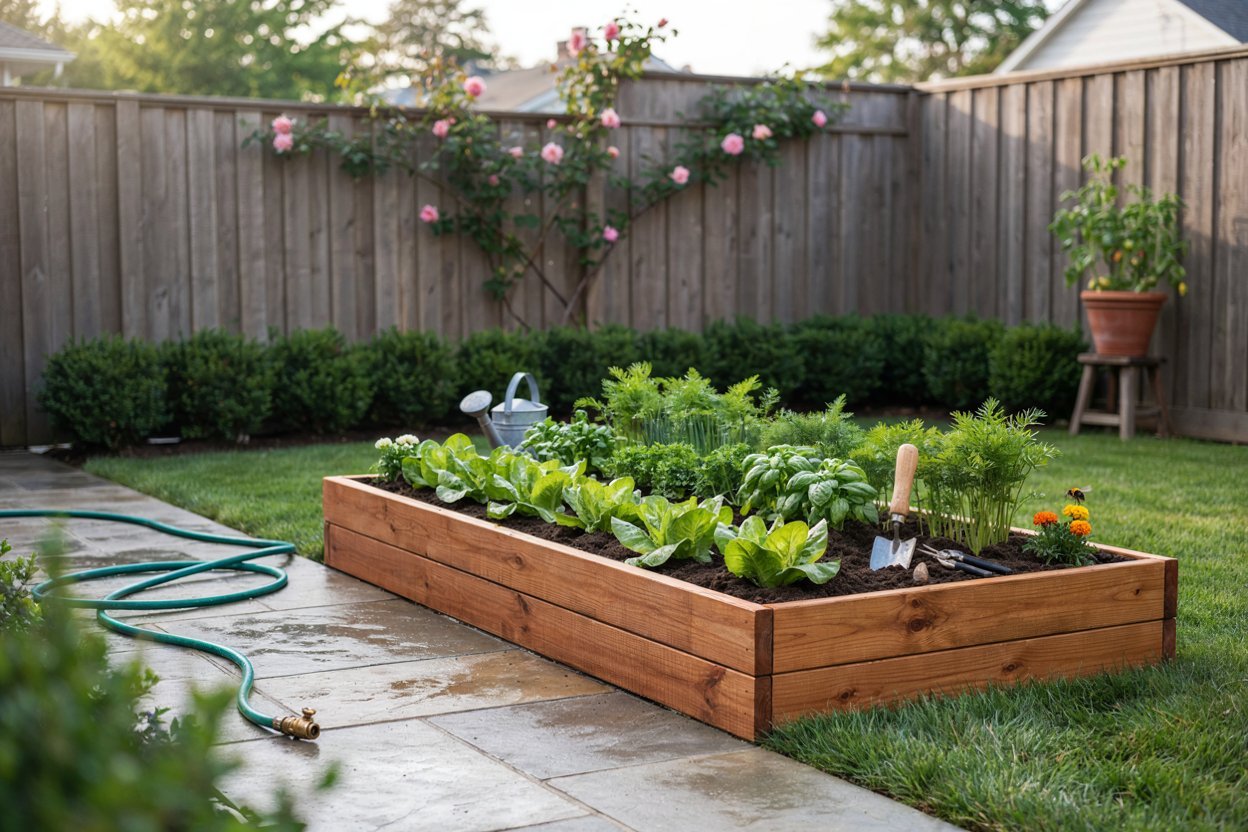

I love using raised garden beds because they make growing vegetables feel so much easier and more organized.
You don’t need a large backyard, expensive materials, or advanced building skills to make one.
A simple wooden frame, good soil, and a sunny spot can give you a wonderful place to grow vegetables, herbs, and flowers.
Raised beds are also helpful when your garden soil is poor or difficult to work with. If you have been thinking about starting a garden but don’t know where to begin, this is a great project to try.
Let’s walk through how to make a simple raised garden bed with just a few basic supplies.
Why Use a Raised Garden Bed?
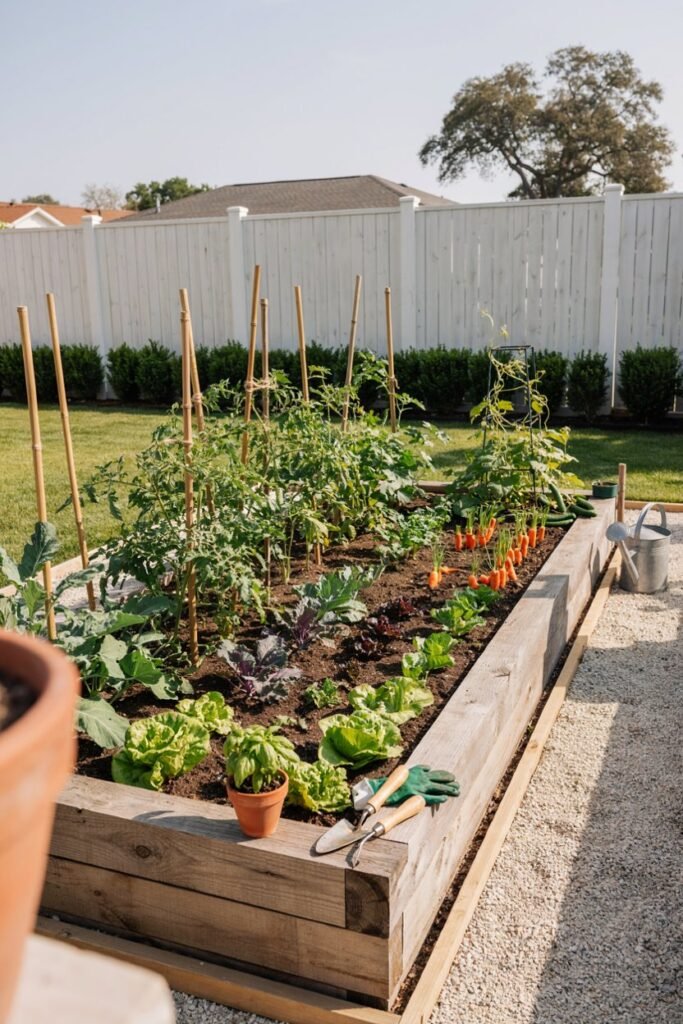
Raised garden beds are popular because they make gardening simple.
Some of the main benefits include:
- Better control over your soil
- Improved drainage
- Easier planting and weeding
- Less compacted soil
- A more organized garden
- Easy access to your plants
You can also make a raised bed in almost any size you need.
What You’ll Need
For a basic wooden raised bed, you only need a few things:
- 4 wooden boards
- Outdoor screws
- Drill
- Measuring tape
- Level
- Garden soil
- Compost
- Plants or seeds
Cedar is a good choice for raised beds because it holds up well outdoors. If you use another type of wood, choose untreated wood that is suitable for garden use.
Choose the Right Location
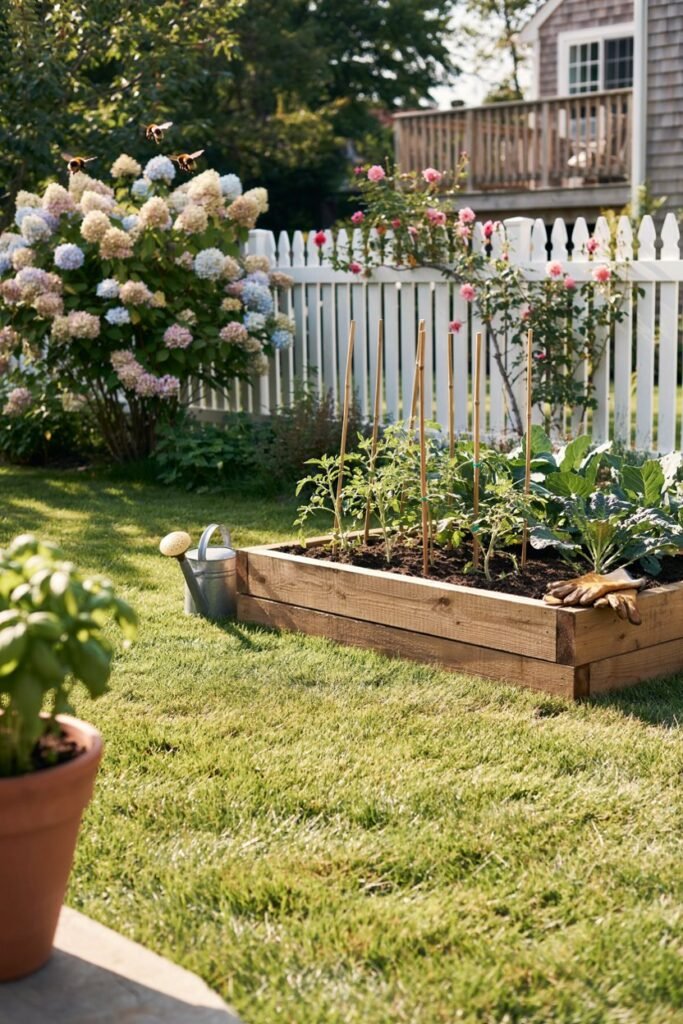
Before building your bed, choose a good location.
Most vegetables need plenty of sunlight, so pick an area that gets around 6–8 hours of sunlight a day.
Also choose a spot that is:
- Easy to reach
- Close to a water source
- Fairly level
- Not constantly wet
Think about how you will care for the garden before you build it. A bed that’s close to your home will be much easier to water and check every day.
Pick a Simple Size
You can make your raised bed any size you want.
A good beginner size is 4 feet wide by 8 feet long.
However, smaller beds work just as well.
For example, you could make one that is:
- 3 × 3 feet
- 4 × 4 feet
- 4 × 6 feet
- 4 × 8 feet
Try not to make the bed too wide. You should be able to reach the center without stepping inside it.
Build the Frame
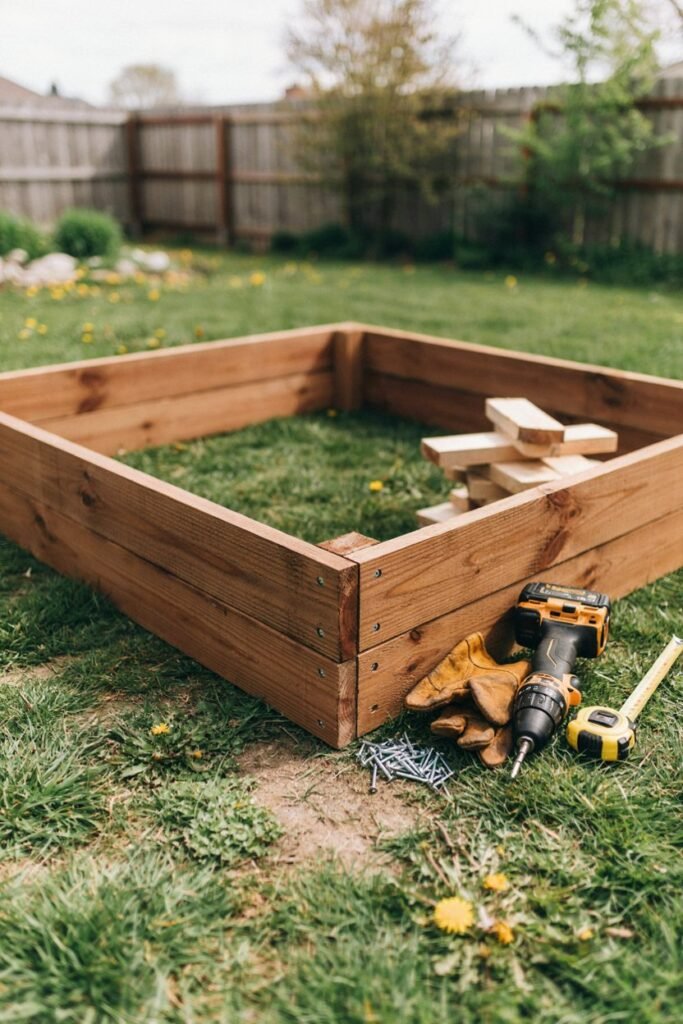
Place your four boards on the ground to form a rectangle or square.
Line up the corners and use your drill to attach the boards with outdoor screws.
Use two or more screws at each corner to make the frame sturdy.
Once the frame is together, check that it sits properly on the ground.
That’s really all you need for a basic raised garden bed.
You don’t need complicated plans or fancy designs.
Prepare the Ground
Before putting the bed in place, clear away large weeds, grass, and rocks.
You can place the raised bed directly on the ground.
If you’re putting it over grass, cut the grass short first.
You can also place plain cardboard underneath the bed. This can help block grass and weeds while the cardboard gradually breaks down.
Make sure the cardboard doesn’t contain plastic or glossy coatings.
Fill the Bed With Soil
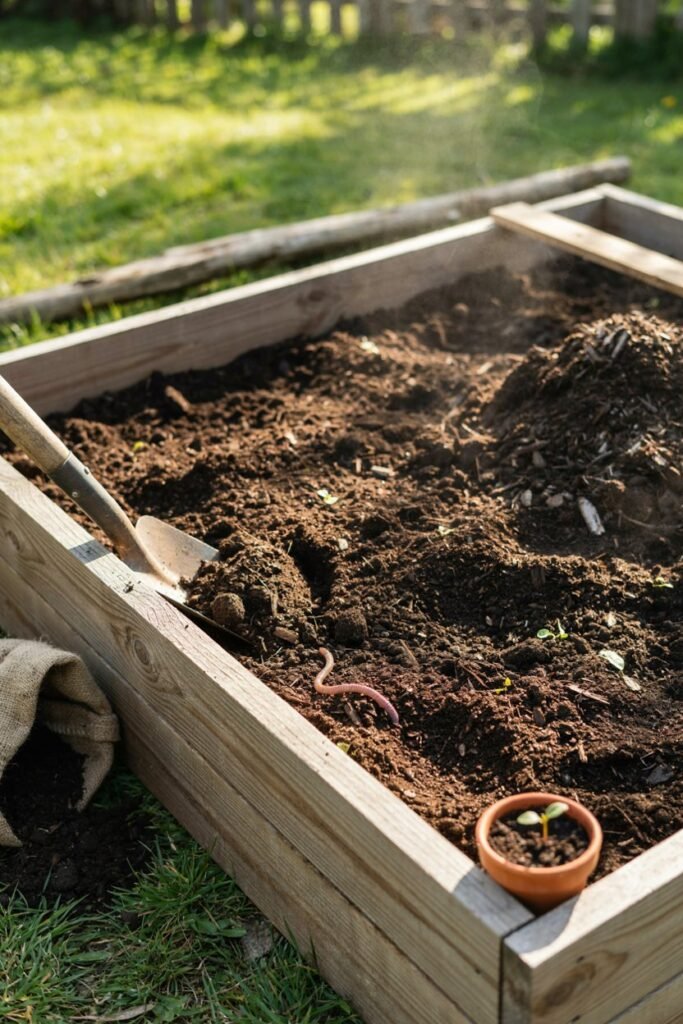
Now comes the most important part: filling your bed.
Use a good-quality garden soil and mix in compost.
A simple mixture can be:
Garden soil + compost
You don’t need to make the soil mixture complicated.
Compost helps add organic matter and supports healthy plant growth.
Fill the bed almost to the top, leaving a little space so soil doesn’t wash out when you water.
What Can You Grow?
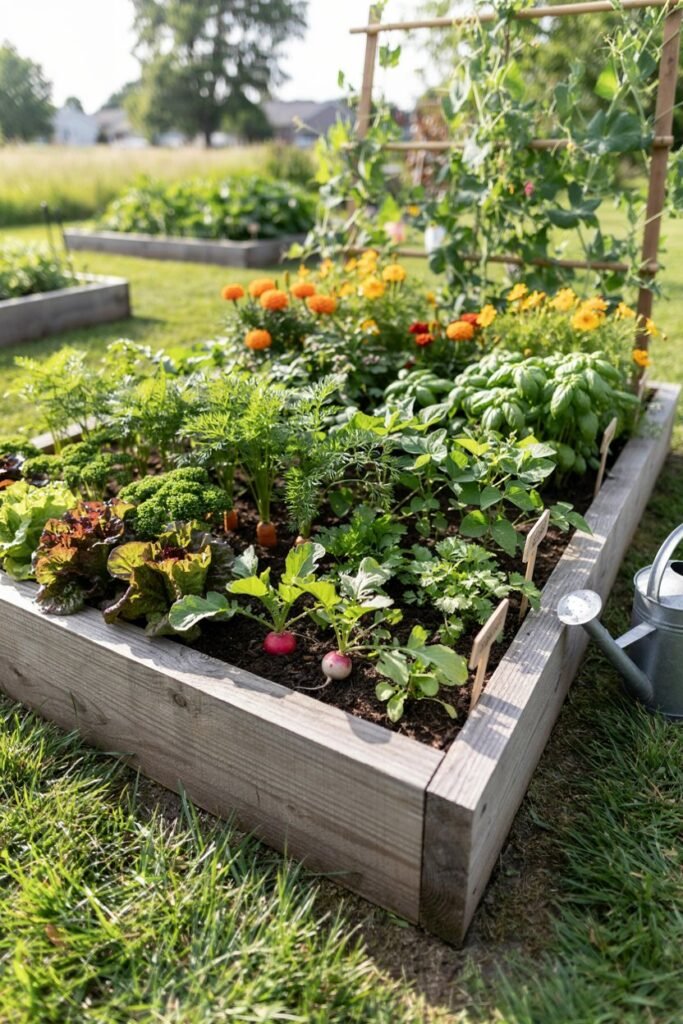
You can grow many different plants in a raised garden bed.
Some easy choices include:
Lettuce
Lettuce doesn’t need a lot of space and grows well in raised beds.
Radishes
Radishes are quick-growing and beginner-friendly.
Carrots
Loose soil makes it easier for carrots to develop straight roots.
Beans
Bush beans are a simple choice for a small raised bed.
Herbs
Try growing:
- Basil
- Parsley
- Cilantro
- Chives
- Thyme
Flowers
You can also add flowers such as marigolds or nasturtiums to bring color to your vegetable garden.
Don’t Plant Too Close Together
One simple mistake beginners make is overcrowding their beds.
Plants need room to grow.
When planting, check the spacing instructions on the seed packet or plant label.
It may look like you have too much empty space at first, but your plants will fill in as they grow.
Giving plants enough room also improves airflow and makes harvesting easier.
Water Your Raised Bed
After planting, water the bed thoroughly.
Check the soil regularly, especially during hot or dry weather.
Instead of watering just the surface, water deeply enough to moisten the soil around the roots.
Morning is a good time to water your garden.
How often you need to water will depend on your weather, soil, and plants.
The easiest method is to check the soil before watering.
Add Mulch
Adding mulch around your plants can make maintaining your raised bed easier.
You can use materials such as:
- Straw
- Shredded leaves
- Grass clippings that are suitable for garden use
- Other organic mulch
Mulch can help keep moisture in the soil and reduce weeds.
Leave a little space around plant stems instead of piling mulch directly against them.
Easy Maintenance
Once your raised bed is planted, it doesn’t require much work.
Pull Weeds
Remove weeds when they are small.
Add Compost
Add more compost when preparing the bed for a new growing season.
Check Your Plants
Look at your plants regularly for signs of pests or disease.
Water When Needed
Don’t let the soil stay extremely dry for long periods.
Harvest Regularly
Pick vegetables and herbs when they’re ready. Regular harvesting can encourage some plants to keep producing.
Simple Raised Bed Ideas
You don’t have to build a large garden.
Small Herb Bed
Make a small 2–3 foot bed and fill it with your favorite herbs.
Vegetable Bed
Grow lettuce, carrots, radishes, and beans together.
Flower Bed
Use a raised bed to create a colorful flower garden.
Mixed Garden
Combine vegetables, herbs, and flowers in one bed.
This can be a lovely option if you want your garden to look attractive while still producing food.
Final Thoughts
A raised garden bed is one of the easiest ways to create a simple growing space at home. You don’t need expensive materials or complicated building plans.
Start with one small bed, fill it with good soil and compost, and choose a few plants that you enjoy. As you become more comfortable, you can always add another bed later.
The goal isn’t to create a perfect garden right away. Start small, keep things simple, and enjoy watching your garden grow.
