

It always begins so quietly.
One day your succulent looks perfectly balanced soft, symmetrical, almost like a tiny piece of living art. And then, slowly, it begins to change.
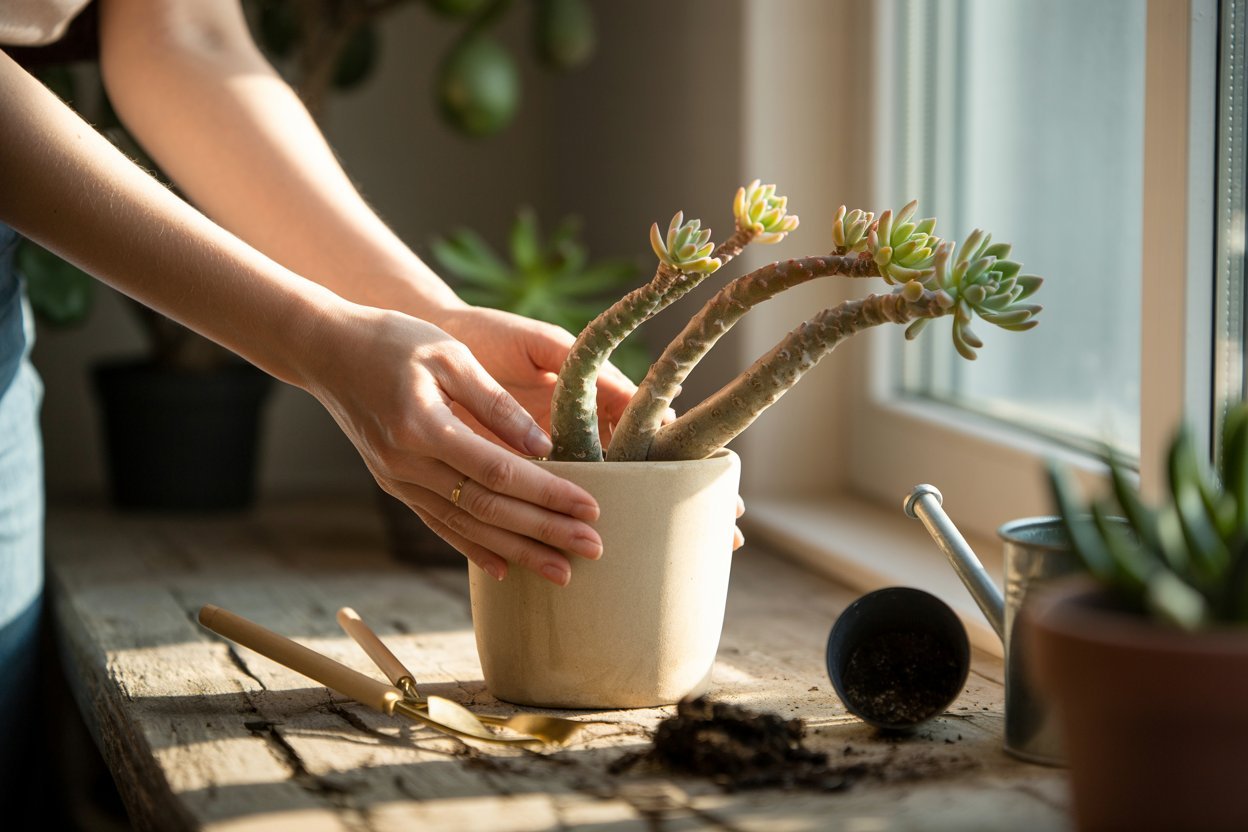
The leaves stretch apart, the stem rises higher than it should, and before you know it, your once-compact beauty is tall, uneven, and leaning toward the nearest window like it’s searching for something.
If you’ve found yourself staring at your plant wondering what went wrong, you’re not alone. I’ve had succulents that started out picture-perfect and ended up looking like they were trying to escape their pots.
But here’s the comforting truth: this is incredibly common and completely fixable.
In this guide, I’m going to gently walk you through exactly how to fix a stretched succulent, why it happens in the first place, and how to help your plants stay compact, healthy, and beautifully shaped going forward.
shop my amazon essentials
- Sharp Pruning Scissors
- Succulent Potting Mix
- Terracotta Pots
- Grow Lights
- Small Hand Trowel
- Pruning Knife or Garden Blade
- Drainage Pebbles or Small Rocks
- Spray Bottle
- Bamboo Stakes or Plant Supports
- Gardening Gloves
What Is a Stretched or Leggy Succulent?
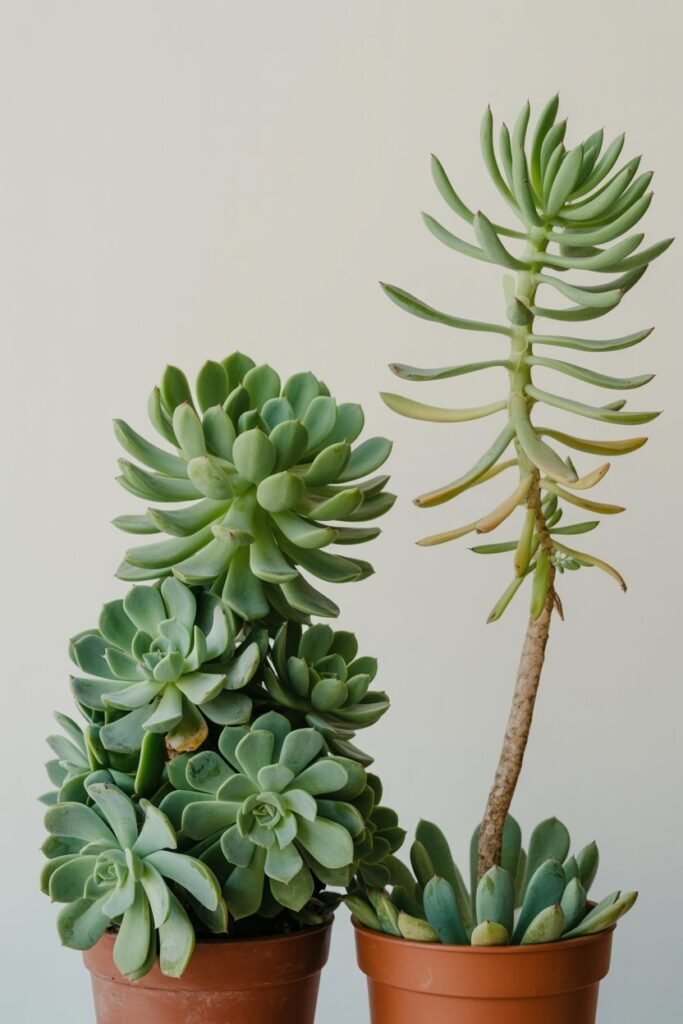
A stretched succulent, often described as “leggy,” is simply a plant that has grown in an elongated, spaced-out way instead of staying compact.
Signs Your Succulent Is Leggy
You might notice:
- Long stems with visible gaps between leaves
- Leaves that look smaller or thinner than usual
- A plant that leans toward light
- Faded or pale coloring
- A top-heavy appearance
Instead of growing in tight rosettes or clusters, your succulent looks like it’s reaching upward and that’s exactly what it’s doing.
Read Greenhouse for Beginners: Simple Tips and Practical Guidance to Get Started
Why Succulents Grow Tall and Leggy
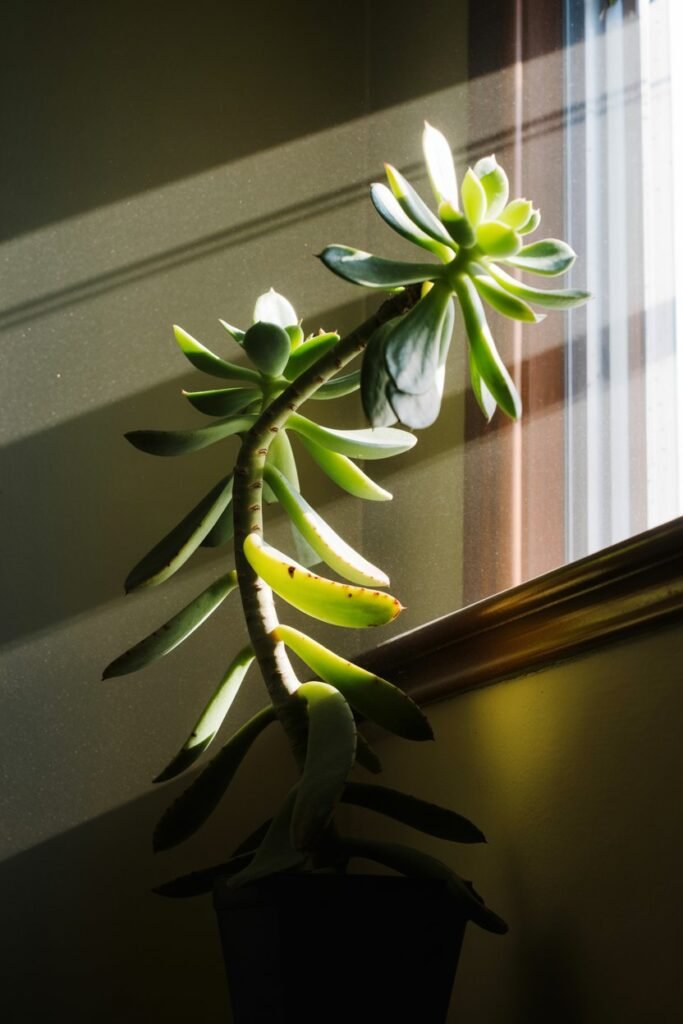
Understanding why your succulent stretched is the key to fixing it properly and preventing it from happening again.
The Main Cause: Lack of Light (Etiolation)
Succulents stretch due to a process called etiolation.
When they don’t receive enough light, they begin to:
- Grow taller to find more light
- Spread their leaves apart
- Lose their compact shape
It’s not a flaw it’s survival.
Other Contributing Factors
While low light is the main reason, a few subtle habits can make it worse:
- Keeping your plant far from a window
- Cloudy or rainy seasons reducing sunlight
- Not rotating your plant regularly
- Using weak indoor lighting
- Overcrowding multiple plants together
When these factors combine, stretching happens faster than you’d expect.
Read Cheap Items You Can Use as Gardening Supplies (That I Personally Swear By!)
Can You Actually Fix a Leggy Succulent?

This is where honesty matters.
You cannot reverse the stretching that has already happened. The elongated stem won’t shrink back.
But don’t worry that doesn’t mean your plant is ruined.
You can reshape it
You can propagate new plants
You can restore compact growth
In fact, many gardeners turn leggy succulents into multiple thriving plants.
The Best Method: Beheading Your Succulent (Don’t Worry, It Works!)
This is the most effective and transformative way to fix a stretched succulent.
And yes it sounds dramatic, but it’s surprisingly simple and rewarding.
Why Beheading Works
- The top becomes a new compact plant
- The base produces baby offsets
- You get a fresh, healthy restart
Read How to Dry and Preserve Herbs (The Gentle Gardener’s Guide)
Step-by-Step Guide to Beheading
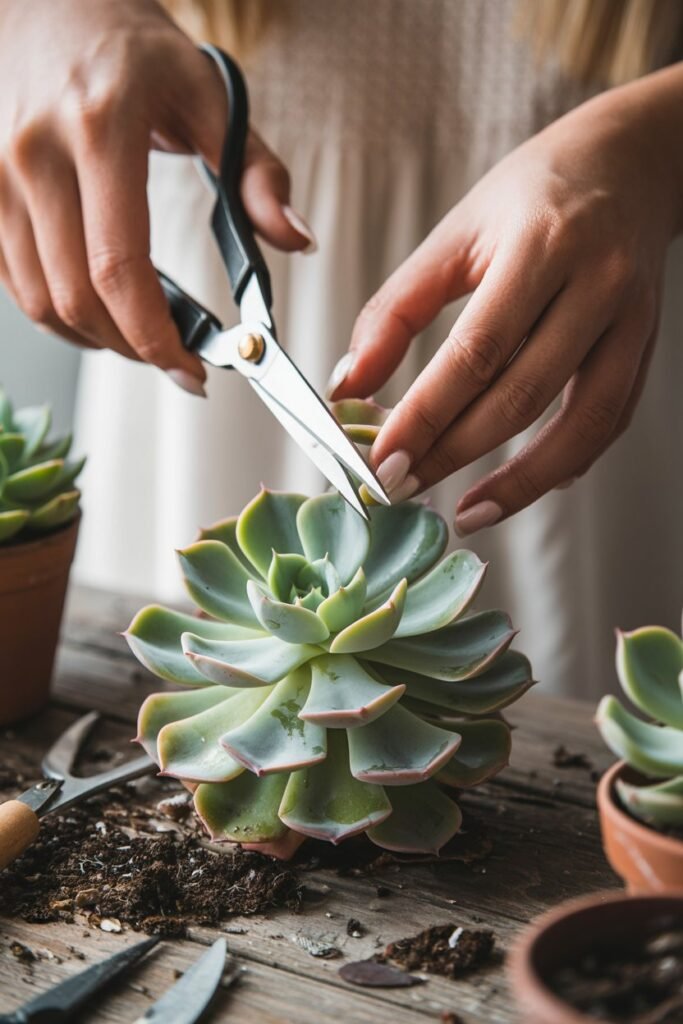
Step 1: Identify the Healthy Top
Look for the portion where leaves are still relatively close together. This is the part you want to save.
Step 2: Make a Clean Cut
Using clean scissors or pruning shears, cut just below the healthy rosette.
A clean cut reduces stress and prevents infection.
Step 3: Let It Callous
This step is gentle but essential.
Place the cutting in a dry, shaded area for 2–5 days until the cut end dries completely.
Step 4: Replant the Top
- Use well-draining succulent soil
- Insert the stem lightly into the soil
- Wait a few days before watering
Roots will begin forming within 1–3 weeks.
Step 5: Care for the Remaining Stem
Don’t throw away the base.
With time, it often produces:
- Tiny offsets (baby plants)
- New growth from the sides
It may look bare at first but patience transforms it.
Propagating Leaves from a Leggy Succulent
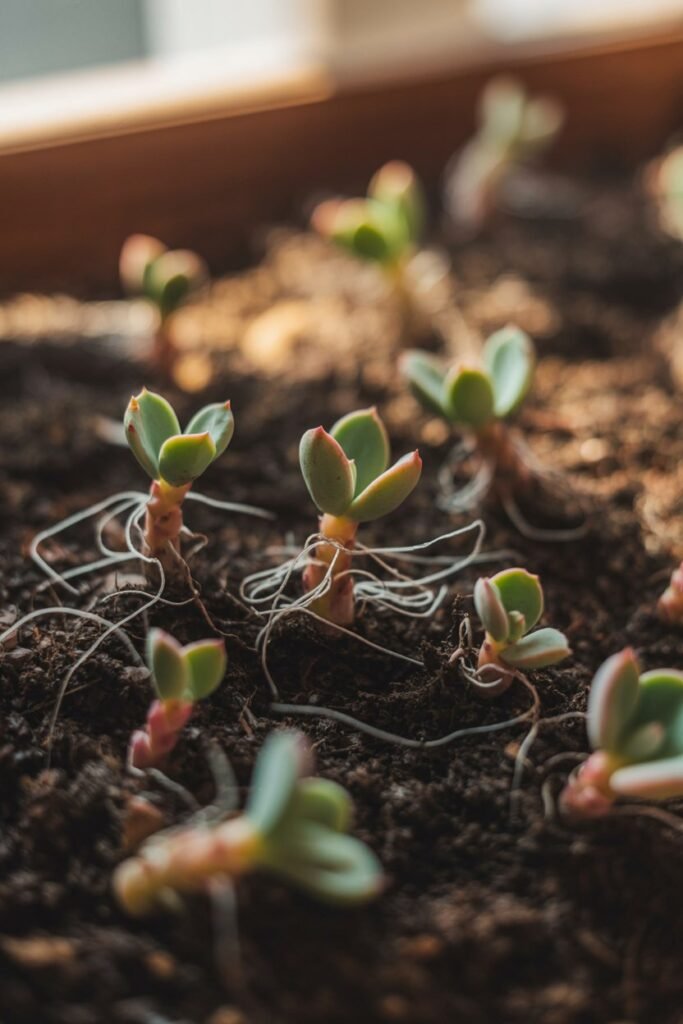
If your plant still has healthy leaves, you can multiply your success.
How to Propagate Leaves
- Gently twist off full, healthy leaves
- Let them dry for a few days
- Place them on top of soil
- Wait for roots and tiny plants to form
This process is slow but deeply satisfying like watching life quietly unfold.
Fixing the Real Problem: Light
Here’s the truth most guides skip:
If you don’t fix the lighting, your succulent will stretch again even after cutting.
How Much Light Do Succulents Need?
Most succulents thrive with:
- 4–6 hours of bright, indirect sunlight
- Or gentle morning direct sun
How to Transition Your Plant Safely
If your succulent has been in low light, avoid sudden changes.
Instead:
- Move it gradually closer to light
- Increase exposure over 1–2 weeks
- Watch for signs of stress
This prevents sunburn while encouraging healthy growth.
Read How to Grow Wandering Jew (Tradescantia) — A Gardener’s Complete, Hands-On Guide
Choosing the Right Spot in Your Home
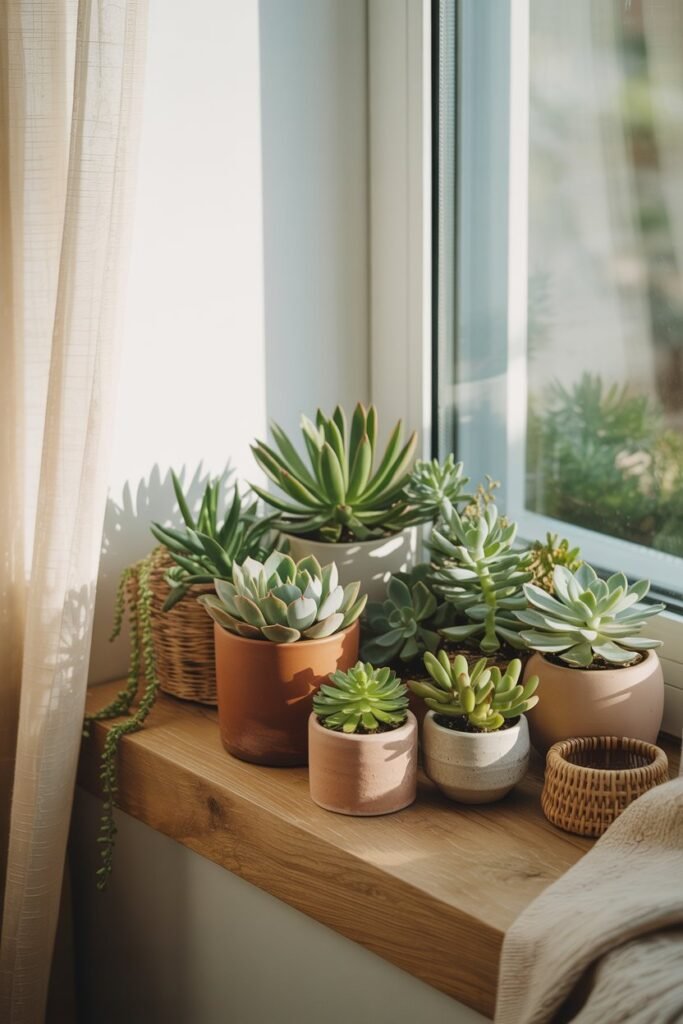
Light placement matters more than anything else.
Ideal Locations
- South-facing windows (best)
- East-facing windows (gentle morning light)
- Bright indoor spaces close to windows
Avoid placing succulents:
- In dark corners
- Far from natural light
- Behind heavy curtains
Grow Lights: Your Secret Weapon
If natural light is limited, grow lights can completely change your results.
What to Look For
- Full-spectrum LED lights
- 10–12 hours daily exposure
- Placement 6–12 inches above plants
Grow lights bring consistency and consistency is everything.
Watering a Recovered Succulent
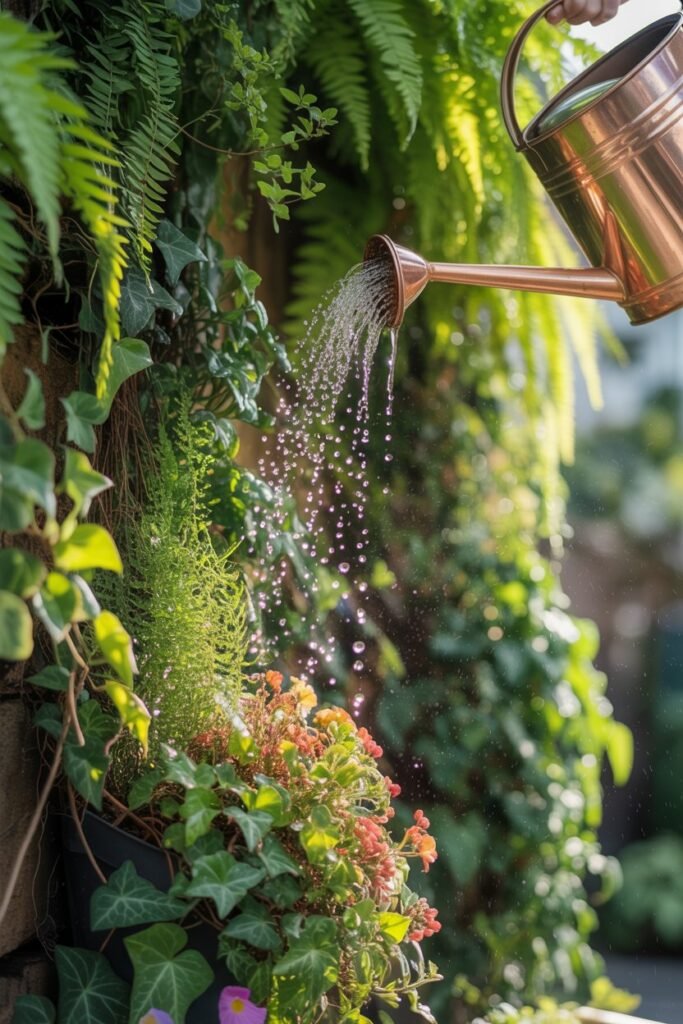
After fixing your plant, watering becomes even more important.
The Golden Rule
Only water when the soil is completely dry.
After Beheading
- Wait 3–5 days before watering
- Start lightly
- Increase gradually as roots develop
Too much water too soon can cause rot, especially in fresh cuttings.
Soil: The Foundation of Healthy Growth
Succulents need soil that drains quickly and doesn’t hold excess moisture.
Ideal Soil Mix
- Cactus or succulent soil
- Mixed with perlite or coarse sand
This keeps roots healthy and prevents waterlogging.
Repotting for a Fresh Start
Sometimes your succulent just needs a clean slate.
Benefits of Repotting
- Refreshes old soil
- Improves drainage
- Supports new growth
Choose a pot with drainage holes and avoid oversized containers.
How to Prevent Leggy Succulents in the Future
Once you’ve fixed your plant, prevention becomes your quiet superpower.
Simple Habits That Make a Difference
- Keep your plant in bright light
- Rotate it weekly
- Avoid overcrowding
- Adjust for seasonal light changes
- Use grow lights when needed
Small adjustments create lasting results.
Common Mistakes to Avoid
Even with love and care, a few missteps can slow progress:
- Watering immediately after cutting
- Moving plants into harsh sun too quickly
- Ignoring lighting conditions
- Overwatering to “help” the plant
Succulents thrive on balance, not excess.
Emotional Side of Plant Care (Because It Matters)
It’s easy to feel discouraged when your plant changes shape.
But here’s something I’ve learned over time:
Plants don’t fail—they adapt.
Your succulent stretched because it was trying to survive, not because you did something wrong.
And now, with a little knowledge and care, you can guide it into something even more beautiful.
Final Thoughts: A Fresh Start for You and Your Plant
Fixing a leggy succulent is more than just a gardening task it’s a quiet transformation.
You take something that looks tired and stretched, and with a few gentle steps, you give it a second life.
And in the process, you grow too.
With better light, mindful watering, and a little patience, your succulents can return to their compact, elegant forms—and even multiply into new plants you can share, gift, or grow into a fuller collection.
So if your succulent is tall and reaching right now, don’t see it as a mistake.
See it as the beginning of something new
