
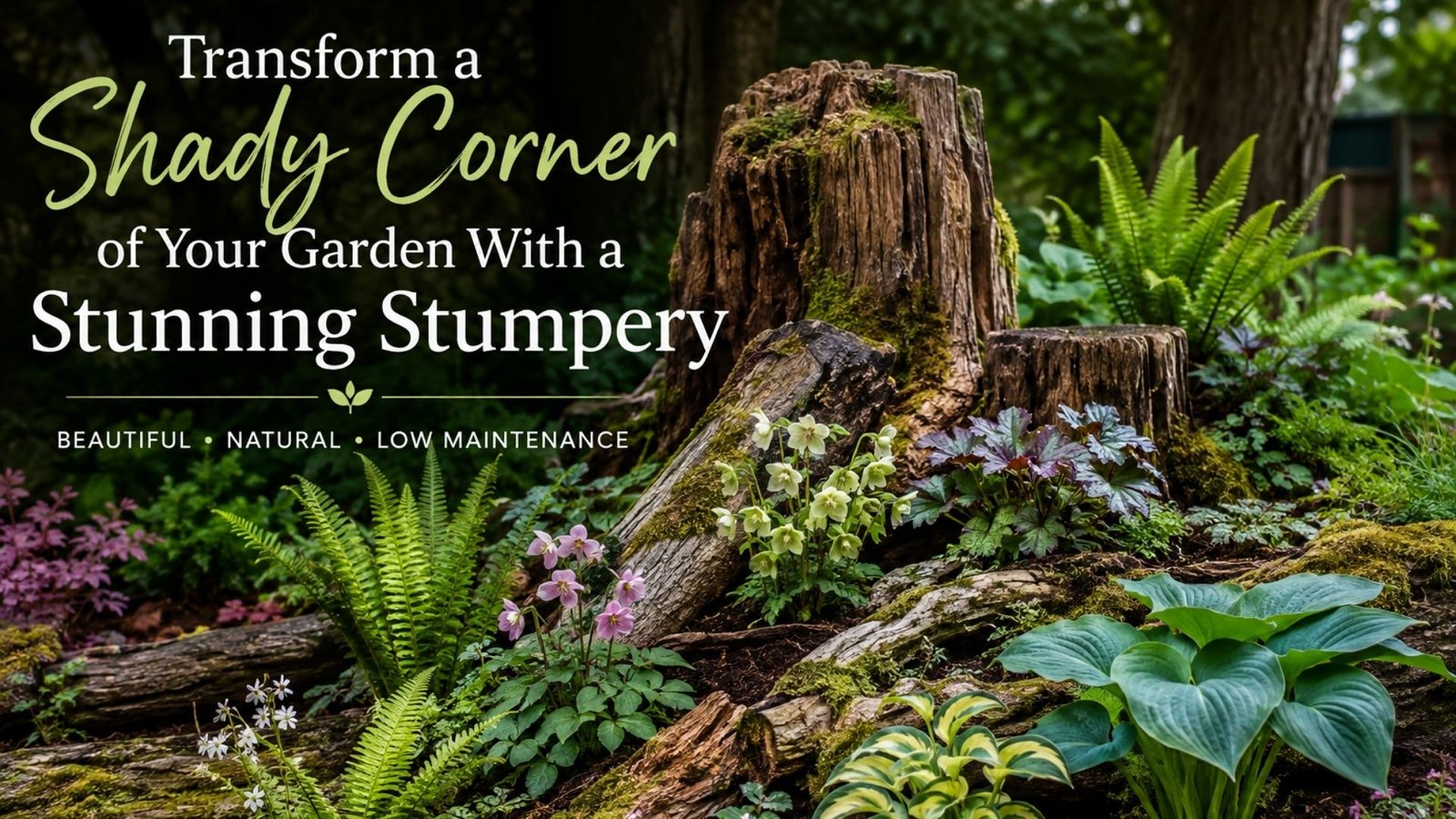

A shady corner of the garden can sometimes feel difficult to work with. I know how frustrating it can be when flowers struggle to grow and the space ends up looking empty or forgotten.
Instead of trying to force sun-loving plants into that area, why not turn it into something completely different?
A stumpery is a beautiful way to transform a shady corner into a natural woodland-style feature. Using old tree stumps, logs, roots, and shade-loving plants, you can create a peaceful garden area filled with texture and greenery.
The best part is that a stumpery does not need to look perfect. The more natural it feels, the more beautiful it can become. Here is how to create one in your own garden.
What Is a Stumpery?
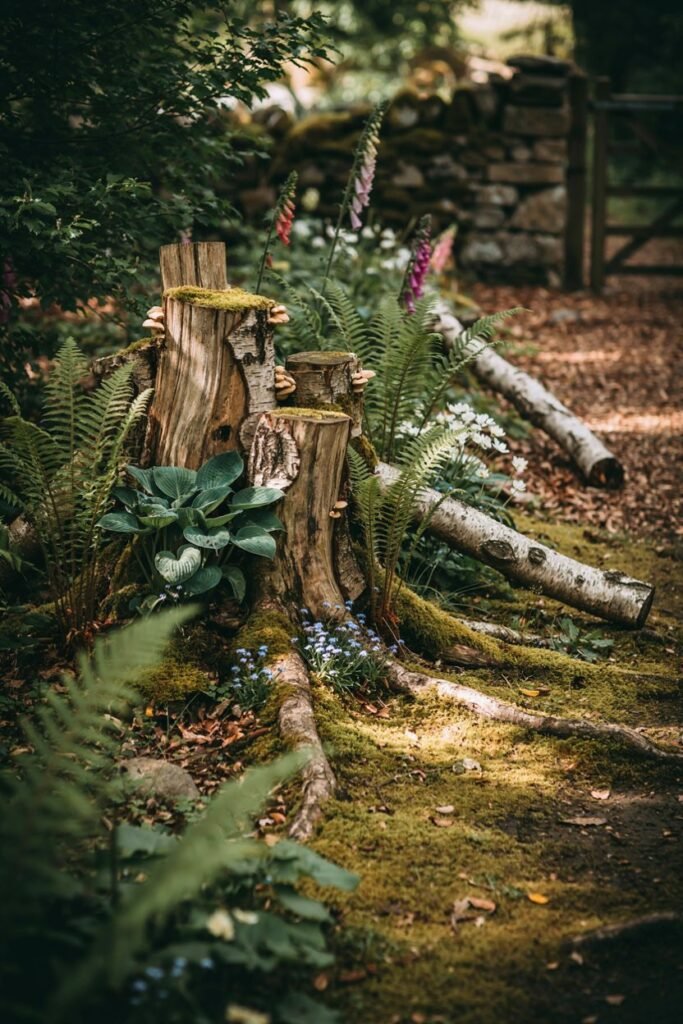
A stumpery is a garden feature made using old tree stumps, logs, roots, and pieces of wood. These are arranged together and surrounded by plants that enjoy shady conditions.
The idea is to create a natural woodland look.
A stumpery can be:
- Small and simple
- Large and dramatic
- Wild and natural-looking
- Filled with ferns and leafy plants
- Created in an unused garden corner
It is also a great way to reuse old wood instead of throwing it away.
Why a Shady Corner Is Perfect for a Stumpery
Shade can be difficult for traditional flower beds, but it is perfect for creating a woodland-style garden.
Many beautiful plants naturally grow in shaded areas, including:
- Ferns
- Hostas
- Heucheras
- Hellebores
- Brunnera
- Primroses
When you combine these plants with natural wood, the whole area can feel like a small woodland garden.
Before you start, take a little time to look at your shady corner. Check whether the soil is mostly moist or dry, as this will help you choose the right plants.
What You Need to Create a Stumpery
You do not need expensive materials to get started.
Natural Materials
Try to collect:
- Old tree stumps
- Logs
- Tree roots
- Thick branches
- Pieces of bark
Using different sizes and shapes will make your stumpery look more interesting.
Basic Gardening Tools
You may need:
- Gardening gloves
- A spade
- Hand trowel
- Pruning shears
- Wheelbarrow
You may also want compost or leaf mold to improve the planting areas.
How to Build Your Stumpery
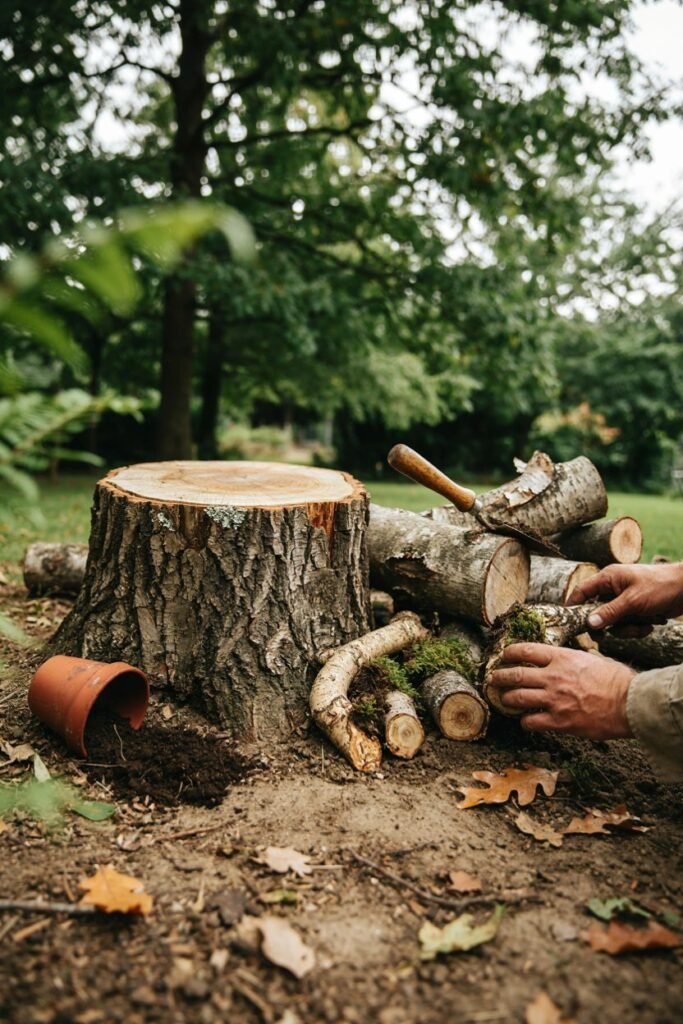
1. Choose Your Main Stump
Start with your largest and most interesting piece of wood.
This will become the main focal point of your stumpery.
You can place it upright, at an angle, or partially bury part of it in the soil. Take a few minutes to turn it around and see which position looks best.
2. Add More Logs and Roots
Once your main piece is in place, begin adding smaller logs, roots, and branches around it.
Try not to arrange everything in a straight line.
Instead, create a natural-looking group with different heights and angles.
Partially burying some pieces can make them look like they have always been part of the garden.
3. Leave Space for Plants
Do not completely cover the area with wood.
Leave small spaces between the stumps and logs where you can add plants.
These planting pockets will become fuller over time and help soften the rough edges of the wood.
4. Add Compost to Planting Areas
Improve the soil in your planting spaces with compost or other suitable organic matter.
This can help your plants establish more easily.
If your stumpery is beneath a tree, be careful when digging around large tree roots.
The Best Plants for a Stumpery
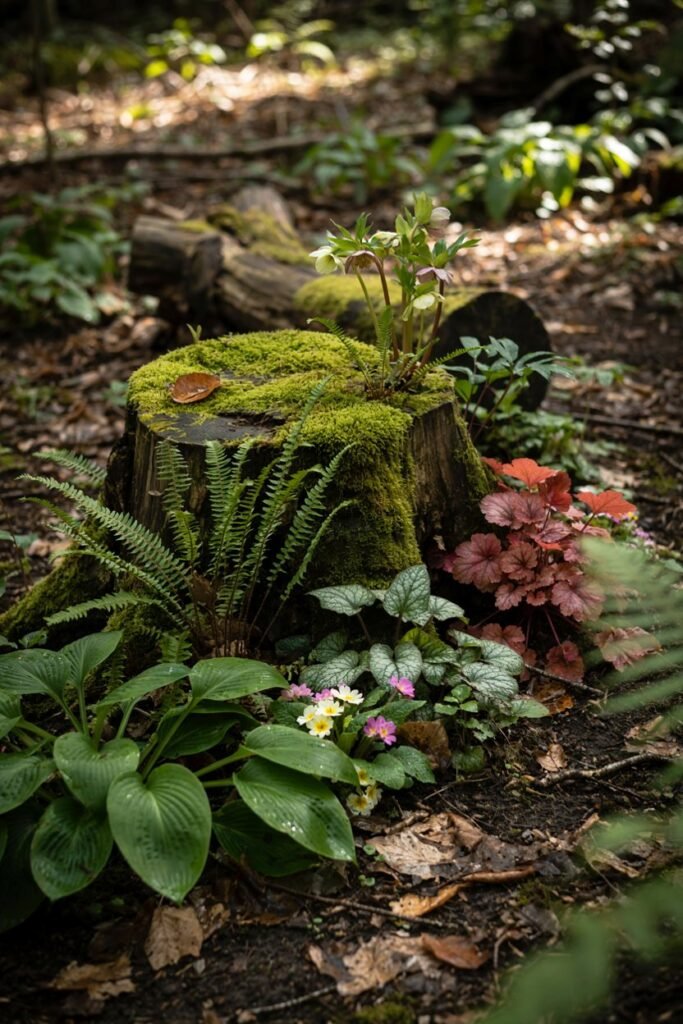
The plants are what bring your stumpery to life.
Ferns
Ferns are one of the best choices for a shady stumpery.
Their soft, detailed foliage looks beautiful next to rough and weathered wood.
Plant several ferns around the base of your stumps for a lush woodland feeling.
Hostas
Hostas have large, beautiful leaves that add bold texture.
They are especially useful for filling larger spaces between logs and stumps.
Choose different varieties to create a mixture of leaf shapes and colors.
Heucheras
Heucheras are perfect if you want to add more color.
Their foliage can come in shades of purple, bronze, green, and other attractive tones.
Hellebores
Hellebores can add flowers to a shady area, particularly during the cooler parts of the growing season.
They work beautifully in a woodland-style planting design.
Brunnera
Brunnera has lovely foliage and delicate flowers.
Some varieties have silvery leaves that can brighten a darker garden corner.
Primroses
Primroses are wonderful for adding cheerful spring color.
Plant them in small groups around the edges of your stumpery.
How to Make Your Stumpery Look Natural
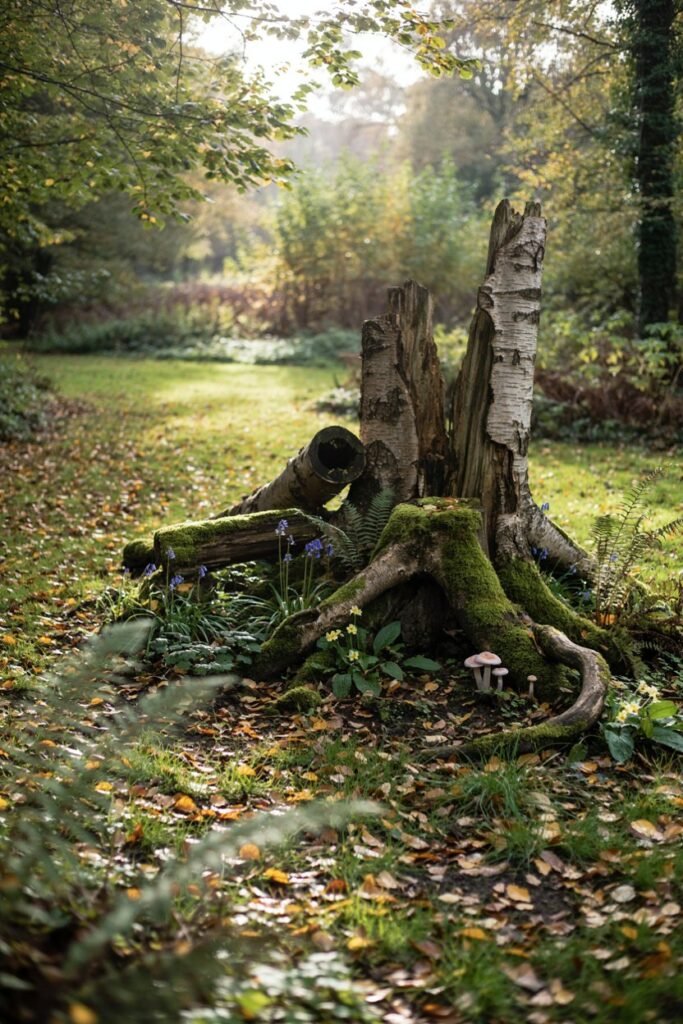
The secret to a beautiful stumpery is not making it look too perfect.
Nature is full of different shapes, heights, and textures.
Try these simple ideas:
- Use different sizes of wood.
- Avoid arranging everything evenly.
- Mix upright and horizontal pieces.
- Allow plants to grow between the wood.
- Leave some natural leaf litter around the area.
- Choose plants with different leaf shapes and textures.
Over time, your stumpery will begin to look even better as plants grow and settle into the space.
Add Different Heights for a Better Look
A mixture of heights can make even a small stumpery look more impressive.
Try using:
- Tall upright stumps at the back
- Medium-sized roots in the middle
- Low logs near the front
- Small plants around the edges
This creates depth and makes the garden feature more interesting to look at.
Don’t Forget About Wildlife
Old wood can provide shelter and habitat for small garden creatures and insects.
A stumpery can become a valuable natural feature in your garden as the wood slowly weathers over time.
You do not need to constantly replace or remove older pieces of wood simply because they look weathered. That natural aging process is part of the charm.
Avoid using chemically treated wood in areas where you are creating a natural wildlife-friendly garden feature.
How to Care for Your Stumpery
One of the best things about a stumpery is that it does not need constant maintenance.
Water New Plants
Water your plants regularly while they are becoming established.
Remember that shaded areas beneath trees can sometimes be surprisingly dry, so check the soil instead of assuming it has enough moisture.
Remove Weeds
Pull unwanted weeds before they take over your planting areas.
Add Organic Matter
Adding compost or leaf mold occasionally can help improve the soil around your plants.
Avoid Over-Tidying
A stumpery should have a slightly natural and relaxed appearance.
You do not need to remove every fallen leaf or make everything perfectly neat.
A little natural messiness is part of what makes the space beautiful.
Common Mistakes to Avoid
Choosing Plants That Need Full Sun
Always choose plants that match the amount of light your garden receives.
Planting Too Closely
Your plants may look small now, but many will grow much larger.
Leave enough space for them to spread.
Making Everything Too Neat
A perfectly arranged row of logs may not create the woodland look you want.
Mix things up and allow the design to feel natural.
Forgetting to Check the Soil
Not all shady areas are moist.
Areas beneath large trees can be very dry, so choose plants carefully.
Create a Small Stumpery in a Tiny Garden
You do not need a large garden to try this idea.
Even one beautiful stump surrounded by a few ferns and shade-loving plants can make a big difference.
For a small garden, try using:
- One main stump
- Two or three smaller logs
- A few ferns
- One or two hostas
- Small flowering plants around the edges
The key is to keep the design simple.
Final Thoughts
A shady garden corner does not have to remain empty or difficult to manage. A stumpery gives you the chance to turn that forgotten space into something natural and beautiful.
Start with a few interesting pieces of wood, arrange them in a relaxed way, and add plants that genuinely enjoy the conditions in your garden.
I love this idea because it allows the garden to feel a little more natural. You do not need everything to be perfectly matched or perfectly arranged. As the plants grow and the wood slowly weathers, your stumpery will develop its own unique character.
With a little creativity, that dark and overlooked corner could easily become one of the most interesting and beautiful parts of your garden.
