
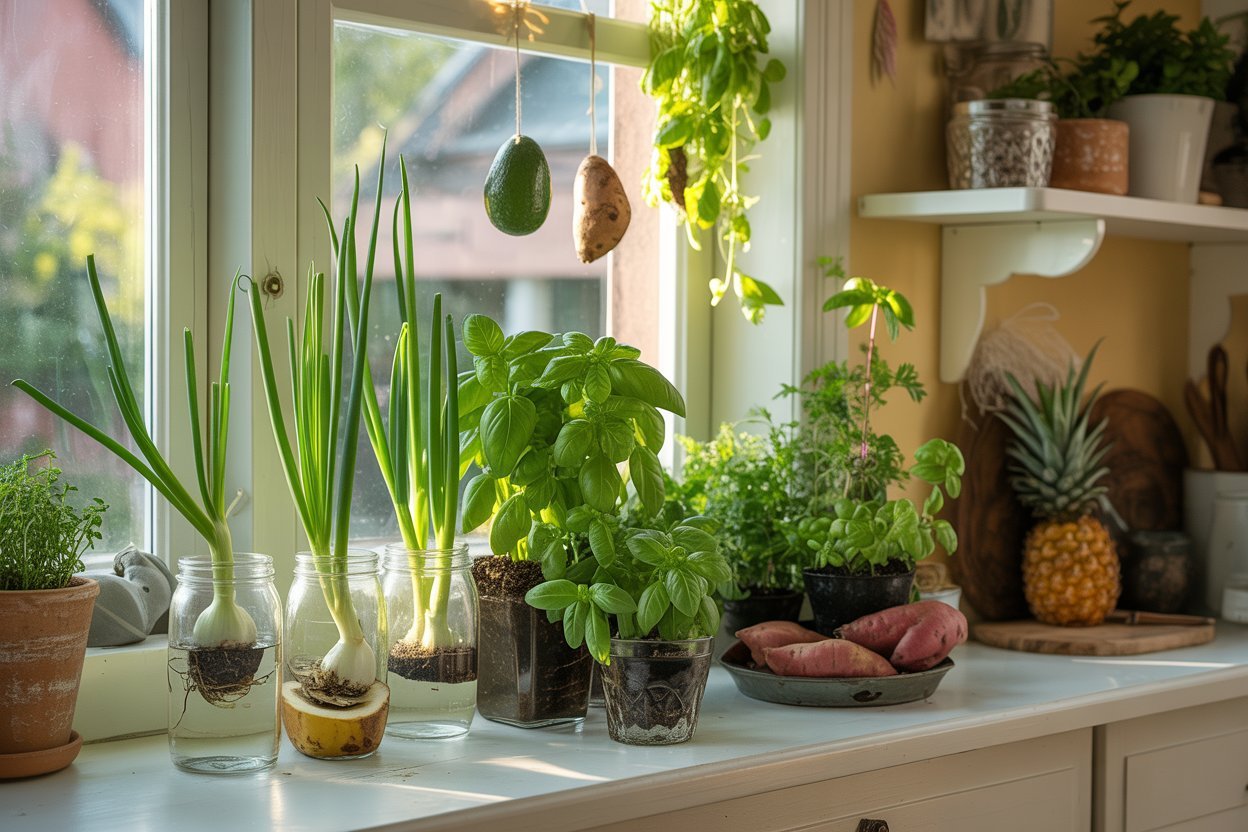

Fresh produce has a way of making a kitchen feel alive.
A handful of green onions in a jar by the window, a celery base sprouting tiny leaves, or a sweet potato vine trailing across a shelf can completely change the energy of your home.
Even better, many vegetables, herbs, and fruits can regrow from scraps you would normally toss into the compost or trash.
Regrowing food from kitchen scraps is one of the easiest and most rewarding ways to start gardening. It saves money, reduces waste, and gives you the joy of watching new life emerge from something that looked finished.
You do not need a huge backyard or fancy equipment either. A sunny windowsill, a few jars, water, and patience are often enough to get started.
For beginner gardeners, this is a gentle and confidence-boosting way to learn how plants grow. For experienced gardeners, regrowing scraps feels wonderfully practical and sustainable.
Many of these plants regrow quickly, making them especially fun for families, apartment gardeners, and anyone who loves seeing fast results.
In this guide, you’ll discover vegetables, herbs, and fruits you can easily regrow from kitchen scraps, along with detailed instructions, growing tips, common mistakes to avoid, and ways to keep your harvest thriving long after the first regrowth appears.
Why Regrowing Kitchen Scraps Is Worth Trying
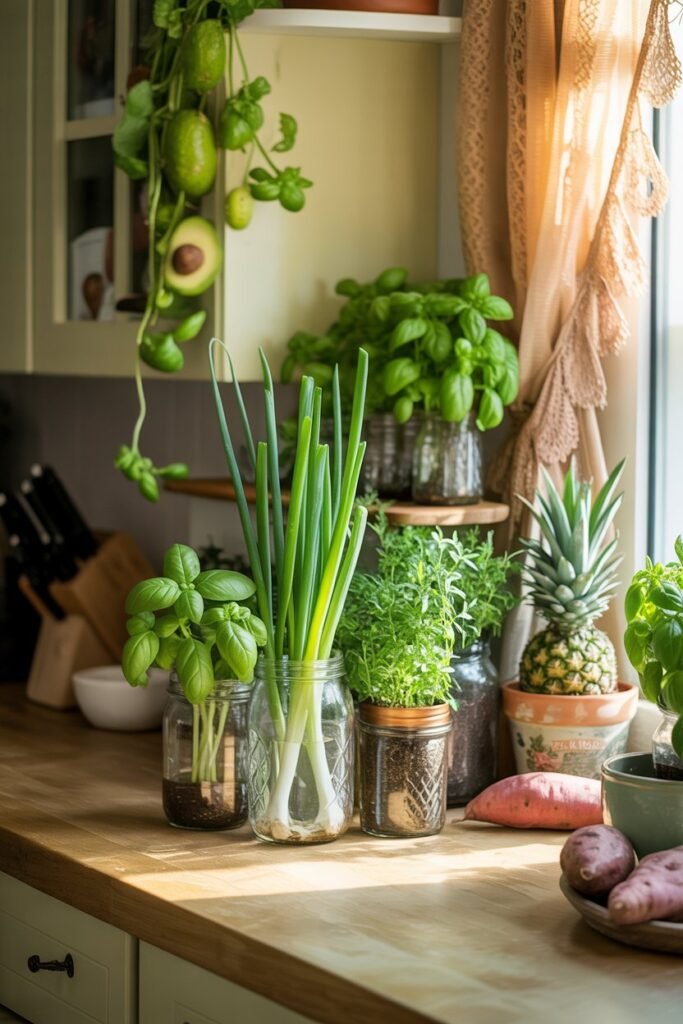
Before diving into the plants themselves, it helps to understand why so many gardeners love this simple practice.
It Reduces Food Waste
Many vegetable tops, roots, seeds, and stems still contain energy and growing potential. Instead of throwing them away, you can give them a second life.
It Saves Money
Buying fresh herbs and produce repeatedly adds up quickly. Regrowing scraps helps stretch your grocery budget, especially for frequently used ingredients like green onions, basil, lettuce, and celery.
It’s Beginner-Friendly
You do not need expensive gardening tools or advanced skills. Most regrowing projects start with little more than water and sunlight.
It Teaches Patience and Plant Care
Watching roots form and new leaves appear teaches valuable gardening lessons in a hands-on and enjoyable way.
It Brings Beauty Indoors
Many regrown plants are surprisingly attractive. Herb jars on a windowsill or sweet potato vines trailing from a glass container can double as natural décor.
What You Need to Start Regrowing Kitchen Scraps
One of the best things about regrowing food is how simple the setup can be.
Here are a few helpful supplies:
- Glass jars or small containers
- Fresh water
- Sharp scissors or a knife
- Potting soil
- Small pots or containers
- Sunny windowsill or grow light
- Patience and consistency
Most plants begin in water and later move into soil for stronger growth.
Best Vegetables You Can Regrow From Kitchen Scraps
1. Green Onions
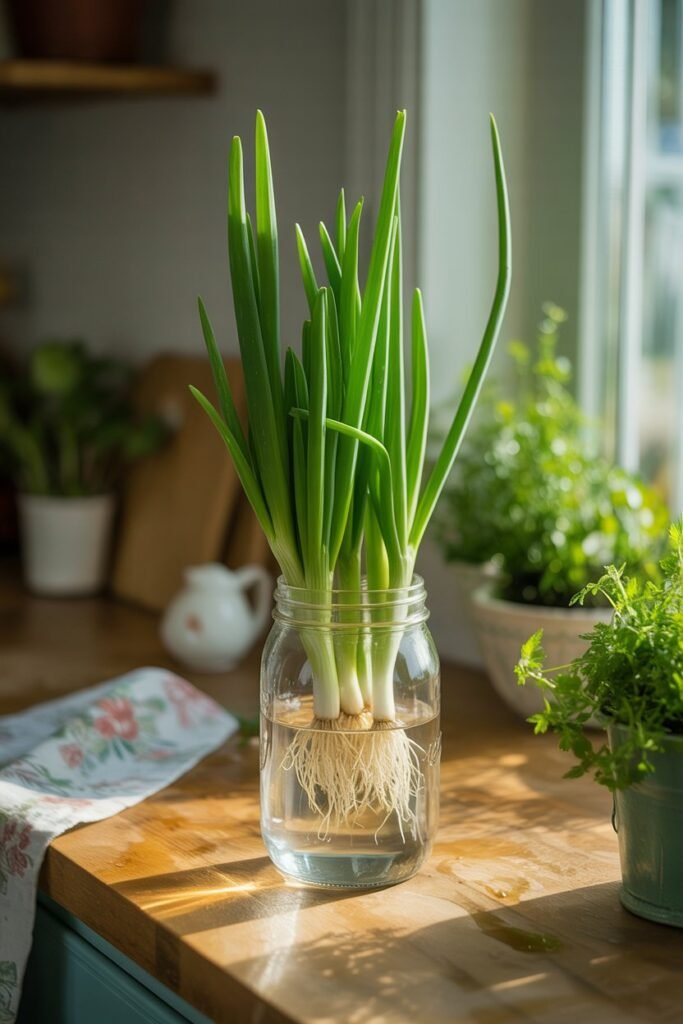
Green onions are one of the easiest and most rewarding plants to regrow from kitchen scraps, making them absolutely perfect for beginner gardeners.
Even if you have never grown a single plant before, green onions are incredibly forgiving and grow surprisingly fast. Watching fresh green shoots appear only days after placing the roots in water feels almost magical.
One of the reasons gardeners love regrowing green onions is because they can continue producing again and again with very little effort. Instead of buying new bunches every week, you can keep harvesting fresh greens right from your kitchen windowsill.
How to Regrow Them
After using the green tops in cooking, save the white root ends with about 1–2 inches still attached. Place them upright in a small glass or jar with enough water to cover the roots while keeping the upper white section above water.
Set the jar in a bright location, such as a sunny kitchen window. Within just a few days, new green shoots will begin growing from the center.
Growing Tips
- Change the water every two days to prevent unpleasant smells or bacteria buildup.
- Give the plant plenty of sunlight for stronger, greener growth.
- Avoid submerging the entire stem in water because it may rot.
- Once roots become stronger, you can transfer them into soil for longer-lasting harvests.
- Trim the green tops with scissors instead of pulling them off.
Common Mistakes to Avoid
- Forgetting to change the water regularly
- Keeping the jar in a dark corner
- Cutting the plant too low during harvest
Why Gardeners Love It
Green onions regrow incredibly quickly. Sometimes you can harvest fresh greens again within a single week. They are one of the fastest and easiest edible plants you can grow indoors year-round.
2. Lettuce
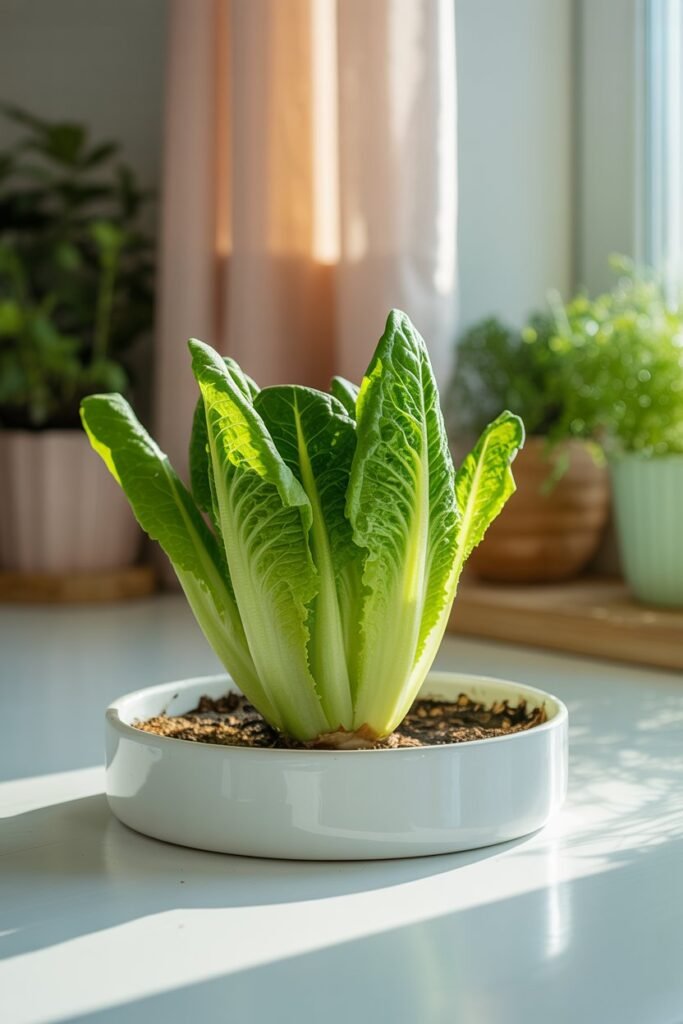
Lettuce is another wonderful vegetable to regrow from scraps, especially if you love making salads or sandwiches at home. Romaine lettuce works especially well, although leaf lettuce varieties can regrow nicely too.
While regrown lettuce usually does not produce a full supermarket-sized head again, it still provides plenty of fresh tender leaves for everyday meals.
How to Regrow It
Save the bottom 2 inches of the lettuce head after cutting off the leaves. Place the base into a shallow bowl or dish with a small amount of water.
Keep the dish in bright indirect sunlight and refresh the water every couple of days. After several days, tiny leaves will begin forming from the center.
Growing Tips
- Use shallow water rather than fully submerging the base.
- Rotate the container occasionally for even growth.
- Transfer into soil once roots begin developing.
- Harvest outer leaves first to encourage continued growth.
What to Expect
The center of the lettuce will slowly produce fresh leafy growth. The texture is often tender and flavorful, especially when harvested young.
Helpful Tip
Lettuce grows best in cooler temperatures. Excessive heat may cause bitterness or bolting.
3. Celery
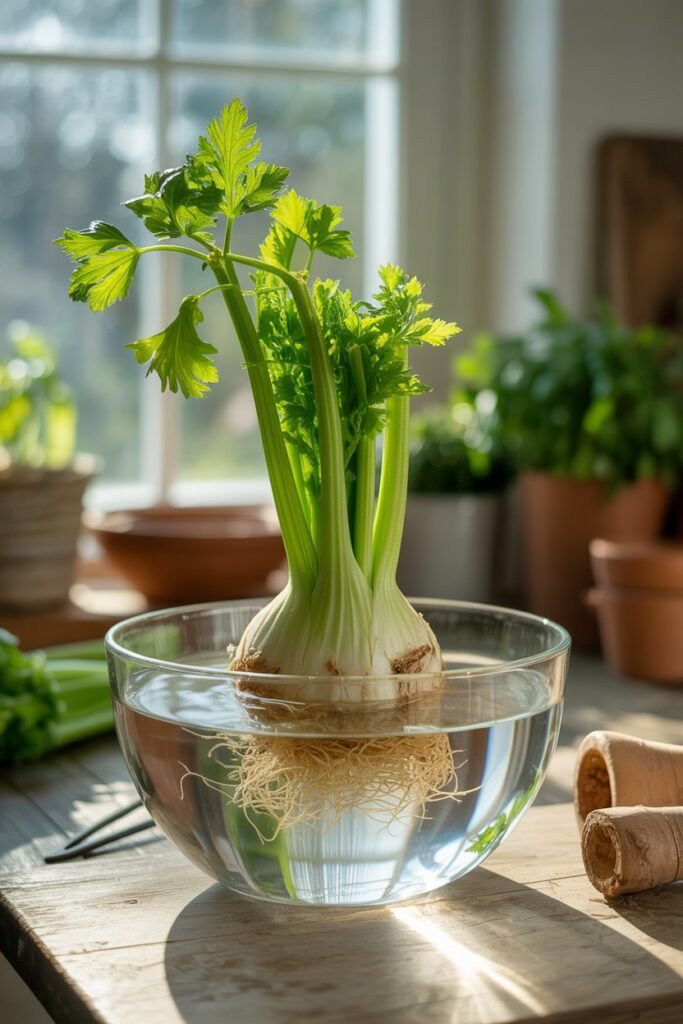
Celery is one of the most exciting vegetables to regrow because the transformation happens so quickly and visibly. Tiny fresh leaves emerge from the middle of the base within days, making it a very satisfying project for gardeners of all ages.
How to Regrow It
Cut off the celery stalks and save the bottom base portion. Place the base into a shallow bowl of water with the cut side facing upward.
Keep it in a bright sunny area and refresh the water every few days.
What Happens Next
Within about a week, small yellow-green leaves start emerging from the center. Soon after, roots begin forming underneath the base.
Best Results
Once roots become established, transplant the celery into soil. This encourages fuller growth and healthier stalk development.
Growing Tips
- Use a wide shallow bowl for stability.
- Keep the water level low enough to avoid rotting.
- Celery prefers consistent moisture.
- Rich soil helps produce stronger stalks later on.
Why It’s Worth Trying
Celery regrowth is visually impressive and extremely beginner-friendly. Even children enjoy watching the center slowly come back to life.
4. Bok Choy
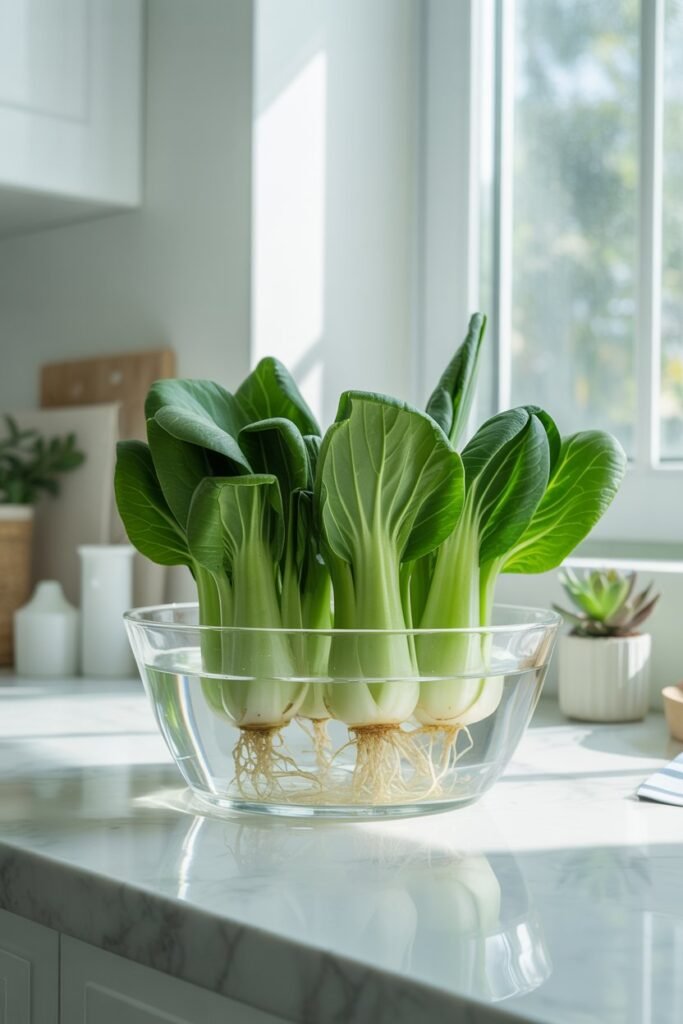
Bok choy is a beautiful leafy vegetable that regrows surprisingly well from kitchen scraps. Its compact shape and quick regrowth make it ideal for small-space gardening.
How to Regrow It
Save the rooted bottom section and place it in shallow water with the cut side facing upward.
Position it near bright sunlight and replace the water every few days.
What You’ll Notice
New leafy growth starts appearing from the center fairly quickly. The outer base may slightly yellow while the fresh middle continues developing.
Helpful Tip
Once roots become stronger, transplant the bok choy into soil for larger and healthier growth.
Growing Conditions
- Cool temperatures work best
- Bright indirect light encourages steady growth
- Moist soil helps prevent bitterness
Why Gardeners Love It
Bok choy grows quickly and takes up very little space, making it ideal for indoor gardeners and apartment dwellers.
5. Garlic
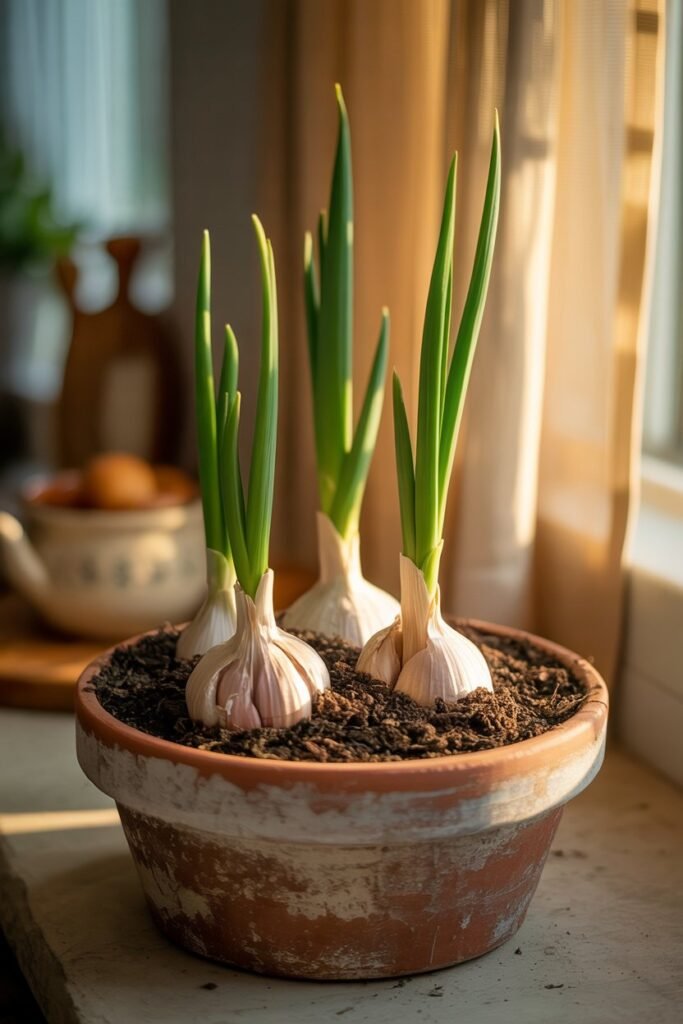
Garlic is one of the easiest kitchen staples to regrow and can provide both flavorful greens and full garlic bulbs if grown long enough.
How to Regrow It
Take individual garlic cloves and plant them root-side down in loose soil with the pointed tip facing upward.
Keep the soil lightly moist and place the pot in a sunny location.
What You’ll Get
Depending on how long you grow it, garlic can provide:
- Garlic greens for garnishes and cooking
- Full garlic bulbs for harvesting later
Growing Tips
- Use well-draining soil to prevent rot.
- Avoid overwatering.
- Garlic enjoys full sunlight.
- Containers should have drainage holes.
Harvesting Garlic Greens
The green shoots can be snipped and used similarly to chives or green onions.
Common Mistake
Too much water is the biggest problem with garlic. Soggy soil often causes cloves to rot before they establish roots.
6. Potatoes
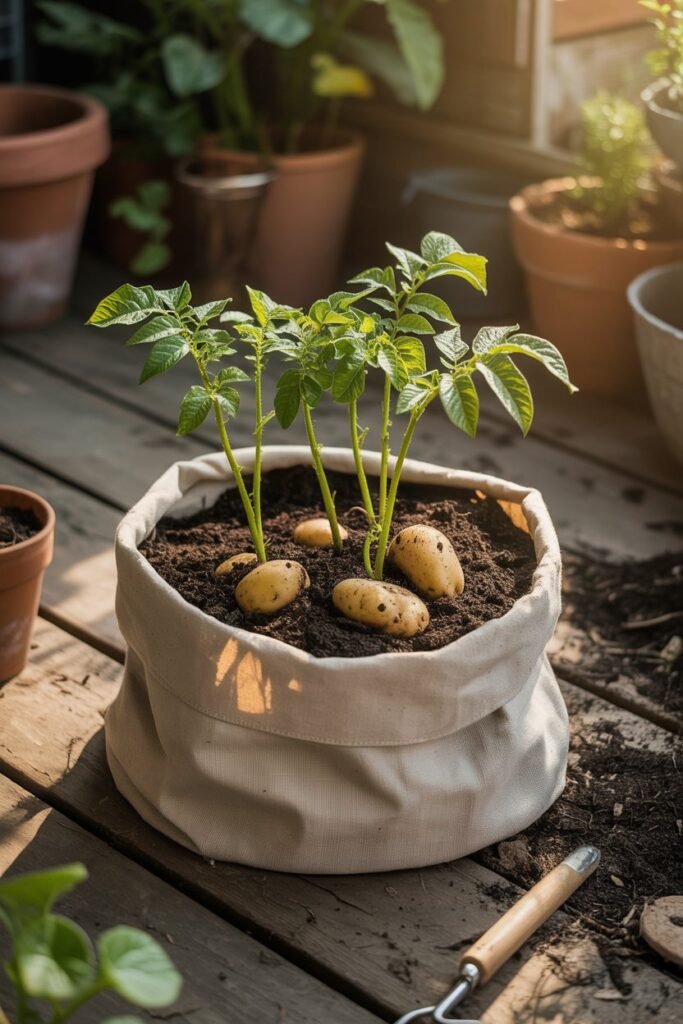
Potatoes naturally sprout when left in the pantry too long, making them one of the easiest vegetables to regrow.
How to Regrow Them
Cut sprouted potatoes into chunks, making sure each piece has at least one healthy “eye” or sprout attached.
Allow the pieces to dry for about 24 hours before planting. This helps reduce rotting.
Growing Tips
- Plant in deep loose soil.
- Add soil around stems as they grow taller.
- Water consistently but avoid soggy conditions.
- Grow bags and containers work beautifully for potatoes.
Harvesting
Potatoes are usually ready when the plant foliage turns yellow and begins dying back.
Common Mistake
Overwatering young potato plants can quickly lead to rot and fungal problems.
Why Gardeners Love Them
Harvesting potatoes feels like digging for hidden treasure beneath the soil.
7. Sweet Potatoes
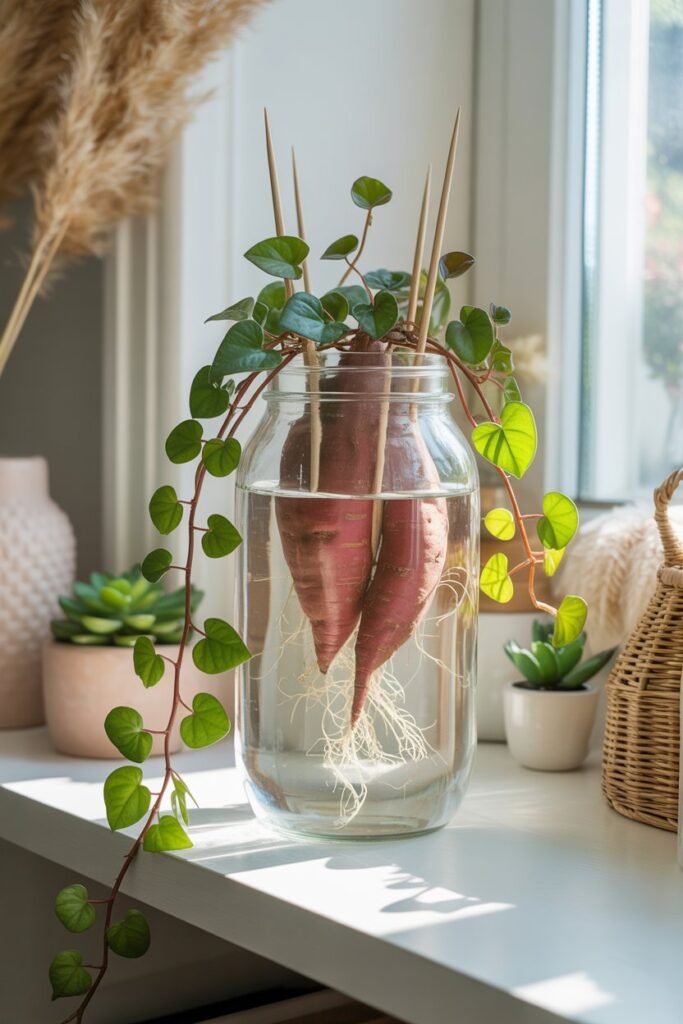
Sweet potatoes are both productive and decorative, producing gorgeous trailing vines that brighten indoor spaces beautifully.
How to Regrow Them
Suspend half a sweet potato over a jar of water using toothpicks, keeping the lower half submerged.
Soon, roots and leafy vines will begin growing.
What You Can Do
- Grow decorative vines indoors
- Plant slips in soil to grow more sweet potatoes outdoors
Growing Tips
- Use warm temperatures for faster growth.
- Change the water regularly.
- Give bright sunlight for stronger vines.
Why Gardeners Love Them
The trailing vines are lush, vibrant, and incredibly pretty inside the home.
8. Carrot Tops
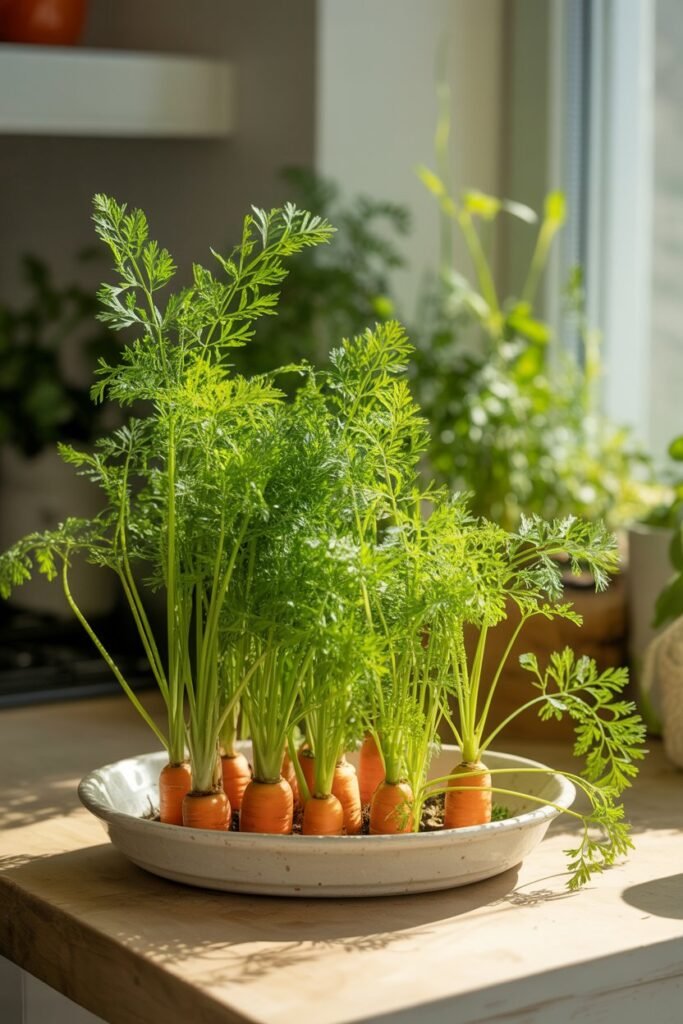
While carrots themselves will not regrow fully, the tops produce lovely edible greens that are surprisingly useful in the kitchen.
How to Regrow Them
Place carrot tops in a shallow dish with a small amount of water.
Set the dish near bright sunlight and refresh the water regularly.
Uses for the Greens
Carrot greens can be used in:
- Pesto
- Soups
- Salads
- Garnishes
- Chimichurri sauces
Extra Benefit
The feathery foliage looks delicate and beautiful on windowsills.
Helpful Tip
Avoid submerging the entire carrot top because excess moisture can encourage mold.
9. Beets
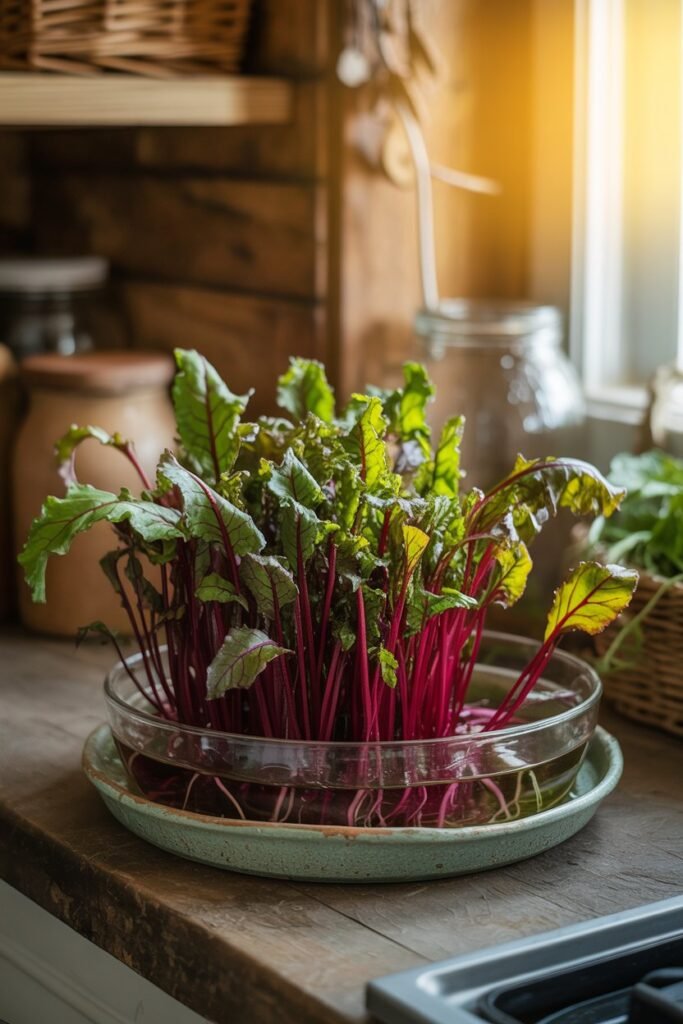
Beets regrow similarly to carrots and produce nutritious leafy greens instead of full new roots.
How to Regrow Them
Place the cut top section into shallow water with the cut side facing upward.
What Regrows
Fresh beet greens emerge from the center after several days.
Growing Tips
- Keep the water fresh.
- Give bright indirect light.
- Transfer to soil if roots develop.
Why It’s Worth Trying
Beet greens are packed with nutrients and taste delicious sautéed with garlic and olive oil.
10. Leeks
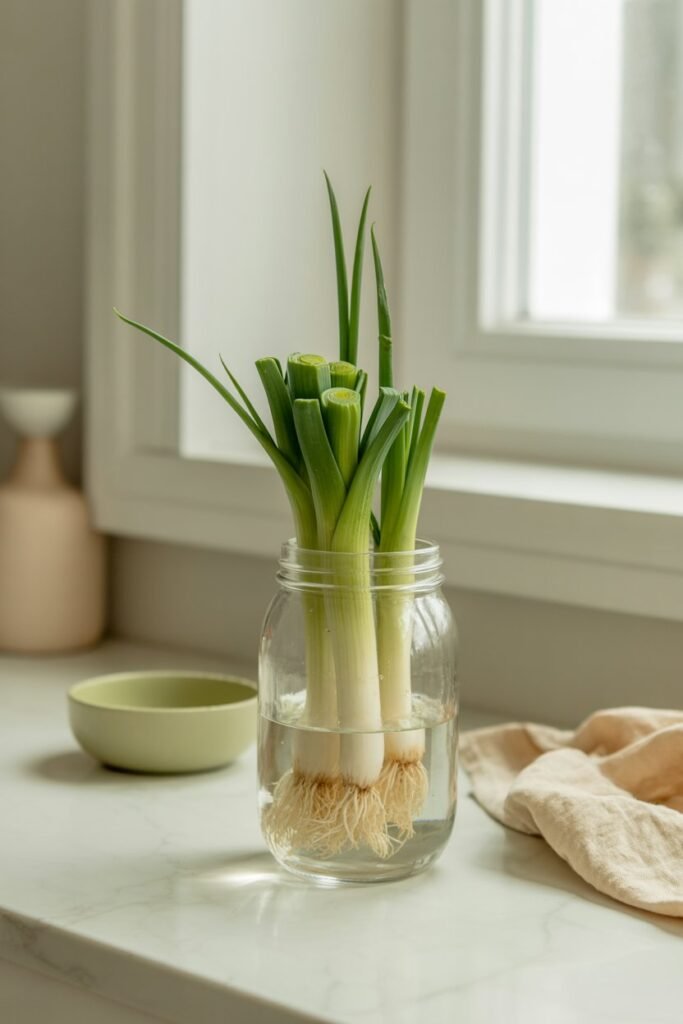
Leeks regrow almost exactly like green onions and are wonderfully easy to maintain.
How to Regrow Them
Place the rooted base into a jar with shallow water and set it near sunlight.
What Happens
Fresh green growth emerges from the center within days.
Growing Tips
- Refresh water every few days.
- Use a narrow container for support.
- Transfer into soil for longer-lasting harvests.
Why Gardeners Love Them
Leeks provide continuous fresh greens while requiring very little care.
Herbs You Can Easily Regrow From Scraps
11. Basil
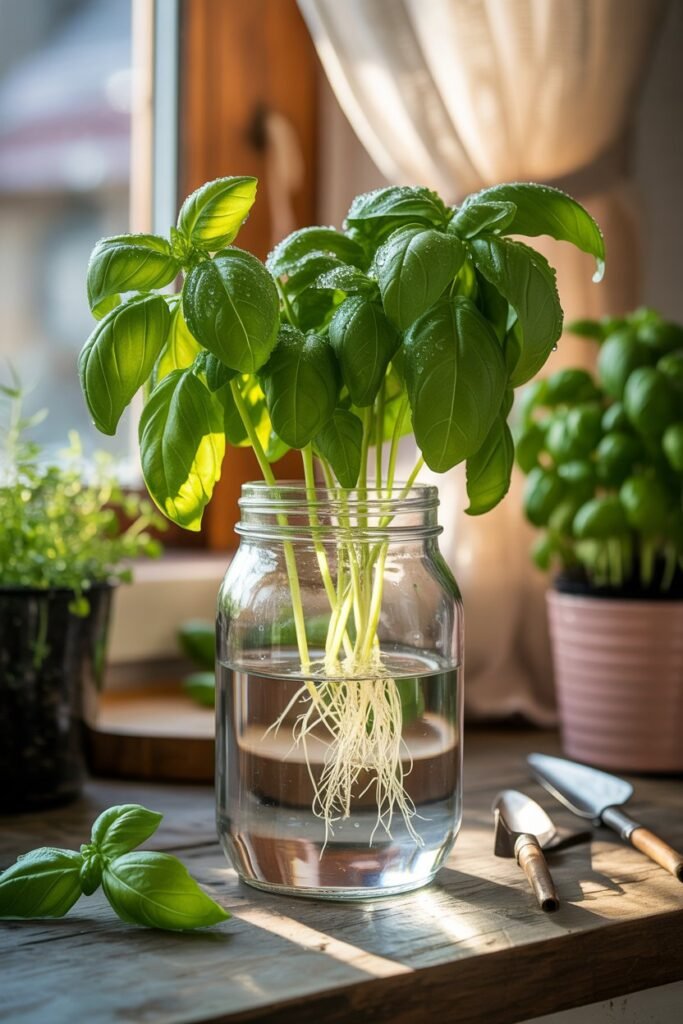
Fresh basil is one of the most rewarding herbs to regrow because it roots quickly and fills the kitchen with an amazing fragrance.
How to Regrow It
Take healthy basil stem cuttings just below a leaf node and place them in water.
What Happens
Roots typically appear within one to two weeks.
Growing Tips
- Remove lower leaves before placing in water.
- Keep leaves above the water line.
- Transfer to soil after roots strengthen.
- Pinch flower buds regularly to encourage leaf growth.
Why It’s So Popular
Basil grows quickly and provides fresh flavor for pasta, salads, pizzas, and sauces.
12. Mint
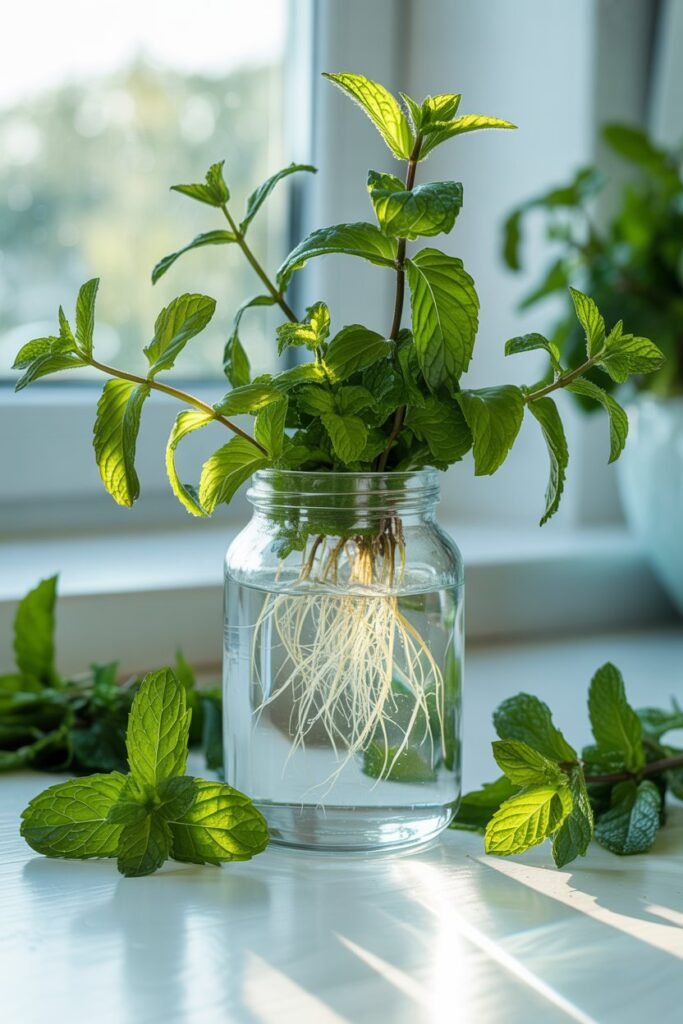
Mint is famously vigorous and one of the easiest herbs to propagate.
How to Regrow It
Place healthy mint cuttings into water until roots appear.
Best Uses
- Tea
- Desserts
- Lemonade
- Cocktails
- Fruit salads
Important Tip
Mint spreads aggressively outdoors, so containers are usually best.
Growing Conditions
Mint enjoys moist soil, bright light, and regular trimming.
13. Cilantro
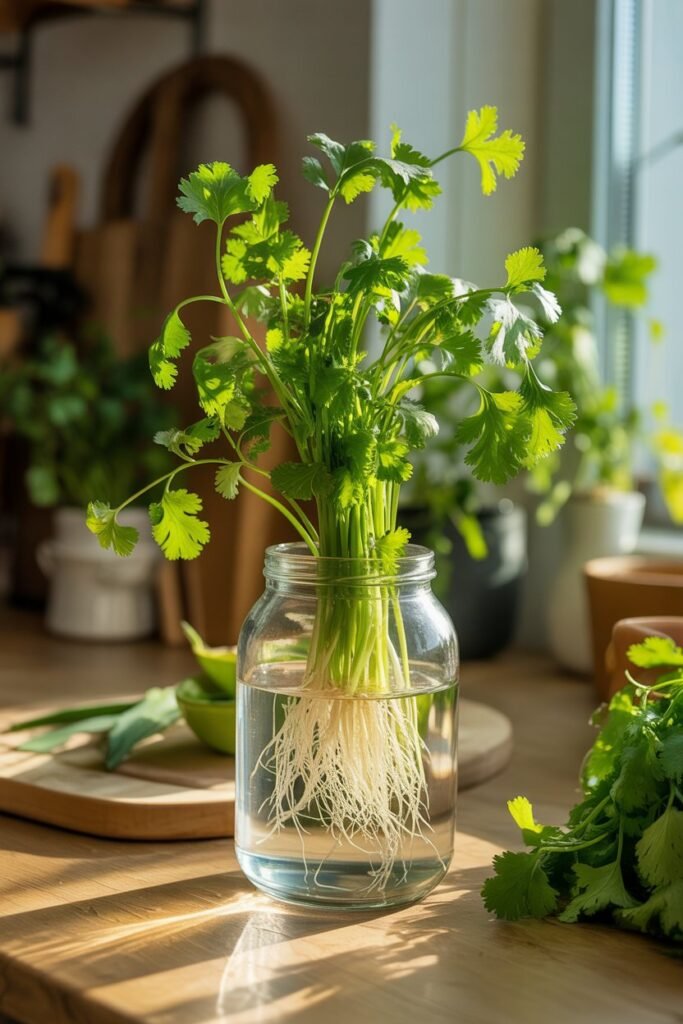
Cilantro can be a little delicate, but it regrows beautifully from fresh stems.
How to Regrow It
Place stems into water until roots develop, then transfer into soil.
Helpful Advice
Cilantro prefers cooler weather and bolts quickly in heat.
Growing Tips
- Harvest frequently for tender leaves.
- Keep soil lightly moist.
- Avoid intense afternoon heat.
Why Gardeners Grow It
Fresh cilantro completely transforms dishes like tacos, curries, soups, and salads.
14. Rosemary
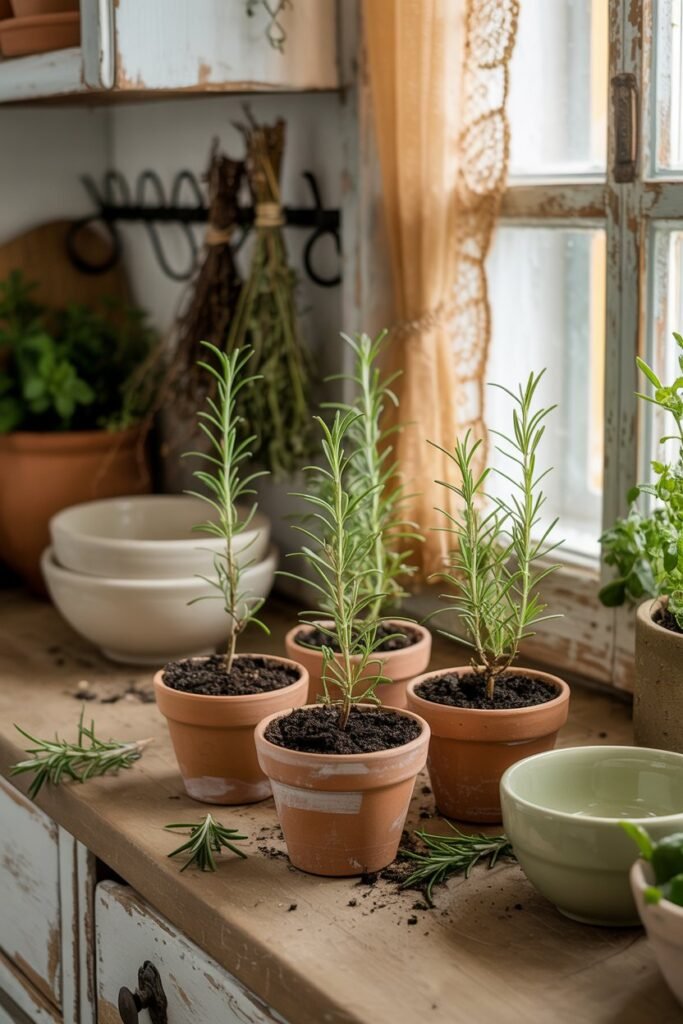
Rosemary takes patience but rewards gardeners with a fragrant and beautiful herb plant.
How to Regrow It
Use soft green stem cuttings and place them in water or moist soil.
Patience Is Key
Rosemary roots more slowly than herbs like basil or mint.
Best Conditions
- Warm temperatures
- Bright sunlight
- Good airflow
- Light watering
Helpful Tip
Avoid overly wet soil because rosemary prefers slightly drier conditions.
15. Parsley
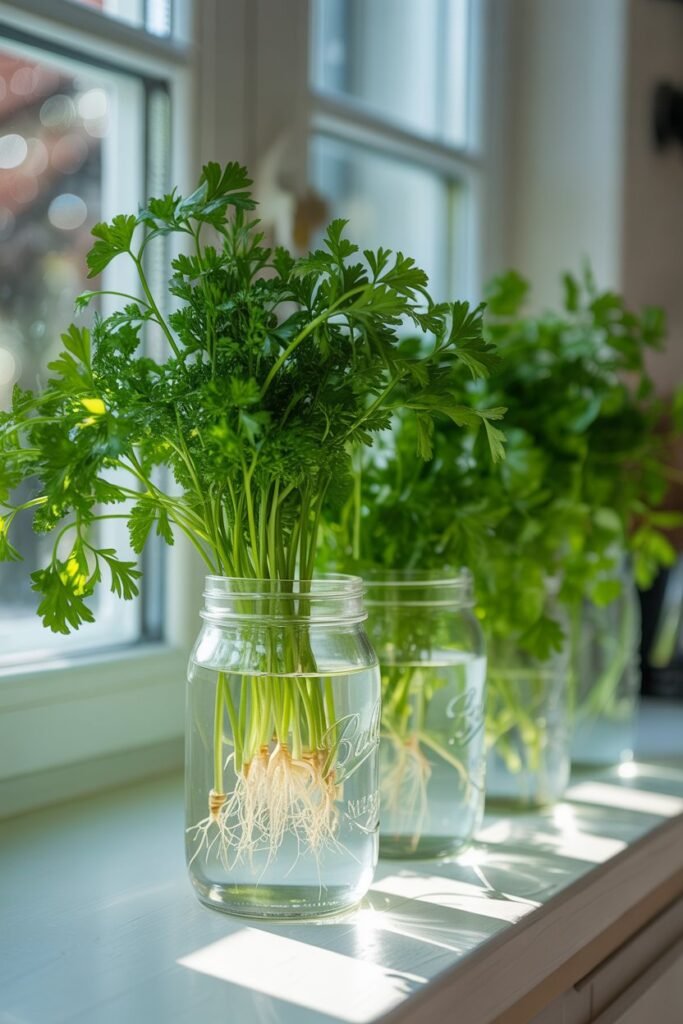
Parsley regrows well from stem cuttings and can continue producing for months indoors.
How to Regrow It
Place fresh parsley stems into water near bright sunlight.
Growing Tips
- Change the water frequently.
- Move into soil once roots appear.
- Harvest regularly for fuller growth.
Why It’s Worth Growing
Parsley is versatile, nutritious, and useful in countless everyday meals.
16. Lemongrass
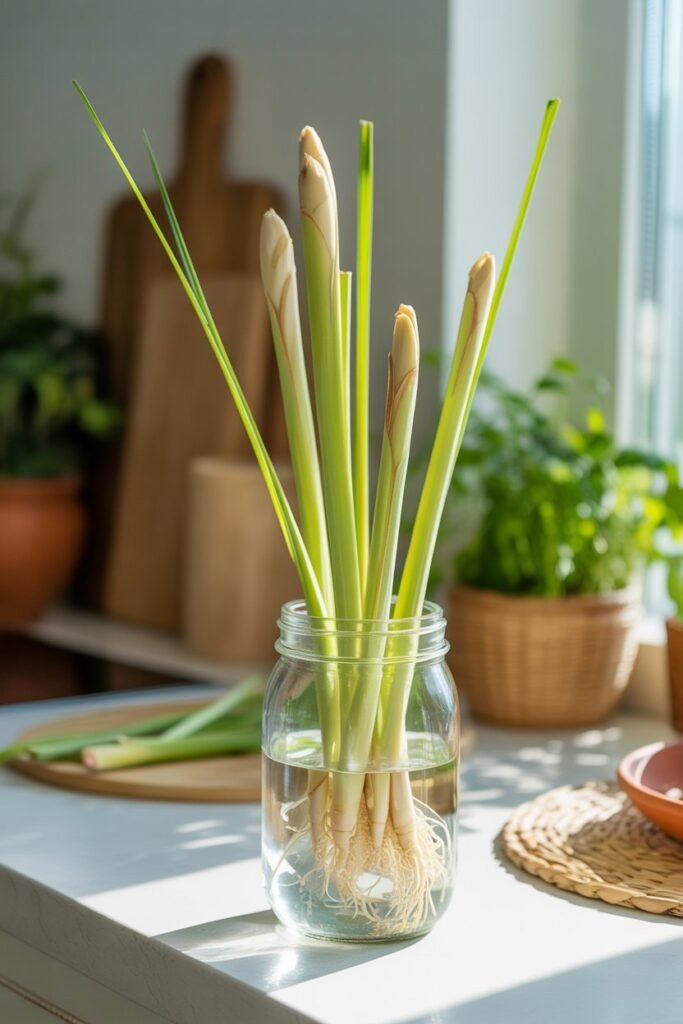
Lemongrass regrows beautifully and adds a fresh citrus fragrance to indoor spaces.
How to Regrow It
Place the bulb end into shallow water just like green onions.
What Happens
Fresh green blades emerge while roots develop underneath.
Growing Tips
- Warm temperatures speed up growth.
- Bright sunlight helps produce stronger blades.
- Transfer into soil once roots strengthen.
Extra Perk
The plant smells absolutely wonderful indoors.
Fruits You Can Regrow From Kitchen Scraps
17. Pineapple
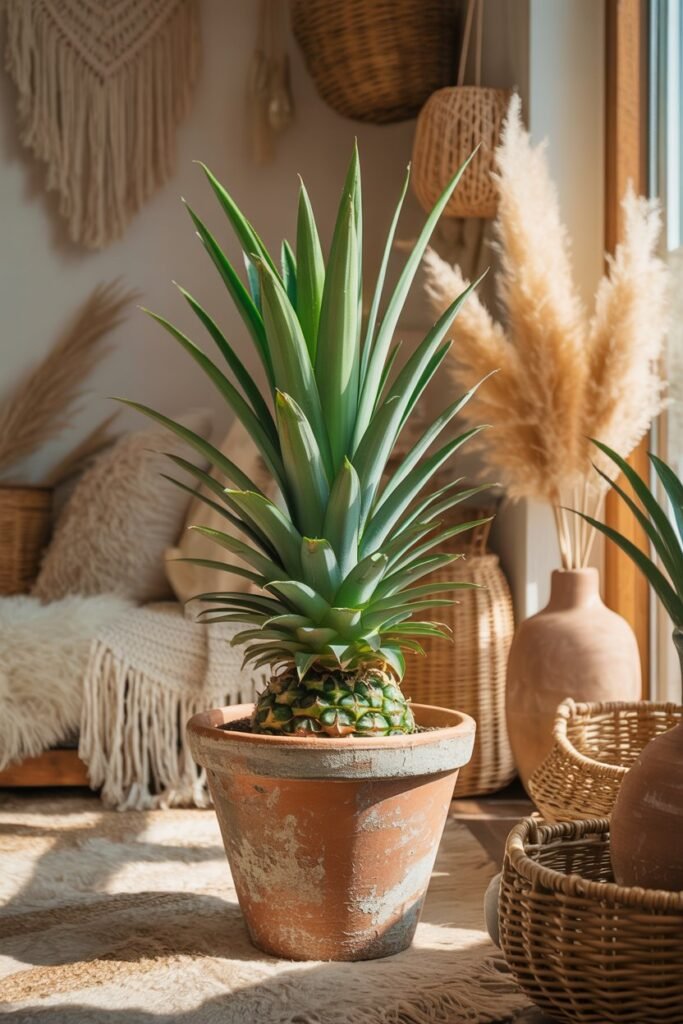
Pineapple tops can grow into stunning tropical plants that make gorgeous houseplants.
How to Regrow It
Twist off the leafy top and remove several lower leaves. Let the base dry for about a day before planting in water or soil.
Important to Know
Growing a full pineapple fruit can take several years.
Growing Tips
- Use sandy, well-draining soil.
- Give lots of sunlight.
- Avoid overwatering.
Why People Still Love It
Even without fruit, pineapple plants look striking and exotic indoors.
18. Avocado
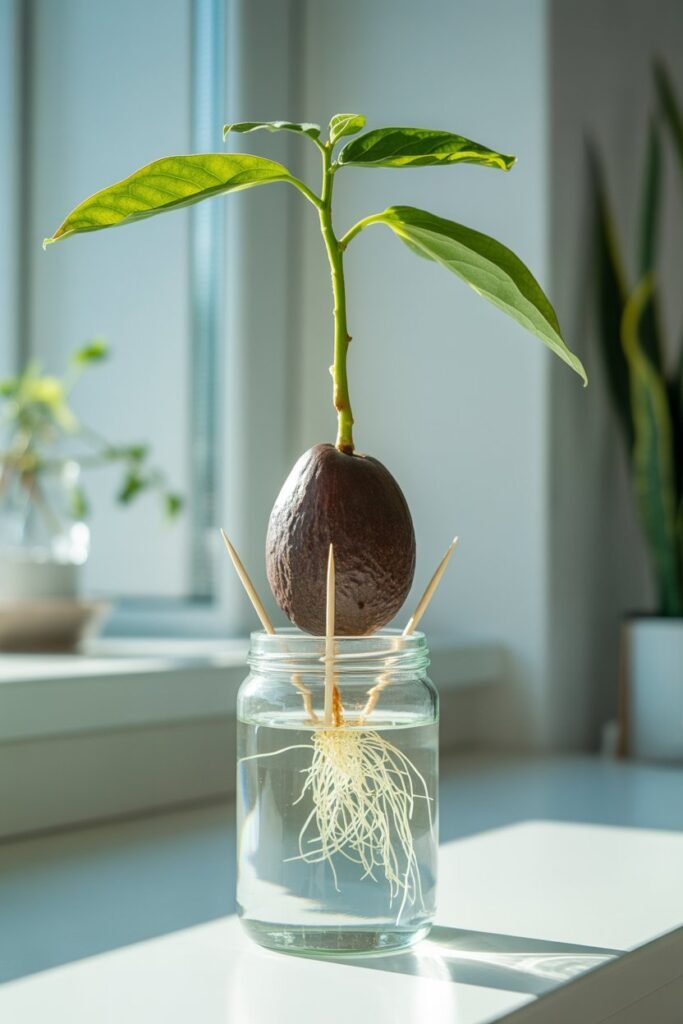
Avocado pits are one of the most famous kitchen scrap growing projects.
How to Regrow It
Insert toothpicks around the pit and suspend it over water with the bottom half submerged.
What Happens
Roots appear first, followed by a stem growing upward.
Growing Tips
- Refresh the water often.
- Move to soil once roots become strong.
- Pinch the stem to encourage bushier growth.
Important to Know
Indoor avocado plants may not produce fruit, but they still make lovely houseplants.
19. Tomatoes
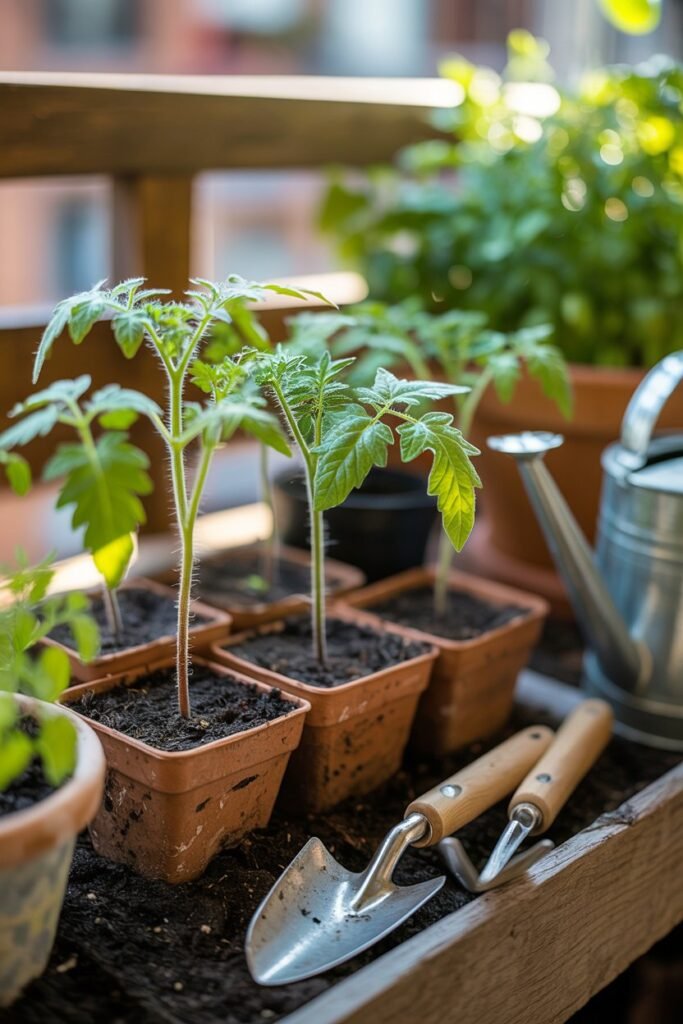
Tomatoes regrow easily from seeds found inside ripe fruits.
How to Regrow Them
Save tomato seeds, rinse away the pulp, dry them thoroughly, and plant them in moist soil.
Helpful Tip
Cherry tomatoes are especially beginner-friendly and productive.
Growing Conditions
- Full sunlight
- Warm temperatures
- Consistent watering
- Nutrient-rich soil
Why Gardeners Love Them
Homegrown tomatoes taste dramatically sweeter and fresher than store-bought ones.
20. Peppers
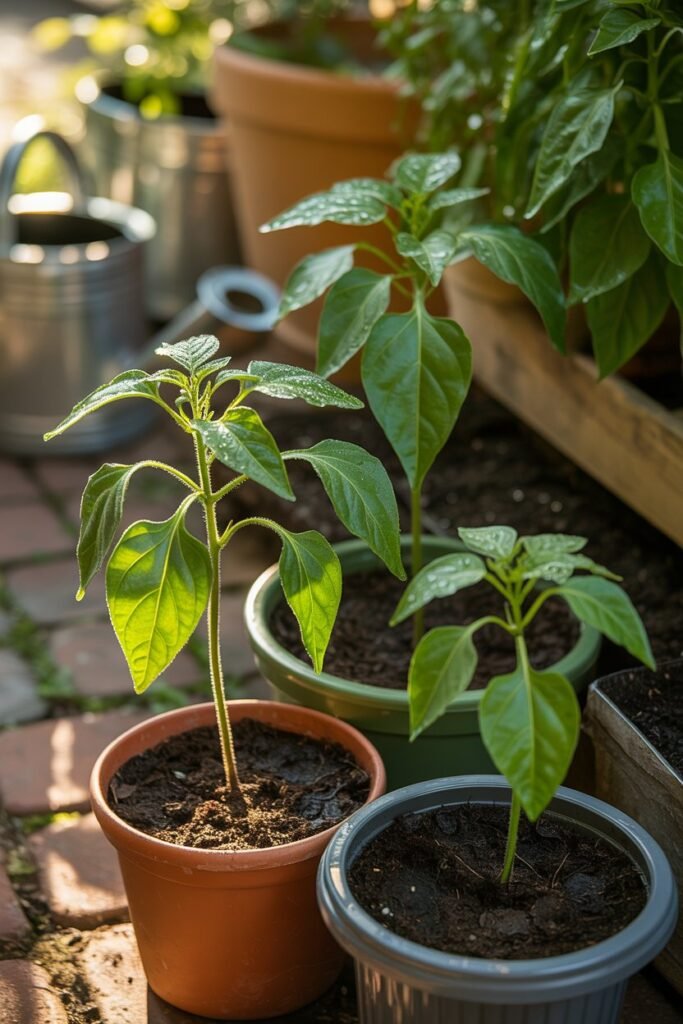
Bell peppers and chili peppers are both easy to regrow from seeds.
How to Regrow Them
Dry the seeds from ripe peppers and plant them in moist soil.
Growing Tips
- Warmth improves germination.
- Use containers if garden space is limited.
- Give full sunlight daily.
Important Tip
Pepper plants dislike cold temperatures, so warmth is essential.
Why They’re Worth Growing
Peppers are productive, colorful, and excellent for container gardening.
21. Strawberries
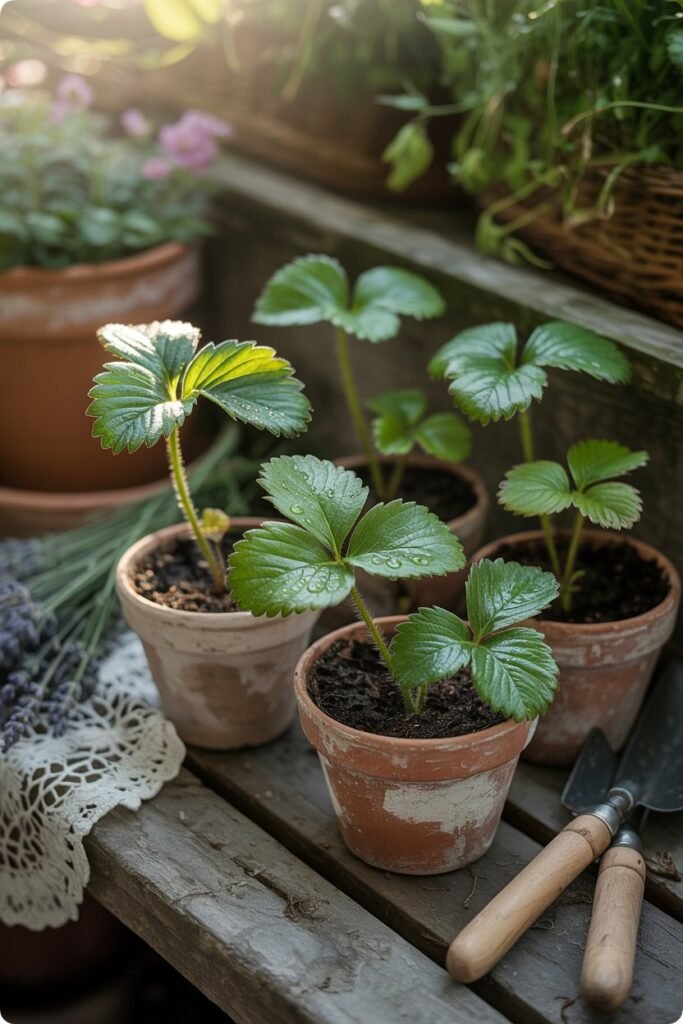
Strawberries can be regrown from the tiny seeds found on the outside of the fruit.
How to Regrow Them
Scrape seeds from ripe strawberries and allow them to dry before planting.
Important to Know
Growing strawberries from seed takes patience and time.
Easier Option
Once mature plants develop runners, those runners can create even more strawberry plants naturally.
Growing Tips
- Use well-draining soil.
- Keep the soil consistently moist.
- Give plenty of sunlight.
- Protect ripening fruit from pests.
Why Gardeners Adore Strawberries
Fresh strawberries picked right from the garden taste incredibly sweet and rewarding.
Common Mistakes to Avoid
Even simple regrowing projects can run into problems. Here are the most common mistakes gardeners make.
Forgetting to Change the Water
Stagnant water encourages bacteria and mold. Refresh water every couple of days.
Not Giving Enough Light
Most regrown plants need bright light to stay healthy.
Starting With Old Produce
Fresh scraps regrow better than wilted or rotting ones.
Moving to Soil Too Early
Wait until roots are well established before transplanting.
Overwatering Soil-Grown Plants
Too much moisture can quickly cause root rot.
Water vs Soil: Which Is Better?
Many gardeners wonder whether water or soil works best.
Growing in Water
Benefits
- Easy to monitor roots
- Cleaner setup
- Great for beginners
Downsides
- Plants may weaken over time
- Limited nutrients
Growing in Soil
Benefits
- Stronger long-term growth
- Better harvest potential
- Healthier root systems
Downsides
- Slightly more maintenance
- Requires containers and potting mix
For best results, many gardeners start plants in water and later move them into soil.
Best Places to Keep Regrowing Plants Indoors
Location matters more than many people realize.
Sunny Windowsills
South-facing windows usually provide the most sunlight.
Kitchen Counters Near Light
Perfect for herbs and water jars.
Balconies and Patios
Outdoor fresh air often boosts growth.
Under Grow Lights
Helpful during winter or in darker homes.
How to Transition Plants From Water to Soil
Moving plants carefully helps prevent transplant shock.
Step 1: Wait for Healthy Roots
Roots should be at least a couple of inches long.
Step 2: Use Moist Potting Mix
Dry soil stresses young roots.
Step 3: Water Gently
Keep soil lightly moist during the first week.
Step 4: Avoid Harsh Sun Immediately
Let plants adjust gradually.
Easiest Plants for Complete Beginners
If you are completely new to gardening, start with these foolproof options:
- Green onions
- Lettuce
- Celery
- Mint
- Basil
- Sweet potatoes
These plants usually show visible growth quickly, which keeps gardening exciting and motivating.
Creative Ways to Display Regrowing Plants
Kitchen scrap gardening can be beautiful as well as practical.
Use Clear Glass Jars
Watching roots grow is part of the fun.
Arrange Herbs Together
Create a mini indoor herb garden.
Repurpose Containers
Old mugs, jars, and cans can become charming planters.
Label Everything
Handwritten labels add personality and help identify plants.
Can You Grow Enough Food This Way?
Kitchen scrap gardening works best as a supplement rather than a complete food source.
You may not produce endless harvests from every scrap, but you can absolutely grow:
- Fresh herbs regularly
- Salad greens
- Garlic greens
- Green onions
- Celery leaves
- Decorative edible plants
Many gardeners eventually expand from regrowing scraps into container gardening and larger vegetable gardens.
Final Thoughts
Regrowing vegetables, herbs, and fruits from kitchen scraps turns ordinary leftovers into something surprisingly magical. A simple celery base can become a thriving plant again. Tiny basil stems can fill your kitchen with fragrance. Green onions seem to grow almost endlessly with just water and sunlight.
Beyond saving money and reducing waste, this kind of gardening reconnects people with the growing process in a gentle and meaningful way. It reminds us that food is alive, resilient, and capable of renewal.
The best part is how accessible it feels. You do not need a large garden, expensive supplies, or years of experience. A few scraps, a sunny window, and curiosity are enough to begin.
Start with one easy plant like green onions or basil, then slowly experiment with more. Before long, your kitchen windowsill may be filled with thriving greenery grown from scraps that once seemed destined for the trash.
