
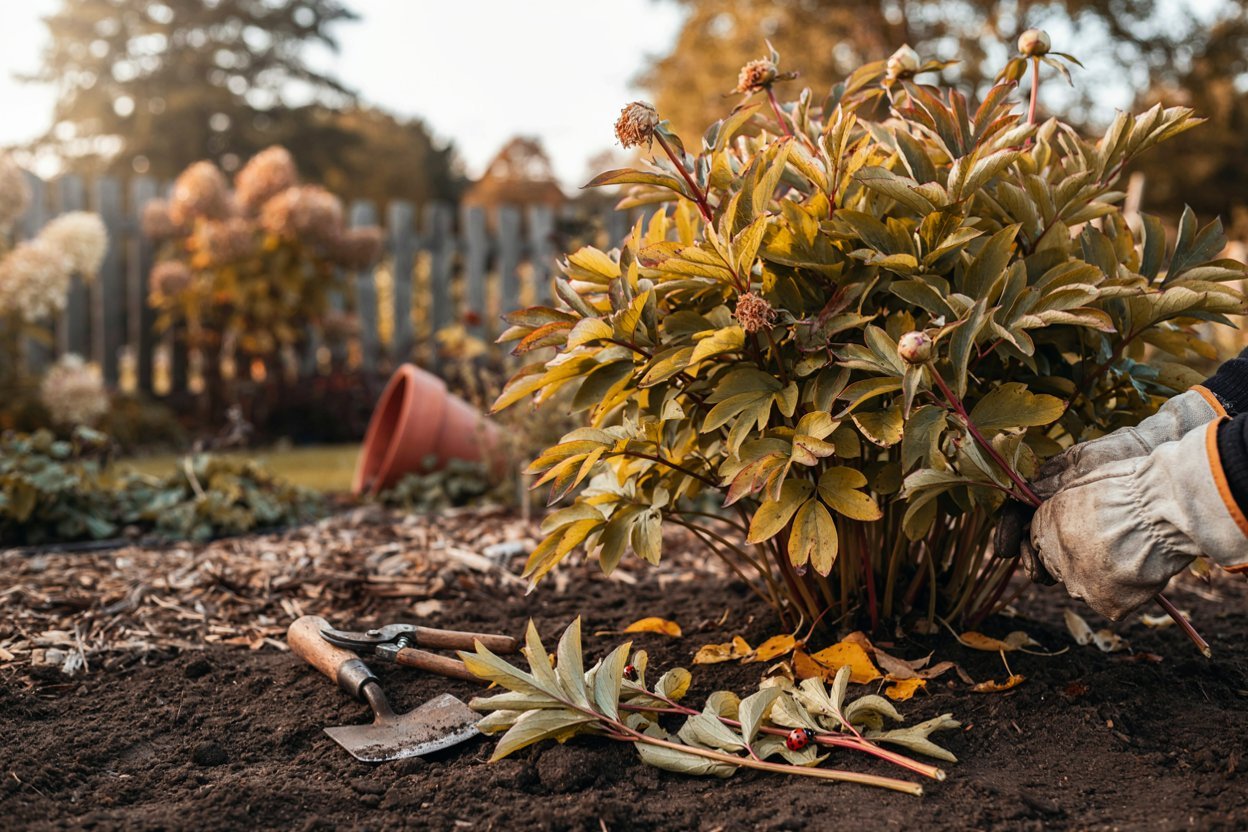

Every fall, I find myself taking a little extra time to walk around my garden and check on my peonies.
After months of beautiful blooms, their foliage can start looking tired, and it can be tempting to simply cut everything down and move on.
But fall is actually an important time to care for these long-lived perennials. A little cleanup now can help keep your plants healthy and prepare them for another beautiful season.
If your peony has become crowded, stopped blooming well, or is simply growing in the wrong spot, fall can also be the perfect time to divide or transplant it. Here’s exactly what I do with my peonies in fall.
What Should You Do With Peonies In The Fall?
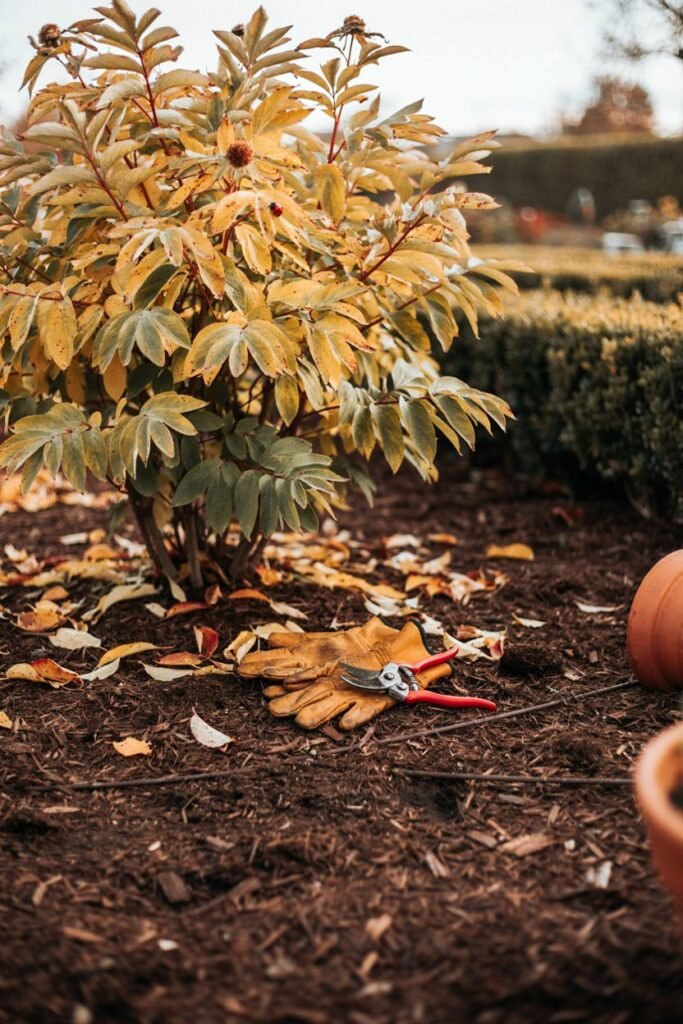
Fall peony care is actually quite simple. You generally want to:
- Allow the foliage to naturally die back.
- Cut back herbaceous peonies after the foliage has died.
- Remove and discard unhealthy foliage.
- Clean up leaves and plant debris around the crown.
- Divide mature peonies if they have become overcrowded.
- Transplant peonies carefully if they are growing in the wrong location.
- Replant divisions at the correct depth.
- Water newly transplanted peonies well.
- Add a light layer of mulch if needed.
The most important thing is not to rush the process.
Peonies benefit from having their leaves for as long as possible because the foliage continues to produce energy that the plant stores in its roots for next year’s growth.
So although the plant may look messy in late fall, I don’t cut mine back simply because the leaves are beginning to look unattractive.
I wait until the foliage has naturally yellowed, browned, or been damaged by frost.
When Should You Cut Back Peonies In The Fall?

The best time to cut back herbaceous peonies is after the foliage has naturally died back, usually after several hard frosts.
Depending on your climate, this may happen anywhere from early fall to late fall.
I look for a few signs:
- Leaves have turned yellow or brown.
- Stems are beginning to collapse.
- Frost has damaged the foliage.
- The plant is no longer actively growing.
Once most of the foliage has died back, you can cut the stems close to the ground.
Don’t cut them back too early
This is one of the most important things to remember.
If your peony still has healthy green leaves in early fall, leave it alone.
Those leaves are still working for the plant.
Cutting the foliage down too early can reduce the amount of energy the plant stores in its roots. Over time, this can contribute to weaker growth and fewer flowers.
So when I’m tempted to tidy up my garden early, I remind myself that peonies don’t need to look perfect in September or early fall.
Let them finish their job first.
How To Cut Back Peonies
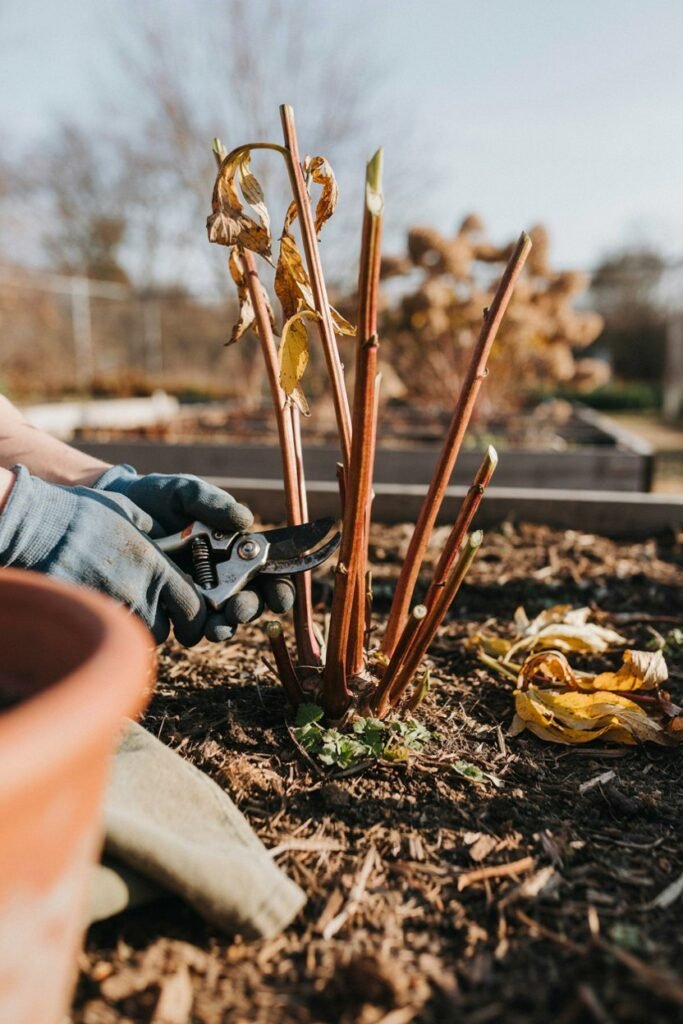
Once the foliage has died naturally, cutting back a peony is very easy.
What you’ll need
- Clean pruning shears
- Gardening gloves
- Bucket or garden bag
- Disinfectant for your tools
Before starting, make sure your pruning shears are clean and sharp.
Clean tools make cleaner cuts and reduce the chance of spreading plant diseases from one plant to another.
Step 1: Wait until the foliage dies
Don’t start cutting simply because the calendar says fall.
Wait until the plant has finished growing for the season.
Step 2: Cut the stems
Cut the dead stems down close to the soil surface.
You don’t need to leave tall stems standing through winter.
However, avoid digging into or damaging the crown of the plant.
Step 3: Remove the foliage
Gather up the dead leaves and stems around the plant.
I like to remove this material from the garden rather than leaving a thick pile sitting directly over the crown.
Step 4: Inspect the plant
Take a quick look at the base of your peony.
Check for:
- Rot
- Unusual discoloration
- Damaged stems
- Insect problems
- Excessive moisture around the crown
If the plant looks healthy, simply leave it alone until spring.
Why Fall Cleanup Matters For Peonies
Peony foliage can sometimes develop fungal problems during the growing season.
Diseased leaves left sitting around the plant can become a source of problems in the following season.
That’s why I like to keep the area around my peonies relatively clean.
After cutting the plant back, remove fallen leaves and old stems from the immediate area.
Don’t add obviously diseased peony foliage to your compost pile unless you are certain your composting system reaches temperatures capable of destroying plant pathogens.
For most home gardeners, it’s safer to dispose of diseased material separately.
Should You Cut Peonies Back Every Fall?

For herbaceous peonies, yes, cutting them back after the foliage dies is a good part of routine fall maintenance.
However, it’s important to know that not every plant called a “peony” should be treated exactly the same way.
Herbaceous peonies
These are the classic garden peonies that die back to the ground every winter.
They should be cut back in late fall after the foliage has died.
Tree peonies
Tree peonies have woody stems and don’t die completely back to the ground.
Do not cut a tree peony down like a herbaceous peony.
Instead, remove dead, damaged, or weak growth as needed.
Intersectional or Itoh peonies
Itoh peonies are hybrids between herbaceous and tree peonies.
They generally die back in winter but may retain some woody growth.
Carefully remove dead foliage in late fall without cutting healthy woody stems unnecessarily.
Knowing which type of peony you have will help prevent accidental damage.
Should You Divide Peonies In The Fall?
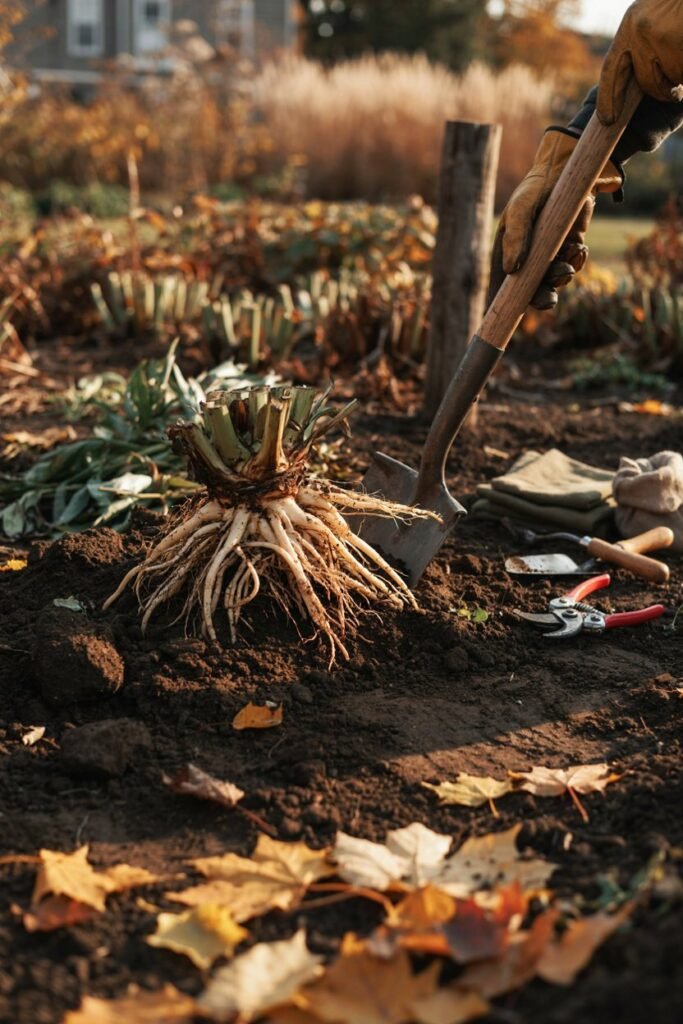
Yes, fall is generally an excellent time to divide herbaceous peonies.
But here’s something I always tell gardeners:
You don’t need to divide a healthy peony just because it is old.
Peonies can live and flower for decades when they’re happy.
I only consider dividing one when there is a good reason.
You might want to divide a peony if:
- The plant has become too large for its location.
- It is overcrowded.
- You want additional plants.
- You need to move it.
- Flowering has declined because of overcrowding.
- The center of the plant has become weak or congested.
If your peony is flowering beautifully and has plenty of space, leaving it alone may be the best choice.
When Is The Best Time To Divide Peonies?
Early to mid-fall is often a good time, particularly in areas where the soil remains workable before the ground freezes.
The goal is to give the roots enough time to settle before winter while allowing the plant to enter dormancy naturally.
Avoid dividing too late when the soil is frozen or extremely wet.
You also don’t want to divide during hot, dry weather.
A cool fall day is much easier on both you and the plant.
How To Divide Peony Bushes

Dividing a peony isn’t difficult, but it does require a little patience.
The most important part is making sure each division contains enough healthy root material and several viable buds, often called eyes.
What you’ll need
- Sharp spade
- Clean knife or garden knife
- Gardening gloves
- Hose or watering can
- Compost or organic matter
- Clean planting area
Step 1: Cut the plant back
If you are dividing an herbaceous peony in fall, wait until the foliage has died back.
Cut the stems down close to the ground.
This makes the plant much easier to handle.
Step 2: Water the plant beforehand
If the soil is dry, give the plant a good watering a day before digging.
Moist soil is easier to work with and can help reduce stress on the roots.
Don’t dig when the soil is soaking wet and muddy, though.
Step 3: Dig around the peony
Don’t dig directly against the crown.
Instead, place your spade several inches away from the plant and work around it.
Push the spade deep enough to get underneath the root system.
Peony roots can be surprisingly large, so don’t be surprised if you have to dig deeper than expected.
Step 4: Lift the root ball
Once you’ve loosened the soil around the plant, carefully lift the entire root clump.
Use the spade to gently pry it upward.
Try to avoid pulling aggressively on the remaining stems.
If the root system is large, you may need to work around the plant several times before it comes free.
Step 5: Remove excess soil
Gently shake or wash away some of the soil so you can see the roots and buds.
You don’t necessarily need to remove every bit of soil.
You simply need enough visibility to determine where to divide the plant.
Look for the small buds or “eyes” around the crown.
What Are Peony Eyes?
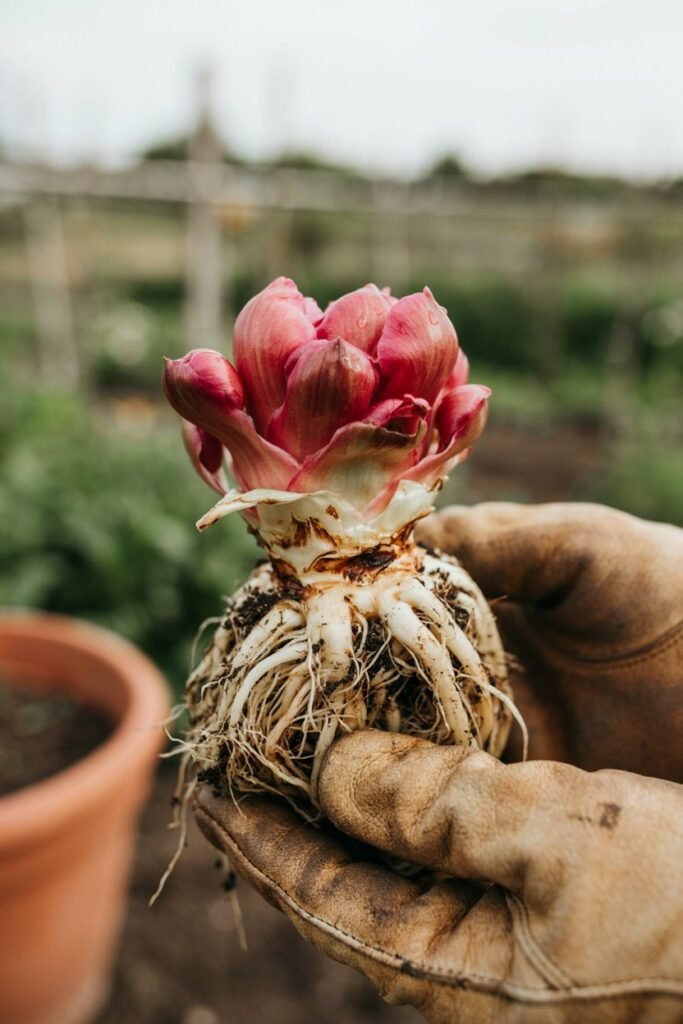
Peony eyes are the small growth buds located on the crown of the plant.
They are extremely important when dividing a peony.
A successful division needs healthy roots and viable eyes.
A piece of root without a good bud may not produce a strong new plant.
When dividing, look for sections that have several healthy eyes attached to a substantial piece of root.
How Many Eyes Should A Peony Division Have?
For a strong new plant, I generally aim for divisions with around 3–5 healthy eyes, along with a good amount of healthy root.
Larger divisions can establish more easily than tiny pieces.
Don’t get carried away trying to create as many plants as possible.
A few strong divisions are usually much better than lots of tiny divisions.
Step 6: Divide The Crown
Once you can see the eyes, use a clean, sharp knife to divide the crown.
Make deliberate cuts rather than repeatedly hacking at the root.
Each division should contain:
- Several healthy eyes
- Healthy roots
- A solid section of crown
Remove any obviously damaged or rotten portions while you’re working.
If the crown is extremely tough, take your time.
Peony roots can be firm and woody, especially on older plants.
Step 7: Replant The Divisions
Try to replant your divisions fairly quickly.
Don’t leave them sitting out in the sun or drying out for hours.
Prepare the new planting location before you begin dividing whenever possible.
This makes the entire process much easier.
How Deep Should You Plant Peonies?
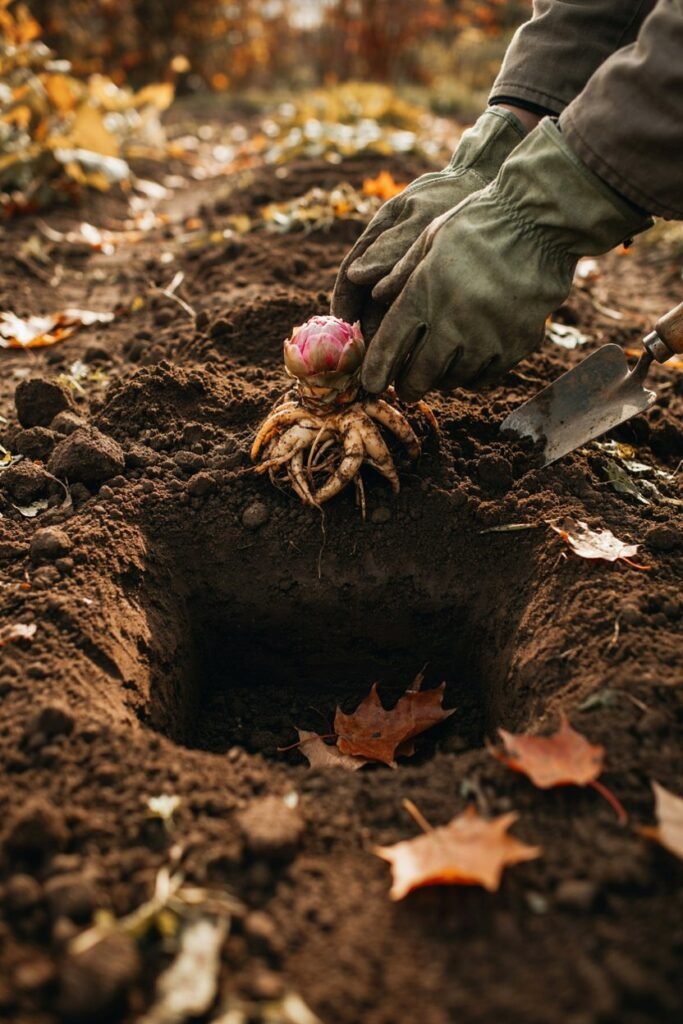
This is one of the most important parts of growing peonies.
Peony eyes should generally be planted only about 1–2 inches below the soil surface in colder climates, with the exact depth adjusted for local conditions.
Planting too deeply is one of the most common reasons peonies fail to bloom.
It can be tempting to bury the roots deeply because the plant seems large, but peony eyes need to remain relatively close to the surface.
If your peony produces lots of leaves but very few flowers, planting depth is one thing worth checking.
How To Transplant A Mature Peony
Sometimes you don’t need to divide a peony at all.
Maybe you planted it too close to a tree.
Perhaps it isn’t getting enough sunlight.
Or maybe you simply want to redesign that part of the garden.
In those situations, you can transplant the entire plant.
Fall is a good time to do this for herbaceous peonies.
Step 1: Choose the new location
Look for a spot with:
- Plenty of sunlight
- Good drainage
- Fertile soil
- Good air circulation
- Enough room for mature growth
Peonies generally perform best with several hours of direct sunlight.
More sun usually means better flowering.
Avoid Planting Peonies Too Close To Trees
This is something I learned to pay more attention to when planning garden beds.
Large trees can compete with peonies for:
- Water
- Nutrients
- Root space
- Sunlight
A peony may survive in a crowded location, but that doesn’t necessarily mean it will thrive.
Give it enough room to grow without having to compete heavily with nearby plants.
Step 2: Prepare The New Hole
Dig a hole that is wide enough to accommodate the roots comfortably.
You don’t want the roots bent tightly against the sides.
The soil should drain well.
If your soil is heavy clay, improve the overall planting area rather than creating a small pocket of extremely rich soil inside the hole.
A peony appreciates good soil structure and drainage.
Step 3: Position The Peony
Place the roots in the hole with the eyes facing upward.
Make sure the eyes aren’t buried too deeply.
This is where I slow down and check the planting depth carefully.
I’d much rather spend an extra minute getting the depth right than spend the next few years wondering why my peony refuses to bloom.
Step 4: Backfill With Soil
Gently fill the hole around the roots.
Don’t pack the soil down aggressively.
Water thoroughly once you’re finished.
This helps settle the soil around the roots and removes large air pockets.
Step 5: Add A Little Mulch
A light layer of mulch can help protect the soil during winter.
However, don’t pile mulch directly against the crown.
Keep the crown area relatively open.
Too much moisture and organic material sitting directly against the crown can create problems.
Watering Peonies After Transplanting
Newly divided or transplanted peonies need consistent moisture while their roots settle.
Give them a thorough watering after planting.
Then monitor the soil during fall.
You don’t want the soil bone dry, but you also don’t want the plant sitting in waterlogged soil.
Once winter arrives and the ground freezes, regular watering usually isn’t necessary.
Should You Fertilize Peonies In The Fall?
I wouldn’t heavily fertilize newly divided or transplanted peonies in fall.
The main priority is establishing the roots and preparing the plant for winter.
If your soil needs improvement, incorporating mature compost into the planting area can be useful.
For established peonies, regular fertilization should be based on soil conditions and plant performance rather than automatically adding large amounts every fall.
Too much fertilizer can encourage excessive foliage at the expense of flowering.
Common Peony Mistakes To Avoid In Fall
Even though peonies are relatively easy to grow, a few mistakes can cause problems.
1. Cutting healthy foliage too early
Don’t cut back green leaves simply because they look untidy.
Wait until the foliage naturally dies.
2. Planting peony eyes too deeply
This is one of the biggest mistakes.
Deep planting can lead to poor flowering.
3. Dividing tiny pieces
Don’t try to turn one large plant into a dozen tiny divisions.
Strong divisions are much more likely to establish successfully.
4. Overwatering
Peonies don’t like sitting in constantly wet soil.
Good drainage is important.
5. Adding too much mulch
Keep thick mulch away from the crown.
6. Planting in too much shade
A peony may grow in partial shade, but insufficient sunlight can reduce flowering.
7. Forgetting to clean diseased foliage
Remove unhealthy leaves and stems at the end of the season.
What If My Peony Doesn’t Bloom?
If your peony isn’t flowering, don’t immediately assume that the plant is unhealthy.
Several factors can affect flowering.
Too much shade
Peonies need plenty of light to flower well.
Planted too deeply
This is one of the first things I’d check.
Too much nitrogen
Excess nitrogen can encourage leafy growth without producing the flowers you’re hoping for.
Newly planted
Peonies can take time to settle after being planted or transplanted.
Don’t expect a newly divided plant to immediately produce a huge display.
Immature division
Very small divisions may take several seasons to become strong enough to flower well.
Competition
Nearby trees and large shrubs can compete for resources.
Poor drainage
Constantly wet roots can lead to weak growth and root problems.
What To Do With Peonies After Dividing Them
Once you’ve divided and replanted your peony, the best thing you can often do is leave it alone.
Don’t keep digging it up to check the roots.
Don’t move it again next spring because it hasn’t flowered yet.
Give it time.
The first year after dividing can be more about root establishment than producing an impressive flower display.
I think this is one of the hardest things for gardeners to accept because we naturally want to see results right away.
But peonies are long-lived plants, and patience really pays off.
Should You Divide A Peony Every Few Years?
No.
Peonies don’t need regular division like some fast-spreading perennials.
A healthy peony can remain in the same location for many years.
In fact, established peonies often become better performers as they mature.
Only divide when you have a genuine reason to do so.
If the plant is healthy, flowering well, and has enough room, simply leave it where it is.
Can You Move A Peony Without Dividing It?
Yes.
If the plant is relatively young or you want to preserve the entire plant, you can transplant the whole root system.
However, mature peonies can develop large, heavy root systems.
Dividing the plant may make it easier to move and establish.
If you’re moving a particularly old or valuable peony, take extra care when digging so you don’t unnecessarily damage the roots.
Fall Peony Care Checklist
Here’s my simple checklist for the end of the growing season:
Before cutting
☐ Wait for foliage to naturally die back
☐ Check the plant for disease
☐ Choose a dry, cool day
☐ Clean your pruning tools
Cutting back
☐ Cut herbaceous peony stems near ground level
☐ Remove dead foliage
☐ Clean debris from around the crown
☐ Dispose of diseased foliage appropriately
If dividing
☐ Water the plant if the soil is dry
☐ Dig carefully around the root system
☐ Lift the crown gently
☐ Identify healthy eyes
☐ Make strong divisions
☐ Replant promptly
If transplanting
☐ Choose a sunny location
☐ Prepare well-drained soil
☐ Position eyes near the soil surface
☐ Backfill gently
☐ Water thoroughly
☐ Add only a light layer of mulch
Frequently Asked Questions
Can I cut peonies back in September?
You can if the foliage has already naturally died back, but don’t cut healthy green foliage simply because it is September.
The timing depends more on the plant’s condition and your climate than the calendar.
What happens if I cut my peony back too early?
Cutting healthy foliage too early can reduce the plant’s ability to produce and store energy for the following growing season.
It’s better to wait until the foliage has naturally declined.
Can I divide peonies in October?
In many climates, yes. Early or mid-fall can be a good time, provided the ground is still workable and there is enough time before the soil freezes.
Your local climate should determine the exact timing.
Why do peonies need to be planted shallowly?
Their eyes need access to conditions that encourage flowering. Planting them too deeply can result in healthy-looking foliage but few or no flowers.
Can I transplant a peony in spring?
It’s possible, but fall is generally preferable for moving established herbaceous peonies because the plant is entering dormancy.
How long does it take a divided peony to bloom?
It can take a couple of growing seasons for a newly divided peony to become fully established and produce its best flowering.
Should I mulch peonies for winter?
A light layer of mulch can help protect the soil, particularly in colder areas. Avoid piling mulch directly over the crown.
Can I leave dead peony leaves on the ground?
It’s better to remove them, especially if the foliage showed signs of disease during the growing season.
Final Thoughts
Peonies don’t ask for much, and that’s one of the reasons I love having them in the garden.
Fall care is mostly about knowing when not to interfere. Let the green foliage do its work, wait for it to die naturally, then cut back the plant and clean up the garden.
If your peony has become overcrowded or you’re ready to move it, fall can also be a wonderful opportunity to divide or transplant it.
Just remember the most important details: dig carefully, keep healthy eyes attached to each division, plant them shallowly, provide good drainage, and give newly moved plants time to settle.
A little patience now can set your peonies up for stronger growth and beautiful flowers in the seasons ahead.
And honestly, I think that’s one of the nicest things about gardening doing a little work in the quiet months and then being rewarded with those gorgeous blooms when spring finally arrives.
