
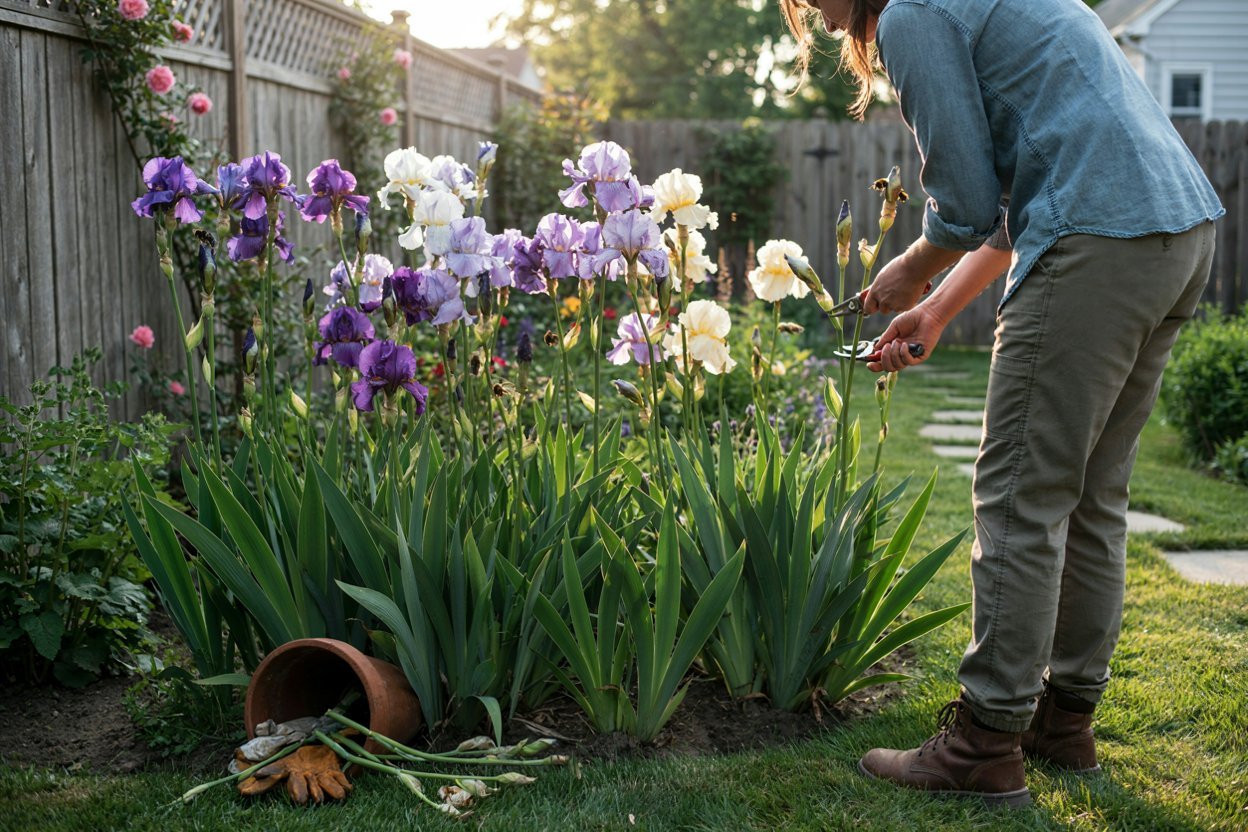

I always feel a little sad when my irises finish blooming.
After weeks of those beautiful flowers standing tall in the garden, the fading blooms and tired-looking leaves can make the whole plant look a little messy. My first instinct used to be grabbing my pruners and cutting everything back.
I learned that irises actually need some of their green foliage for a while after flowering.
Those leaves are still working, even when the flowers are gone, helping the plant store energy for next year’s blooms. Knowing when to cut back irises makes a bigger difference than simply cutting them whenever they start looking untidy.
With the right timing, a little cleanup can help keep iris plants healthier, reduce disease problems, discourage pests, and leave your garden looking much neater.
Why Does Cutting Back Irises Matter?
Irises are fairly easy-care perennials, but the timing of pruning matters.
Bearded irises usually put on their biggest show in late spring or early summer. Once those flowers fade, the plant doesn’t simply stop working.
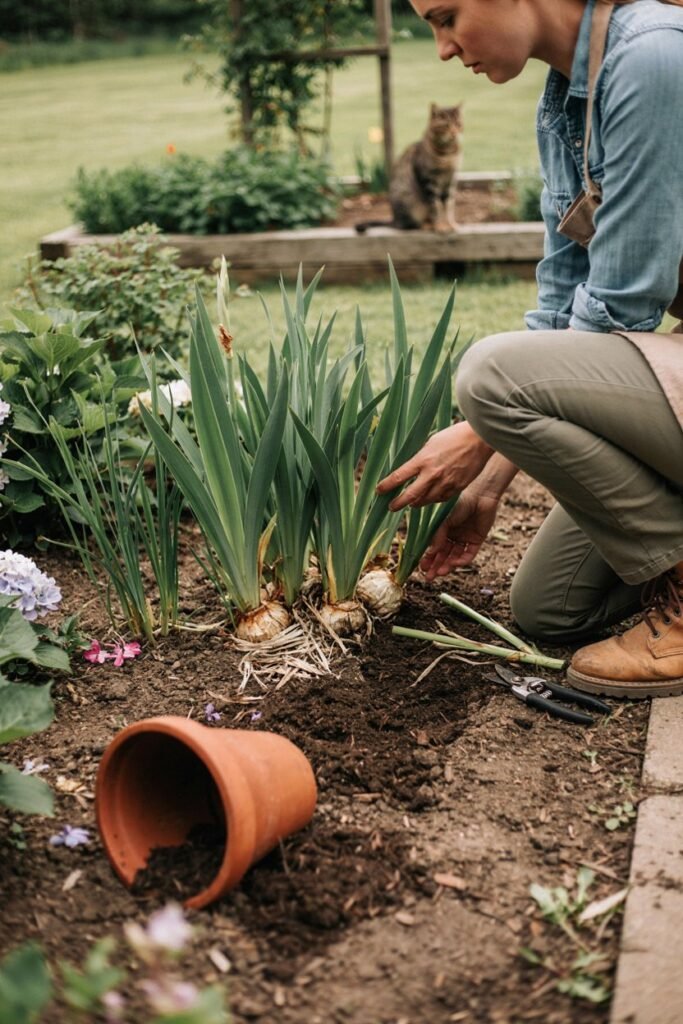
The green leaves continue collecting sunlight and sending energy back into the rhizome, the thick underground stem that stores nutrients for the next growing season.
Cutting healthy foliage away too early can reduce that energy supply.
At the same time, leaving old, diseased, or completely dead foliage sitting around the plant for months can create a place for pests and diseases to persist.
So I like to think of iris pruning as having three different jobs:
- Removing finished flower stalks after blooming
- Removing unhealthy leaves whenever necessary
- Cutting back the remaining foliage in late summer or fall
Once you separate those jobs, iris pruning becomes much easier.
When Should You Cut Back Iris Flower Stalks?
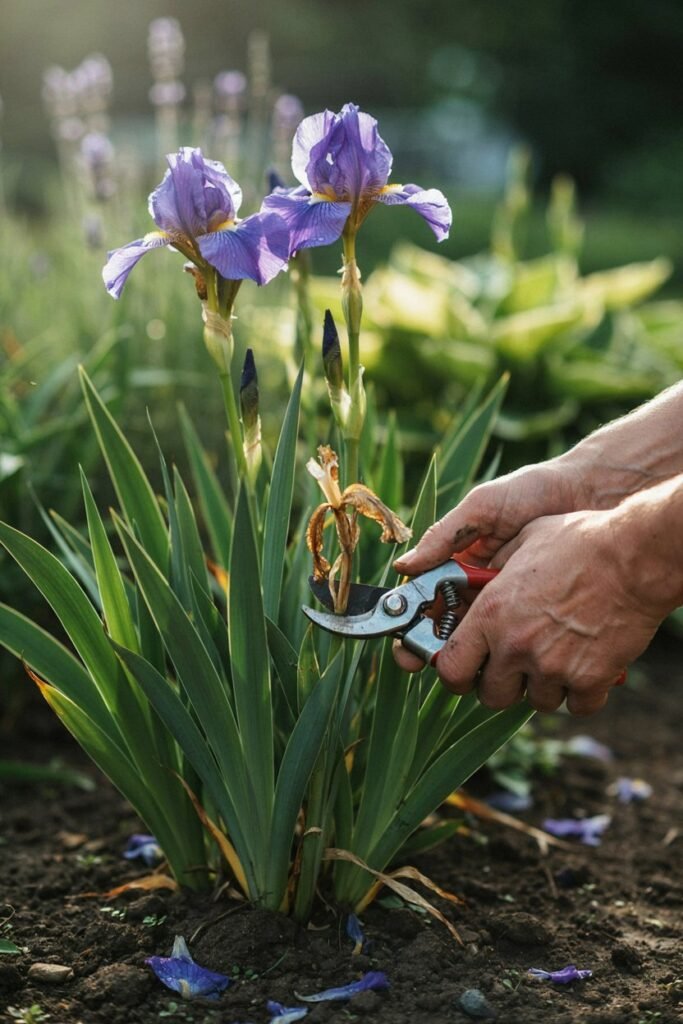
The first cleanup should happen shortly after flowering has finished.
Once the flowers have faded, I remove the entire flower stalk rather than repeatedly picking off individual dead flowers. Most bearded iris varieties bloom once during their main flowering period, so removing the stalk won’t make the plant produce another flush of flowers.
Wait until the flowers on the stalk have finished blooming, then cut the stalk down near its base.
Removing the old stalk keeps the plant looking tidy and prevents the fading flower stems from becoming unnecessary garden debris.
It can also reduce the chance of certain disease problems developing around old plant material.
How to Remove the Flower Stalk
Use a pair of sharp, clean pruning shears.
Follow the flower stem downward until you reach the base of the plant. Make a clean cut as close to the base as you reasonably can without damaging the rhizome.
I prefer making a slightly angled cut rather than leaving a flat cut where water can sit.
Don’t worry about removing every green leaf at this stage. The leaves are still valuable to the plant.
Should You Cut Iris Leaves After Flowering?

No—not if the leaves are healthy and green.
This is probably the most important iris-pruning mistake to avoid.
After the flowers disappear, the leaves may not look nearly as exciting, but they’re still doing important work. Through photosynthesis, healthy foliage helps the plant produce and store energy in its rhizome.
That stored energy helps support future growth and flowering.
So even if your iris bed looks a little less attractive after blooming, try to be patient with the green leaves.
I know that’s easier said than done when you’re trying to keep a flower garden looking neat!
Instead of cutting everything down immediately, remove the spent flower stalks and leave the healthy foliage in place.
What If Some Iris Leaves Turn Brown or Yellow?
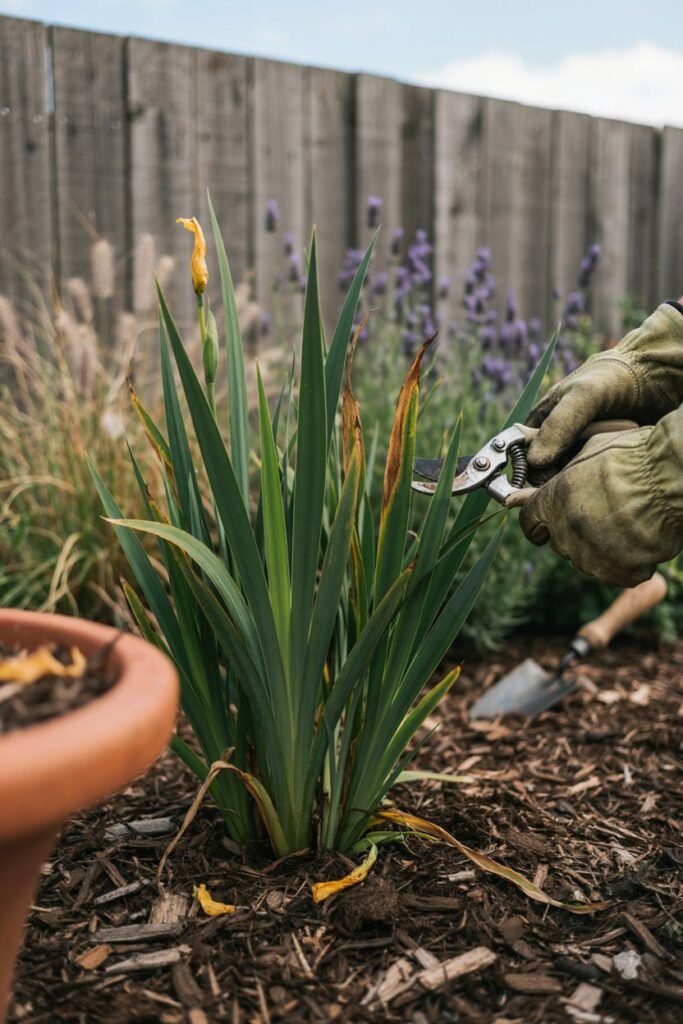
This is different.
You don’t have to leave diseased or badly damaged foliage on the plant just because it’s still summer.
If you notice leaves with obvious brown spots, streaks, blotches, severe yellowing, or other signs of disease, remove the affected leaves as soon as you notice them.
Bearded irises can experience several foliage and rhizome diseases, particularly when conditions are wet and air circulation is poor. Removing affected foliage can help limit problems from spreading through the planting.
When removing unhealthy leaves:
- Use clean, sharp pruners.
- Cut the affected leaf close to its base.
- Avoid dragging diseased leaves through healthy foliage.
- Remove the debris from the garden.
- Clean your tools before moving to another plant.
I wouldn’t put obviously diseased iris leaves into my regular compost pile. Removing infected material from the garden is a safer approach.
The Best Time to Cut Back Iris Foliage

For the major foliage cleanup, late summer into fall is generally the best time.
You want the plant to have enough time to use its healthy green leaves before you remove them completely.
Once the foliage has naturally started dying back and fall frosts have killed it, you can cut the remaining leaves down.
Some gardeners also tidy the foliage earlier in late summer if it has become floppy, damaged, or unattractive. The key is not to remove healthy green foliage too aggressively while the plant is still actively using it.
For many bearded irises, cutting the foliage back after frost is especially useful because old leaves can harbor disease organisms and iris borer eggs.
A Simple Iris Pruning Schedule
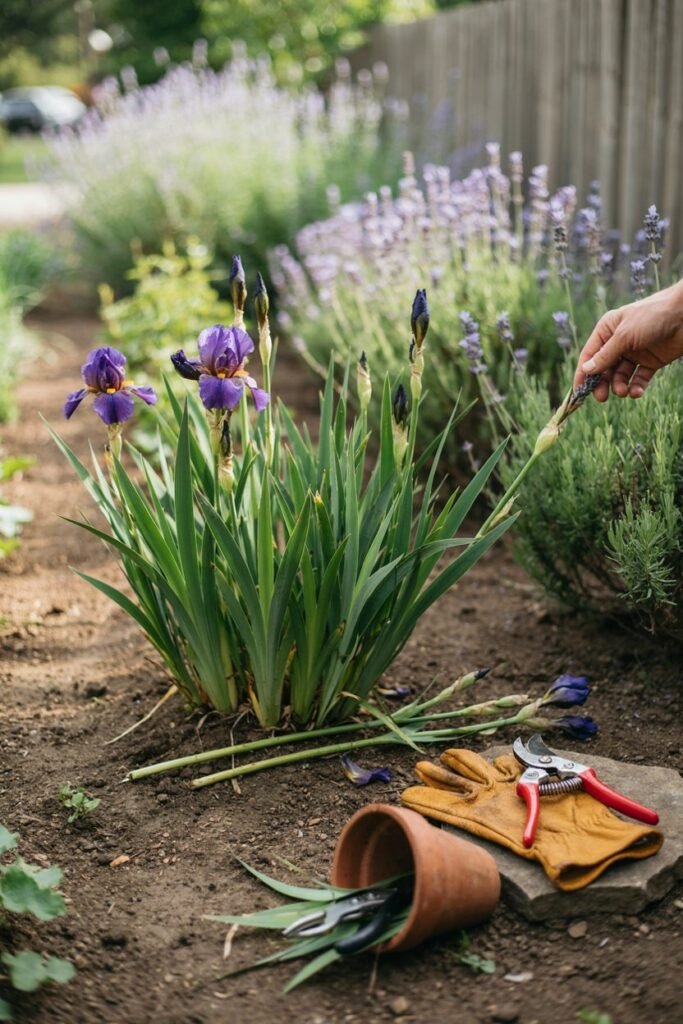
If you’re wondering exactly what to do throughout the year, this simple schedule makes it easy.
Spring
Let the fresh iris foliage grow naturally.
Avoid cutting healthy leaves simply because they’re getting tall. Those leaves are helping the plant build energy for flowering.
During this time, keep an eye out for damaged or diseased leaves.
After Blooming
Once the flowers have finished, remove the spent flower stalks.
Don’t cut the healthy leaf fans down yet.
This is also a good time to check the plant for signs of overcrowding, pests, or disease.
Summer
Allow healthy foliage to continue working.
If individual leaves develop serious disease symptoms, remove them.
If the whole plant becomes extremely floppy or unattractive later in the season, some gardeners trim the leaf fans back partially rather than removing everything. A fan-shaped trim can make the plant look tidier while leaving some foliage behind.
Fall
After the foliage has naturally declined and frost has damaged or killed it, cut the remaining foliage back.
Remove old plant debris from around the rhizomes.
This final cleanup is especially useful for reducing places where pests and disease organisms can survive through winter.
How Far Back Should You Cut Iris Leaves?
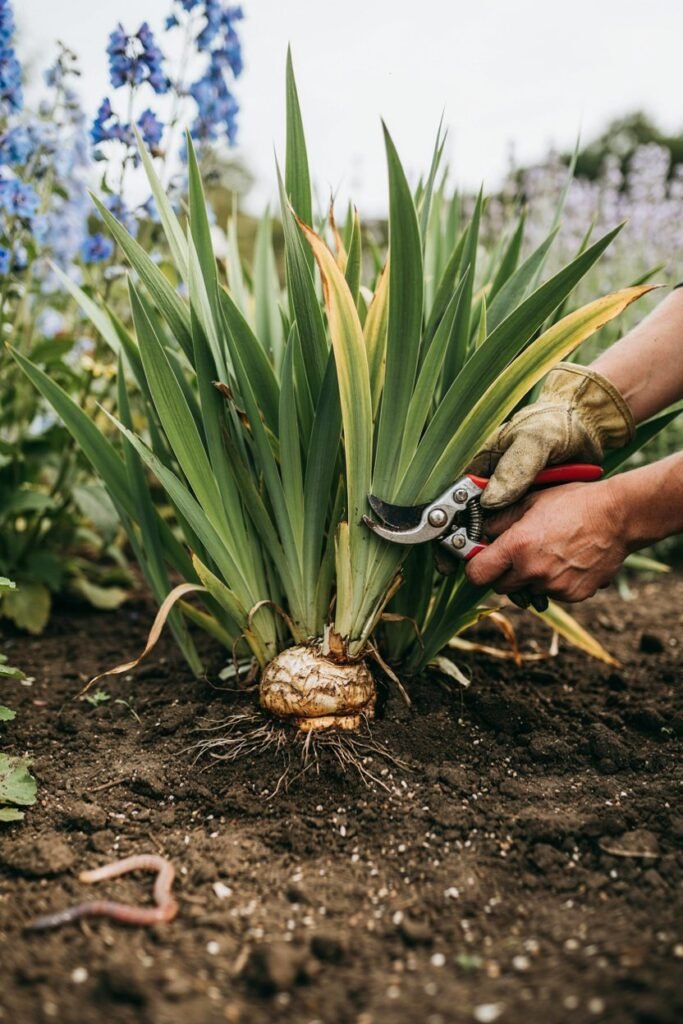
When the foliage is ready for its final fall cleanup, you can cut the leaves close to the base of the plant.
For a neat appearance, some gardeners leave a small amount of foliage above the rhizome rather than cutting directly into the plant.
If you’re doing a partial summer trim, you don’t need to cut all the way down. The goal is simply to tidy the plant while keeping enough healthy foliage for photosynthesis.
The exact height isn’t as important as the timing and condition of the foliage.
Most importantly, don’t cut into the rhizome itself.
Why You Shouldn’t Cut Green Iris Leaves Too Early
I’ve found that the easiest way to remember this is:
Green leaves are working leaves.
Even though the flowers are gone, those leaves are still collecting sunlight.
The rhizome is essentially the plant’s storage system. The more healthy foliage the iris has available during the growing season, the more opportunity it has to replenish those stored reserves.
Cutting the foliage immediately after flowering can therefore work against the plant’s natural cycle.
If your iris leaves are healthy, green, and upright, I’d leave them alone.
A slightly messy plant for a few weeks is much better than sacrificing the foliage the plant needs to prepare for next year’s flowers.
How Cutting Back Irises Can Help Prevent Disease
Good pruning is only one part of iris disease prevention, but it can make a noticeable difference.
Many iris problems become worse when foliage stays wet for long periods or when old infected leaves remain around the plant.
Good garden habits include:
- Give iris plants enough room for air circulation.
- Avoid constantly wetting the foliage.
- Water near the soil instead of repeatedly spraying the leaves.
- Remove diseased leaves promptly.
- Clean your pruning tools between plants when disease is present.
- Remove dead foliage at the end of the season.
Keeping the foliage relatively dry can also help. If you use irrigation, watering near the base of the plant is preferable to repeatedly soaking the leaves.
Don’t Forget About Iris Borers
Iris borers are another reason fall cleanup is important for bearded irises.
These pests can cause serious problems because their larvae feed within the plant and eventually move toward the rhizome.
One useful prevention step is removing old iris foliage before winter.
Iris borer eggs can overwinter on foliage, so cleaning up the leaves at the end of the growing season removes some of the places where the pest can survive.
When you cut back the plant in fall, don’t simply leave the old leaves lying around the base.
Collect them and remove them from the planting area, particularly if you’ve had iris borer or disease problems before.
While pruning isn’t the only way to manage iris borers, good sanitation is a simple habit that can help.
What Should You Do With Soft or Rotten Rhizomes?
While you’re cleaning up your iris plants, take a moment to look at the rhizomes if they’re exposed.
A healthy iris rhizome should feel firm rather than mushy.
If you discover a soft, rotten, badly damaged rhizome, don’t simply cover it back up and hope for the best.
Remove the affected material and dispose of it appropriately. Rotten rhizomes can be associated with serious iris health problems.
If the problem is widespread, it may also be time to consider dividing the entire clump and keeping only healthy sections.
Should You Divide Irises When You Cut Them Back?
Sometimes, yes.
If your iris clump has become crowded, flowers have become smaller, the center of the clump isn’t performing well, or the plants simply seem to be losing vigor, division may help.
Bearded irises are commonly divided every few years, although the exact timing depends on the variety and growing conditions. The University of Connecticut recommends dividing bearded irises roughly every three to four years to maintain vigorous growth.
Division is also an opportunity to inspect the rhizomes closely.
You can remove damaged or unhealthy sections and replant the strongest pieces.
When dividing, the foliage is often shortened first so the plant is easier to handle and loses less water while becoming established.
How to Keep Iris Plants Looking Attractive During Summer
One thing I don’t love about irises is the way the foliage can look tired after flowering.
But you don’t necessarily have to choose between an ugly garden and cutting the plant down too early.
Try these simple tricks:
Keep the flower bed tidy
Remove spent flower stalks and dead leaves regularly.
Remove only damaged foliage
If one or two leaves look bad, you don’t need to cut the entire plant.
Give the plants space
Crowded iris clumps have poorer air circulation and can become more difficult to maintain.
Pair irises with other plants
I like using nearby flowers and foliage plants to soften the appearance of iris leaves after flowering.
This way, the garden still looks full and attractive while the iris foliage continues doing its job.
Common Iris Pruning Mistakes to Avoid
Cutting everything immediately after flowering
This is probably the biggest mistake.
Leave healthy foliage so the plant can continue producing energy.
Pulling leaves out by hand
Don’t yank healthy leaves from the plant.
Use clean, sharp pruners when removing foliage.
Leaving diseased leaves in the garden
If leaves show obvious signs of disease, remove them rather than allowing them to remain around the plant.
Forgetting the fall cleanup
Old iris foliage shouldn’t simply be forgotten once winter arrives.
A good end-of-season cleanup helps reduce pest and disease problems.
Cutting into the rhizome
Be careful when trimming near the base. The rhizome is an important part of the plant and shouldn’t be damaged during routine pruning.
Using dirty pruning tools
Dirty tools can transfer disease between plants.
A quick cleaning between plants is a small habit that can save you trouble later.
What Tools Do You Need?
You don’t need a huge collection of gardening equipment to prune irises.
I keep it simple with:
- Sharp pruning shears
- Gardening gloves
- A bucket or garden bag for debris
- Disinfectant or rubbing alcohol for cleaning tools
- A small hand pruner for individual leaves
Sharp tools make clean cuts and are easier to control.
Before pruning, make sure your shears are clean. This becomes especially important if you’re cutting diseased foliage.
A Quick Step-by-Step Guide to Cutting Back Irises
If you want the simplest version of everything we’ve covered, follow these steps.
Step 1: Wait until flowering finishes
Don’t rush to cut green leaves immediately after the flowers fade.
Step 2: Remove spent flower stalks
Cut the finished stalk down near its base with clean pruning shears.
Step 3: Leave healthy foliage alone
Allow green leaves to continue feeding the rhizome.
Step 4: Remove diseased leaves
Cut away leaves that show obvious signs of disease or serious damage.
Step 5: Watch the plant through summer
Keep the area around the iris free of weeds and excess debris.
Step 6: Wait for fall
Allow the foliage to naturally decline.
Step 7: Cut back after frost
Once frost has killed the foliage, cut the remaining leaves back and clean up the debris.
Step 8: Inspect the plant
Look for signs of rot, pests, or overcrowding while you’re working.
This simple routine can keep your iris bed looking much healthier without making pruning complicated.
What About Irises in Warm Climates?
Gardeners in warmer regions may not get the same hard frost that gardeners in colder areas experience.
In that case, don’t rely entirely on frost as your signal.
Instead, watch the plant.
When the foliage has naturally declined, become brown, or stopped actively growing, you can perform the end-of-season cleanup.
However, the timing can vary significantly depending on the type of iris and your local climate. Some beardless irises, including Louisiana irises in warm regions, can retain green foliage and have different pruning needs. The American Iris Society specifically notes that Louisiana iris foliage may remain green in southern climates and should not automatically be treated like frost-killed bearded iris foliage.
So if you’re growing a type of iris other than the familiar bearded iris, check its specific care requirements before doing a major cutback.
What About Potted Irises?
Potted irises can generally be maintained using the same basic pruning principles.
Remove spent flower stalks after flowering, leave healthy foliage while it’s green, and clean up declining foliage at the appropriate time.
The bigger challenge with container-grown irises is winter protection.
A container can expose roots and rhizomes to colder temperatures than plants growing in the ground, especially in regions with severe winters.
Make sure your particular iris is suited to container growing and consider your local winter temperatures when deciding how to protect the pot.
Frequently Asked Questions
Can I cut iris leaves right after they bloom?
It’s better not to cut healthy green leaves immediately after flowering. Leave them in place so they can continue photosynthesizing and replenishing the rhizome. Remove the spent flower stalk instead.
Should I cut off dead iris flowers?
Yes. Once flowering is finished, remove the spent flower stalk. You don’t have to remove every individual flower as it fades.
When should I cut iris leaves completely back?
For bearded irises, wait until the foliage has naturally declined and is killed or badly damaged by fall frost. Then cut it back and remove the debris.
What if my iris leaves have brown spots?
Remove leaves that clearly show signs of disease rather than waiting until fall. Good sanitation and airflow can help reduce disease pressure.
Do irises bloom again after you cut them back?
Cutting back the plant doesn’t cause most bearded irises to rebloom. Most varieties have one main flowering period. There are some reblooming cultivars, but they aren’t the norm.
How often should bearded irises be divided?
Many gardeners divide bearded irises every few years. If the clump becomes crowded or flowering declines, division can help restore vigor.
Final Thoughts
I’ve learned that pruning irises is really more about timing than cutting.
When the flowers fade, clean up the old flower stalks. When the leaves are healthy and green, let them work. If disease appears, remove the affected foliage. And when fall arrives and the foliage naturally dies back, give the plant a proper final cleanup.
That little bit of patience can make your iris bed healthier, tidier, and better prepared for another beautiful flowering season.
I know it’s tempting to cut everything down as soon as the flowers disappear, especially when you’re trying to keep the garden looking neat. But those green leaves are doing important work beneath the surface.
So next time your irises finish blooming, grab your pruners—but don’t cut too soon. Give those leaves a little more time, and your future garden may thank you with another gorgeous display.
