
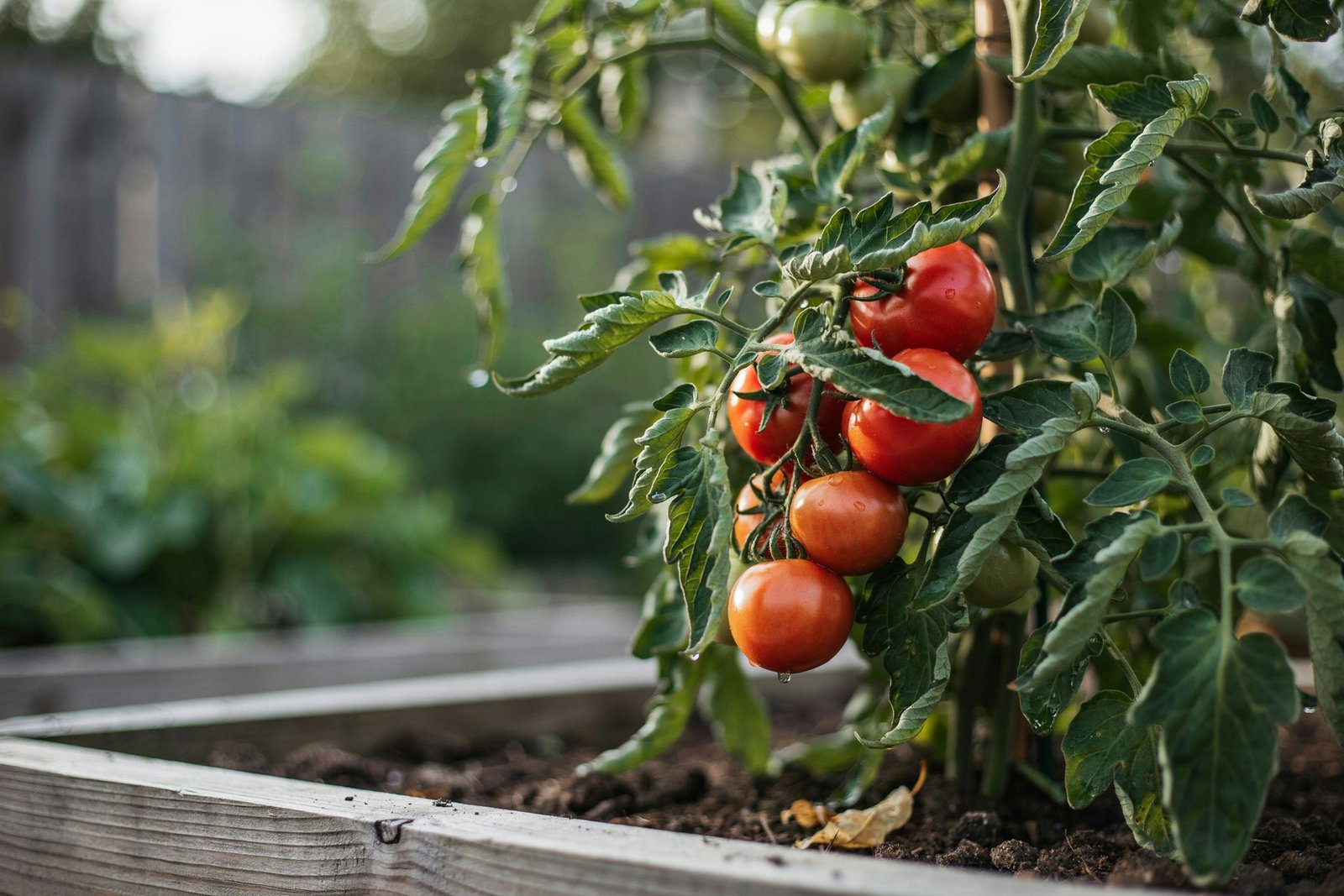

I’ve had those moments in the garden when my tomato plants looked perfectly healthy one day, only for the leaves to start curling the next.
At first, it can be worrying because curled leaves often make us think something is seriously wrong. Thankfully, tomato leaf curl does not always mean your plant is dying.
Sometimes it is simply reacting to heat, inconsistent watering, wind, or other environmental stress. Other times, curling leaves can signal pests, disease, herbicide damage, or a problem with the plant’s roots.
In this guide, I’ll walk you through the most common reasons tomato leaves curl, how to identify the cause, what you can do to help your plants recover, and how to prevent the problem from returning.
Why Are My Tomato Leaves Curling?
Tomato leaves can curl for several different reasons, and the first step toward fixing the problem is figuring out what type of curling you are seeing and what is happening around the plant.
Tomato leaves may curl upward, downward, inward, or become twisted and distorted. A plant may also have curled leaves while the rest of the plant looks completely healthy.
Common causes include:
- Heat and excessive sunlight
- Watering problems
- Transplant shock
- Root damage
- Strong winds
- Too much fertilizer
- Nutrient problems
- Aphids and other pests
- Tomato viruses
- Herbicide exposure
- Certain diseases
- Natural physiological leaf roll
The good news is that many causes of tomato leaf curl can be corrected once you identify the underlying problem.
1. Heat Stress Can Cause Tomato Leaves to Curl
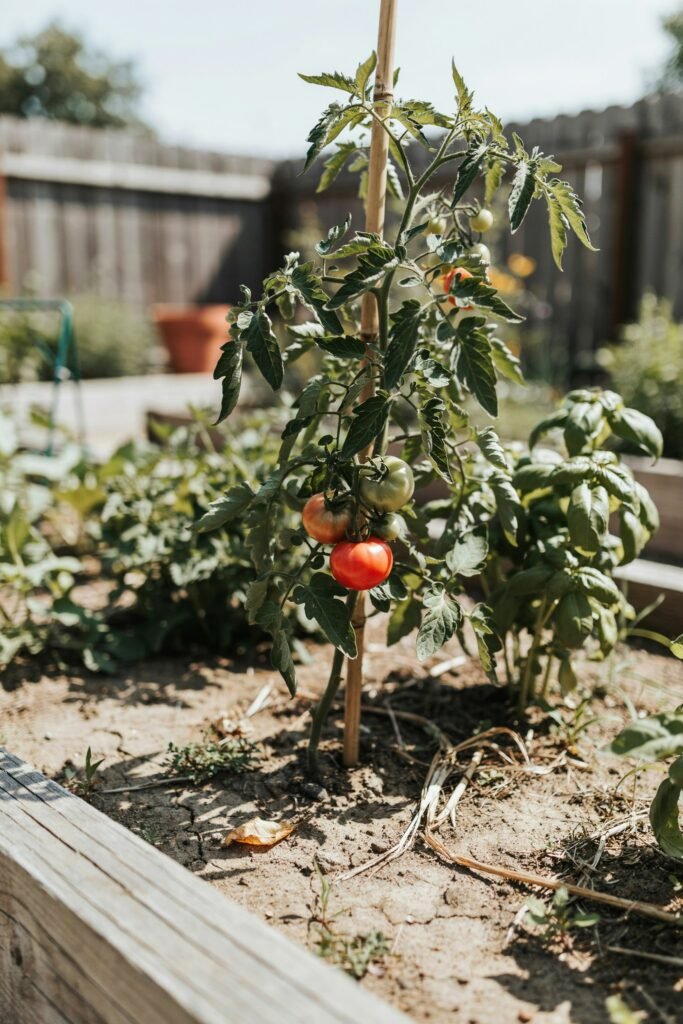
One of the most common reasons tomato leaves curl is hot weather.
Tomato plants love warmth, but extremely hot conditions can cause them to lose water through their leaves faster than their roots can replace it.
In response, the plant may curl its leaves inward or upward to reduce the amount of leaf surface exposed to the sun.
This is particularly common during periods of very hot weather.
You may notice:
- Leaves curling upward along the edges
- Leaves looking slightly limp during the hottest part of the day
- Curling becoming more noticeable in the afternoon
- Leaves looking better again in the evening
- Flowers dropping during prolonged extreme heat
If the leaves become less curled once temperatures cool, heat stress may be the main culprit.
How to help a heat-stressed tomato plant
Keep the soil consistently moist, but avoid keeping it constantly waterlogged.
A layer of organic mulch around the plant can also help keep the soil cooler and slow moisture evaporation.
Good mulch options include:
- Straw
- Shredded leaves
- Compost
- Untreated grass clippings
- Pine straw
Leave a small gap between the mulch and the tomato stem to reduce the risk of moisture-related problems around the base.
During periods of extreme heat, providing temporary shade during the hottest portion of the afternoon can also help, particularly for plants growing in containers.
2. Inconsistent Watering Can Make Tomato Leaves Curl
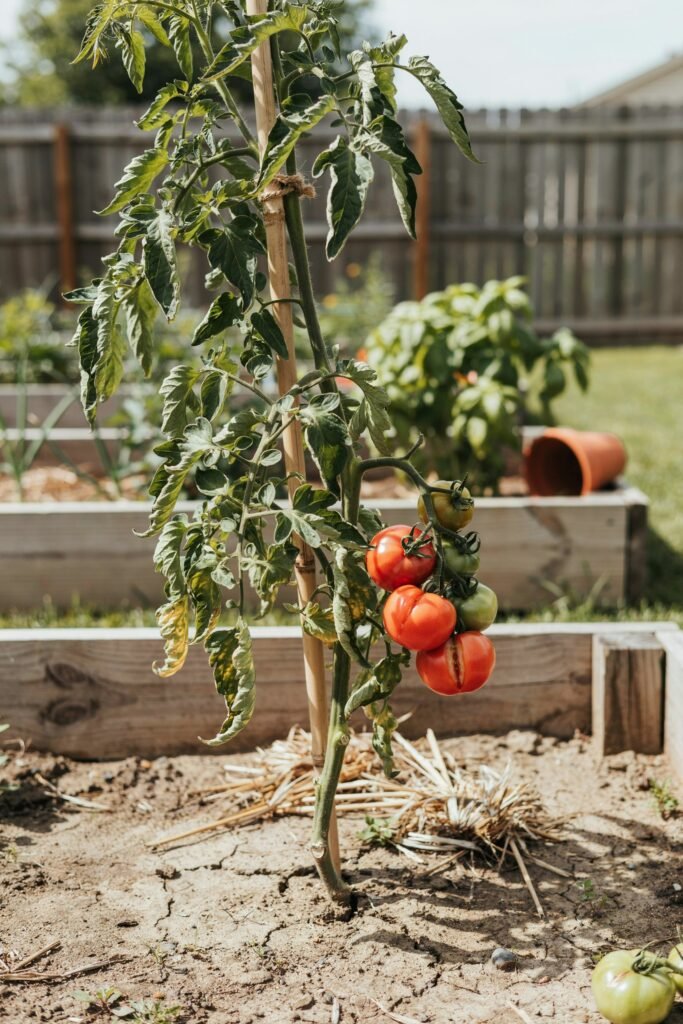
Tomatoes need a fairly consistent supply of moisture. Allowing the soil to become extremely dry and then soaking it heavily can stress the plant.
This can cause leaves to curl, especially when the plant repeatedly experiences cycles of drought and heavy watering.
A tomato plant that is thirsty may also have:
- Drooping leaves
- Dry soil several inches below the surface
- Slow growth
- Smaller fruit
- Blossom problems
How to fix watering problems
Instead of watering a little every day, aim for deep, consistent watering.
Water slowly enough that moisture penetrates into the root zone.
Before watering, check the soil rather than relying entirely on a fixed schedule. Weather, soil type, container size, and plant size all affect how quickly the soil dries.
Helpful tip
Tomatoes growing in containers usually dry out faster than tomatoes planted directly in the ground. During hot weather, container-grown plants may need to be checked more frequently.
3. Overwatering Can Also Cause Curled Leaves
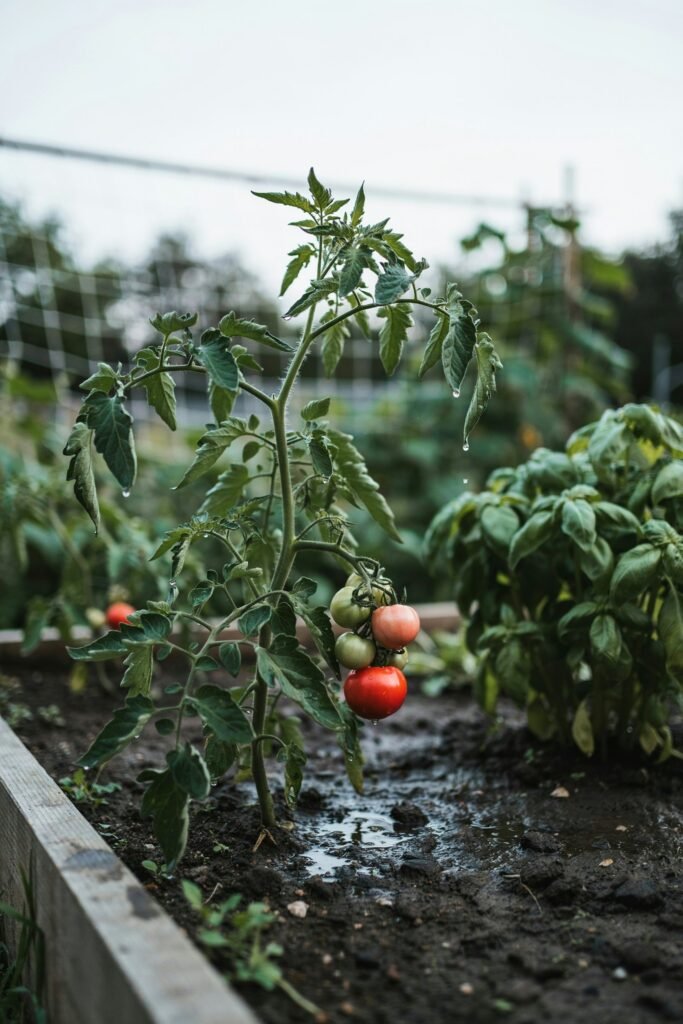
It is easy to assume that curled leaves always mean a tomato plant needs more water, but too much water can create problems too.
When soil stays saturated for long periods, the roots may struggle to get enough oxygen. Damaged or stressed roots cannot function normally, which can eventually affect the leaves.
Overwatered tomato plants may have:
- Yellowing leaves
- Drooping despite wet soil
- Slow growth
- Soft or unhealthy-looking roots
- Poor fruit development
What to do
Check the soil before watering again.
If the soil is consistently soggy, improve drainage rather than simply adding more water.
For container tomatoes, make sure the container has drainage holes. Avoid allowing the pot to sit in a tray filled with standing water.
For garden beds, improving soil structure with organic matter can help drainage over time.
4. Transplant Shock Can Cause Temporary Leaf Curl
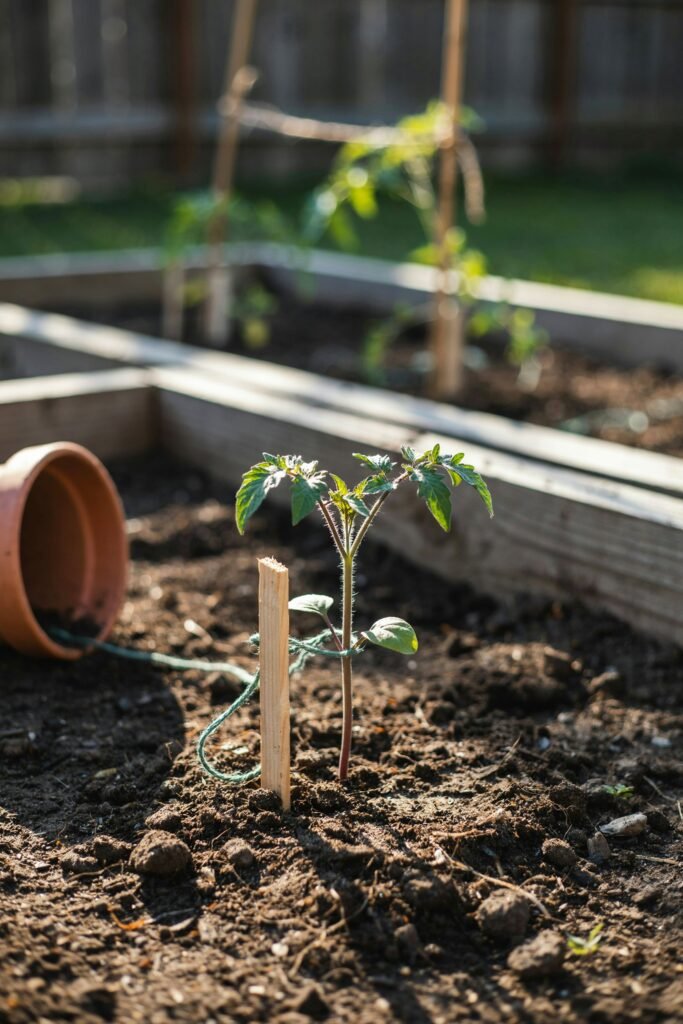
If your tomato leaves started curling shortly after you planted seedlings outdoors, transplant shock could be responsible.
Moving a tomato plant from one environment to another can temporarily stress its roots and leaves.
This is especially likely if the plant was:
- Moved from indoors to full sun too quickly
- Transplanted during very hot weather
- Disturbed heavily during planting
- Not watered adequately after transplanting
- Exposed to strong wind immediately after planting
How to help
Give newly transplanted tomatoes time to adjust.
Keep the soil evenly moist while the roots become established. Protect young plants from harsh conditions when necessary and gradually acclimate indoor-grown seedlings to outdoor conditions before permanently planting them outside.
In many cases, mild curling caused by transplant shock improves as the plant establishes new roots.
5. Root Damage Can Lead to Curling Leaves
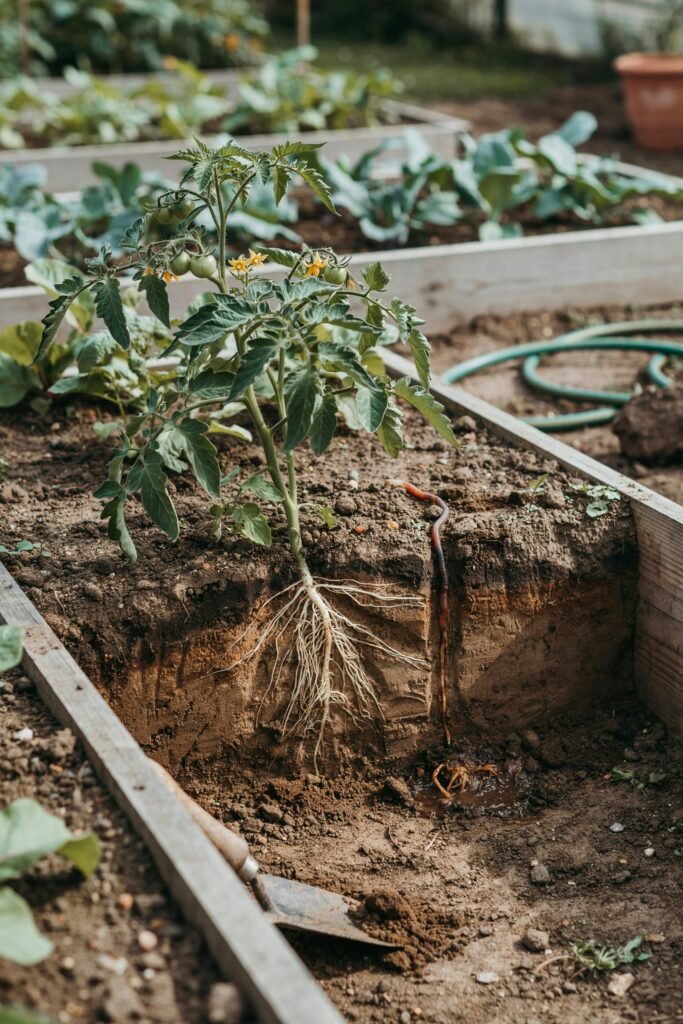
Healthy roots are essential for healthy tomato foliage.
If the root system is damaged, the plant may struggle to absorb water and nutrients efficiently.
Root damage can occur because of:
- Rough transplanting
- Digging too close to the plant
- Waterlogged soil
- Root-feeding insects
- Certain soil diseases
- Physical damage during cultivation
When the roots cannot supply the foliage properly, leaves may curl or wilt.
What you can do
Avoid disturbing the soil immediately around established tomato plants.
When planting, handle the root ball carefully. If a tomato is growing in a container, make sure the container is large enough for the plant and has good drainage.
6. Aphids Can Cause Tomato Leaves to Curl
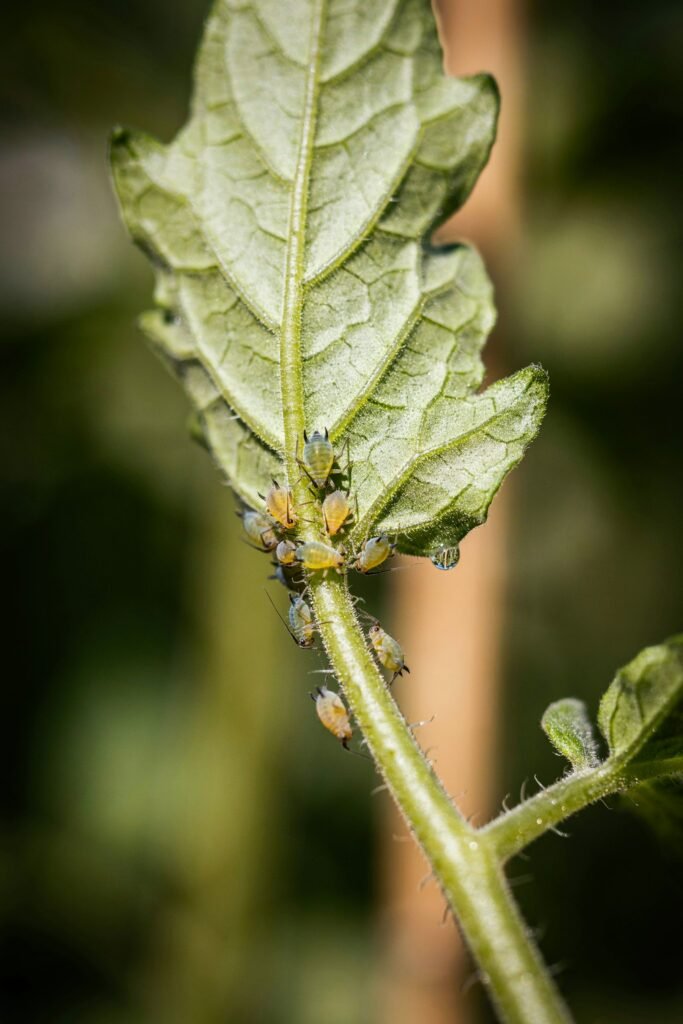
Aphids are tiny sap-sucking insects that can cause significant problems when populations become large.
They often gather on:
- New shoots
- Young leaves
- Leaf undersides
- Tender stems
As aphids feed, they can cause new growth to become distorted or curled.
You may also notice sticky material on the leaves. This substance, called honeydew, can encourage the growth of sooty mold.
How to check for aphids
Turn over several curled leaves and inspect the undersides carefully.
Look for small insects clustered around tender growth.
Also check for ants. Ants sometimes visit plants where aphids are producing honeydew.
Helping a plant with aphids
For a small infestation, physically removing the insects with a strong stream of water can reduce their numbers.
Encouraging beneficial insects such as lady beetles, lacewings, and other natural predators can also help keep aphid populations under control.
Avoid unnecessarily spraying broad-spectrum insecticides because they can harm beneficial insects as well as pests.
7. Tomato Viruses Can Cause Severe Leaf Curling
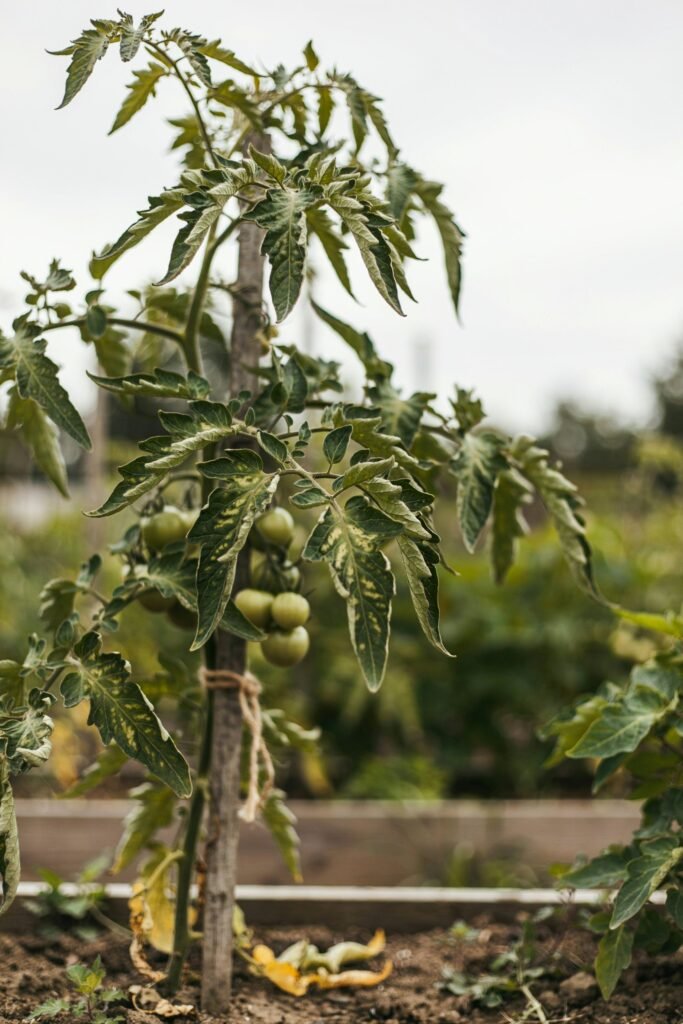
Not all leaf curl is caused by environmental stress.
Certain plant viruses can cause tomato leaves to curl, twist, become discolored, or develop unusual growth.
Viral problems may also cause:
- Stunted growth
- Yellowing
- Mottled leaves
- Distorted new growth
- Poor fruit development
Unlike simple heat stress, viral symptoms generally do not disappear when temperatures cool.
What should you do?
If you strongly suspect a viral disease, avoid moving plant material from the affected tomato to healthy plants.
Remove heavily infected plants according to local gardening recommendations rather than composting diseased material unless you know your composting system reaches temperatures capable of destroying the pathogen.
Also control insect pests that can spread plant viruses.
8. Herbicide Drift Can Cause Twisted or Curled Leaves
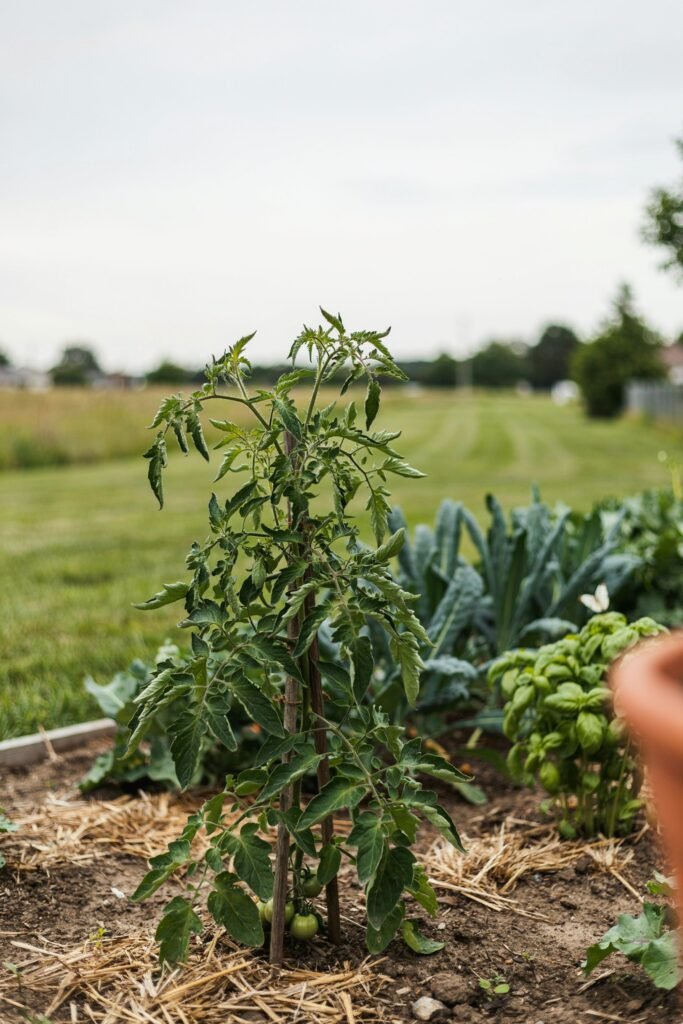
Herbicide exposure is another important cause of tomato leaf distortion.
Tomatoes are particularly sensitive to certain herbicides. Even exposure to small amounts of herbicide drift can cause unusual curling, twisting, or distortion.
You might notice:
- New leaves becoming twisted
- Narrow or strap-like leaves
- Distorted growing points
- Curling that appears across newer growth
- Symptoms appearing after nearby weed-control activity
Herbicide injury can sometimes be confused with viral disease.
How to prevent herbicide damage
Avoid spraying herbicides near tomato plants when wind could carry droplets toward the garden.
Be especially careful with lawn and weed-control products.
Do not assume that a product is safe simply because it is being used far away from your tomatoes. Wind and accidental movement can carry herbicides farther than expected.
If you believe your tomato plant has been exposed, avoid adding additional stress while you monitor new growth.
9. Nutrient Problems Can Affect Tomato Leaves
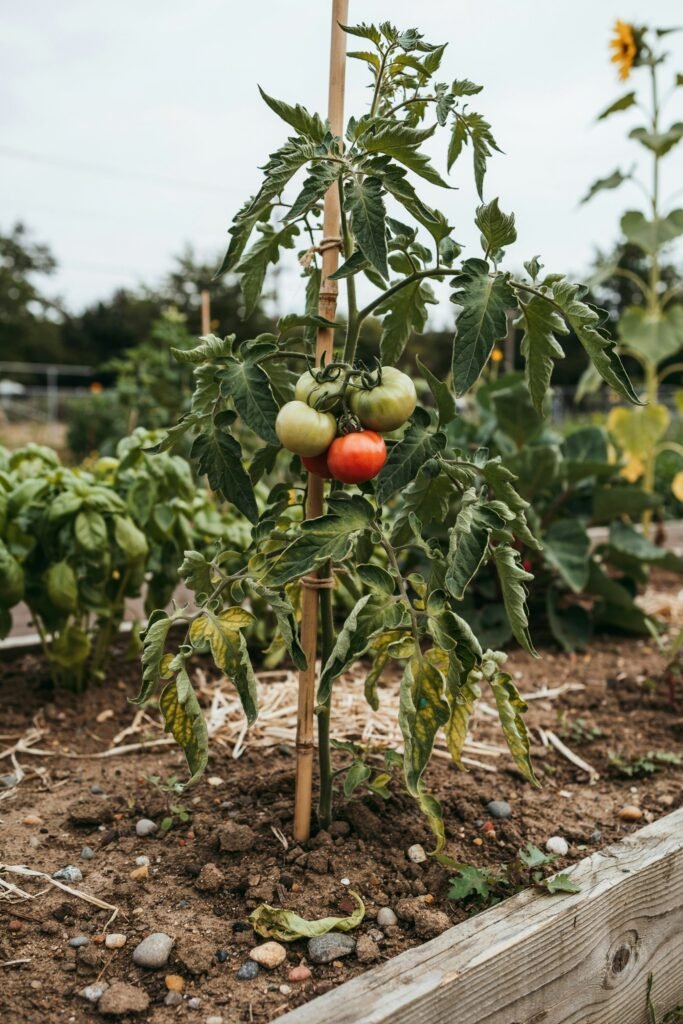
Tomatoes need several nutrients to grow properly.
Nutrient deficiencies can sometimes contribute to abnormal foliage, although nutrient problems are not the cause of every case of curled leaves.
For example, problems involving nitrogen, potassium, magnesium, calcium, or other nutrients can affect plant growth and leaf appearance.
However, it is important not to immediately add fertilizer simply because leaves look unusual.
Overfertilizing can create additional problems.
A better approach
Start by looking at the entire plant.
Ask:
- Are older leaves affected or only new leaves?
- Are the leaves yellow?
- Are the leaf edges browning?
- Is growth stunted?
- Is the soil unusually dry or wet?
- Have you recently fertilized?
- Has the plant been exposed to extreme weather?
If a nutrient deficiency is suspected, a soil test can provide much more useful information than guessing.
10. Too Much Fertilizer Can Stress Tomato Plants
More fertilizer does not automatically mean more tomatoes.
Applying excessive fertilizer can create nutrient imbalances and cause problems with plant growth.
High levels of certain nutrients can interfere with the uptake of others.
A tomato plant that has recently received a large amount of fertilizer and then develops unusual foliage should be monitored carefully.
How to avoid fertilizer problems
Follow the product’s label directions and avoid applying more than recommended.
Compost and other organic matter can improve soil health, but even organic fertilizers should be used appropriately.
If your soil is already fertile, additional fertilizer may not be necessary as often as you think.
11. Physiological Leaf Roll Is Not Always a Serious Problem
Sometimes tomato leaves curl even though the plant is otherwise healthy.
This condition is often called physiological leaf roll.
It can occur when the plant experiences stress from:
- High temperatures
- Rapid changes in weather
- Root pruning
- Heavy fruit production
- Irregular moisture
- Excessive pruning
The leaves may curl upward along the edges while remaining green.
If the plant continues growing normally and producing healthy flowers and fruit, the condition may not require drastic treatment.
The important thing is to watch the plant
If the curled leaves remain green and the plant continues producing healthy new growth, avoid immediately reaching for pesticides or large amounts of fertilizer.
Sometimes the best treatment is simply reducing environmental stress.
How to Tell What Is Causing Your Tomato Leaves to Curl
When you notice curled leaves, take a few minutes to investigate before treating the plant.
Step 1: Look at the leaves
Are they:
- Green and curled?
- Yellow and curled?
- Brown around the edges?
- Twisted?
- Mottled?
- Covered in insects?
The appearance can provide important clues.
Step 2: Check the soil
Push your finger several inches into the soil.
Is it:
- Dry?
- Moist?
- Soggy?
This simple check can immediately reveal whether watering might be contributing to the problem.
Step 3: Inspect the undersides of leaves
Look closely for aphids and other small pests.
Young leaves deserve particular attention.
Step 4: Think about recent weather
Did the curling begin after:
- A heat wave?
- Heavy rain?
- Strong wind?
- A sudden cold spell?
Environmental changes can cause rapid symptoms.
Step 5: Think about recent treatments
Have you recently applied:
- Fertilizer?
- Weed killer?
- Insecticide?
- Fungicide?
- Compost or manure?
Knowing what changed immediately before symptoms appeared can help identify the cause.
How to Prevent Tomato Leaves From Curling
Prevention starts with creating stable growing conditions.
1. Water Consistently
Keep moisture levels reasonably consistent.
Do not allow tomato plants to repeatedly go from bone-dry soil to saturated soil.
Water deeply when needed and adjust your watering according to weather conditions.
2. Mulch Around Tomatoes
Mulching is one of my favorite simple tomato-growing tricks because it helps stabilize soil moisture and temperature.
Apply a layer of suitable organic mulch around the plant.
Mulch can:
- Reduce evaporation
- Moderate soil temperature
- Reduce soil splash
- Help suppress weeds
- Improve soil health as organic mulch breaks down
Keep mulch away from direct contact with the stem.
3. Improve Soil Drainage
Tomatoes dislike constantly saturated soil.
If your garden soil holds water for long periods, improve its structure with appropriate organic matter or consider growing tomatoes in raised beds or containers with proper drainage.
4. Give Plants Enough Space
Crowded tomato plants have reduced airflow, and dense foliage can create conditions that encourage certain diseases.
Follow the spacing recommendations for the tomato variety you’re growing.
Good spacing also makes it easier to inspect leaves for pests.
5. Inspect Plants Regularly
A quick inspection once or twice a week can help you catch problems before they become severe.
Look under leaves, around new growth, and along stems.
Finding a small aphid population is much easier to manage than discovering a heavily infested plant later.
Helpful Tomato Leaf Curl Tips
Here are a few simple tips I keep in mind when caring for tomatoes.
Don’t panic when you see one curled leaf
One or two curled leaves do not necessarily indicate a serious problem.
Look at the overall health of the plant.
Don’t automatically add fertilizer
Curling leaves do not automatically mean the plant needs more nutrients.
Diagnose the problem first.
Check the newest growth
New growth can provide useful clues.
Twisted or severely distorted new leaves can point toward pests, herbicide exposure, or disease.
Check the soil before watering
Don’t water simply because the leaves look curled.
Curling can occur from both too little and too much water.
Look under the leaves
Pests are often hiding where you cannot easily see them from above.
Avoid unnecessary chemical treatments
Treating the wrong problem can make plant stress worse and may harm beneficial insects.
Can Curled Tomato Leaves Recover?
Sometimes they can.
Whether a tomato plant recovers depends on the cause and severity of the problem.
If curling was caused by temporary environmental stress such as heat, inconsistent watering, or transplant shock, the plant may produce healthy new growth once conditions improve.
However, severely damaged leaves may not return to their original shape.
That’s okay.
The more important question is whether the plant is producing healthy new growth.
If new leaves look normal and the plant continues flowering and producing fruit, recovery is often a good sign.
When Should You Be Concerned?
Pay closer attention when curled leaves are accompanied by other symptoms.
Be especially cautious if you notice:
- Severe twisting
- Yellowing
- Extensive spotting
- Stunted growth
- Rapid decline
- Large numbers of insects
- Distorted new growth
- Symptoms spreading quickly throughout the plant
- Multiple plants developing identical symptoms at the same time
When several plants develop the same unusual symptoms simultaneously, consider whether they share an environmental problem, pest, disease, or chemical exposure.
Frequently Asked Questions About Tomato Leaf Curl
Why are my tomato leaves curling upward?
Upward curling can occur because of heat, drought stress, inconsistent watering, root stress, or physiological leaf roll. Examine the soil moisture and weather conditions before deciding on a treatment.
Why are my tomato leaves curling downward?
Downward curling can have several causes, including environmental stress, pests, disease, or root problems. Inspect the leaves and soil carefully rather than assuming it is simply a watering problem.
Should I remove curled tomato leaves?
Not necessarily.
If the leaves are still green and the plant is otherwise healthy, removing them may not be necessary.
Remove leaves when they are severely damaged, diseased, dead, or interfering with airflow according to the specific problem you’re dealing with.
Will watering fix curled tomato leaves?
Only if inadequate moisture is causing the curling.
If the plant is already sitting in wet soil, adding more water could make the problem worse.
Always check the soil first.
Can heat cause tomato leaves to curl?
Yes. Hot conditions can cause tomato leaves to curl as the plant attempts to reduce water loss.
Providing consistent moisture, using mulch, and reducing extreme heat stress can help.
Can aphids cause tomato leaves to curl?
Yes. Aphids feed on plant sap and can cause young tomato leaves and shoots to become distorted or curled.
Check the undersides of leaves and tender new growth.
Should I cut off all curled leaves?
No.
Curling alone is not a good reason to remove every affected leaf.
First determine why the leaves are curling. Removing healthy but curled leaves can unnecessarily reduce the plant’s photosynthetic capacity.
Final Thoughts
When I see curled tomato leaves, I try not to reach for a treatment immediately. Instead, I look at the whole plant and ask what changed.
Has the weather become unusually hot? Has the soil been drying out too quickly? Did I recently transplant the plant, fertilize it, or notice insects underneath the leaves?
That little investigation can make all the difference.
Tomato leaf curl is a symptom rather than a single disease, so the right solution depends on the cause.
By keeping your plants consistently watered, protecting them from unnecessary stress, checking regularly for pests, avoiding excessive fertilizer, and being careful with herbicides, you can greatly reduce the chances of serious leaf-curl problems.
Most importantly, don’t judge the health of your tomato plant by one curled leaf. Look at the new growth, the stems, the soil, the roots, and the overall condition of the plant.
Once you understand what your tomato is trying to tell you, fixing the problem becomes much easier.
