
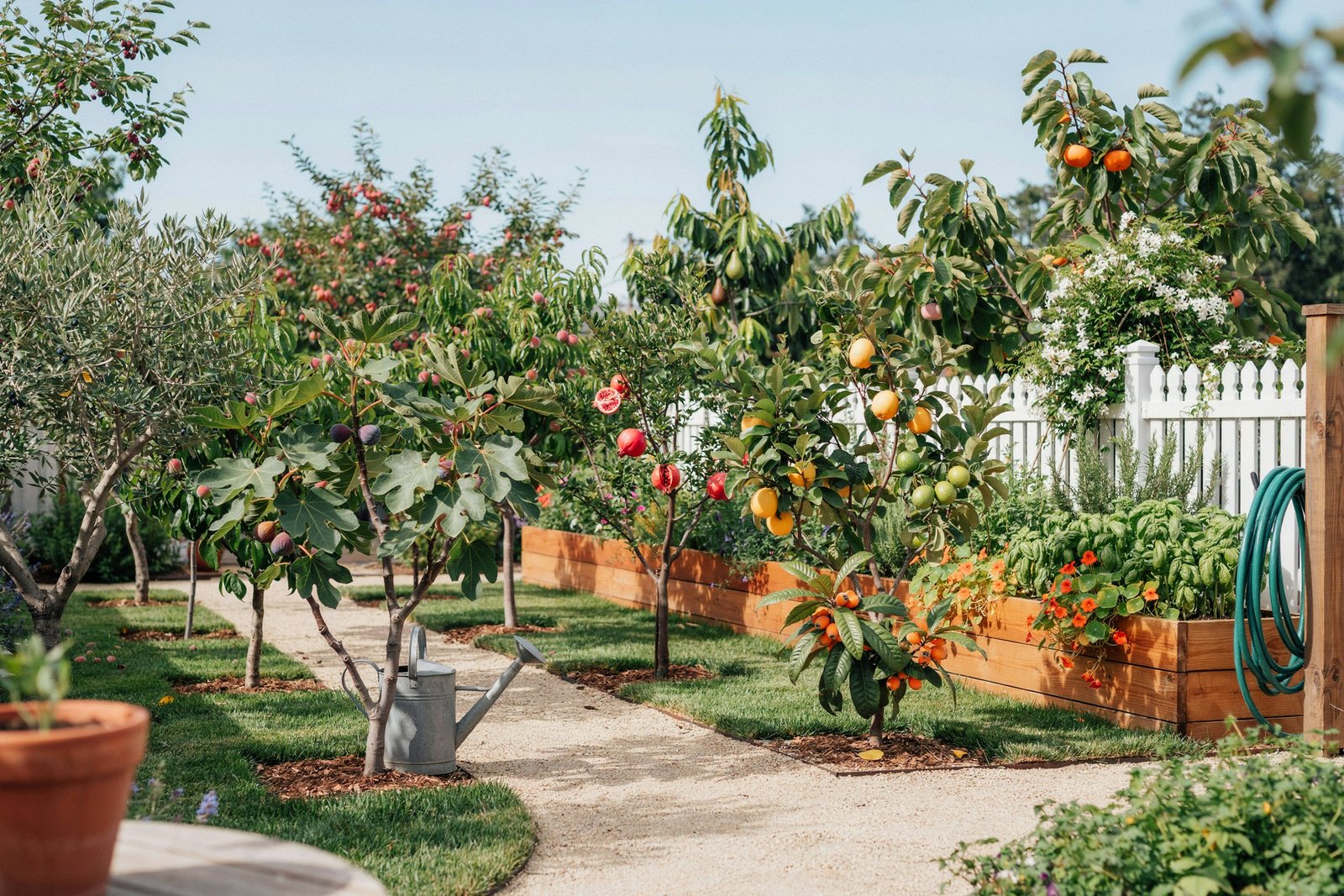

I love the idea of growing fruit trees because they can turn an ordinary garden into something that feels truly rewarding.
Watching a tree flower, form tiny fruits, and eventually give you something sweet to pick is such a wonderful part of gardening.
The best part is that you don’t need to spend every weekend pruning, spraying, and fussing over your trees. Some fruit trees are surprisingly easygoing once they are planted in the right spot.
If you’re a beginner or simply want a garden that needs less work, these 12 low-maintenance fruit trees are worth considering for your home.
What Makes a Fruit Tree Low Maintenance?

Before choosing a fruit tree, it helps to understand what “low maintenance” actually means.
No fruit tree is completely maintenance-free. Every tree needs the basics: suitable sunlight, enough water while it becomes established, good soil, and occasional pruning.
However, some varieties are naturally easier to manage than others.
A low-maintenance fruit tree generally has a combination of these qualities:
- It adapts well to common garden conditions.
- It doesn’t require frequent pruning.
- It has relatively few serious pest or disease problems in suitable climates.
- It can tolerate short periods of dryness once established.
- It doesn’t need complicated feeding schedules.
- It produces fruit without requiring lots of specialized care.
- It can grow happily in an ordinary home garden.
The most important thing is choosing a tree that suits your climate and growing zone. A tree that is easy to grow in one region may struggle in another.
With that in mind, here are 12 fruit trees that can be wonderfully manageable for home gardeners.
1. Fig Tree

Fig trees are one of my favorite choices for gardeners who want fruit without a complicated routine. Once established, many figs are surprisingly forgiving and can handle periods of dry weather better than many other fruit trees.
Figs grow best in a sunny location with well-draining soil. Give the tree plenty of room if you’re planting it directly in the ground because some varieties can become quite large.
One advantage of figs is that they can also be grown in large containers. Container growing can help gardeners with small yards keep the tree at a manageable size.
Basic care
- Give it at least 6 hours of sunlight.
- Use well-draining soil.
- Water regularly while the tree is young.
- Reduce watering once an established tree is growing strongly, depending on rainfall.
- Prune lightly to remove dead, damaged, or poorly positioned branches.
- Protect young trees from unusually cold weather.
Why it’s low maintenance
Established fig trees can tolerate some dryness and don’t usually need constant attention. The biggest challenge is often protecting ripe fruit from birds and other hungry garden visitors.
2. Pomegranate Tree
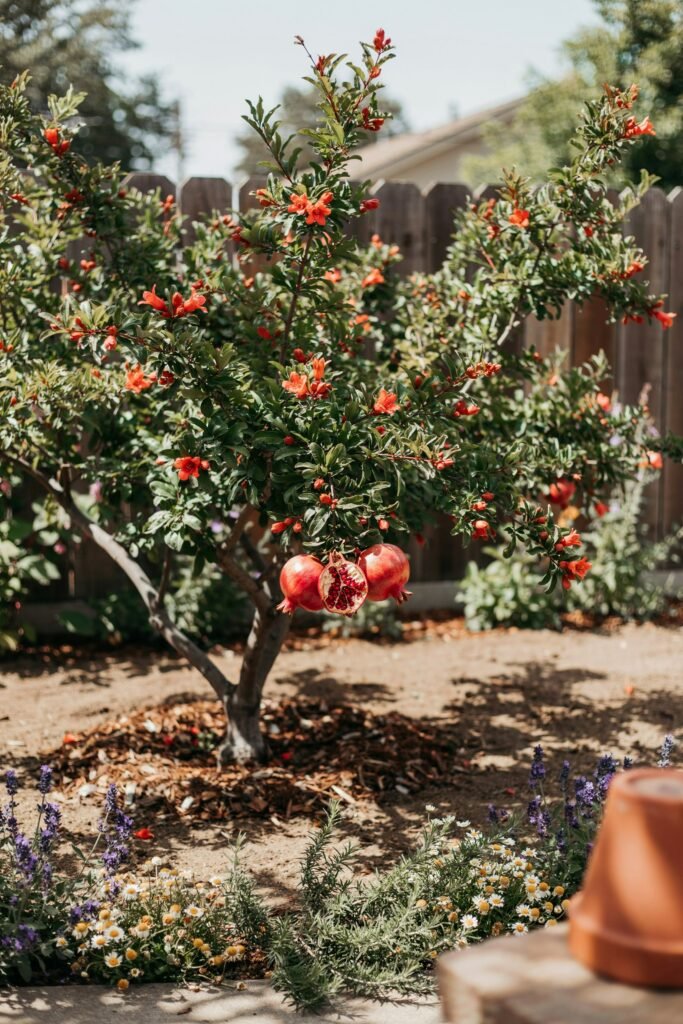
If you live somewhere with plenty of sunshine, a pomegranate tree can be an excellent addition to the garden.
Pomegranates are attractive trees with beautiful flowers followed by round fruits filled with juicy seeds. They are also relatively drought-tolerant once established, making them useful for gardeners who don’t want a tree that constantly needs watering.
Plant yours in a sunny location with soil that drains well.
Basic care
- Choose a spot with plenty of direct sunlight.
- Water consistently during establishment.
- Allow the soil to dry somewhat between watering once the tree is established.
- Feed lightly if the soil is poor.
- Remove dead or crossing branches when necessary.
- Harvest fruits when they have developed their mature color and sound firm.
Why it’s low maintenance
Pomegranates generally prefer warmth and sunshine and can cope with relatively dry conditions once their root systems are established.
Read Grow Your Own Chocolate Tree Indoors (Even In Cold Climates
3. Mulberry Tree

Mulberry trees can be incredibly productive. Once established, they can grow vigorously and produce large quantities of sweet berries.
This is a tree where location matters. Some mulberry varieties can become quite large, so think carefully before planting one close to your house, walkway, or small garden bed.
The fruits can be eaten fresh or used in jams, desserts, smoothies, and other recipes.
Basic care
- Plant in full sun where possible.
- Provide well-draining soil.
- Water regularly during the first growing season.
- Give the tree enough space to grow.
- Prune to remove damaged branches and maintain a manageable shape.
- Harvest berries as they ripen.
Why it’s low maintenance
Mulberries are generally vigorous growers. Once established, they can provide fruit without needing an elaborate care routine.
The main consideration is the mess created by fallen berries, so avoid planting one directly over patios or frequently used walkways.
Read How to Grow Limes Anywhere (A Complete Guide for Thriving Citrus Trees)
4. Guava Tree

Guava is an especially useful fruit tree for warm-climate gardeners. It loves sunshine and warmth and can grow quickly when conditions are right.
The fragrant flowers eventually develop into delicious fruits that can be eaten fresh or used for juice, jam, desserts, and other recipes.
Guava can also be pruned to keep it at a manageable height, which makes harvesting much easier.
Basic care
- Plant in full sun.
- Choose fertile, well-draining soil.
- Water consistently while young.
- Add compost around the root zone.
- Prune lightly to encourage a manageable shape.
- Mulch around the tree while keeping mulch away from the trunk.
Why it’s low maintenance
Guava generally grows vigorously in warm conditions and doesn’t require complicated care. Once established, it can become a dependable fruit producer.
5. Persimmon Tree

Persimmons are beautiful fruit trees that can also add seasonal interest to the garden. Their orange fruits stand out against the leaves, and some varieties develop attractive fall color.
Many persimmons are fairly adaptable when planted in suitable soil and climate conditions.
Choose a sunny location with good drainage and give the tree enough space to develop.
Basic care
- Plant in full sun.
- Use well-draining soil.
- Water deeply during dry periods.
- Add a layer of organic mulch.
- Remove dead or damaged branches.
- Avoid excessive pruning.
Why it’s low maintenance
Persimmons don’t generally need aggressive pruning. Once established in an appropriate location, they can become fairly self-sufficient.
Be sure to check whether your chosen variety requires another persimmon tree for pollination.
6. Lemon Tree

A lemon tree is one of those plants that can make a garden feel incredibly useful. Having fresh lemons within reach is wonderful for cooking, drinks, baking, and everyday household use.
Lemons prefer warm conditions and plenty of sunlight. In cooler climates, dwarf varieties can be grown in containers and moved into a protected area when necessary.
Basic care
- Provide plenty of sunshine.
- Use fertile, well-draining soil.
- Water deeply rather than giving tiny amounts constantly.
- Feed with a citrus fertilizer when appropriate.
- Prune away dead or damaged growth.
- Watch for common citrus pests.
Why it’s low maintenance
Once established in a suitable warm climate, lemon trees can grow steadily with relatively straightforward care.
The key is avoiding constantly soggy soil. Good drainage is extremely important.
7. Lime Tree
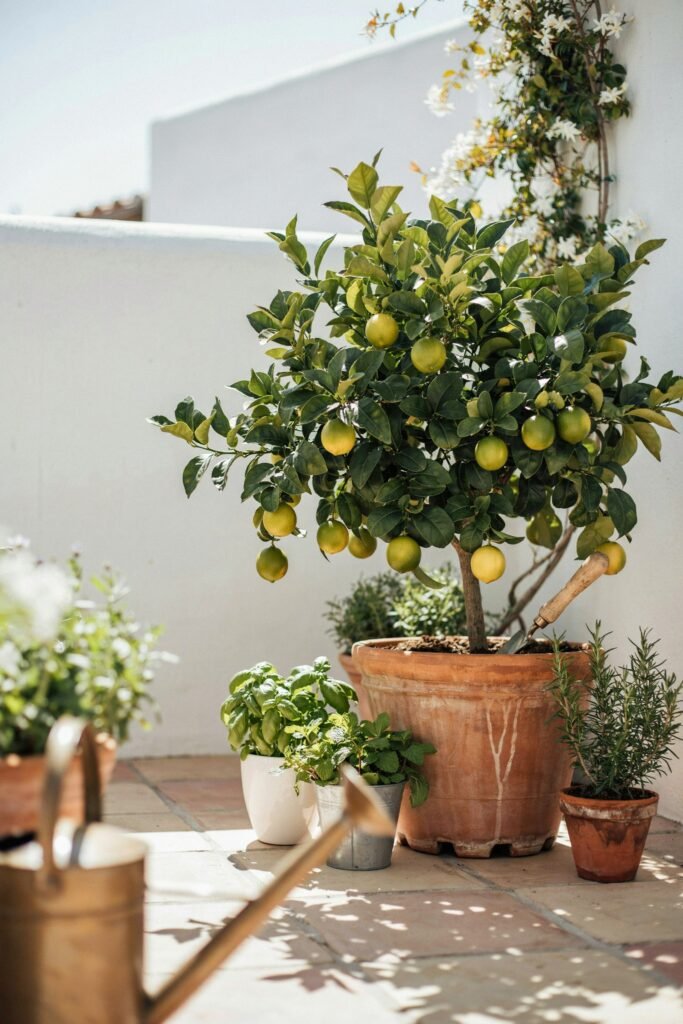
If you use limes frequently in cooking or drinks, growing your own tree can be incredibly rewarding.
Lime trees enjoy warm temperatures and plenty of sunlight. They can also work well in containers when you choose a compact variety.
A large pot with drainage holes, quality potting mix, and a sunny location can provide everything a container-grown lime needs.
Basic care
- Give it full sun.
- Use excellent drainage.
- Water when the upper layer of soil begins to dry.
- Feed during active growth.
- Remove dead or crowded branches.
- Protect from unusually cold temperatures.
Why it’s low maintenance
In the right warm climate, lime trees can grow happily without requiring complicated care.
8. Loquat Tree
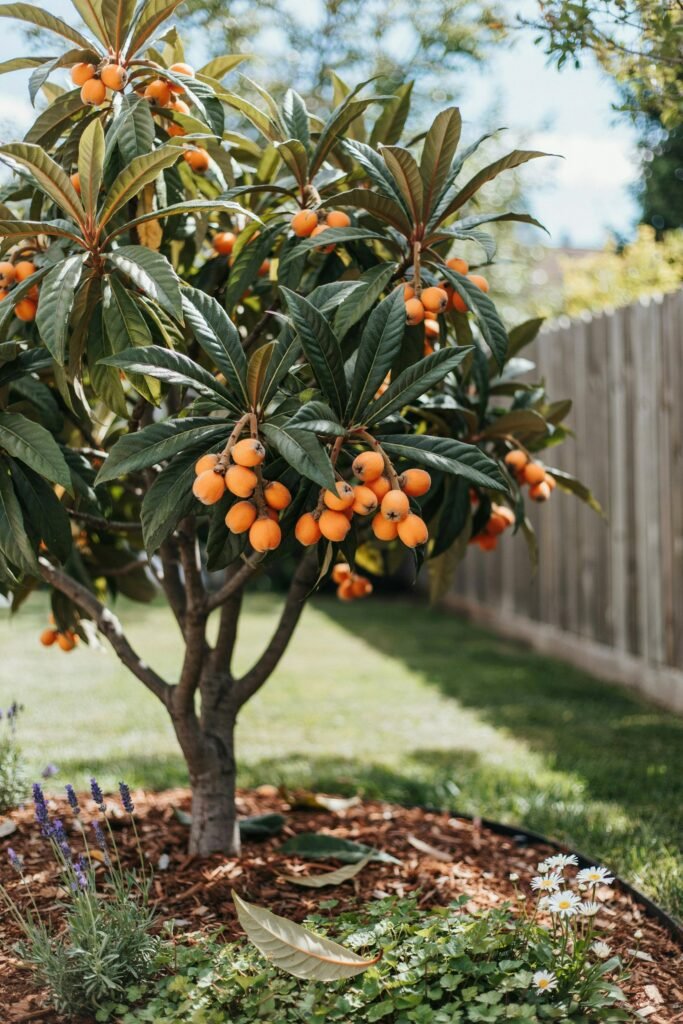
Loquat trees are sometimes overlooked, but they’re worth considering if your climate suits them.
They produce clusters of small, golden-orange fruits with a sweet and slightly tangy flavor. The evergreen foliage also gives the tree an attractive appearance throughout much of the year.
Loquats prefer sunshine and well-draining soil.
Basic care
- Choose a sunny or lightly sheltered position.
- Provide well-draining soil.
- Water during prolonged dry periods.
- Add compost around the root zone.
- Prune only when necessary.
- Protect young trees from severe cold.
Why it’s low maintenance
Loquats can establish into attractive, productive trees without demanding constant pruning or complicated feeding.
9. Olive Tree

Olive trees are excellent for gardeners in warm, sunny climates who want a tree that can handle relatively dry conditions.
Their silvery-green leaves give them a beautiful ornamental quality even when they’re not carrying fruit.
Olives prefer excellent drainage. Heavy, waterlogged soil can cause problems, so choose a raised or naturally well-drained location if necessary.
Basic care
- Give the tree full sun.
- Plant in well-draining soil.
- Water regularly while young.
- Reduce irrigation once established, depending on climate.
- Prune lightly to maintain structure.
- Avoid constantly wet soil.
Why it’s low maintenance
Established olive trees are well known for tolerating dry conditions. They are especially suitable for gardeners who want a fruiting tree without constant watering.
Keep in mind that producing a good olive crop depends on the variety, climate, pollination, and local growing conditions.
10. Avocado Tree

Avocado trees can look intimidating because they can eventually become large, but with the right variety and conditions, they can be a rewarding home-grown fruit tree.
They need warmth, sunlight, and excellent drainage. Their roots don’t appreciate sitting in water, so avoid planting them in heavy, poorly drained soil.
For smaller gardens, look for compact or dwarf varieties where available.
Basic care
- Plant in full sun.
- Choose very well-draining soil.
- Water deeply during establishment.
- Mulch around the root area without piling mulch against the trunk.
- Protect young trees from strong winds and cold.
- Prune selectively to control size.
Why it’s low maintenance
Once established in the right climate, an avocado tree can grow vigorously with a relatively simple routine.
The important part is getting the planting location right from the beginning.
11. Peach Tree
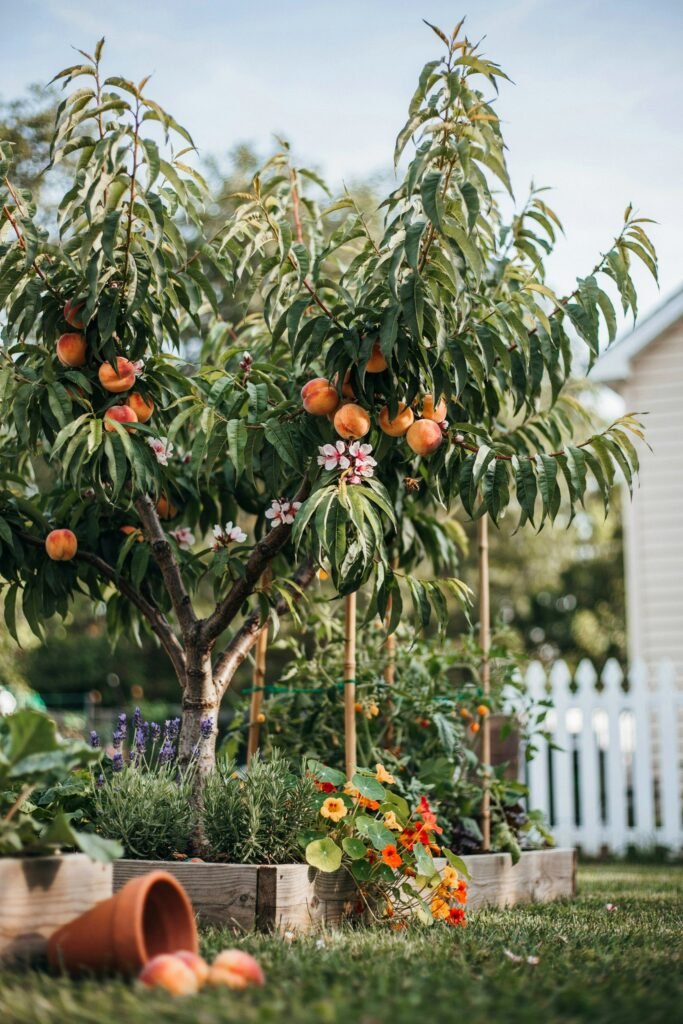
Peach trees can be wonderfully productive, especially when you choose a variety suited to your local climate.
Many gardeners grow peaches because the reward is so enjoyable: beautiful spring blossoms followed by soft, juicy fruit.
Peaches generally need plenty of sunlight and good drainage.
Basic care
- Choose a sunny location.
- Use well-draining soil.
- Water consistently while young.
- Prune appropriately during the dormant season where applicable.
- Remove damaged or diseased branches.
- Thin fruit when necessary to help the tree support a manageable crop.
Why it’s relatively low maintenance
Peaches do require more attention than some trees on this list, particularly regarding pruning and pests, but a healthy tree in the right climate can still be manageable for a home gardener.
If your goal is truly minimal work, choose a disease-resistant variety recommended for your region.
12. Apple Tree

Apple trees are classic choices for a home orchard, but not every variety is equally easy to grow.
The trick is choosing an apple variety that matches your climate. Many apples need a certain amount of winter chilling to flower and fruit properly, so gardeners in warm regions need to look specifically for low-chill varieties.
Dwarf and semi-dwarf trees are also excellent for smaller gardens.
Basic care
- Plant in full sun.
- Use fertile, well-draining soil.
- Water consistently during establishment.
- Prune according to the variety and tree form.
- Watch for local pests and diseases.
- Choose disease-resistant varieties when possible.
Why it’s low maintenance
A well-chosen apple tree can provide years of fruit with a straightforward care routine. Dwarf trees are particularly useful because they are easier to prune, spray when necessary, and harvest.
How to Choose the Right Low-Maintenance Fruit Tree
Choosing the easiest fruit tree isn’t simply about picking the tree with the reputation for being tough. Your local climate matters more than almost anything else.
Before buying a tree, check these five things.
1. Know Your Climate
Find out your USDA hardiness zone or use reliable local climate information if you live outside the United States.
Some trees need winter chill, while others need year-round warmth.
For example, an apple that thrives in a cold region may struggle to produce fruit in a tropical climate, while guava and lime generally prefer warmer conditions.
2. Check the Mature Size
A small nursery tree can eventually become a surprisingly large plant.
Always check the expected mature height and width before planting.
For smaller yards, consider:
- Dwarf varieties
- Compact cultivars
- Container-grown fruit trees
- Trees that respond well to pruning
3. Give Your Tree Enough Sun
Most fruit trees need plenty of sunlight to grow well and produce fruit.
A location receiving around six or more hours of direct sunlight is a useful general target for many fruit trees, although exact requirements vary.
Don’t tuck a fruit tree into a dark corner simply because you have an empty spot there.
4. Don’t Ignore Drainage
One of the easiest ways to make fruit-tree care difficult is planting a tree where water constantly collects.
Before planting, observe the area after heavy rain.
If water sits around the roots for long periods, improve drainage or choose a better location.
5. Start With a Healthy Tree
A healthy nursery tree gives you a much better starting point.
Look for:
- Healthy leaves
- Strong branches
- No obvious pest infestation
- No major wounds
- A sturdy trunk
- A healthy root system
Don’t feel pressured to buy the biggest tree available. A smaller, healthy tree can establish beautifully when planted correctly.
Simple Fruit Tree Care Routine
You don’t need to spend hours every week caring for a fruit tree.
A simple routine can go a long way.
Water
Young trees usually need more regular watering while their roots become established.
Once established, watering needs depend heavily on the tree and your climate.
Mulch
A layer of organic mulch can help conserve soil moisture and reduce competition from weeds.
Keep mulch a few inches away from the trunk rather than piling it directly against the bark.
Feed When Needed
Don’t automatically dump fertilizer around every tree.
A soil test can tell you whether nutrients are actually lacking. When feeding is necessary, use a fertilizer appropriate for the specific fruit tree.
Prune Selectively
Pruning doesn’t always mean cutting half the tree away.
Focus on removing:
- Dead branches
- Broken branches
- Diseased growth
- Branches that cross and rub
- Unwanted suckers
The exact pruning method depends on the tree.
Watch for Problems Early
Spend a few minutes looking at your trees when you’re already outside gardening.
Check the leaves, stems, flowers, and fruit.
Catching a small pest or disease problem early is generally much easier than dealing with a major infestation later.
Can You Grow Fruit Trees in Containers?
Absolutely.
If you have a patio, balcony, courtyard, or tiny backyard, container growing can make fruit trees much more accessible.
The best choices are generally compact or dwarf varieties.
Citrus trees, figs, some pomegranates, and certain other fruit trees can perform well in large containers when given adequate sunlight, drainage, water, and nutrients.
Use a container with drainage holes and choose a pot large enough for the tree’s mature root needs.
Remember that container trees usually need more frequent watering than trees planted in the ground because their soil dries out faster.
Final Thoughts
Growing your own fruit doesn’t have to mean creating a complicated backyard orchard.
The easiest approach is to start with one tree that naturally suits your climate, garden size, and available sunlight. Give it a good planting spot, establish it with consistent care, and then let the tree do much of the work.
Figs, pomegranates, guavas, mulberries, citrus, loquats, olives, and other suitable fruit trees can turn even a simple garden into a productive little food-growing space.
And honestly, there’s something special about walking outside and picking fruit from a tree you planted yourself. That’s the kind of garden reward that makes the little bit of care feel completely worthwhile.
Quick List: 12 Low-Maintenance Fruit Trees
- Fig Tree
- Pomegranate Tree
- Mulberry Tree
- Guava Tree
- Persimmon Tree
- Lemon Tree
- Lime Tree
- Loquat Tree
- Olive Tree
- Avocado Tree
- Peach Tree
- Apple Tree
