


I’ve always loved the way clematis can turn an ordinary fence, trellis, or garden corner into something full of color.
With their beautiful flowers and climbing habit, they can make a garden feel much more inviting.
The good news is that clematis is not as difficult to grow as it may seem, especially when you understand what it needs.
What Is Clematis?

Clematis is a large group of flowering plants known for their beautiful blooms and climbing growth. Some varieties are vigorous vines that can cover a trellis or pergola, while others are smaller and better suited to containers or garden borders.
The flowers come in many colors, including purple, pink, white, blue, and red. Depending on the variety, blooms may be star-shaped, bell-shaped, or even large and showy.
Clematis can also flower at different times of the year. Some varieties bloom in winter or spring, while others produce flowers in early summer or later in summer and autumn.
Choosing a variety based on your garden space and desired flowering season is one of the most important steps.
Where Should You Plant Clematis?

Clematis generally grows well in full sun to partial shade, although the exact preference depends on the variety. A location with good light will usually give you better flowering.
One of the most useful things to remember is that clematis likes its roots cool and moist while its foliage enjoys plenty of sunlight.
This means you can grow the vine where the upper part receives sunshine while the soil around the roots is protected by mulch or low-growing plants.
Avoid planting clematis in a location where the soil stays constantly wet. Poor drainage can cause problems with the roots.
Also consider the mature size of the variety before planting. Some clematis can become surprisingly large, so give vigorous varieties enough room to climb.
Choosing the Right Support
Clematis is a climbing plant, so it needs something to grow on.
A sturdy trellis, fence, arch, pergola, obelisk, or suitable garden support can work well. The support should be strong enough to handle the mature plant rather than just the small plant you bring home from the nursery.
Clematis climbs differently from plants such as climbing roses. Its leaf stalks wrap around narrow supports, so a trellis or mesh with relatively small openings can work particularly well.
If you are growing clematis against a wall or fence, avoid placing the plant directly against the structure. Giving it some space can make watering easier and help prevent the planting area from becoming excessively dry.
Read What To Do With Peonies In The Fall
How to Plant Clematis

Planting clematis properly gives it a much better start.
1. Choose a Good Location
Pick an area with enough sunlight for the variety you have chosen. Make sure there is also enough space for the vine to climb.
2. Prepare the Soil
Clematis prefers soil that is:
- Fertile
- Moist but not waterlogged
- Well drained
- Rich in organic matter
- Deep enough for healthy roots
If your soil is poor, incorporate well-rotted compost or another suitable organic material before planting.
3. Dig a Generous Hole
Dig a hole wider and deeper than the plant’s existing rootball. This gives the roots room to spread into loosened soil.
4. Position the Plant
Place the clematis carefully into the hole and fill around the roots with soil.
For many large-flowered clematis hybrids, planting slightly deeper than the original rootball level is recommended. Other types have different planting requirements, so check the instructions for your specific variety.
5. Water Thoroughly
Give the plant a deep watering after planting. This settles the soil around the roots and removes large air pockets.
6. Add Mulch
Apply a layer of organic mulch around the plant to help retain moisture and keep the root area cooler.
Keep the mulch slightly away from the main stems rather than piling it directly against them.
Read 6 Best Bedroom Plants That Can Support Your Health and Wellness
How Much Sunlight Does Clematis Need?
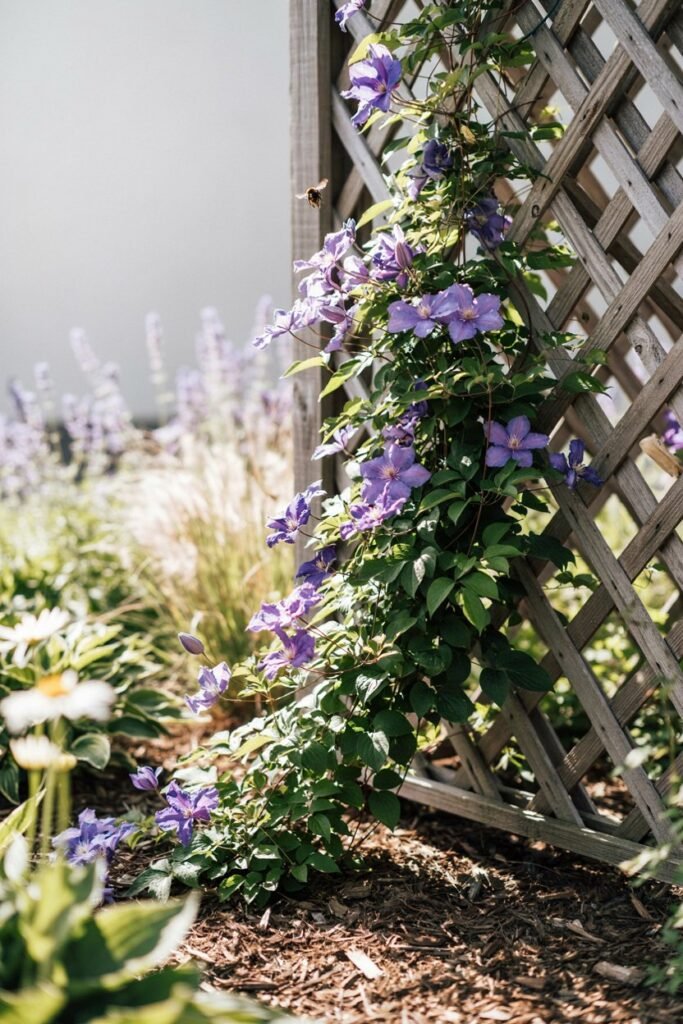
Most clematis varieties perform well with several hours of sunlight each day.
Full sun can encourage abundant flowering, but the roots should not be allowed to become excessively hot and dry.
If your garden receives strong afternoon sun, consider protecting the soil around the base with mulch or nearby low-growing plants.
Some varieties tolerate partial shade better than others, so always consider the needs of the particular clematis you are growing. Very deep shade can result in disappointing flowering.
Watering Clematis
Clematis does not like being allowed to dry out repeatedly, particularly while it is becoming established.
Newly planted clematis should receive regular watering during dry weather. Once established, plants growing in the ground usually become less demanding, although they still need water during prolonged hot or dry periods.
When you water, water deeply rather than giving the plant a tiny amount every day.
Container-grown clematis usually needs more attention because pots dry out faster than garden soil.
A simple way to check is to feel the soil several inches below the surface. If it feels dry, give the plant a thorough watering.
During very hot weather, check containers more frequently.
Feeding Clematis
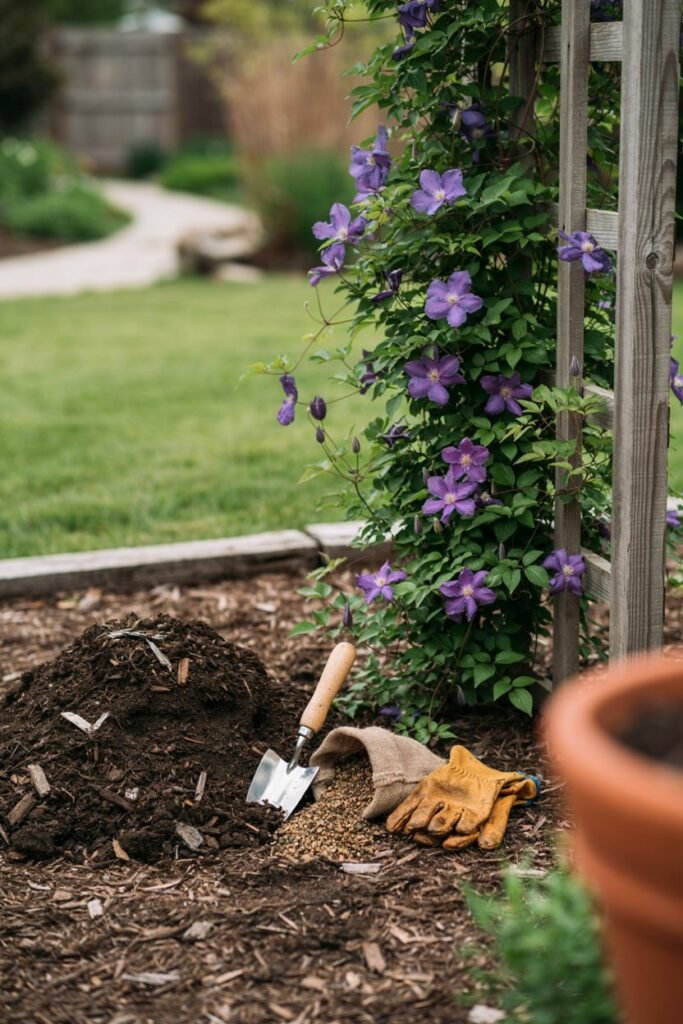
Clematis growing in fertile garden soil may not need constant feeding.
A yearly layer of compost or well-rotted organic matter around the plant can help improve soil condition and maintain moisture.
For clematis grown in containers, feeding can be more important because nutrients are gradually used or washed from the potting mix. A suitable general-purpose fertilizer can be used during the active growing season according to the product instructions.
Avoid assuming that more fertilizer means more flowers. Overfeeding can encourage excessive leafy growth instead of giving you the balanced plant you want.
How to Train Clematis
Training your clematis early makes a big difference.
When young stems begin growing, gently guide them toward the trellis or support.
You can loosely tie stems to the support until the plant’s leaf stalks begin holding onto it naturally.
Be gentle when handling the stems because young clematis growth can be fragile.
Try to spread stems across the support instead of allowing everything to grow in one narrow section. Evenly distributed growth can create a fuller-looking plant and better cover.
The RHS recommends using loose ties and avoiding anything that could cut into the stems as they grow.
Read Transform a Shady Corner of Your Garden With a Stunning Stumpery
When Should You Prune Clematis?

This is the part that makes many gardeners nervous, but clematis pruning becomes much easier when you know when your plant flowers.
Clematis is generally divided into three pruning groups.
Pruning Group 1
These varieties flower early in the year on older growth.
They are generally pruned after flowering in spring.
Remove dead, damaged, or unwanted growth and lightly shape the plant when necessary.
Heavy pruning can remove the stems that would produce flowers the following season, so avoid cutting aggressively unless you know your plant can handle it.
Pruning Group 2
These clematis usually produce large flowers in late spring or early summer, with some varieties flowering again later.
They generally need lighter pruning.
In late winter, remove dead or weak stems and cut back to healthy buds when needed. After the first flush of flowers, you can lightly prune selected stems to encourage another round of blooms.
Pruning Group 3
These varieties flower on new growth produced during the current season.
They are generally pruned quite hard in late winter or early spring.
Old stems can be cut back to a pair of healthy buds relatively close to the ground. This encourages fresh growth from the base.
Examples include many late-summer flowering clematis and some herbaceous types.
What If You Don’t Know Your Clematis Group?
Don’t guess if you can avoid it.
Check the plant label, nursery information, or variety name first.
If you cannot find the information, observe when the plant flowers. Flowering time can give you a useful clue, but identifying the exact variety is safer before doing heavy pruning.
Growing Clematis in Containers

Yes, you can grow clematis in a container.
This is especially useful if you have a small garden, patio, balcony, or rented home.
Choose a smaller-growing variety and use a large, sturdy container. The RHS recommends a container at least about 45 cm (18 inches) wide and deep for suitable clematis.
Make sure the pot has drainage holes.
Use a good-quality, well-draining potting mix and provide a trellis or obelisk for the vine to climb.
Container-grown clematis needs more frequent watering than plants growing in the ground because pots can dry out quickly.
Remember that the roots still need protection from excessive heat. Mulching the surface or using nearby low-growing plants can help shade the root area.
Common Clematis Problems
Clematis Wilting
Sudden wilting can be worrying.
Clematis wilt can affect some large-flowered hybrids, particularly when stems wilt and darken. However, not every wilted clematis has the disease. Drought, poor soil, root problems, or physical damage can also cause similar symptoms.
Good planting conditions and proper watering can help reduce stress.
Yellowing Leaves
Yellow leaves can have several causes, including watering problems, poor growing conditions, nutrient issues, or natural aging.
Before adding fertilizer, check the soil moisture and drainage.
Few or No Flowers
If your clematis grows lots of leaves but produces few flowers, consider its light levels, pruning method, age, and growing conditions.
Incorrect pruning is a particularly common reason for losing flowers because different clematis varieties bloom on different types of growth.
Pests
Aphids, slugs, snails, earwigs, and other pests can sometimes cause damage.
Regularly inspect the leaves and young stems so you can notice problems early.
How to Encourage More Clematis Flowers
If your goal is a fuller display of blooms, focus on the basics:
- Give the plant enough sunlight.
- Keep the soil consistently moist without waterlogging it.
- Protect the roots from excessive heat.
- Provide a suitable climbing support.
- Train young stems across the support.
- Feed container plants appropriately.
- Prune according to the correct pruning group.
- Remove dead or damaged growth.
- Give the plant enough room to grow.
- Be patient with newly planted clematis.
Healthy growing conditions usually matter more than trying lots of special gardening tricks.
Can Clematis Grow Up a Tree?
Some clematis can be trained into trees and large shrubs, creating a beautiful layered garden effect.
However, this requires planning. The clematis should have enough access to light, water, and nutrients, and it should not be forced to compete too heavily with the tree’s root system.
The RHS recommends planting clematis at least about 1.2 metres (4 feet) from the base of a tree or shrub when growing it into the branches, helping reduce competition.
A cane or temporary support can help guide the young vine toward the tree.
Final Thoughts
Clematis may look like a high-maintenance flowering vine, but once you understand its basic needs, caring for it becomes much simpler. Give it good soil, regular moisture, sunlight for its foliage, cool roots, and a sturdy place to climb.
The biggest thing I would remember is don’t prune your clematis until you know when it flowers and which pruning group it belongs to. Getting that one detail right can save you from accidentally cutting away next season’s flowers.
With the right variety and a little patience, clematis can become one of the most beautiful vertical features in your garden.
