


Growing your own pistachio tree is one of those gardening projects that takes patience, but it can be incredibly rewarding.
I love the idea of planting a tree that can eventually provide a harvest of delicious nuts right from the garden. Pistachios are not the quickest crop to grow, so this is definitely a long-term project.
However, once you understand what these trees need, caring for them becomes much easier.
In this guide, I’ll walk you through how to grow pistachio trees, from choosing the right variety and planting location to watering, feeding, pruning, pollination, and harvesting your first crop at home.
Can You Grow Pistachios at Home?
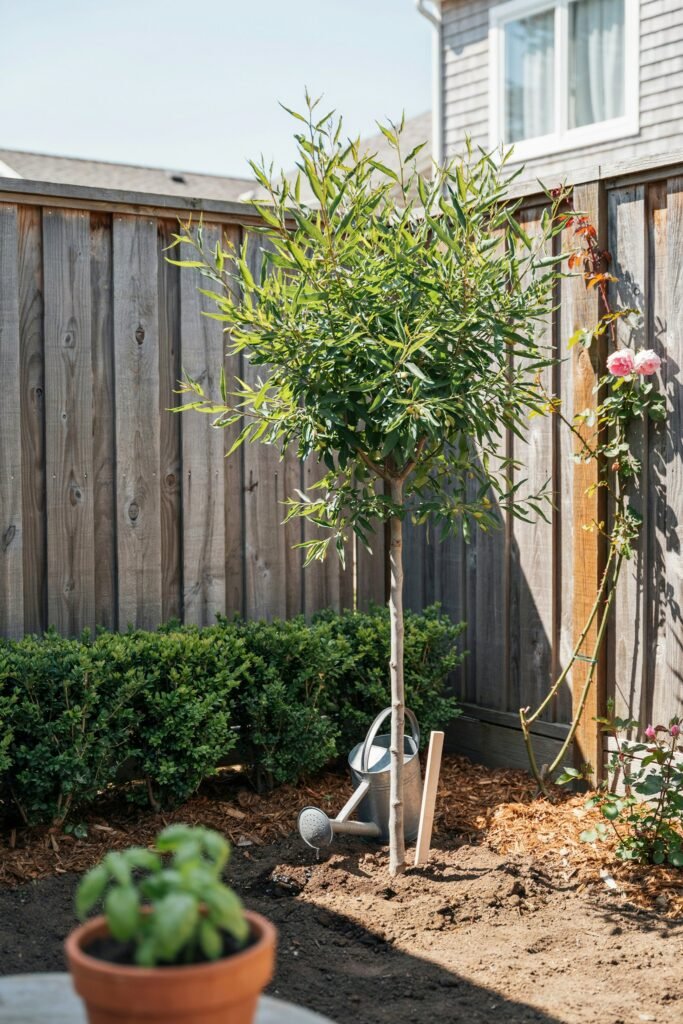
Yes, you can grow pistachio trees at home if your climate provides the right growing conditions.
Pistachio trees prefer hot, dry summers and relatively cool winters. They also need plenty of sunlight and well-draining soil.
The biggest thing to understand is that pistachio trees are a long-term investment. They can take several years before producing a meaningful harvest, so patience is important.
If you live somewhere with a warm climate and plenty of sunshine, pistachios may be worth trying.
What Do Pistachio Trees Need to Grow?
Before planting, it helps to understand the basic conditions these trees prefer.
Pistachio trees generally need:
- Full sun
- Hot summers
- Cool winter temperatures
- Well-draining soil
- Low humidity
- Regular watering while young
- Plenty of space to grow
- Both male and female trees for nuts
Good drainage is especially important. Pistachio trees do not like sitting in constantly wet soil.
Choose the Right Pistachio Variety

Choosing the right tree is one of the most important steps.
Pistachios are dioecious, which means male and female flowers grow on separate trees. A female tree produces the nuts, while a male tree provides the pollen needed for pollination.
For this reason, you normally need at least one male tree growing near your female trees.
If you are purchasing young trees from a nursery, ask which varieties they are and whether they are suited to your climate.
Buying a grafted tree can also be a better option than starting completely from seed because you know what variety you are getting and can usually reach production sooner.
Pick a Sunny Planting Location

Pistachio trees need lots of sunlight.
Choose a location that receives at least 6 to 8 hours of direct sunlight each day, preferably more.
I would also give the tree plenty of room because pistachio trees can eventually become quite large.
Avoid planting it directly against a building, fence, or other large tree that could block sunlight or restrict its roots.
A sunny, open part of the garden is usually ideal.
Prepare the Soil
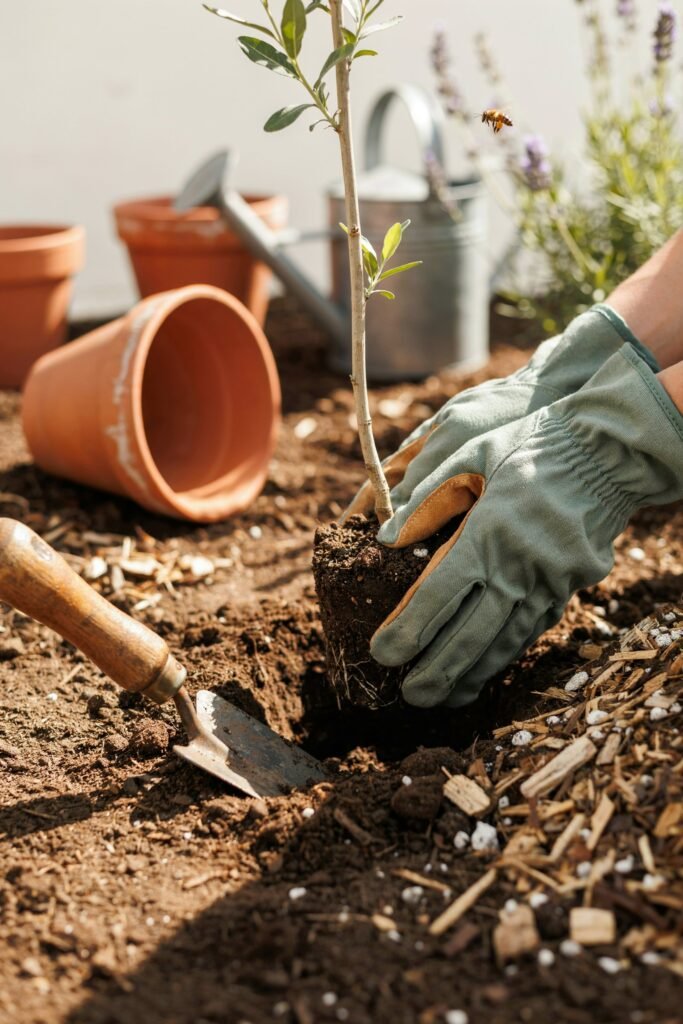
Pistachio trees prefer soil that drains well.
Before planting, loosen the soil and remove large stones, weeds, and other debris.
If your soil holds water for a long time after rain, improve the drainage before planting. Heavy, constantly wet soil can cause problems with the roots.
A slightly alkaline to neutral soil is generally suitable for pistachios.
You can also have your garden soil tested before planting. A soil test can tell you whether you need to adjust the soil or add particular nutrients.
Read The New Gardener Checklist: Everything I Wish Someone Had Told Me
How to Plant a Pistachio Tree

Once you have the right tree and location, planting is fairly straightforward.
1. Dig the Hole
Dig a hole that is wider than the tree’s root ball and deep enough for the roots to sit comfortably.
Avoid planting the tree much deeper than it was growing in its nursery container.
2. Place the Tree
Carefully remove the tree from its container and gently loosen any tightly circling roots.
Place it in the center of the hole.
The top of the root ball should remain level with or slightly above the surrounding soil.
3. Fill the Hole
Backfill around the roots with the soil you removed.
Gently press the soil down to remove large air pockets, but don’t pack it extremely tightly.
4. Water Thoroughly
Give the newly planted tree a deep watering.
This helps settle the soil around the roots and gives the tree a good start.
Read Apartment Vegetable Garden Ideas: Growing Food Where You Never Thought You Could
How Often Should You Water Pistachio Trees?

Young pistachio trees need more consistent watering than established trees.
During the first few years, water deeply whenever the soil begins to dry out.
The exact schedule will depend on your climate, soil type, rainfall, and temperature.
Rather than watering a little every day, I prefer deep watering followed by allowing the soil to partially dry.
Once the tree is established, pistachios are relatively drought tolerant. However, drought stress can still affect growth and nut production, especially during important stages of development.
Avoid keeping the soil constantly soggy.
Fertilizing Pistachio Trees

Pistachio trees need nutrients for healthy growth, but more fertilizer is not always better.
A soil test is the best way to determine what your tree actually needs.
Young trees can benefit from appropriate balanced fertilizer as they establish themselves. Established trees may need additional nutrients depending on the soil.
Nitrogen is particularly important for leafy growth, but excessive nitrogen can encourage lots of vegetative growth without necessarily improving fruit production.
Always follow the fertilizer label and avoid applying more than recommended.
Do Pistachio Trees Need a Male and Female Tree?

Yes, this is one of the most important things to remember.
A female pistachio tree produces the nuts, but it needs pollen from a male tree.
Male and female trees usually flower around the same time, allowing wind to carry pollen from the male flowers to the female flowers.
If you only plant one female tree, you may end up with little or no nut production because there isn’t enough pollen available.
When purchasing trees, make sure you know whether you are buying a male or female.
How Long Does It Take for a Pistachio Tree to Produce Nuts?

Pistachio trees require patience.
A grafted tree may begin producing a small crop after several years, but it can take longer before the tree produces a substantial harvest.
Seed-grown trees can take considerably longer and may not produce nuts with the same characteristics as the parent tree.
The exact timing depends on the variety, climate, tree health, pollination, and growing conditions.
I think of pistachios as a long-term garden project rather than a quick harvest crop.
How to Prune Pistachio Trees
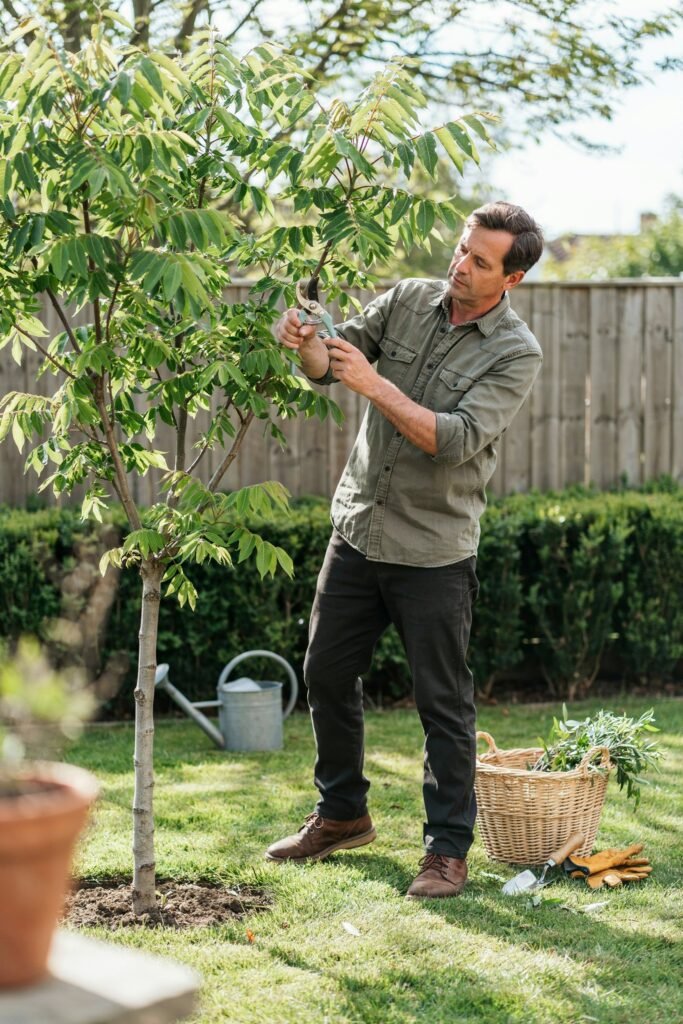
Pruning helps create a strong structure while the tree is young.
During the early years, focus on developing a strong central structure and removing weak, damaged, or poorly positioned branches.
Once the tree is established, prune lightly when necessary.
Remove:
- Dead branches
- Broken branches
- Diseased growth
- Branches that cross each other
- Weak shoots growing in undesirable directions
Avoid excessive pruning because the tree needs healthy foliage for growth and nut production.
Common Pistachio Tree Problems
Pistachio trees can experience several common gardening problems.
Poor Drainage
Wet soil can cause root problems. Make sure excess water can drain away from the roots.
Too Much Shade
A tree growing in shade may struggle to grow well and produce a good crop.
Lack of Pollination
If there isn’t a suitable male tree nearby, female flowers may not receive enough pollen.
Overwatering
Pistachios tolerate dry conditions once established, so constantly wet soil can create unnecessary problems.
Poor Nutrition
Nutrient deficiencies can cause weak growth, yellowing leaves, or reduced production. A soil test can help identify what is missing.
How to Protect Young Pistachio Trees
Young trees need more protection than established ones.
Keep weeds and grass away from the base of the tree so they don’t compete for water and nutrients.
A layer of organic mulch can help conserve soil moisture and reduce weed growth. Keep the mulch a few inches away from the trunk rather than piling it directly against the bark.
If your area experiences unusually cold temperatures, protect young trees from severe cold according to the needs of your particular variety.
When Are Pistachios Ready to Harvest?
Pistachios are usually harvested when the nuts have developed and the outer hull begins changing appearance and loosening from the shell.
A mature crop can often be recognized by the characteristic opening of the shells.
Commercial growers use specialized equipment, but a home gardener can harvest a small crop by hand.
Don’t leave mature nuts sitting on the tree for too long because pests and weather can damage them.
How to Harvest Pistachios at Home
For a small backyard tree, harvesting can be simple.
Place a clean sheet or tarp underneath the tree and gently shake or tap suitable branches so mature nuts fall onto the surface.
Collect the nuts and remove damaged material.
The outer hull should be removed relatively soon after harvest. The nuts can then be dried properly before storage.
Always make sure harvested nuts are fully dried and stored appropriately to reduce the risk of mold.
Can You Grow Pistachios From Seed?
You can grow pistachios from seed, but it is not usually the easiest option for beginners.
One major problem is that you won’t necessarily know whether a seed will grow into a male or female tree.
Seed-grown trees also take longer to mature, and the resulting tree may not produce nuts identical to the tree the seed came from.
For a home garden, purchasing a healthy grafted tree from a reputable nursery is usually much more predictable.
Can Pistachio Trees Grow in Containers?
Pistachios are naturally large trees, so containers are not the best long-term growing environment.
A young pistachio tree can be grown temporarily in a large container while it develops, but eventually it will need much more room for its roots.
If you want to experiment with growing one in a container, choose a very large container with excellent drainage and be prepared to move the tree into the ground when it becomes established.
How Much Space Does a Pistachio Tree Need?
Give pistachio trees plenty of room to develop.
Spacing requirements depend on the variety and growing system, but these trees can become quite large over time.
Avoid planting them so close together that mature trees compete heavily for sunlight, water, and nutrients.
Think about the tree’s eventual size before planting rather than only considering how small the young tree looks.
Tips for Growing Healthy Pistachio Trees
Here are a few simple things I would keep in mind:
- Choose a variety suited to your climate.
- Plant in full sun.
- Use soil with excellent drainage.
- Remember that you need male and female trees for reliable nut production.
- Water young trees consistently.
- Avoid constantly wet soil.
- Feed according to soil-test results when possible.
- Prune lightly and remove damaged branches.
- Give the tree plenty of space.
- Be patient because pistachios take years to mature.
Final Thoughts
Growing pistachio trees isn’t a project I would recommend if you’re looking for a quick harvest.
These trees take time, space, and the right climate, but watching a young tree develop into a productive plant can be incredibly satisfying.
If you have plenty of sunshine, well-draining soil, and enough patience for a long-term gardening project, pistachios can be a wonderful addition to your garden.
Start with a healthy tree, make sure you have proper pollination, and give it the consistent care it needs as it grows.
