
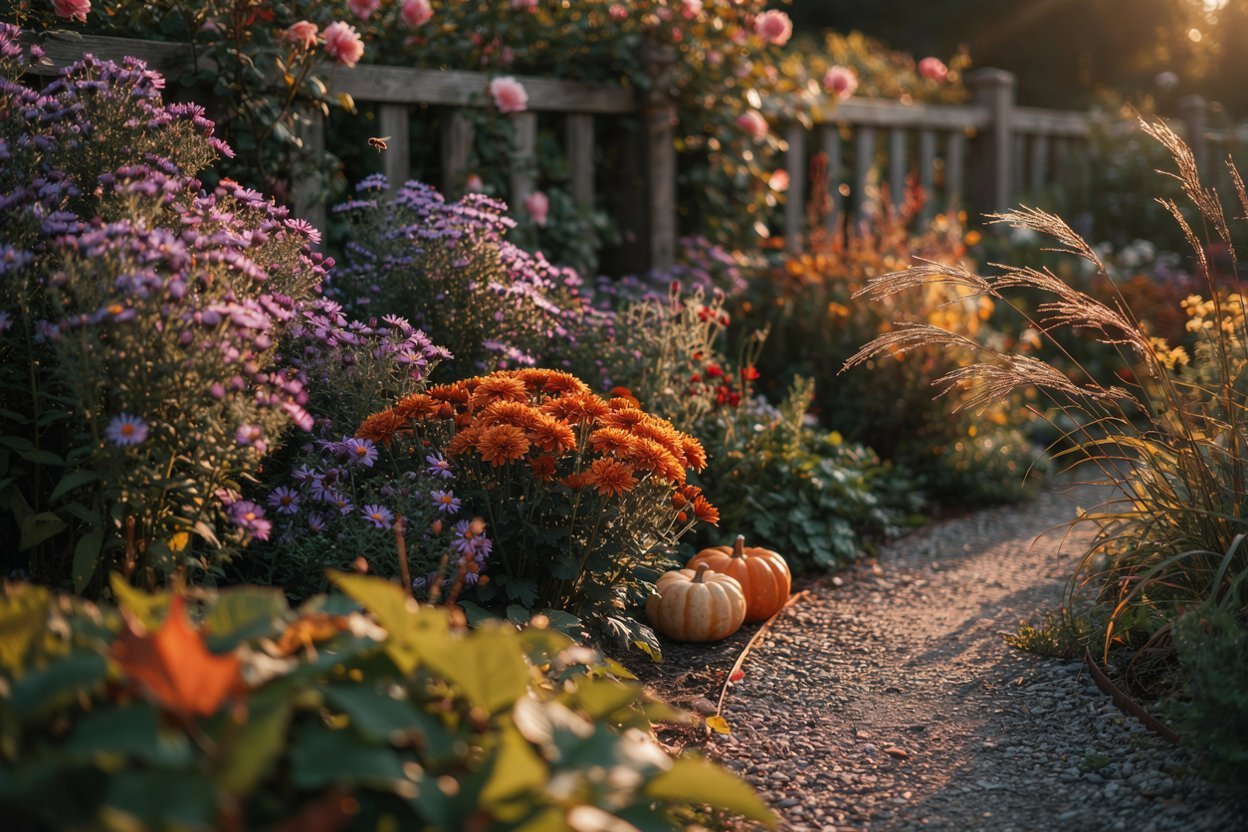

Autumn has always felt like my favorite season in the garden, more than spring even.
There’s something about golden light falling across a bed of asters and mums that makes my whole yard feel like a warm hug.
If you’ve been dreaming of turning your outdoor space into that romantic, slightly wild, endlessly charming look, you’re in exactly the right place.
I’m walking you through everything I’ve learned about building a cottage garden that thrives right through the chilly months, so grab a cup of tea and let’s dig in together.
What Exactly Is a Fall Cottage Garden?
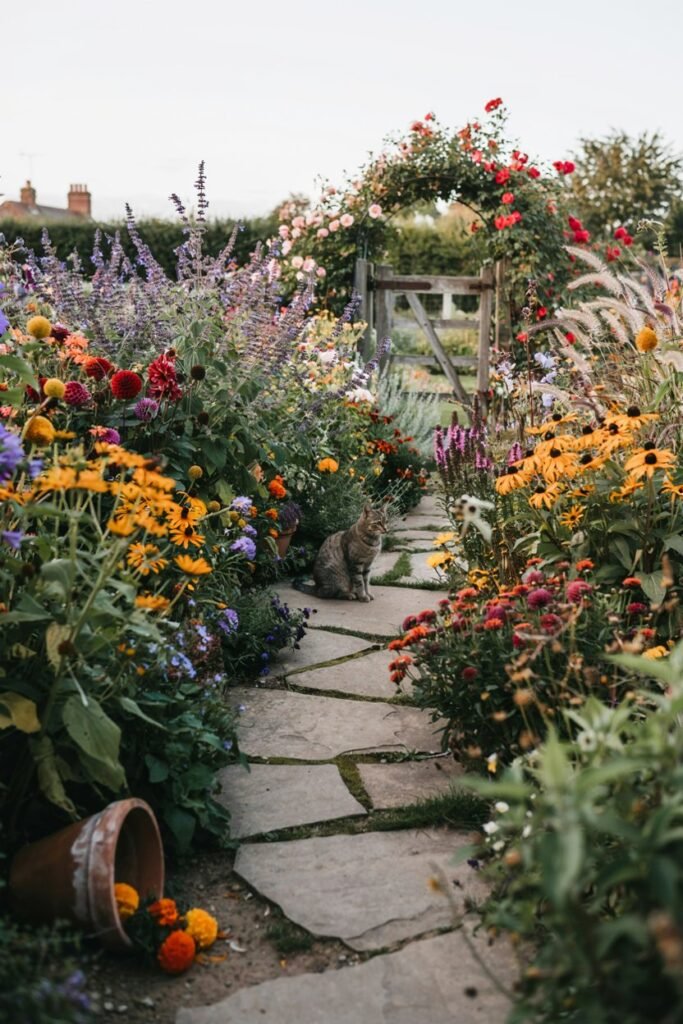
A cottage garden is that relaxed, informal style where flowers seem to spill over one another in the prettiest kind of chaos.
Think layers of blooms, winding paths, a little bit of wildness, and nothing that looks too perfectly manicured.
When you bring that style into autumn, you’re simply swapping your summer favorites for plants that love the cooler weather and richer color palette of the season: rust, plum, gold, and deep burgundy.
The beauty of a fall cottage garden is that it doesn’t require you to start from scratch. If you already have a cottage-style bed, you’re just adding to it.
If you’re starting fresh, fall is honestly one of the best times to plant because the cooler air and warm soil help roots establish before winter.
Why Fall Cottage Gardens Are Worth the Effort
I get asked all the time why I bother refreshing my garden for fall instead of just letting it wind down after summer.
Here’s my honest answer: a fall garden extends your growing season, keeps pollinators fed a little longer, and gives you weeks (sometimes months) more of color and life outside your window.
There’s also something deeply satisfying about walking outside in a light sweater with your coffee and seeing your garden still in full swing while everyone else’s yard has gone quiet.
My Favorite Fall Cottage Garden Flowers and Plants
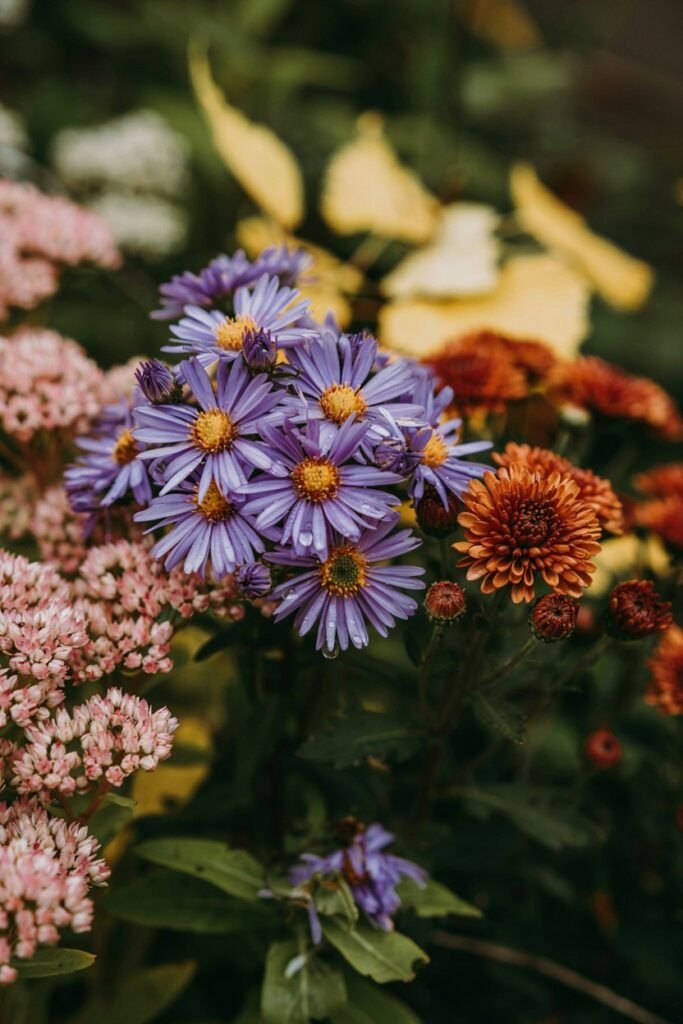
This is the fun part. Here’s my go-to list of plants that give you that overflowing, romantic cottage look while holding up beautifully in cooler temperatures.
Flowering Perennials and Annuals
- Asters (purple, pink, and white varieties)
- Chrysanthemums (mums), in rust, gold, burgundy, and cream
- Sedum (especially Autumn Joy, with its dusty pink flower heads)
- Black-eyed Susans
- Japanese anemones for soft, airy blooms
- Goldenrod for a wild, meadow-like touch
- Coneflowers (echinacea), which often rebloom into fall
- Ornamental kale and cabbage for texture and color
- Pansies and violas, which handle light frost beautifully
- Snapdragons in mixed colors
- Dahlias, if you’re in a milder climate, for one last big showy bloom
Foliage and Grasses
- Ornamental grasses like fountain grass or feather reed grass
- Heuchera (coral bells) for deep burgundy leaves
- Japanese maple, if you want a small tree with stunning color
- Amaranth for dramatic, trailing seed heads
Bulbs to Plant Now for Spring Fall is also bulb-planting season, so don’t skip this. Tuck in tulip, daffodil, crocus, and allium bulbs now, and you’ll thank yourself in April when they pop up like little surprises.
Pumpkins, Gourds, and Natural Accents A true cottage garden feels lived-in, so I love layering in mini pumpkins, gourds, dried corn stalks, and bundles of wheat near the entrance or along a path.
It adds that farmhouse charm without costing a thing if you already have a pumpkin patch nearby.
Your Fall Cottage Garden Shopping List
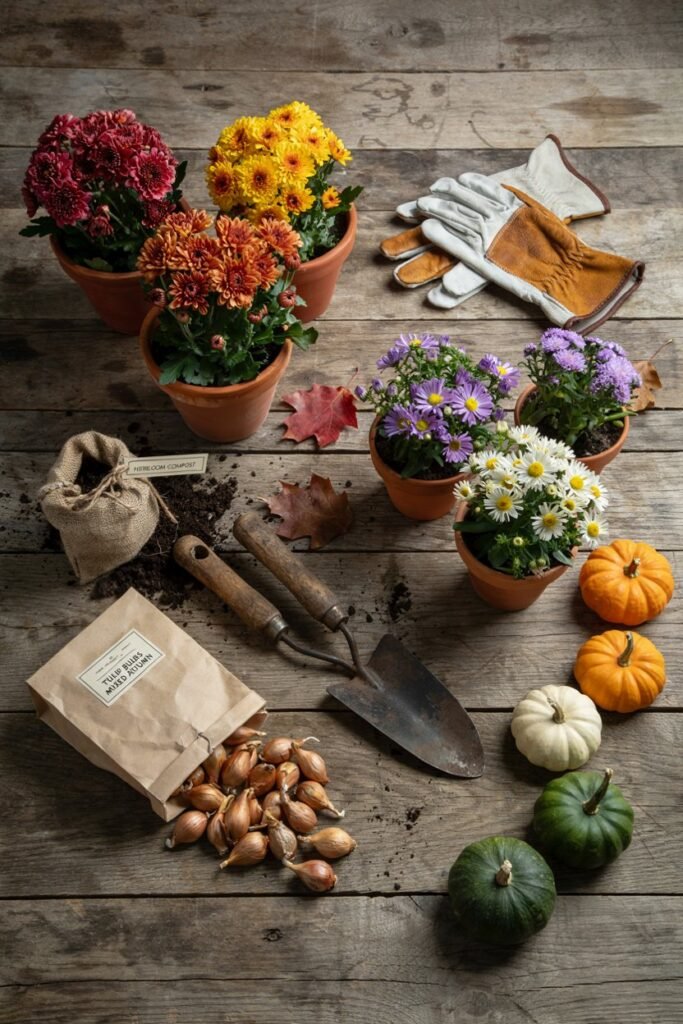
If you’re heading to the nursery this weekend, here’s a simple shopping list to keep you from wandering aimlessly (we’ve all been there):
- A mix of mums and asters in 3 to 4 different colors
- A few sedum plants for structure
- One or two ornamental grasses
- A bag of tulip or daffodil bulbs
- Bone meal or bulb fertilizer
- A bag of compost or well-aged manure
- Mulch (shredded bark or straw both work beautifully)
- A soil test kit if it’s been a while since you checked your soil
- Garden gloves and a hand trowel, because you’ll want to get planting right away
- A few decorative pumpkins or gourds for accents
- Plant markers, so you remember what you planted where come spring
How to Design Your Fall Cottage Garden Layout
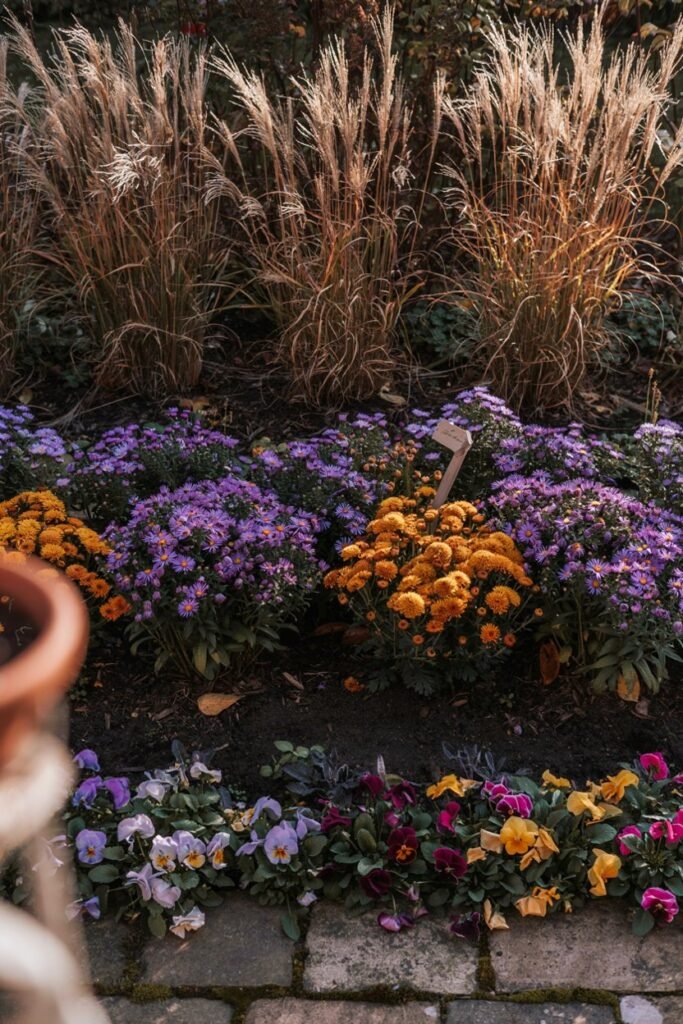
Cottage gardens thrive on a layered, “controlled chaos” look, but there is a method to it. Here’s how I approach mine every year.
Start with height. Place your tallest plants, like ornamental grasses or amaranth, toward the back of the bed or the center of an island bed. This gives your garden depth and structure.
Layer your mid-height blooms next. Asters, mums, and coneflowers work beautifully here, since they fill the middle of the bed with color and texture.
Let the front spill over. Pansies, violas, and low sedum varieties are perfect for the front edge, especially if you let them tumble slightly over a path or border.
Add winding paths. A gravel or stone path that curves rather than runs straight instantly makes a garden feel more like a cottage retreat.
Don’t forget vertical interest. A small trellis with climbing sweet peas or a rustic obelisk gives your eye somewhere to travel upward, which makes even a small garden feel bigger.
Mix textures generously. Combine feathery grasses with the bold leaves of kale, the delicate blooms of asters, and the chunky texture of pumpkins. Variety is what makes a cottage garden feel abundant instead of sparse.
Care Tips for Your Fall Cottage Garden
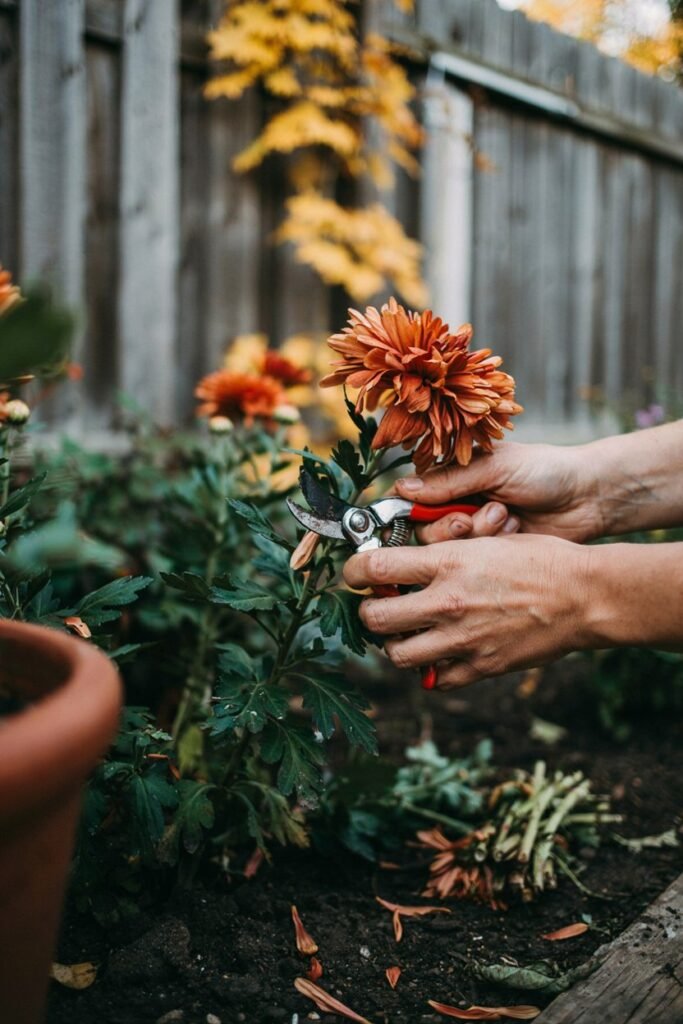
Now let’s talk about keeping everything happy and healthy through the season. These are the care habits that have made the biggest difference for me.
Water deeply but less often. As temperatures drop, plants need less frequent watering, but when you do water, soak the soil deeply so roots grow strong before the ground cools further.
Mulch generously. A two to three inch layer of mulch around your plants helps regulate soil temperature, retains moisture, and protects roots as the weather turns colder.
Deadhead spent blooms. Snipping off faded flowers on your mums and asters encourages them to keep producing new blooms right up until frost.
Feed your soil, not just your plants. Work some compost into your beds this season. It improves soil structure and gives your plants a nutrient boost heading into winter dormancy.
Watch for the first frost date. Know your area’s average first frost date and plan around it. Tender annuals like dahlias may need to be dug up and stored, while hardy perennials can typically stay put.
Divide overcrowded perennials. If your asters or sedum have gotten a little too bushy, fall is a great time to divide them and either replant elsewhere or share with a gardening friend.
Protect potted plants. Container plants are more vulnerable to cold since their roots aren’t insulated by the ground. Move pots closer to your house or into a garage during particularly cold nights.
Keep an eye on pests. Slugs and aphids can still be active in cooler weather, so check the undersides of leaves regularly, especially on kale and pansies.
Helpful Tips for a Long-Lasting Fall Display
A few smaller things I’ve picked up over the years that genuinely make a difference:
- Plant in odd-numbered groupings (threes, fives, sevens) rather than pairs. It looks far more natural and cottage-like.
- Repeat a few key colors throughout the bed rather than scattering every color you love in one spot. It creates cohesion.
- Choose a mix of bloom times so something is always flowering, even as other plants fade.
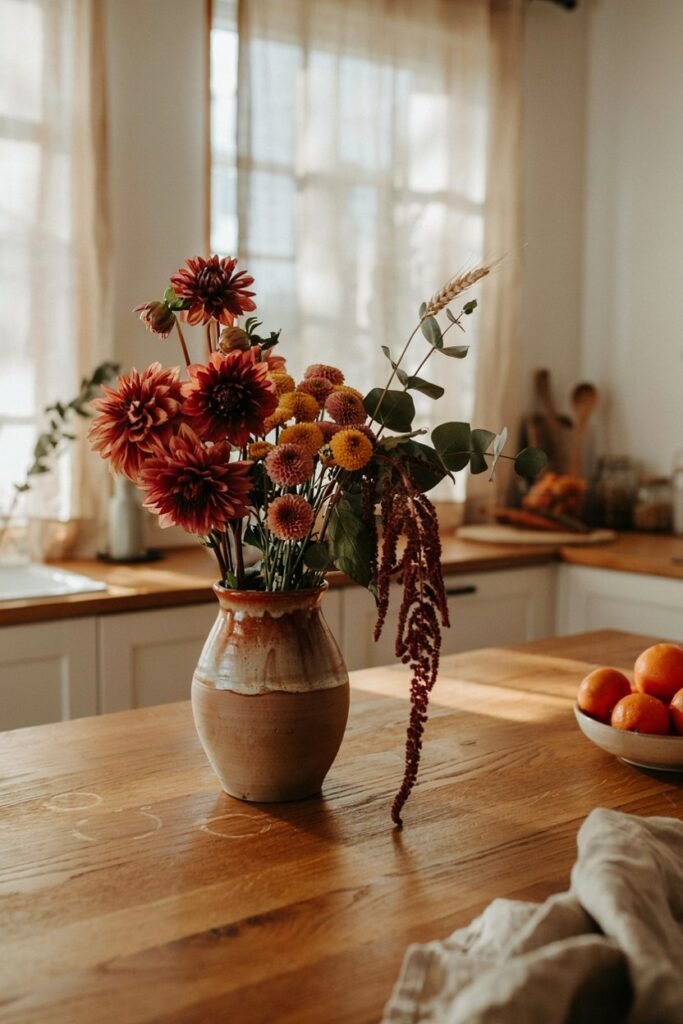
- Bring a few stems inside for a simple vase arrangement. Dahlias, mums, and amaranth all hold up beautifully as cut flowers.
- Use natural elements like birch branches, dried hydrangea, or wheat bundles tucked into your beds for texture between blooms.
- Take photos of your garden every couple of weeks. It’s such a nice way to track what’s working and plan next year’s layout.
A Closer Look at My Favorite Fall Cottage Garden Plants
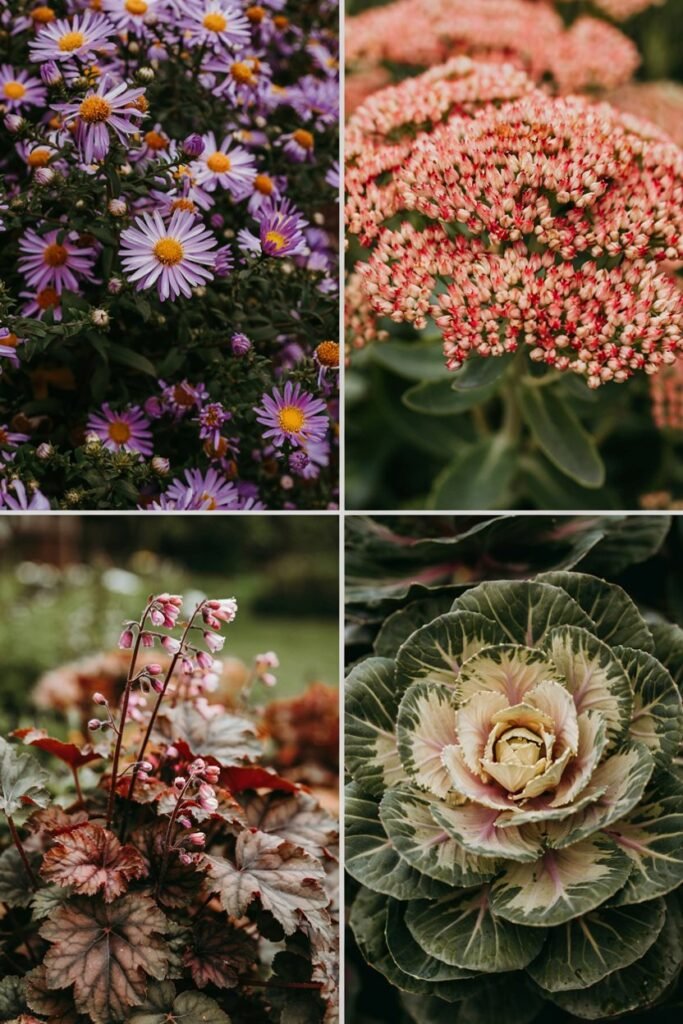
I want to slow down for a moment and really talk through why these particular plants make the cut every single year, because knowing a little about each one helps you use it well.
Asters are the backbone of my fall beds.
They bloom in that soft lavender-to-deep-purple range, though you can also find pink and white varieties, and they tend to flower right as everything else is fading, which makes them feel like a little gift late in the season.
They love full sun and well-drained soil, and once established, they come back reliably year after year.
Chrysanthemums, or mums, are the classic fall flower for a reason. They come in nearly every autumn shade imaginable, from buttery yellow to deep wine red, and they hold their shape beautifully in a pot or straight in the ground.
I like to treat garden-center mums as perennials rather than one-season annuals; if you plant them in the ground (not just leave them in their nursery pot) by early fall, many varieties will return next year.
Sedum, especially the Autumn Joy variety, gives you that dusty rose, almost succulent-like flower cluster that pollinators absolutely adore. It’s incredibly low maintenance, drought tolerant, and adds a lovely structural element among softer blooms.
Ornamental grasses bring movement to the garden. On a breezy day, there’s nothing quite like watching feather reed grass sway next to a cluster of mums. They also provide winter interest long after the flowers are gone, so I always leave mine standing until early spring.
Heuchera, or coral bells, gives you that gorgeous burgundy or amber foliage that pairs so well with the cooler tones of fall. It’s technically an evergreen perennial in many zones, so it holds color well into winter.
Ornamental kale and cabbage might feel like an unusual choice for a flower garden, but their ruffled, almost rose-like centers in purple, white, and pink make them one of my favorite fall surprises. They’re frost tolerant, which means they’ll often look their best after the first light frost hits.
Pansies and violas are the little troopers of the fall garden. They can handle a surprising amount of cold, and I’ve had them bloom right through a light snow. Tuck them along your border for a pop of color that lasts.
Choosing the Right Spot for Your Fall Cottage Garden
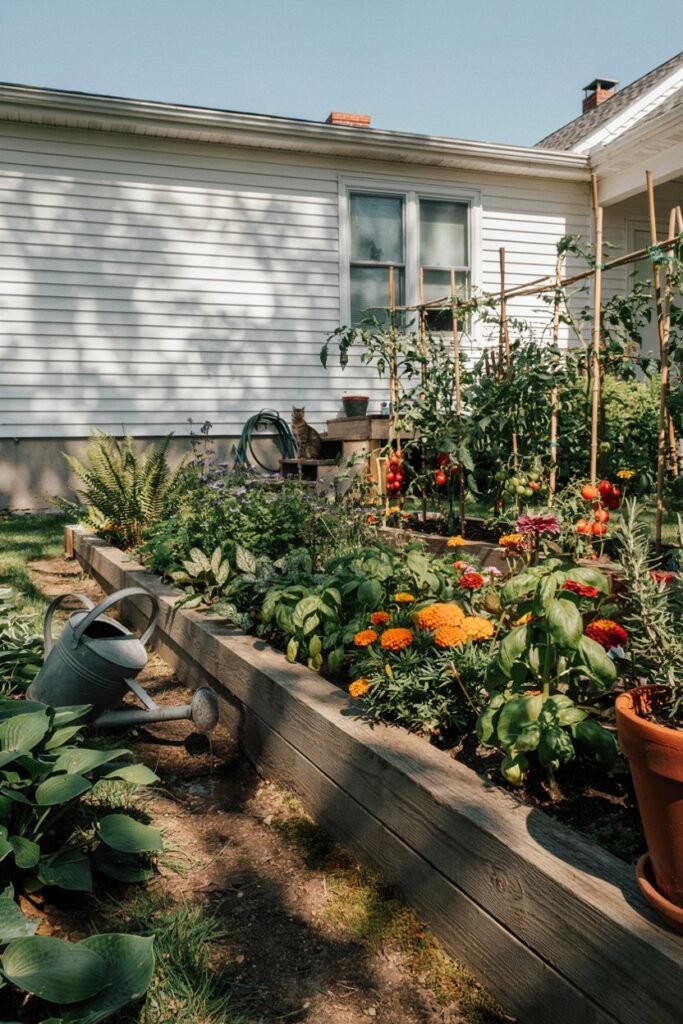
Before you start digging, take a walk around your yard and pay attention to sunlight.
Most fall bloomers, especially mums, asters, and sedum, want at least six hours of direct sun each day to produce their best color. If you’re working with a shadier spot, lean more heavily on heuchera, Japanese anemones, and ornamental kale, which tolerate partial shade far better.
Soil drainage matters just as much as sunlight. Cottage garden plants generally dislike sitting in soggy soil, especially as temperatures drop and roots become more vulnerable to rot.
If your soil tends to hold water, consider working in some compost or even building a slightly raised bed to improve drainage.
I also like to think about sightlines.
Since fall gardens are often enjoyed from indoors as the weather cools, consider planting a few of your boldest colors, like deep red mums or golden black-eyed Susans, somewhere visible from your kitchen window or the spot where you curl up with your morning coffee.
A Simple Month-by-Month Fall Cottage Garden Calendar
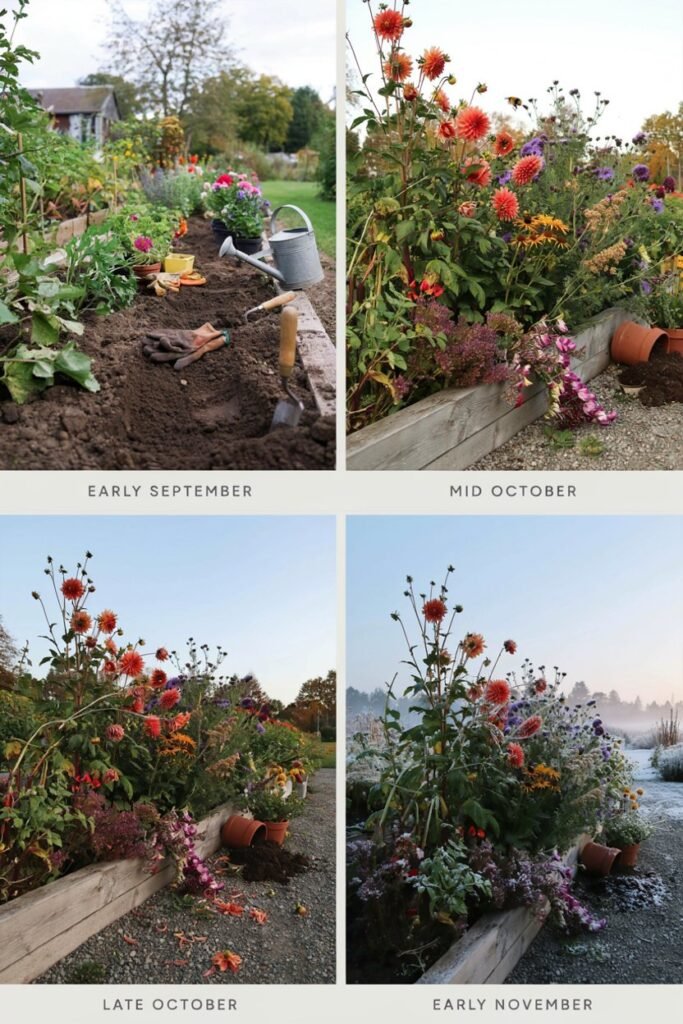
Early Fall (September) This is when I do my biggest planting push. Soil is still warm from summer, which helps new perennials establish strong roots before winter.
Plant asters, mums, sedum, and ornamental grasses now. It’s also the time to divide any overcrowded perennials and tuck spring bulbs into the ground.
Mid Fall (October) By now, your garden should be hitting its stride. Focus on maintenance: deadhead spent blooms, keep mulch topped up, and watch your local frost forecasts.
This is also a lovely time to add pumpkins, gourds, and other natural accents for a festive touch.
Late Fall (November) As frost becomes a regular visitor, shift into protection mode.
Move tender potted plants indoors or into a garage, add a thicker layer of mulch around perennial roots, and cut back any plants that have fully browned, while leaving grasses and seed heads that provide winter interest and food for birds.
Common Fall Cottage Garden Mistakes to Avoid
Even after years of gardening, I still catch myself making one of these mistakes occasionally, so consider this your friendly heads-up.
Planting too late. Waiting until the first cold snap to start your fall garden means your plants won’t have time to establish roots before winter dormancy.
Aim to get most of your planting done four to six weeks before your first expected frost.
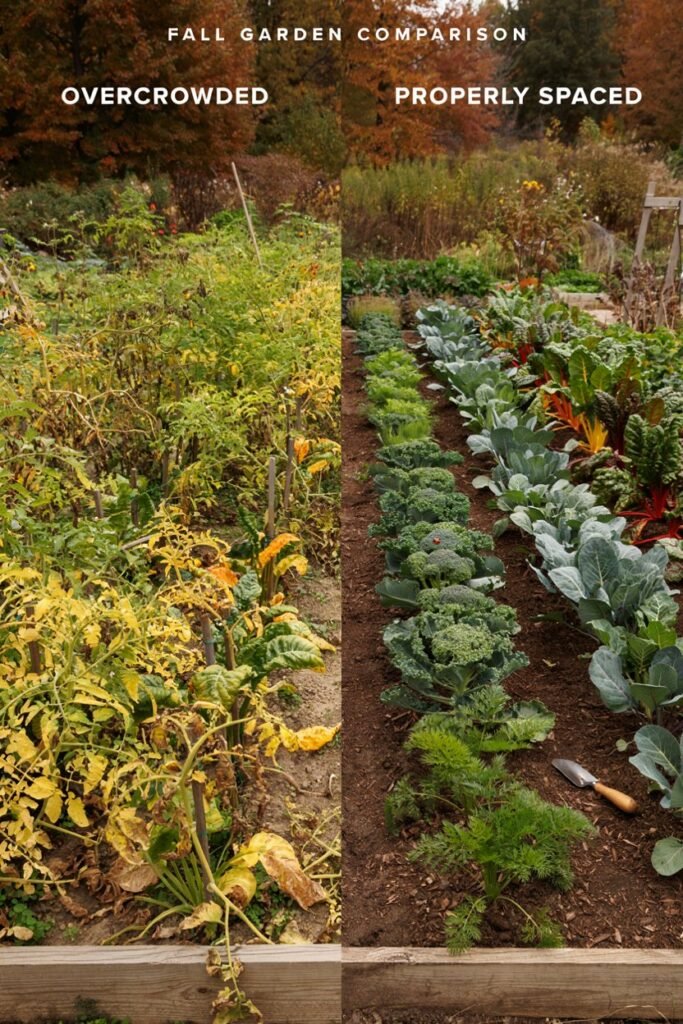
Overcrowding new plants. It’s tempting to pack everything in tightly for that instant “full” cottage look, but overcrowded plants compete for water and nutrients, which can weaken them heading into winter.
Give each plant the spacing recommended on its tag, even if the bed looks a little sparse at first.
Forgetting to water new plantings. Cooler weather doesn’t mean you can skip watering altogether, especially for anything newly planted. Roots still need consistent moisture to establish.
Skipping the mulch. I know it feels like an extra step, but mulch is one of the most protective things you can do for your garden as temperatures swing between warm afternoons and cold nights.
Removing all your spent plants too early. I used to tidy up every faded bloom the moment it browned, but many seed heads and dried stalks provide food and shelter for birds and beneficial insects through the colder months. Leave some of the mess; it’s doing more good than you’d think.
Frequently Asked Questions About Fall Cottage Gardens
Can I still plant a cottage garden if fall has already started where I live? Absolutely. As long as you have four to six weeks before your first hard frost, you have time to get perennials and hardy annuals established.
If frost is imminent, lean into container plantings with mums, pansies, and ornamental kale instead, since these can be moved or refreshed easily.
Do I need to replace my whole summer garden for fall? Not at all. Many cottage garden staples, like coneflowers, black-eyed Susans, and sedum, transition beautifully from summer into fall on their own.
You’re mostly just adding a few seasonal favorites like mums and asters to fill in the gaps and boost color.
How do I keep my fall cottage garden looking good through the first frost? Cold-hardy plants like pansies, ornamental kale, and asters can handle a light frost just fine and often look even prettier with a touch of frost on their leaves.
For anything tender, like dahlias, plan to either bring pots indoors or dig up tubers for winter storage.
What should I do with my fall garden once winter arrives? Leave most of your perennials standing through winter rather than cutting them all the way back.
The dried stalks and seed heads provide shelter for beneficial insects and food for birds, and they also protect the crown of the plant from harsh weather. A big spring cleanup is the better time to cut everything back.
Styling Ideas to Make Your Fall Cottage Garden Feel Complete
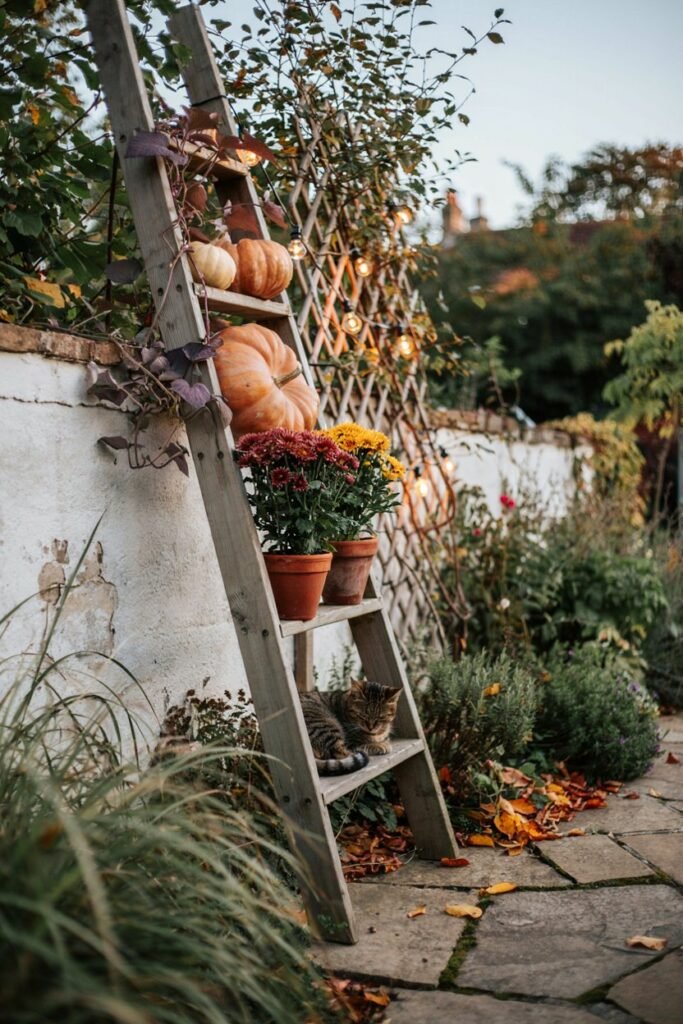
Beyond the plants themselves, a few styling touches really make a cottage garden feel finished and personal.
Add a rustic focal point. A weathered garden bench, an old wheelbarrow filled with mums, or a vintage ladder leaned against the fence and used as a plant stand all add that lived-in cottage charm.
Use natural materials for borders. Instead of straight plastic edging, try low woven willow fencing, stacked stones, or even reclaimed wood to frame your beds. It softens the whole look and fits the relaxed cottage aesthetic.
Layer in lighting. String lights woven through a trellis or a few lanterns tucked among the plants extend the time you get to enjoy your garden into the shorter evenings of fall.
Bring in a water feature, even a small one. A simple birdbath or small fountain adds movement and sound, and it gives birds a reason to visit your garden even as other water sources start to freeze.
Don’t be afraid of a little wildness. Let a few plants self-seed, allow vines to ramble along a fence, and resist the urge to trim everything into perfect lines. The charm of a cottage garden lives in that soft, natural imperfection.
Pair colors thoughtfully. My favorite fall combination is deep burgundy heuchera next to golden black-eyed Susans and a touch of purple aster, with a soft grey-green grass tying it all together.
Pick two or three anchor colors and repeat them throughout the space so the whole garden feels connected rather than scattered.
A Note on Budget-Friendly Fall Gardening
You truly don’t need to spend a fortune to get this look. Many nurseries discount their mums, asters, and perennials in fall since they’re clearing inventory before winter, so keep an eye out for sales.
Dividing your own overgrown perennials, or trading divisions with a neighbor, is another wonderful way to fill out a bed without buying a single new plant.
And those pumpkins and gourds I mentioned earlier? A quick trip to a local farm stand usually gets you a beautiful, budget-friendly haul that adds instant seasonal charm.
Bringing It All Together
A fall cottage garden is really about embracing the season instead of letting your yard go quiet the moment summer ends.
With the right mix of mums, asters, grasses, and a little seasonal styling with pumpkins and gourds, your garden can feel just as full and inviting in October as it did in June.
I hope this guide gives you everything you need to get started this weekend, and I would love to see how your garden turns out.
You Might Also Love These Posts
- Cottage Garden Makeover: My Complete Guide to Growing a Charming, Overflowing Garden
- Fall Container Gardens: Create Stunning Pots That Celebrate the Beauty of Autumn
- 15 Fall Flowers That Bloom Until Frost
- October Gardening Checklist: A Cozy To-Do List for Your Autumn Garden
- September Gardening Checklist: Everything I Always Do Before Autumn Takes Over
- 24 Colorful Flower Garden Layout Ideas
- Flower Garden Maintenance Checklist: My Complete Season-by-Season Guide to Gorgeous Blooms
