
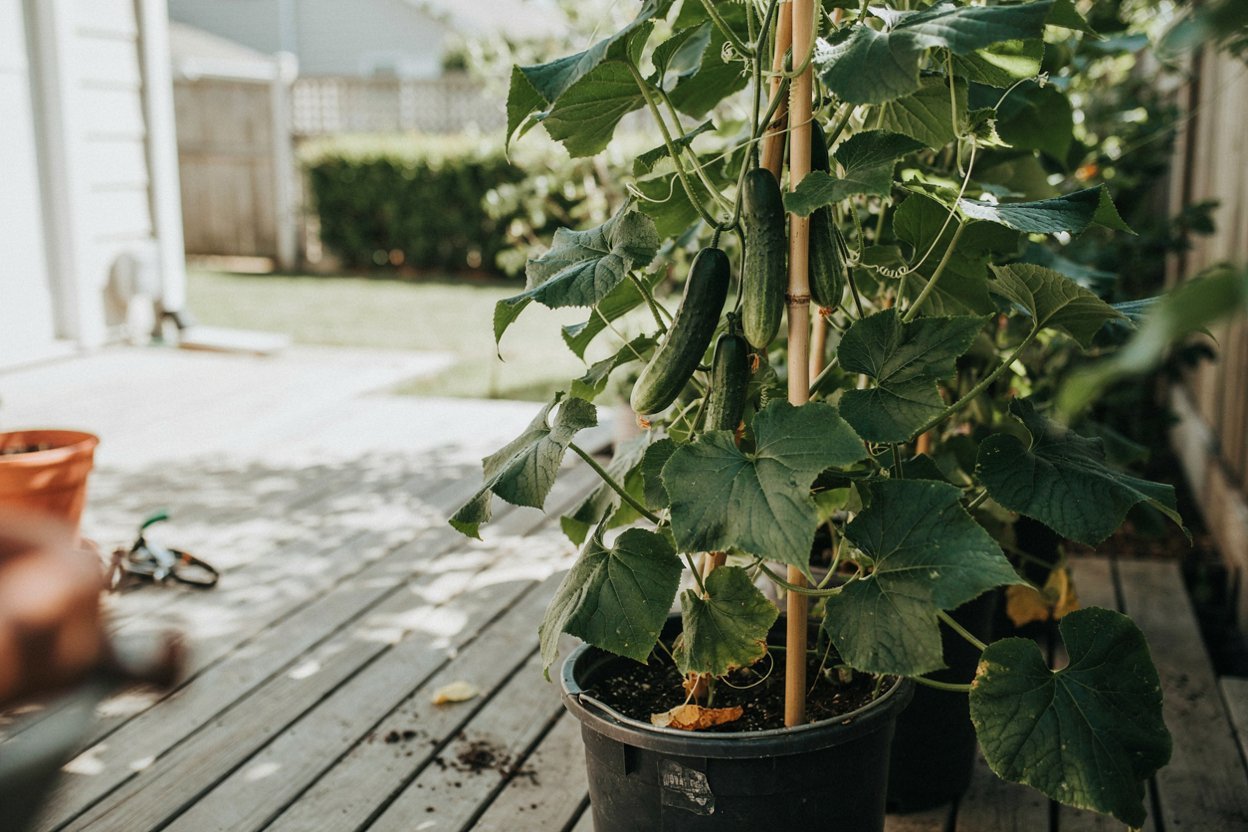

My first bucket of cucumbers was an accident, honestly. I had one leftover 5-gallon bucket, a few holes drilled from another project, and a packet of seeds I couldn’t bear to throw away.
Two months later, I was pulling crisp cucumbers off a vine that had climbed clean over a bamboo trellis.
If you’ve got a bucket, a sunny spot, and about fifteen minutes to set things up, you can do this too even with zero garden space to spare.
Cucumbers are one of the easiest vegetables to grow in a container, and a 5-gallon bucket is honestly the perfect size for them deep enough for roots, small enough to fit on a patio, balcony, or driveway.
If you’ve got a tiny yard or no yard at all, this is a great place to start; my guide to apartment vegetable garden ideas has more tricks for growing food in small spaces if buckets turn out to be your gateway drug into container gardening.
Why Grow Cucumbers In A Bucket?
A few reasons this method works so well:
- Space-saving — you don’t need a garden bed, just a sunny corner
- Portable — move the bucket to chase the sun or dodge a storm
- Fewer pests and soilborne diseases — fresh potting mix means fewer problems than in-ground beds
- Great drainage control — you decide exactly what your cucumbers are rooted in
The trade-off is that container plants dry out faster and need consistent feeding, since there’s no surrounding soil to buffer them. Once you know that going in, it’s easy to manage.
What You’ll Need
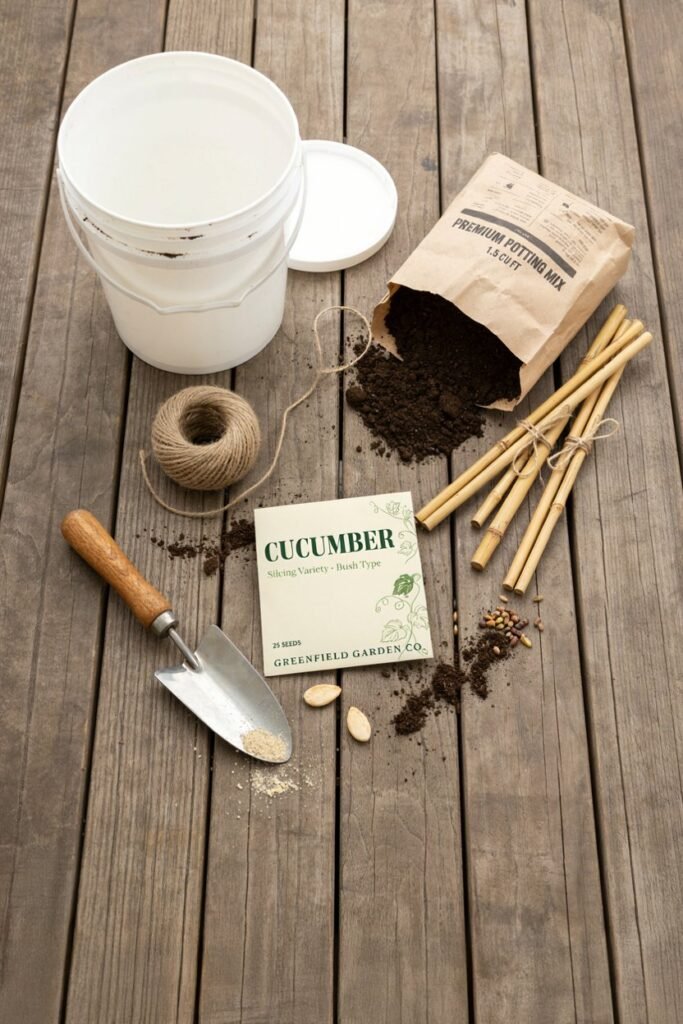
- A 5-gallon bucket or container with good drainage (a food-safe bucket, grow bag, or fabric pot all work)
- Light, well-draining potting mix — a blend with compost and perlite or vermiculite works best
- Cucumber seeds or a bush/compact variety bred for containers (bush cucumbers do better than long vining types, though vining types work great with a trellis)
- Trellis materials — bamboo stakes, a tomato cage, or a purchased trellis (more on this below)
- Watering can or drip line
- Balanced fertilizer or compost tea
- Mulch — shredded leaves or straw
If your potting mix has ever hosted a sick or pest-ridden plant, it’s worth sterilizing it first I walk through exactly how in how to properly sterilize potting soil, which is a quick step that saves a lot of heartache later.
Choosing The Right Cucumber Variety
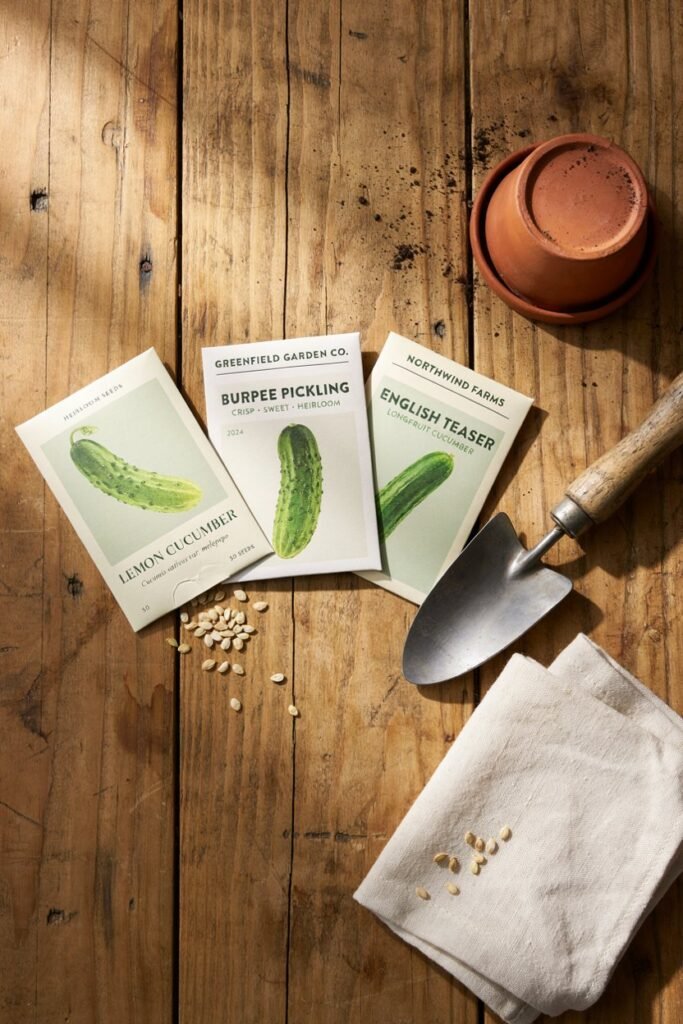
Not every cucumber plant is cut out for bucket life, so this step matters more than people expect.
Standard vining cucumbers can send out runners 6 feet long or more, which is a lot to manage on a single trellis anchored in one bucket. You’ve got two solid options:
- Bush or compact varieties (like Bush Champion or Salad Bush) stay short and don’t need much support at all a good choice if you want something low-maintenance and aren’t fussed about a trellis.
- Compact vining varieties bred for containers (like SpaceMaster or Patio Snacker) still climb, but stay manageable on a 4–5 foot trellis and tend to produce heavily for their size.
If you love the idea of vines climbing up a trellis and honestly, it’s one of the most satisfying things to watch in a container garden a compact vining type paired with a sturdy trellis is the way to go.
Standard slicing or pickling cucumbers can technically work too, but expect to do more pruning and tying to keep them contained.
Step-By-Step: Growing Cucumbers In A 5-Gallon Bucket
1. Prep Your Bucket
Drill 6–8 holes, about an inch wide, around the lower sides of the bucket not just the bottom center.
Side-bottom holes let roots reach the soil below (if the bucket is sitting on the ground) and drain far more evenly than a single center hole, which tends to clog.
2. Fill With Soil
Use a light, organic potting mix blended with compost. Fill to about an inch below the rim, leaving room for watering without overflow.
3. Set Up Your Trellis (Do This Before Planting)
This is the step people skip and regret. Cucumber vines grow fast often several inches a day once established and if you wait until the vine is already sprawling across your patio to add support, you’ll be untangling stems and risking broken vines. Get the trellis in the bucket before you plant.
Simple trellis ideas that work great in a bucket:
- A tepee of 3–4 bamboo stakes, zip-tied or twine-lashed at the top — cheap, sturdy, and easy to build in five minutes
- A tomato cage flipped upside down or used as-is, which gives the vine plenty of surfaces to grip
- A section of cattle panel or wire fencing, bent into an arch or cylinder and pushed into the soil
- A store-bought collapsible cucumber trellis, if you’d rather skip the DIY step
- Leaning the bucket against a fence or wall trellis you already have, which works well if space is tight
Whichever you choose, make sure it’s tall enough 4 to 5 feet is a good minimum and anchored deep enough into the soil that it won’t tip once the vine is loaded with fruit and leaves.
I’ve got a whole roundup of garden trellis ideas that add height if you want more inspiration, and if you’re building anything more permanent, my guide to raised bed planter boxes with a trellis covers how to build a sturdier structure that a bucket can sit next to.
4. Plant Your Seeds
Sow 2–3 seeds about an inch deep near the base of your trellis, spaced evenly around it.
Once seedlings have their first true leaves, thin down to the strongest 1–2 plants per bucket crowding leads to poor airflow and more disease.
Cucumbers don’t love being transplanted, so starting seeds directly in the bucket usually beats moving a seedling in later.
5. Water Consistently
Keep the soil evenly moist, especially while seeds are germinating and again once fruit starts forming.
Inconsistent watering is the number one cause of oddly shaped or bitter cucumbers, so try to water on a regular schedule rather than letting the bucket dry out completely between waterings.
6. Feed Every Two Weeks
Container soil runs out of nutrients faster than garden soil because there’s less of it to draw from. Feed with a balanced fertilizer or compost tea every couple of weeks once the plant is established and flowering.
7. Mulch The Surface
A thin layer of shredded leaves or straw on top of the soil helps retain moisture and keeps roots cooler in summer heat small buckets heat up fast in direct sun.
8. Train The Vines As They Grow
As new growth appears, gently guide the vines onto the trellis and loosely tie them with soft garden twine or stretchy plant tape.
Cucumbers have tendrils that will grab on by themselves once they’re close enough, but a little guidance early on keeps the plant climbing rather than sprawling.
Common Problems (And What They Mean)
Misshapen or curved cucumbers almost always inconsistent watering, not a disease. Even out your watering schedule and future fruit should straighten out.
Yellow cucumbers these are overripe, not diseased. Pick cucumbers while they’re still firm and green; once they yellow, the plant thinks its job is done and slows down on producing more.
Wilting leaves in the afternoon heat normal in extreme heat if the plant perks back up by evening. If it doesn’t recover overnight, check that the bucket is draining properly and not staying soggy.
Bitter taste usually from letting cucumbers grow too large before picking, or from heat and water stress. Harvest a little earlier next time.
If you’re also managing other container vegetables and keep running into leaf or pest issues, my garden pest prevention checklist is worth a look, and if it’s specifically your tomatoes acting up nearby, why tomato leaves curl covers a lot of the same watering-related culprits that affect cucumbers too.
When To Harvest
Pick cucumbers once they’re firm, plump, and a rich green usually a bit before you’d expect, since they fill out in length first and then thicken. Waiting too long lets the seeds inside develop and the fruit turns bitter. Regular picking also signals the plant to keep producing, so don’t let ripe cucumbers linger on the vine.
A Few Extra Tips
- Provide afternoon shade with a simple shade cloth if temperatures regularly climb above 90°F buckets heat up faster than garden beds and can stress roots.
- Rotate your bucket every few days if it’s not getting even sun, so the plant doesn’t lean too hard in one direction.
- Succession plant a second bucket two or three weeks after the first for a longer harvest window this pairs well with the seasonal ideas in vegetables to plant in August if you’re looking to keep your containers producing later into the season.
Quick FAQ
Can I skip the trellis entirely? You can, especially with a true bush variety, but even compact vines benefit from some support.
Letting vines sprawl on the ground invites pests, rot on the fruit touching wet soil, and makes cucumbers harder to spot at harvest time. A simple trellis solves all three problems at once.
How many cucumbers will one bucket produce? With a healthy, well-fed plant, one or two cucumber vines in a 5-gallon bucket can realistically produce a dozen or more cucumbers over a season, depending on variety and how consistently you water and feed.
Do I need to transplant seedlings started indoors? Cucumbers generally dislike having their roots disturbed, so it’s best to sow seeds directly in the bucket they’ll grow in rather than starting them elsewhere and moving them later.
What if my bucket doesn’t get full sun? Cucumbers want at least 6 hours of direct sun a day to produce well.
If your spot gets less than that, expect a smaller harvest, and consider moving the bucket to a sunnier location during the day since portability is one of the big perks of container growing.
Growing cucumbers in a bucket really is one of the simplest ways to get a real harvest without a real garden.
Set the trellis up early, keep the watering steady, and you’ll be surprised how fast one little bucket turns into more cucumbers than you know what to do with.
If this is your first year growing anything at all, my new gardener checklist rounds up everything else I wish someone had told me before I started.
