
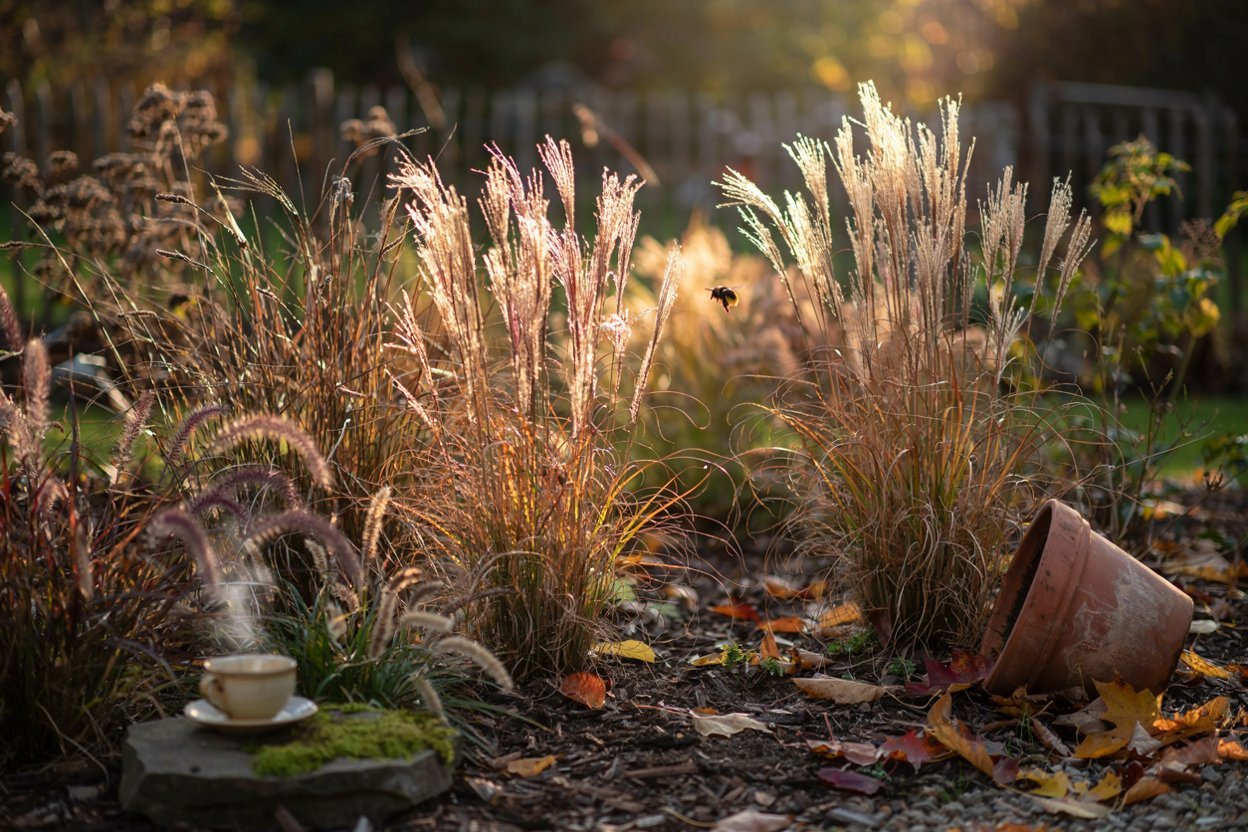

Every autumn, my garden goes through this quiet little transformation where the flowers start to fade and I brace myself for that “everything looks tired” phase except it never actually happens anymore.
The reason? Ornamental grasses.
They catch the low October light, sway with the first cool breezes, and somehow look more beautiful the further we get into fall.
If your garden feels a little flat once the blooms fade, I promise these grasses will change the way you feel about the season entirely.
Why Ornamental Grasses Deserve a Spot in Your Fall Garden

Ornamental grasses are the unsung heroines of the autumn garden.
While your perennials are winding down, most grasses are just getting started their plumes fluff out, their foliage turns copper and gold, and they catch the sunset light in a way no flower quite manages.
They’re also low-maintenance, drought-tolerant once established, and they give your garden movement and texture that lasts well into winter.
If you’re already working on your seasonal displays, grasses pair beautifully with the plants featured in my post on 15 fall flowers that bloom until frost, and they’re an absolute must if you’re planning any fall container gardens this year.
Below, I’m sharing my 15 favorite ornamental grasses for fall, plus exactly what each one needs and how to make it a reality in your own garden, no matter your experience level.
A Quick Note Before You Start
Before you fall in love with all fifteen (which, fair warning, you might), take a moment to think about your space.
Ornamental grasses range from petite 12-inch tufts to towering 8-foot giants, so matching the right grass to the right spot matters.
If you’re working with a smaller yard, keep an eye out for the compact varieties I’ve marked below they pair wonderfully with the ideas in my 25 tiny garden ideas for small spaces post.
Alright, let’s get into it.
1. Maiden Grass (Miscanthus sinensis)
Maiden grass is the classic, elegant grass you picture when someone says “ornamental grass.” It grows in graceful, arching mounds that can reach 4 to 8 feet tall, topped with feathery, silvery-pink plumes that catch the wind beautifully in September and October.
What it needs:
- Full sun (at least 6 hours a day)
- Well-draining soil, though it tolerates a range of soil types
- USDA zones 5–9
- Moderate water while establishing, then minimal once mature
How to make it a reality: Plant maiden grass in spring so the roots have a full season to establish before winter.
Give it plenty of room to spread, at least 3 to 4 feet from neighboring plants, since it forms substantial clumps over the years.
Cut it back to about 6 inches in late winter before new growth emerges, and resist the urge to prune in fall; the dried foliage adds gorgeous winter interest and protects the crown from frost.
2. Fountain Grass (Pennisetum alopecuroides)
Fountain grass earns its name honestly. Its arching, fine-textured blades cascade outward like water, and by late summer it’s covered in fuzzy, bottlebrush-like plumes that turn a warm coppery tan as autumn deepens.
What it needs:
- Full sun for the best plume production
- Average, well-draining soil
- USDA zones 5–9 (some cultivars are hardy to zone 4)
- Regular water the first year, then drought-tolerant
How to make it a reality: Space plants about 2 to 3 feet apart to let those fountain-like blades spread without crowding. Fountain grass looks stunning massed together in drifts, or as a soft border along a walkway. Leave the seed heads standing through winter for birds and visual texture, then cut the whole plant back hard in early spring, right before new shoots appear.
3. Feather Reed Grass (Calamagrostis x acutiflora ‘Karl Foerster’)
If you want vertical drama, feather reed grass is your answer. It grows in narrow, upright columns reaching 4 to 6 feet, with feathery plumes that emerge in early summer and mature into a warm, wheat-golden color by fall.
What it needs:
- Full sun to partial shade
- Moist, well-draining soil
- USDA zones 4–9
- More consistent moisture than most ornamental grasses
How to make it a reality: This is one of the easiest grasses to grow, and it’s sterile, meaning it won’t self-seed and take over your beds. Use it as a living privacy screen or a repeating vertical accent along a fence line — it’s a favorite for the kind of layered screening I talk about in my backyard privacy plants guide. Plant it in groups of three or five for the biggest visual impact, and divide clumps every three to four years once the center starts to thin out.
4. Little Bluestem (Schizachyrium scoparium)
Little bluestem is a native prairie grass that transforms from soft blue-green in summer to a rich mix of copper, burgundy, and orange in fall. It’s tough, drought-tolerant, and beloved by pollinators and birds alike.
What it needs:
- Full sun
- Poor to average, well-draining soil (it actually dislikes rich, fertile soil)
- USDA zones 3–9
- Very low water once established
How to make it a reality: Resist the urge to fertilize or over-water little bluestem; too much of either causes it to flop over instead of standing upright. Plant it in the sunniest, leanest spot in your garden, ideally somewhere with poor soil where other plants struggle. It’s a wonderful choice for naturalistic or cottage-style plantings, and it fits right into the relaxed, overflowing look I describe in my cottage garden makeover guide.
5. Switchgrass (Panicum virgatum)
Switchgrass is another native beauty, prized for its airy, cloud-like seed heads and its color-changing foliage that shifts from blue-green to burgundy, gold, or deep red depending on the cultivar. Varieties like ‘Shenandoah’ and ‘Heavy Metal’ are especially popular for their fall color.
What it needs:
- Full sun
- Adaptable to nearly any soil, including clay and wet spots
- USDA zones 4–9
- Tolerates both drought and occasional flooding
How to make it a reality: Switchgrass is about as forgiving as ornamental grasses get, so it’s a lovely choice if you’re newer to gardening. Plant it in mass groupings for a soft, meadow-like effect, or use a single specimen as an accent near a patio. Give it room to reach its mature height of 3 to 6 feet, and leave it standing through winter; the seed heads are a favorite snack for songbirds.
6. Blue Fescue (Festuca glauca)
Blue fescue is a petite, mounding grass with striking silvery-blue foliage that holds its color well into fall and even through mild winters. It’s compact, tidy, and perfect for edging or container use.
What it needs:
- Full sun for the best blue color
- Well-draining, slightly sandy soil
- USDA zones 4–8
- Low water needs; it dislikes soggy roots
How to make it a reality: Because blue fescue only grows 8 to 12 inches tall, it’s ideal for the front of a border, along pathways, or tucked into rock gardens. Comb through the clump with your fingers each spring to remove dead blades and keep it looking fresh. If your soil tends to hold water, plant it slightly raised or amend with grit to improve drainage; wet roots are really the only thing that trips this grass up.
7. Japanese Forest Grass (Hakonechloa macra)
Unlike most grasses on this list, Japanese forest grass thrives in shade, cascading in soft, weeping mounds of golden or variegated foliage that turns coppery-red as the weather cools. It’s one of the few truly shade-loving ornamental grasses, and it’s gorgeous for it.
What it needs:
- Partial to full shade
- Rich, moist, well-draining soil
- USDA zones 5–9
- Consistent moisture, especially in summer
How to make it a reality: Plant Japanese forest grass beneath trees, along shaded walkways, or in woodland borders where sun-loving grasses simply won’t grow. It’s slow to establish, so be patient the first year or two; once settled, it spreads gently and looks stunning cascading over a low wall or the edge of a raised bed. Mulch around the base to help retain moisture and protect the roots through winter.
8. Purple Fountain Grass (Pennisetum setaceum ‘Rubrum’)
If you want a real showstopper, purple fountain grass brings deep burgundy foliage and rosy-pink plumes that practically glow in fall light. It’s technically a perennial only in warm climates, but it’s wildly popular as an annual accent everywhere else.
What it needs:
- Full sun
- Well-draining soil
- USDA zones 9–10 as a perennial; grown as an annual in colder zones
- Regular water, more than most grasses on this list
How to make it a reality: In cooler climates, treat this one as a seasonal star: plant it in a large container or as a thriller in a mixed pot, and simply replace it each year, or dig it up and overwinter it indoors near a sunny window. It’s one of my favorite additions to autumn container arrangements because the color contrast against mums, pumpkins, and pansies is absolutely striking.
9. Northern Sea Oats (Chasmanthium latifolium)
Northern sea oats has flat, oat-like seed heads that dangle gracefully from arching stems, turning from green to a warm bronze as fall sets in. It handles shade better than most grasses, making it a versatile pick for tricky spots.
What it needs:
- Partial shade to full sun
- Moist, well-draining soil
- USDA zones 3–8
- Regular water; it doesn’t love prolonged drought
How to make it a reality: Give this grass a spot with some afternoon shade if you’re in a hot climate, since it can scorch in intense, all-day sun. It self-seeds fairly readily, so if you’d rather it stay tidy, snip off the seed heads before they fully mature and drop. Otherwise, let it naturalize along a woodland edge or shaded border, where its rustling seed heads add gentle sound and movement to the fall garden.
10. Pampas Grass (Cortaderia selloana)
Pampas grass is the dramatic, larger-than-life grass you’ve probably seen trending in dried flower arrangements. Its enormous, fluffy plumes can reach 10 feet tall and add serious architectural presence to any fall landscape.
What it needs:
- Full sun
- Well-draining soil; tolerates poor soil once established
- USDA zones 7–10 (some hardy cultivars reach zone 6)
- Drought-tolerant once mature
How to make it a reality: Because pampas grass gets large, give it plenty of space, at least 6 feet in every direction, and plant it somewhere it can be the star of the show, like the corner of a large yard or as a privacy anchor. Wear thick gloves when handling it; the blade edges are surprisingly sharp. Cut plumes for indoor arrangements right when they open for the longest-lasting display, and cut the whole plant back in late winter to make room for fresh spring growth.
11. Blue Oat Grass (Helictotrichon sempervirens)
Blue oat grass forms a neat, spiky mound of steel-blue foliage that holds its color beautifully through fall, with tall, airy seed stalks rising above the clump like golden fireworks.
What it needs:
- Full sun
- Well-draining, slightly alkaline soil
- USDA zones 4–8
- Low water once established
How to make it a reality: This grass genuinely dislikes wet feet, so if your soil tends to stay damp, work in some coarse sand or grit before planting. It pairs beautifully with warm-toned perennials and looks especially striking planted in odd-numbered groupings, which also lines up nicely with the layout tips I share in my colorful flower garden layout ideas post. Avoid cutting it back in fall; simply comb out dead blades in early spring instead.
12. Prairie Dropseed (Sporobolus heterolepis)
Prairie dropseed is a graceful, fine-textured native grass that forms tidy mounds and produces delicate, airy seed heads with a faint, pleasant fragrance often compared to buttered popcorn or coriander. Its fall color ranges from golden orange to soft copper.
What it needs:
- Full sun
- Average to poor, well-draining soil
- USDA zones 3–9
- Very drought-tolerant once established
How to make it a reality: Prairie dropseed is slow to establish (be patient for the first two seasons), but once it settles in, it’s remarkably low-maintenance and long-lived. Use it as a soft, rounded edging plant along beds or paths, where its fine texture contrasts beautifully with broader-leaved perennials. It’s a wonderful addition if you’re following any kind of flower garden maintenance checklist, since it genuinely needs so little upkeep once established.
13. Ravenna Grass (Saccharum ravennae, formerly Erianthus)
Sometimes called hardy pampas grass, Ravenna grass gives you that same dramatic, feathery plume effect but with better cold tolerance. It grows into an enormous, fountain-like clump with silvery-tan plumes rising well above the foliage in fall.
What it needs:
- Full sun
- Well-draining soil
- USDA zones 5–9
- Drought-tolerant once established
How to make it a reality: Give Ravenna grass a generous amount of space, similar to pampas grass, since mature clumps can reach 8 to 12 feet with plumes included. It works beautifully as a focal point at the back of a large border or along a property line for privacy and screening. Cut it back to the ground in late winter each year to keep the clump vigorous and prevent the center from becoming woody.
14. Autumn Moor Grass (Sesleria autumnalis)
Autumn moor grass is a compact, tidy grass with bright chartreuse-green foliage that stays fresh-looking well into fall, offset by delicate white-tinged flower spikes in late summer. It’s a lovely, understated choice for structure without overwhelming a bed.
What it needs:
- Full sun to partial shade
- Well-draining soil; adaptable to many soil types
- USDA zones 5–9
- Moderate water; more drought-tolerant once mature
How to make it a reality: This grass is fantastic for edging pathways, filling gaps between perennials, or softening the base of shrubs. Because it stays under 12 inches tall, it works beautifully in smaller garden spaces or containers where taller grasses would feel overwhelming. It requires very little pruning beyond a light spring tidy-up, making it a favorite for gardeners who want texture without extra work.
15. Korean Feather Reed Grass (Calamagrostis brachytricha)
Korean feather reed grass produces some of the most romantic plumes on this list, soft, purplish-pink seed heads that catch dew and light beautifully in early fall before fading to a warm tan. It’s one of the few grasses that actually blooms in autumn rather than earlier in the season.
What it needs:
- Full sun to partial shade
- Moist, well-draining soil
- USDA zones 4–9
- Regular water, especially during dry spells
How to make it a reality: Plant this grass somewhere you’ll actually see it catch the morning or evening light, near a window, patio, or path, since the plumes are genuinely one of the highlights of the fall garden. It tolerates a bit more shade than most grasses, making it a flexible choice for gardens with mixed sun exposure. Divide clumps every few years in early spring to keep the plant vigorous and the plume production strong.
How to Choose the Right Grasses for Your Garden
With fifteen gorgeous options in front of you, narrowing it down comes down to three simple questions:
- How much space do you have? Compact grasses like blue fescue, autumn moor grass, and prairie dropseed suit smaller beds and containers, while maiden grass, pampas grass, and Ravenna grass need real room to spread out.
- How much sun does your spot get? Most ornamental grasses want full sun, but if you’re working with a shady corner, Japanese forest grass and northern sea oats are your best friends.
- What look are you going for? Soft and romantic, lean toward fountain grass and Korean feather reed grass. Bold and architectural, go for pampas grass or Ravenna grass. Native and low-maintenance, little bluestem and switchgrass won’t let you down.
Caring for Ornamental Grasses Through the Rest of Fall and Into Winter
One of the loveliest things about ornamental grasses is how little they ask of you once they’re settled in. A few general habits will keep them thriving:
- Leave them standing through fall and winter. The dried foliage and seed heads provide structure, shelter for beneficial insects, and food for birds, plus they genuinely look beautiful dusted with frost.
- Skip the fertilizer. Most ornamental grasses, especially natives like little bluestem and prairie dropseed, actually perform better in lean soil. Rich soil or heavy feeding often causes floppy, weak growth.
- Water deeply but infrequently while they establish. Once a grass has been in the ground for a full growing season, most varieties need very little supplemental water.
- Cut back in late winter or very early spring, before new growth emerges, rather than in fall. This protects the crown through the cold months and gives you all that gorgeous winter texture in the meantime.
If you’re mapping out your broader autumn task list, this pairs nicely with the seasonal rhythm I outline in my September gardening checklist and my October gardening checklist, both of which walk through exactly when to plant, divide, and prep your grasses (and everything else) for the colder months ahead.
Pairing Grasses With the Rest of Your Fall Garden
Grasses are lovely on their own, but they truly shine when they’re layered in with other seasonal plants. Their fine texture and neutral, warm tones act almost like a frame, making everything around them look a little more polished.
Try tucking little bluestem or prairie dropseed behind clusters of mums or asters for a naturalistic, prairie-inspired look. Pair blue fescue or autumn moor grass with pumpkins and ornamental cabbage for a cozy front-porch display. And if you’re planning a full seasonal refresh, grasses are one of the easiest ways to add height and movement to the kind of layered look I describe in my colorful flower garden layout ideas post, where texture and repetition do a lot of the heavy lifting.
Grasses also solve a very specific fall problem: that awkward lull once the summer flowers fade but before the frost really sets in. While most blooms are winding down, plumes are just reaching their peak, which means your garden keeps evolving and looking fresh well into November.
Common Questions About Growing Ornamental Grasses in Fall
Can I plant ornamental grasses in fall, or should I wait until spring? You can plant most ornamental grasses in early fall, ideally at least six weeks before your first hard frost, so the roots have time to establish before the ground freezes. If you’re in a colder climate or planting later in the season, spring planting is the safer choice, since it gives the grass a full growing season to settle in before facing winter.
Do ornamental grasses come back every year? Most of the grasses on this list are herbaceous perennials, meaning the foliage dies back in winter and returns from the roots each spring. A few, like purple fountain grass, are only hardy in warmer zones and are typically grown as annuals or overwintered indoors elsewhere.
Should I cut back my ornamental grasses in fall? I’d gently steer you away from it. Leaving the foliage standing through fall and winter protects the crown of the plant from harsh weather, provides food and shelter for wildlife, and gives your garden gorgeous texture when little else is going on. Save the big cutback for late winter or very early spring, right before new growth starts.
Are ornamental grasses low-maintenance? Wonderfully so. Once established, most need very little water, no fertilizer, and only one annual pruning. They’re one of the lowest-effort, highest-reward additions you can make to a fall garden, which is exactly why I keep coming back to them year after year.
Do ornamental grasses spread aggressively? It depends on the variety. Clumping grasses like maiden grass, blue fescue, and little bluestem stay tidy and expand slowly from the base. A few, like northern sea oats, self-seed more readily, so if you’d rather keep things contained, simply trim the seed heads before they mature and drop.
A Final Word
Ornamental grasses have this quiet way of making a garden feel finished, like the missing piece you didn’t know you needed. They soften hard edges, catch the wind and light in a way flowers simply can’t, and reward you with structure and beauty long after everything else has gone dormant. Whichever of these fifteen you choose, I promise your fall garden is about to feel a whole lot more alive.
Happy planting, friend. Your future self, sipping cider on the porch surrounded by golden, swaying grasses, is going to thank you.
